- Pradžia

- Spausdinimas ant drobės
- Lionello Spada
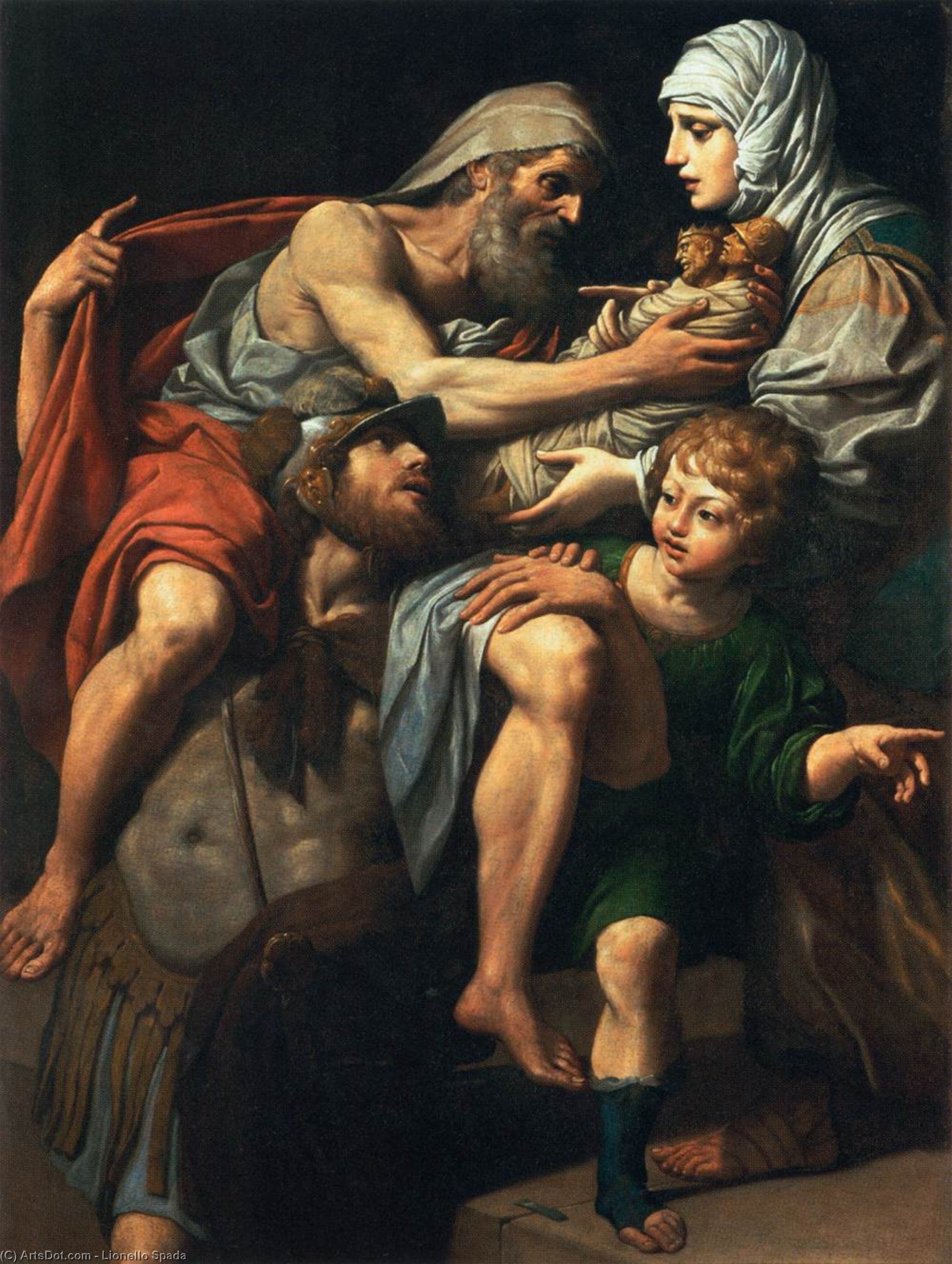
- Aeneas and Anchises
 Užsisakyti kopiją Pirkti skaitmeninį paveikslą
 Pasidalinti
 Dalintis
 Išsamiau
 Pridėti į mėgstamiausius

 Atsisiųsti
 Panašūs eksponatai
 Rentgeno nuotrauka
 Automatinė diorama
Aeneas and Anchises
 Oil On Canvas
- WallArt
- Baroque
 1615
1615 195.0 x 132.0 cm
 Liuvro muziejus
 Skaityti daugiau
Giclée / Meno spausdinimas
Muziejų lygio „giclée“ arba drobos spausdinimas: greita gamyba ir lankstios apdailos parinktys.




P118B $10

P118H $10

P118W $10

P438Z $10

P508JH $12

P508YH $12

P805H $10

P805Z $10

P919BZ $10

P919G $10

P919XJ $10

P959ZH $10

P968JZ $12

W106C $8

W218G $10

W218JH $8

W218Y $10

W307PJ $10

W316G $10

W316PJ $8

W316Y $10

W398PJ $8

W4111J $10

W500HY $15

W500JH $15

W692G $12

W849H $8

W940BG $15

W953PJ $8




Pasirinkite iš mūsų nustatytų dydžių, atitinkančių originalaus meno kūrinio proporcijas.

Galite nurodyti savo matmenis, kad vaizdas atitiktų konkretų rėmą ar erdvę. Jei pasirinktas dydis nesutaps su originalaus paveikslėlio proporcijomis, mes arba apkirpsime kūrinį, arba išplėsime vaizdą naudojant veideliu atspindėtą arba vientisą šoną. Skaitmeninis maketas bus išsiųstas jums patvirtinti prieš pradedant gamybą.
Atkreipkite dėmesį, kad ekrane matomas vaizdinys neatspindi tikrojo apkirpimo ar išplėtimo. Tik maketas tiksliai parodytų galutinę kompoziciją.
Nors galima rinktis ir individualius dydžius, rekomenduojame pasirinkti vieną iš išanksti nustatytų matmenų, kad būtų išlaikytos originalios proporcijos.
Pristatymas visame pasaulyje () per 2 weeks, o ne įprastas 4/5 savaičių laikotarpis. (22 liepa)

Nemokamas greitasis pristatymas visame pasaulyje

Aukštos kokybės lininis drobė

Pilnas siuntimo draudimas

Muitinės mokesčių grąžinimo garantija

Tikro spalvų atitikimo garantija

60 dienų grąžinimo politika (tik esant gamyklinėms defektams)

100% pinigų grąžinimo garantija

Nuolaida už kelias reprodukcijas
 Stiklo variantas prieinamas tik pasirinkus dydį iki 110 cm

Aeneas and Anchises
Giclée / Meno spausdinimas
Reprodukcijos matmenys
-


Galutinė kaina
-
Kolekcinio eksponato aprašymas
The Dramatic Echoes of Troy: Lionello Spada’s “Aeneas and Anchises”
Lionello Spada's "Aeneas and Anchises," painted around 1615, is not merely a depiction of a pivotal moment in Virgil’s *Aeneid*; it’s a visceral embodiment of the anxieties and aspirations that defined the early Baroque era. Housed within the hallowed halls of the Louvre Museum, this oil on canvas transcends its simple subject matter to become a profound meditation on lineage, destiny, and the fraught relationship between past and future. Spada, deeply influenced by the revolutionary realism of Caravaggio yet firmly rooted in the Bolognese tradition championed by the Carracci, masterfully synthesizes these influences into a work that pulsates with dramatic intensity.
The scene unfolds with arresting immediacy. We witness Aeneas, already established as a Trojan hero and destined to found Rome, engaged in a weighty conversation with his paternal ancestor, Anchises. The figures are not idealized; they possess a palpable physicality, their faces etched with the burdens of history and the uncertainties of the journey ahead. Anchises, depicted as an aged patriarch, leans heavily on a staff, his gaze fixed upon his grandson, radiating both wisdom and a poignant sense of loss. A woman stands beside him, her expression one of quiet concern – likely Creusa, Aeneas’s wife who tragically perished during their escape from Troy, adding a layer of sorrow to the narrative.
A Baroque Masterclass: Composition and Technique
Spada's technical prowess is immediately evident in the painting’s masterful use of chiaroscuro – the dramatic interplay of light and shadow. This technique, borrowed directly from Caravaggio, serves not merely as a stylistic device but as a crucial element of storytelling. The strong contrasts heighten the emotional impact, drawing our attention to key figures and emphasizing the tension within the scene. Notice how the light illuminates Aeneas’s face, highlighting his determination, while simultaneously shrouding Anchises in shadow, suggesting the weight of generations past.
The composition itself is carefully constructed. The figures are arranged within a shallow space, creating a sense of intimacy and immediacy. Spada employs a dynamic diagonal line that guides our eye through the scene, from Anchises’s aged form to Aeneas’s youthful vigor. The inclusion of several dogs – some playfully nipping at the heels of the men, others scattered throughout the background – adds a touch of earthy realism and subtly underscores the primal nature of the narrative.
Symbolism and Historical Context
“Aeneas and Anchises” is rich in symbolic meaning. The story itself represents the cyclical nature of history—the passing down of legacy, the burden of responsibility, and the enduring quest for a new beginning. Anchises embodies the wisdom of the past, while Aeneas symbolizes the future, carrying the hopes and dreams of his ancestors upon his shoulders. The presence of Creusa’s ghost serves as a constant reminder of the sacrifices required to secure that future.
Painted during the tumultuous years following the Sack of Rome in 1527, “Aeneas and Anchises” reflects the broader anxieties of the era. The decline of the Roman Empire had instilled a deep sense of uncertainty about the future, prompting artists and intellectuals to grapple with themes of loss, redemption, and the search for new foundations. Spada’s work can be seen as an attempt to articulate these concerns through the lens of classical mythology, offering a narrative of resilience and continuity in the face of overwhelming adversity.
A Legacy of Dramatic Intensity
Lionello Spada's “Aeneas and Anchises” remains a compelling testament to the power of Baroque art. Its dramatic intensity, masterful technique, and profound symbolism continue to resonate with viewers centuries after its creation. The painting’s ability to evoke both sorrow and hope, past and future, solidifies its place as a cornerstone of Bolognese Baroque and a poignant reflection on the enduring human quest for meaning and legacy.
Autoriaus biografija
The Dramatic Legacy of Lionello Spada
In the vibrant, shadow-drenched landscape of the early seventeenth century, few artists captured the visceral tension of the Baroque era as profoundly as Lionello Spada. Born in Bologna in 1576, Spada emerged as a pivotal figure within the Bolognese school, a movement that sought to balance classical grace with an unprecedented emotional intensity. His life, though tragically brief—concluding with his death in 17 May 1622 at only forty-six years of age—was defined by a relentless pursuit of realism and a mastery over the interplay of light and darkness. To look upon a Spada canvas is to witness the transition from the stylized elegance of Mannerism into the raw, theatrical power of the Caravaggesque revolution.
Spada’s artistic DNA was woven from the finest threads of his era's competing traditions. His early training under Cesare Bagliente provided him with a rigorous foundation in disegno, the disciplined art of drawing and anatomical precision that had been the hallmark of the Renaissance masters. However, it was the atmospheric influence of the Flemish painter Denis Calvaert that truly ignited Spada's creative spirit. Through this connection, the seeds of Caravaggio’s revolutionary naturalism began to take root in his work. This fusion allowed Spada to move beyond mere anatomical accuracy, embracing a style where light does not simply illuminate a scene but actively sculpts it, carving figures out of an encroaching, velvety gloom.
Mastery of Light and Illusion
As Spada’s career matured, he became a master of the theatrical, expanding his repertoire beyond traditional easel painting into the grand, immersive realms of quadratura. Alongside his collaborator Girolamo Curti, Spada specialized in decorative illusionistic painting, a technique designed to dissolve the physical boundaries of walls and ceilings. These works were not merely decorations but architectural transformations, creating vast, celestial vistas that seemed to open the very heavens above aristocratic halls. This ability to manipulate space and perspective demonstrated a technical versatility that few of his contemporaries could match.
His stylistic evolution is marked by several key artistic milestones:
- The Caravaggesque Influence: The adoption of chiaroscuro, using extreme contrasts between light and shadow to heighten the psychological drama of his subjects.
- Anatomical Rigor: A persistent commitment to the structural integrity of the human form, inherited from his early Bolognese training.
- Collaborative Grandeur: The successful execution of large-scale fresco cycles that integrated painting with architectural illusionism.
- Emotional Realism: A departure from idealized beauty in favor of capturing the grit, movement, and raw humanity of biblical and historical narratives.
Historical Significance and Enduring Impact
The significance of Lionello Spada lies in his role as a bridge between eras. He stood at the crossroads where the structured humanism of the Renaissance met the emotive, often turbulent energy of the Baroque. While much of his biographical history remains shrouded by the passage of time, his visual legacy is unmistakable. By synthesizing the meticulous draftsmanship of the Bolognese tradition with the dramatic naturalism of the Caravaggisti, he helped define a new visual language for Europe.
Today, Spada is remembered not merely as a follower of greater masters, but as a visionary in his own right. His works serve as profound windows into a period of intense religious and social transformation, where art was used to provoke awe, inspire piety, and command the senses. Through his mastery of shadow and his ability to breathe life into the painted figure, Spada ensured that the spirit of the Bolognese Baroque would endure long after his untimely passing.

Lionello Spada
1576 - 1622 , Italy
Trumpa informacija
- Artistic Movement Or Style: Baroque
- Artists Or Movements Influenced By This Artist: ['Caravaggio']
- Artists Who Influenced This Artist:
- Ludovico Carracci
- Denis Calvaert
- Date Of Birth: 1576 Bologna Italy
- Date Of Death: 1622
- Full Name: Lionello Spada
- Nationality: Italian
- Notable Artworks:
- Saint Sebastian
- Joseph & Potiphar’s Wife
- Martyrdom of St Peter
- Place Of Birth: Bologna Italy
Susiję straipsniai
Metropoliteno meno muziejaus perlai: 25 įspūdingiausi kūriniai jūsų interjerui
Atraskite 25 įspūdingiausius Metropoliteno meno muziejaus kūrinius! Claude Monet, van Gogh ir kiti meistrai – paveikslų istorijos, spalvų paletės bei interjero dekoravimo idėjos. Meno reprodukcijos aukščiausia kokybe OriginalUniqueArt.com
Renesanso ištakos: 10 paveikslų, kurie apibrėžė ankstyvąjį atgimimą
Atraskite ankstyvojo renesanso šedevrus! 10 legendinių paveikslų, kuriuos sukūrė Leonardo da Vinci, Michelangelo ir Botticelli. Sužinokite apie meną, spalvas bei istoriją. Kokybiškos meno reprodukcijos – OriginalUniqueArt.com. Išskirtinis dizainas Jūsų namams!
Sandro Botticelli: 25 Šedevrai, Įkvėpę Meną ir Interjero Grožį | OriginalUniqueArt
Atraskite 25 Sandro Botticelli šedevrus! Gilinkitės į Renesanso meno istoriją, Venus gimimą ir Primavera paslaptis. Meno reprodukcijos jūsų interjerui – OriginalUniqueArt.com.
Renaissance Humanism's Greatest Art: 10 Masterpieces for Your Home
Explore 10 Renaissance Humanism masterpieces by Leonardo da Vinci, Michelangelo & Raphael. Discover the stories behind these iconic paintings & sculptures and bring timeless art into your home with museum-quality reproductions from OriginalUniqueArt.com. Explore the full collection online!
Alte Pinakothek: 25 Šedevrai, Įkvėpę Kartas | Tapyba, Menininkai ir Interjero Dekoracijos
Atraskite 25 įspūdingiausius 'Alte Pinakothek' šedevrus! Renesanso ir Baroko paveikslai, Albrecht Dürer, Rembrandtas ir kiti garsūs menininkai. Įkvėpkite interjerui su aukštos kokybės reprodukcijomis – OriginalUniqueArt.com

