
 Peržiūrėti realaus dydžio版
 Pasidalinti
 Dalintis
 Išsamiau
 Vadovas

 Atsisiųsti
 Panašūs eksponatai
 Rentgeno spindulių nuotrauka
 Automatinė diorama
 问答
问答 Statistika
Still Life Decaying Apples

- 34.0 x 44.0 cm


 Skaityti daugiau
Šiame puslapyje rodomas meno kūrinys yra saugomas autorių teisių įstatymais, todėl neturime teisės legaliai kurti ar parduoti jo identiškos reprodukcijos. Ši apsauga užtikrinama remiantis tokiais tarptautiniais susitarimais kaip Bernės konvencija ir pagal nacionalines įstatymų nuostatas, įskaitant tas, kurias nurodo JAV autoriškos teisės įstatymas – 17-asis skyrius.
Šis metodas visiškai atitinka autorių teises, nes jame nėra saugomo kūrinio kopijavimo ar dubliavimo. Tai yra kūrybinė reinterpretacija – naujas paveikslas, kurį įkvėpė originalas, tačiau kuris nėra jo identiškas.
Giclée / Meno spausdinimas
Muziejų lygio „giclée“ arba drobos spausdinimas: greita gamyba ir lankstios apdailos parinktys. ( Pirkti rankų darbo tapybą Perejti prie skaitmeninių vaizdų)




P118B €10

P118H €10

P118W €10

P438Z €10

P508JH €12

P508YH €12

P805H €10

P805Z €10

P919BZ €10

P919G €10

P919XJ €10

P959ZH €10

P968JZ €12

W106C €8

W218G €10

W218JH €8

W218Y €10

W307PJ €10

W316G €10

W316PJ €8

W316Y €10

W398PJ €8

W4111J €10

W500HY €15

W500JH €15

W692G €12

W849H €8

W940BG €15

W953PJ €8




Pasirinkite iš mūsų nustatytų dydžių, atitinkančių originalaus meno kūrinio proporcijas.

Įveskite jums reikiamą plotį ir aukštį, kad atvaizdas derėtų prie jūsų rėmo ar sienos. Spausdiną galima tik sumažinti, bet nepadidinti virš originalaus paveikslėlio dydžio, todėl keičiant proporcijas, dalis vaizdo prarandama. Prieš spausdinimą atsiųsime jums skaitmeninį maketą patvirtinimui. Šioje puslapio nuotraukoje matomas pjūvis nėra tikslus – jį rodo tik maketas.
Pristatymas visame pasaulyje () per 2 weeks, o ne įprastas 4/5 savaičių laikotarpis. (5 lapkritis)

Nemokamas greitasis pristatymas visame pasaulyje

Aukštos kokybės lininis drobė

Pilnas siuntimo draudimas

Muitinės mokesčių grąžinimo garantija

Tikro spalvų atitikimo garantija

100 dienų grąžinimo politika (tik esant įtaigoms)

100% pinigų grąžinimo garantija

Nuolaida dideliems užsakymams
 Stiklo variantas prieinamas tik pasirinkus dydį iki 110 cm

Still Life Decaying Apples
Giclée / Meno spausdinimas
Reprodukcijos matmenys
-


Bendroji kaina
€ 72
A Poignant Meditation on Impermanence
In the quiet, contemplative realm of Still Life Decaying Apples, Sir Lawrence Gowing invites us into a space where time itself seems to slow and settle like dust upon a wooden table. Created in 1946, a period marked by the profound global shifts following the Second World War, this work transcends a mere study of fruit to become a hauntingly beautiful meditation on the cycle of life. The composition is anchored by a collection of apples, their forms varying in size and shape, scattered across the tabletop with an organic, unforced grace. Some fruits sit prominently in the foreground, demanding our immediate attention, while others recede into the soft shadows of the background, creating a rhythmic depth that draws the eye deeper into the painting’s intimate atmosphere.
The presence of two bowls—one nestled near the left periphery and another resting more centrally—alongside a solitary bottle on the right, provides a structural balance to the scene. These objects are not merely props; they serve as silent witnesses to the inevitable passage of time. The title itself, hinting at decay, suggests a vanitas tradition, where the beauty of the fruit is inextricably linked to its eventual decline. For the discerning collector or interior designer, this piece offers a sophisticated layer of intellectual and emotional depth, making it an ideal centerpiece for spaces that value quiet reflection and the understated elegance of the British academic tradition.
Mastery of Light and Texture
Gowing’s technique in this mid-century masterpiece demonstrates a profound command over light and the tactile qualities of his subject matter. The artist employs a subtle, nuanced application of paint to capture the varying textures of the fruit—from the smooth, taut skin of a ripening apple to the bruised, softening surfaces of those beginning to succumb to time. Through a masterful use of chiaroscuro, light dances across the curves of the apples and the reflective surfaces of the glassware, creating a sense of three-dimensional volume that feels remarkably tangible.
The color palette is earthy and grounded, utilizing muted tones that evoke a sense of nostalgia and somber beauty. This restrained use of color allows the viewer to focus on the subtle gradations of shadow and the delicate interplay of light, which imbues the work with a soft, almost melancholic glow. For those seeking to adorn a home or gallery with a high-quality reproduction, the visual richness of Gowing’s brushwork ensures that every detail—from the glint on the bottle to the subtle imperfections in the fruit—is rendered with breathtaking clarity and emotional resonance.
An Enduring Legacy for Modern Interiors
Beyond its technical brilliance, Still Life Decaying Apples carries an emotional weight that resonates across generations. It is a work that speaks to the universal human experience of change and the bittersweet beauty found in fragility. In a modern era often characterized by rapid movement and digital ephemeralness, Gowing’s ability to freeze a moment of quiet decay offers a grounding, soulful presence.
Integrating a reproduction of this caliber into an interior design scheme allows for the introduction of historical gravity and artistic sophistication. Whether placed in a sunlit study or a moody, contemporary dining room, the painting acts as a conversational anchor, prompting viewers to pause and contemplate the transient nature of beauty. It is more than a decoration; it is an invitation to find grace in the ephemeral, making it a timeless acquisition for any lover of fine art.
Klausimai ir atsakymai
Kokia yra „Still Life Decaying Apples“ istorinė padėtis?
Istoriškai „Still Life Decaying Apples“ yra šio platesnio Modern laikotarpio Contemporary Realism stiliaus kūrinys.
Ar galima atsisiųsti „Still Life Decaying Apples“ aukštos raiškos vaizdą?
„Still Life Decaying Apples“ galima įsigyti kaip aukštos raiškos skaitmeninio vaizdo atsisiuntimas, tiesiogiai savo Skaitmeninis vaizdas puslapio.
Kokia technika ir stilius charakterizuoja „Still Life Decaying Apples“ – Lawrence Gowing?
„Still Life Decaying Apples“ – Lawrence Gowing sujungia Oil techniką su Contemporary Realism stiliumi. Technika ir stilius apibūdina kūrinio gamybos būdą bei jo estetinį iš Ausdrucką.
Autoriaus biografija
Lawrence Gowing: A Life Dedicated to Art and Education
Sir Lawrence Burnett Gowing (1918-1991) wasn’t merely an artist; he was a pivotal figure in the landscape of 20th-century British art, a dedicated educator whose influence resonated through generations of artists and scholars. Born in Hackney, East London – a surprisingly humble beginning for one who would later command respect within the highest echelons of the art world – Gowing’s early life was shaped by his Quaker upbringing and a keen observation of the urban environment, as evidenced by his earliest work, “Mare Street, Hackney,” a vibrant snapshot of his father's drapery shop. This initial foray into painting laid the groundwork for a career that seamlessly blended artistic creation with rigorous academic study and passionate teaching.
Gowing’s formal art training began at the prestigious Leighton Park School in Gloucestershire and continued at the Euston Road School, where he studied under William Coldstream – a formative experience that instilled within him a commitment to both observation and a nuanced understanding of color. Crucially, his conscientious objection during World War II led to a period of self-directed study, fostering an independent approach to art history and a deep appreciation for the masters of European painting. This autodidacticism proved invaluable as he navigated the evolving artistic landscape of post-war Britain.
A Portraitist of Prominence and a Champion of Turner
The 1940s marked a turning point in Gowing’s career, establishing him as a sought-after portrait painter. He quickly gained recognition for his ability to capture the essence of prominent figures – Clement Attlee, Lord Halifax, Edgar Adrian – imbuing each portrait with a sense of dignity and character. These weren't merely likenesses; they were carefully constructed narratives reflecting the subject’s position within society. Simultaneously, he continued his lifelong passion for open-air landscape painting, honing his skills through observation and experimentation.
Gowing’s dedication to Turner is particularly noteworthy. In 1966, he orchestrated a landmark exhibition at the Museum of Modern Art in New York, showcasing the breadth and brilliance of the Romantic painter's oeuvre. This event not only brought Turner’s work to a wider audience but also cemented Gowing’s reputation as a leading authority on the artist. Subsequent exhibitions in London and France further solidified his expertise and influence.
Academia and Institutional Leadership
Beyond his artistic pursuits, Gowing made an indelible mark as an educator. He began teaching at King's College, Durham (later Newcastle upon Tyne) in 1948, progressing to the Principalship of Chelsea School of Art from 1958 to 1965 and ultimately assuming the role of Principal of the Slade School of Fine Art at University College London from 1975 to 1985. These positions demanded not only artistic vision but also administrative skill, shaping the curriculum and fostering a vibrant learning environment for countless students.
His influence extended beyond the classroom; Gowing served as a trustee of prestigious institutions like the Tate Gallery, the National Portrait Gallery, and the British Museum, demonstrating his commitment to preserving and promoting art heritage. He was also elected an Associate of the Royal Academy in 1978 and later became a Honorary Curator, further solidifying his standing within the artistic community.
Legacy and Continuing Influence
Lawrence Gowing’s legacy is multifaceted. He wasn't simply a painter or a teacher; he was a curator, an art historian, and a passionate advocate for the enduring power of visual culture. His meticulous research, insightful writings, and dedication to both artistic creation and education have left an undeniable mark on British art history. The recent opening of his personal archive at University College London offers invaluable insights into his life’s work, ensuring that his contributions will continue to be studied and appreciated for generations to come.
His commitment to fostering a deep understanding of artistic techniques, particularly in the study of masters like Vermeer, Hogarth, Turner, Cézanne, Matisse, and Freud, ensured that students were equipped with both technical skills and critical thinking abilities. Gowing’s approach emphasized not just imitation but genuine engagement with the historical context and stylistic nuances of each artist's work – a philosophy that continues to resonate within art education today.

Lawrence Gowing
1918 - 1991
Trumpa informacija
- Full Name: Lawrence Burnett Gowing
- Nationality: English
- Date Of Birth: 1918
- Date Of Death: 1991
- Place Of Birth: Hackney, London
- Notable Artworks:
- Mare Street, Hackney
- On the Phone
- Artistic Movement Or Style: Portraiture, Landscape
- Artists Who Influenced This Artist: ['William Coldstream']
- Artists Or Movements Influenced By This Artist:
- Vermeer
- Turner
- Cézanne
Susiję straipsniai
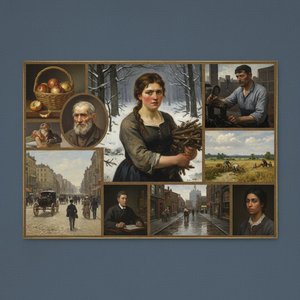
Realism's Masters: 10 Artworks That Capture Life's Essence | OriginalUniqueArt
Explore 10 iconic realism artworks by Courbet, Millet & more! Discover the stories behind these masterpieces of 19th-century painting. Find museum-quality art reproductions and elevate your home decor with OriginalUniqueArt.com.

The Bountiful Still Life: Symbolism & Artistic Representation of Fruit Across Art History
Explore the rich history of still life painting & the symbolism of fruit across art movements. Discover masterpieces from Caravaggio to Cézanne with OriginalUniqueArt – expert guidance & museum-quality reproductions.

Romantic Realism's Finest: 10 Masterpieces for Your Home | OriginalUniqueArt
Explore 10 defining masterpieces of Romantic Realism! Discover Courbet, Millet & Daumier's powerful paintings—capturing emotion and social realities. Find museum-quality reproductions for your home at OriginalUniqueArt.com.

Silent Narratives: Exploring the Enduring Appeal of Still Life Painting Across Centuries
Explore the rich history of still life painting with OriginalUniqueArt. Discover Dutch Masters, decode vanitas symbolism & learn about collecting timeless art. Expert insights and museum-quality reproductions.

Paul Cézanne: 25 Šedevrai, Keičiantys Meno Pasaulį | OriginalUniqueArt.lt
Atraskite 25 Paul Cézanno šedevrus! Išsami analizė, istorijos ir įkvėpimas interjero dekorui. Modernus menas, impresionizmas, natiurmortai – viskas OriginalUniqueArt.com. Explore the full collection online!