

 Peržiūrėti realaus dydžio版
 Siųsti
 Dalintis
 Išsamiau
 Vadovas

 Atsisiųsti
 Panašūs eksponatai
 Rentgeno spindulių nuotrauka
 Diaporama
 Statistika
Augustus Saint-Gaudens
 Oil On Canvas
- WallArt
- Beaux-Arts Realism
 1908
1908- 19th Century
 85.0 x 120.0 cm
 Metropolitano muziejus
 Rodyti daugiau
Giclée / Meno spausdinimas
Muziejų lygio „giclée“ arba drobos spausdinimas: greita gamyba ir lankstios apdailos parinktys. ( Pirkti rankomis tapytą reprodukciją Perejti prie skaitmeninių vaizdų)




P118B $10

P118H $10

P118W $10

P438Z $10

P508JH $12

P508YH $12

P805H $10

P805Z $10

P919BZ $10

P919G $10

P919XJ $10

P959ZH $10

P968JZ $12

W106C $8

W218G $10

W218JH $8

W218Y $10

W307PJ $10

W316G $10

W316PJ $8

W316Y $10

W398PJ $8

W4111J $10

W500HY $15

W500JH $15

W692G $12

W849H $8

W940BG $15

W953PJ $8




Pasirinkite iš mūsų nustatytų dydžių, atitinkančių originalaus meno kūrinio proporcijas.

Galite nurodyti savo matmenis, kad vaizdas atitiktų konkretų rėmą ar erdvę. Jei pasirinktas dydis nesutaps su originalaus paveikslėlio proporcijomis, mes arba apkirpsime kūrinį, arba išplėsime vaizdą naudojant veideliu atspindėtą arba vientisą šoną. Skaitmeninis maketas bus išsiųstas jums patvirtinti prieš pradedant gamybą.
Atkreipkite dėmesį, kad ekrane matomas vaizdinys neatspindi tikrojo apkirpimo ar išplėtimo. Tik maketas tiksliai parodytų galutinę kompoziciją.
Nors galima rinktis ir individualius dydžius, rekomenduojame pasirinkti vieną iš išanksti nustatytų matmenų, kad būtų išlaikytos originalios proporcijos.
Pristatymas visame pasaulyje () per 2 weeks, o ne įprastas 4/5 savaičių laikotarpis. (26 rugsėjis)

Nemokamas greitasis pristatymas visame pasaulyje

Aukštos kokybės lininis drobė

Pilnas siuntimo draudimas

Muitinės mokesčių grąžinimo garantija

Tikro spalvų atitikimo garantija

100 dienų grąžinimo politika (tik esant įtaigoms)

100% pinigų grąžinimo garantija

Nuolaida dideliems užsakymams
 Stiklo variantas prieinamas tik pasirinkus dydį iki 110 cm

Augustus Saint-Gaudens
Giclée / Meno spausdinimas
Reprodukcijos dydis
-


Visų pasirinktų variantų kaina
$ 80
A Glimpse into Artistic Genius: Cox’s Tribute to Saint-Gaudens
This captivating painting transports us directly into the vibrant, intellectual atmosphere of a turn-of-the-century Parisian studio, yet it speaks volumes about enduring artistic legacy. The scene centers on Kenyon Cox, masterfully capturing him in an act of profound contemplation—examining sculptural forms with the discerning eye of a seasoned artist or critic. The composition is rich with implied narrative; we see not just a man among statues, but a moment suspended between creation and appreciation. The very air seems thick with the scent of plaster dust, linseed oil, and intellectual fervor.
The Weight of Memory: Historical Context
To truly appreciate this work is to understand its poignant genesis. Painted in 1908, it serves as a remarkable memorial piece, created by Cox following the devastating 1904 fire that consumed Augustus Saint-Gaudens’s original portrait canvas. This painting is thus more than mere portraiture; it is an act of artistic preservation, a clever echo designed to honor a lost masterpiece for the Metropolitan Museum's exhibition. The inclusion of Saint-Gaudens himself—shown modeling a relief of William Merritt Chase while flanked by his son Homer’s likeness—lends the entire piece an aura of historical significance and deep personal connection.
Composition and Technique: A Study in Observation
Cox employs a sophisticated technique that blends portraiture with genre scene painting. The subject, dressed in crisp white and black, stands thoughtfully amidst the surrounding figures and monumental sculptures. Notice how the artist directs our gaze: from the main figure examining the statues on his left, across to the secondary elements—the other observers and the intriguing bowls placed near the foreground right. This careful arrangement prevents any single element from dominating entirely; instead, it creates a dialogue between man, art, and memory. The handling of light suggests an interior space illuminated by natural sources, lending a polished, almost photographic realism to the scene while retaining the painterly depth characteristic of late 19th-century academic painting.
Symbolism and Emotional Resonance
The symbolism here is layered: the statues represent permanence and enduring form, contrasting with the ephemeral nature of paint and life itself. The act of modeling clay—the very material Saint-Gaudens manipulates—is a potent symbol of creation, suggesting that genius, though sometimes fragile (as evidenced by the lost original), leaves an indelible mark on culture. For the collector or designer, this piece offers more than decoration; it offers conversation. It speaks to patronage, artistic struggle, and the enduring power of human creativity, inviting viewers to pause and consider what they value most: the finished product, or the arduous process that brought it into being.
Autoriaus biografija
Kenyon Cox: Life and Legacy
Early Life and Education
- Born: October 27, 1856, in Warren, Ohio.
- Parents: Jacob Dolson Cox and Helen Finney Cox.
- Kenyon Cox initially studied at the Art Academy of Cincinnati (formerly the McMicken School of Art). However, he quickly recognized the limited artistic opportunities available in the city.
- Following a visit to the Centennial Exposition in Philadelphia, he decided to pursue further education at the Pennsylvania Academy of Fine Arts, hoping it would lead to studies in Europe.
Parisian Training and Influences
- In 1877, Cox moved to Paris, joining a wave of American artists seeking artistic inspiration. He believed Paris was experiencing a “second renaissance” in art.
- Influential Teachers: Carolus-Duran, Jean-Léon Gérôme, and Alexandre Cabanel at the École des Beaux-Arts.
- He initially studied under Carolus-Duran but became frustrated with what he perceived as a “vulgarity” in Duran’s style.
- Travels throughout France and Italy exposed him to the works of Renaissance masters, profoundly shaping his artistic vision.
Career in New York and Artistic Style
- In 1882, Cox returned to New York City, where he established himself as a painter and illustrator.
- Illustration Work: He became well-known for his magazine illustrations, which reached a wider audience than his paintings.
- Art Criticism: Cox also wrote unsigned art criticisms for the New York Evening Post, supplementing his income.
- His artistic style leaned towards realism, with a focus on landscapes, portraits, and genre studies. He was known for idealized nudes and traditional treatments of classical themes.
Teaching and Institutional Involvement
- Art Students League of New York: Cox became a highly influential instructor at the Art Students League, shaping generations of artists. He designed the League’s logo featuring the motto “Nulla Dies Sine Linea” (No Day Without a Line).
- Elected an Associate Academician of the National Academy of Design in 1900 and a full Academician in 1903.
- Founding Member: He was one of the founders and secretary of the National Free Arts League.
- Leadership Roles: Served as president of the National Society of Mural Painters from 1915 to 1919, and held memberships in various prestigious art organizations.
Major Achievements and Historical Significance
- Cox’s work represented a commitment to classical ideals at a time when modern art movements were emerging. He advocated for careful drawing, modulated color, and the use of allegory and symbolism.
- His writings, such as “Two Ways of Painting,” articulated his views on figurative art versus abstract or representational styles.
- Legacy: Though not a radical innovator, Kenyon Cox played a crucial role in maintaining traditional artistic standards and educating aspiring artists. His influence extended through his teaching and his contributions to the American art establishment.
- Death: March 17, 1919.

Kenyon Cox
1856 - 1919
Trumpa informacija apie kūrėją
- Birth Date: 1856
- Birth Place: Warren, Ohio
- Death Date: 1919
- Influenced By:
- Carolus-Duran
- Jean-Léon Gérôme
- Alexandre Cabanel
- Movement: Realism
- Name: Kenyon Cox
- Nationality: American
- Notable Works:
- Louise Howland King (Mrs. Kenyon Cox)
- Fields
- Lengthening Shadows
- Augustus Saint-Gaudens
- An Eclogue
Susiję straipsniai

The Enduring Form: Sculpture Across History, Technique & Emotional Resonance
Explore the rich history of sculpture with OriginalUniqueArt. Discover key techniques, influential artists & investment potential for discerning collectors. Expert insights into valuing and collecting timeless masterpieces.
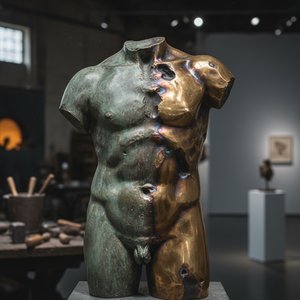
Bronzos skulptūros amžina palikimas: istorija, technikos ir šiuolaikinės interpretacijos
Atraskite bronzos skulptūrų amžiną grožį ir istoriją! Ekspertai apžvelgia prarasto vaško liejimo techniką, sudėtį bei žymiausius kūrinius. Patarimai kolekcionieriams ir meno entuziastams.

Bronze Sculptures That Defined Art History | OriginalUniqueArt
Journey through art history with our Top 10 bronze sculptures! Explore masterpieces by Rodin, Michelangelo & more. Discover stories behind iconic statues and find museum-quality reproductions for your home decor at OriginalUniqueArt.com.

Bronze Age to Modern Masters: 10 Sculptures That Redefined Art | OriginalUniqueArt
Journey through art history with 10 legendary bronze sculptures – from Michelangelo's David to Rodin’s Thinker. Explore the stories, techniques & timeless beauty of these masterpieces. Find museum-quality reproductions & elevate your home decor on OriginalUniqueArt.com.

The Enduring Form: Exploring Themes & Techniques in Sculpture Across Historical Periods
Explore the rich history of sculpture from ancient masterpieces to contemporary innovations. Discover key techniques, influential artists & investment potential for discerning art collectors.