 Skaityti daugiau


 Dėl meno kūrinių ar reprodukcijų, kurių bet kuri pusė yra didesnė nei 105 cm (apie 41 inch), rėmas bus siunčiamas kaip išskaidytas surinkimo rinkinys. Šis metodas užtikrina saugų pristatymą ir apsaugo nuo transportavimo metu galimos žalos.


Daugiau informacijos apie šį paveikslą
Teksto dydis

() ·
Jūsų paties, rankumių darbas
Rankų darbo aliejinės reprodukcijos
Rankiniu būdu tapytas aliejus ant droblio jūsų pageidaujamame dydį ir rėmuose – tai mūsų menininkų pagal užsakymą sukurtas darbas. ( Perjungti į spausdinamus版作品 Perejti prie skaitmeninių vaizdų)
Kolekcinio objekto aprašas
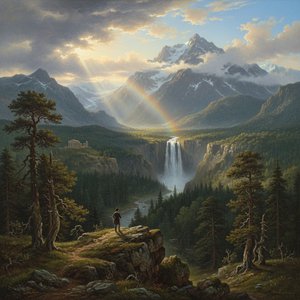
Discover Károly Markó the Younger’s ‘Self Portrait.’ Explore this 19th-century Hungarian landscape painting featuring a captivating figure & serene composition. Art history, unique style.
Autoriaus biografija
Explore the landscapes of Hungarian painter Károly Markó the Younger. Admire his 19th-century scenes, including Visegrád & Italian countryside, showcasing a unique artistic style.
nuo ·
1 skyrius
Kokio dydžio turėtų būti?
Slinkite, kad pakeistumėte dydį; kairėje pusėje esančiame paveikslėlyje rodomas tikrasis rėmo plotis. Originalios proporcijų išlaikomos.
Standartinis dydis
pagal užsakymą
CM
INCH
Pasirinkite iš mūsų nustatytų dydžių, atitinkančių originalaus meno kūrinio proporcijas.
Kraunami dydžiai...

plotis
aukštis
Įveskite jums reikiamą plotį ir aukštį, kad paveikslas atitiktų jūsų rėmą ar sieną. Kadangi šis darbas yra rankinio darbo, siekiant išgauti kitokios formos dydį, paveikslas gali būti šiek tiek didesnis (nuo kraštų bus palikta daugiau erdvės) arba mažesnis – pasirinkite jums patogiausią variantą. Prieš pradedant tapyti, atsiųsime jums skaitmeninį maketą patvirtinimui. Šioje puslapio nuotraukoje matomas vaizdas nėra galutinis rezultatas – jį parodys tik sukurtas maketas.
2 skyrius
Kokia būda yra siunčiamas?
Pasirinkite ištempto drobės kraštus
Pasirinkite rėmelį

Baltas apasutojimas €1

Išblėstantis šonas €1

Išplėstinis €1

P118B €10

P118H €10

P118W €10

P438Z €10

P508JH €12

P508YH €12

P805H €10

P805Z €10

P919BZ €10

P919G €10

P919XJ €10

P959ZH €10

P968JZ €12

W106C €8

W218G €10

W218JH €8

W218Y €10

W307PJ €10

W316G €10

W316PJ €8

W316Y €10

W398PJ €8

W4111J €10

W500HY €15

W500JH €15

W692G €12

W849H €8

W940BG €15

W953PJ €8

H24-GOLD €30

H24-SILVER €30

H36-GOLD €45

H36-SILVER €45
Įrėmintas
Rėmo apvadas: . Bendras dydis su rėmu: .
3 skyrius
Kas jį vaizduoja ir ar turėtų kažkas pasikeisti?
Pavyzdžiai, ką galima pakeisti: pakeisti veidą nuotrauka su klientu; pridėti augintinį (pvz., pakeisti kucingą šuniu); įtraukti paslaptingą žinutę fone; pakeisti fono kraštotvę ar elementus.
Gavus užsakymą, OriginalUniqueArt.com komanda susisieks su klientu el. paštu dėl nurodymų ir pateiks preliminarią maketą.
Gavus užsakymą, OriginalUniqueArt.com komanda susisieks su klientu el. paštu dėl nurodymų ir pateiks preliminarią maketą.
Pristatymas visame pasaulyje () per 3–4 savaites, o ne įprastai – per 5 savaites. (4 lapkritis). Kokybė lieka nepakeičiama.
4 skyrius
Paskutinės detalės
Pavadinimo plokštelė, kaip muziejuje?
Išgraviruotos bronzinės plokštelės detalės
This elegant plaque features the artist's name and the title of the artwork, finely engraved for a timeless presentation.
It is made from bronze with a refined, elegant finish. The text is precisely laser-engraved for a sharp and permanent result. Measuring 9x2 cm, the plaque is compact yet easy to read. It's built to be durable and scratch-resistant, offering a professional, museum-quality look. Mounting is simple thanks to the included adhesive backing.
Skaidrios akrilo plokštelės informacija
The plaque includes essential engraved details such as the artist's name, the title of the artwork, the date it was created, the type of media used-like oil on canvas or watercolor-a brief description of the piece, and a QR code that links to the complete artwork information.
It is crafted from clear acrylic, offering a sleek, modern appearance. The text is UV-engraved in black to ensure strong visual contrast. With a size of 10x15 cm, it ensures optimal readability. It comes equipped with two metal hooks for secure wall mounting. The plaque is designed to be weather-resistant, making it suitable for various environments, and it includes interactive features that work seamlessly with smartphone scanning.
Juodos akrilo plokštelės informacija
This elegant plaque includes engraved information such as the artist's name, the title of the artwork, the date it was created, the type of media used (like oil on canvas or watercolor), a short description of the artwork, and a QR code for quick access to more information.
The plaque itself is made from refined black acrylic with a premium finish. The text is laser-engraved in white for high contrast and readability. Its size is 10x15 cm, designed to be easy to read. It comes with two metal hooks for professional mounting. The design is sleek and fits any interior style. It is also weather-resistant and durable, with built-in digital integration for mobile compatibility.
Apsauginis lakas?
Kada jums reikia?
5 skyrius
Jūsų paveikslas, tiksliai taip, kaip užsakėte
Self portrait
Reprodukcijos technika
Reprodukcijos matmenys
-
Aukščiausios klasės meistras
Daugiau detalių, meistriškumo ir papildomo gamybos laiko
-
Reprodukcijos rėmėjimo parinktys
-
-
Dėl meno kūrinių ar reprodukcijų, kurių bet kuri pusė yra didesnė nei 105 cm (apie 41 inch), rėmas bus siunčiamas kaip išskaidytas surinkimo rinkinys. Šis metodas užtikrina saugų pristatymą ir apsaugo nuo transportavimo metu galimos žalos.
Reikalingas profesionalus surinkimas – tai nėra „pasidaryk pats“ (DIY) produktas.
Rinkinys turi būti surinktas, o drobė išplėsta naudojant patyrį profesionalų rėmininką, medžio klijus (nėra įtraukti į rinkinį), drobės plėšimo kleslę bei presas, kad rėmo rėžiai išliktų tiesūs, kol klijai išdžiūvus. Netinkamas surinkimas arba netolydus drobės įtampa gali negrįžtamai sugadinti meno kūrinį, todėl šie atvejai nėra užtraukiami mūsų garantijos.
Į komplektą įeina visi vientisos medienos elementai, tiksliai išpjauti pagal dydį.
Surmontinama naudojant pridėtus varžtus bei papildomai reikalingą medžio kliją kampų jungtims, kuris nėra pridėtas ir turi būti parinktas rėmininkui.
Reikalingi profesionalūs įrankiai, kurie nėra įtraukti į rinkinį: drobės kėlimo plytelės (stiprintuvai) ir klemiai, laikantys rėmo strygius tiesiu kampu, kol džiūsta lipas.
Svarbu:
Kampų jungtims reikalingi medžio klijai, barams reikia laikyti naudojant presas, kol klijai visiškai išdžiūvės, o surinktam rėmui įtempiamai privilgti būtinos drobės įtempimo plytযুক্ত. Šios priemonės į rinkinį neįtrauktos. Prieš užsakydami šio dydžio rinkinį, rekomenduojame pasimalkoti patyrusiu rėmų meistru.
Pavadinimo lentelė
-
-
Apsauginis lakas
Blizgus lakas (ryškina spalvas, saugo nuo šviesos ir drėgmės)
-
Personalizuoti kūrinį
Ką galima pakeisti (pavyzdžiui): pakeisti veidą klientui skirta nuotrauka; pridėti augintinį (pvz., katę pakeisti šuniu); įtraukti paslėptą žinutę fone; pakeisti fono kraštovaizdį ar elementus.
-
Skubiai
Pristatymas visame pasaulyje () per 3–4 savaites, o ne įprastai – per 5 savaites. (4 lapkritis). Kokybė lieka nepakeičiama.
-
Skubus pristatymas
Pristatymas visame pasaulyje () per 5 weeks. (11 lapkritis).
Įskaičiuota
Bendroji kaina
€ 267
Stiklo variantas prieinamas tik pasirinkus dydį iki 110 cm
Pridedama prie kiekvieno užsakymo
- Nemokamas greitasis pristatymas visame pasaulyje
- Aukštos kokybės lininis drobė
- Pilnas siuntimo draudimas
- Muitinės mokesčių grąžinimo garantija
- Tikro spalvų atitikimo garantija
- 100 dienų grąžinimo politika (tik esant įtaigoms)
- 100% pinigų grąžinimo garantija
- Nuolaida dideliems užsakymams
 Peržiūrėti realaus dydžio版
 Pasidalinti
 Dalintis
 Išsamiau
 Vadovas

 Atsisiųsti
 Panašūs eksponatai
 Rentgeno spindulių nuotrauka
 Automatinė diorama
 问答
问答 Statistika
Skaičiais
- 29pasirinkimo rėmai
- standartinės dydžio, savo proporcijomis
- 5savaitės sugryžti ir pristatyti
Apie originalą


Károly Markó The Younger
1822 - 1891
Trumpa informacija apie Károly Markó The Younger
- Full Name: Károly Markó the Younger
- Nationality: Hungarian
- Date Of Birth: 1822
- Date Of Death: 1891
- Place Of Birth: Pest, Hungary
- Notable Artworks:
- Visegrád
- The Puszta
- Italian Landscape with Viaduct and Rainbow
- Artistic Movement Or Style: Landscape Painting
- Artists Who Influenced This Artist: ['Contemporary Artists']
- Artists Or Movements Influenced By This Artist: ['European Watercolor']
Autoriaus biografija
The Visionary Landscapes of Károly Markó the Younger
In the grand tapestry of nineteenth-century European art, few figures bridge the gap between technical precision and romantic soul as gracefully as Károly Markó the Younger. Born in Pest in 1822, Markó was a man of dual identities: an engineer by training and a master of light by vocation. This unique duality allowed him to approach the canvas with a structural understanding of the world, yet fill it with the ephemeral beauty of the Hungarian Puszta and the sun-drenched vistas of Italy. His journey from the disciplined corridors of engineering in Kolozsvár to the prestigious academies of Vienna and Florence represents a profound metamorphosis, one that saw him emerge as a pioneer of Hungarian landscape painting.
The early years of Markó’s life were defined by a rigorous pursuit of technical mastery. Before he ever wielded a brush to capture the soft glow of a sunset, he honed his skills in the precise language of mathematics and mechanics. This foundation proved invaluable; his landscapes possess an inherent architectural stability, where every horizon line and topographical feature feels grounded in reality. However, it was during his time in Rozsnyó that the call of the aesthetic began to eclipse the call of the mechanical. Inspired by the sweeping vistas of the Hungarian countryside and the evocative works of Eugène Delacroix, Markó began to translate the rugged beauty of his homeland into a visual language that resonated with the Romantic movement.
A Journey Through Light and Shadow
Markó’s artistic evolution was deeply influenced by his migrations across Europe. His move to Vienna in 1818 brought him into contact with the prestigious Academy of Fine Arts, where he refined his draftsmanship under the watchful eyes of the era's great masters. Yet, it was his Italian expeditions between 1832 and 1838 that truly ignited his creative spirit. In the warmth of Rome and the scenic landscapes near Pisa, Markó encountered a palette of light that would forever haunt his work. Despite enduring the physical hardships of malaria during his Roman sojourn, he emerged with a renewed devotion to capturing the atmospheric nuances of the Mediterranean landscape.
His style became a sophisticated dialogue between different artistic traditions. While his brushwork often recalled the classical elegance of Claude Lorrain, there was an unmistakable connection to the Macchiaoli painters and the School of Posillipo, particularly in his ability to capture spontaneous light and shadow. His works frequently feature:
- Atmospheric Depth: A masterful use of haze and light to create a sense of infinite distance.
- Narrative Landscapes: Scenes where human figures, such as fishermen or travelers, are integrated into the environment, often appearing small against the majesty of nature.
- Tonal Harmony: An earthy yet vibrant color palette that reflects both the ruggedness of the Hungarian plains and the luminous clarity of the Italian coast.
Legacy and Historical Significance
As his career progressed, Markó’s influence extended far beyond the canvas. He became a respected educator, serving as a Professor at the Academy of Fine Arts in Florence, Genoa, Perugia, and Urbino. Through his teaching, he shaped the next generation of landscape artists, imparting both his technical rigor and his romantic sensibility. His life eventually took him to Russia, where he sought new horizons before passing away in Moscow in 1891, marking the end of a truly cosmopolitan era of Hungarian art.
Today, the works of Károly Markó the Younger stand as vital historical documents of a changing Europe. He did not merely paint scenery; he captured the very essence of a landscape's spirit—the quietude of a river at dusk, the strength of a mountain range, and the nostalgic beauty of a vanishing era. His ability to blend the precision of an engineer with the passion of a Romantic poet ensures his place as a cornerstone of nineteenth-century art history, leaving behind a legacy that continues to inspire awe in all who gaze upon his luminous horizons.
Susiję straipsniai
Evoking Nature's Sublime: A Comprehensive Exploration of 19th-Century Landscape Painting
Explore the captivating world of 19th-century landscape painting! Discover renowned artists like Friedrich & Monet, key movements, and find the perfect artwork to bring nature's serenity into your home. Expert insights at OriginalUniqueArt.

Oil on Canvas: A Historical & Technical Exploration of a Timeless Artistic Medium
Explore the rich history & enduring techniques of oil painting on canvas. Discover the science behind its longevity, conservation practices, and contemporary relevance. Expert insights for art enthusiasts.

The Enduring Legacy of Oil on Canvas: Technique, History & Aesthetic Impact
Explore the rich history & techniques of oil painting – from Renaissance masters to Impressionism. Discover pigments, layering methods, and why this timeless medium endures. Expert insights for artists & art enthusiasts.

Aliejinės tapybos paveldas drobėje: technika, istorija ir šiuolaikinės praktikos subtilybės
Atraskite aliejinės tapybos paslaptis! Istorija, technika, drobės pasirinkimas ir šiuolaikinė praktika. Patarimai meno kolekcionieriams ir kūrėjams iš ekspertų.