Baroque
St. Peter (José de Ribera)
José de Ribera (1591–1652) sukūrė St. Peter. Šis kūrinys priklaulo Baroque kieruliui. Pagaminta naudojant Oil On Canvas. Eksponatas saugomas Museo del Prado Madridas, Ispanija.
- Oil On Canvas
- Museo del Prado, Madridas

 Peržiūrėti realaus dydžio版

 Rankinio darbo aliejinės imitacijos paveikslas
 Pasidalinti
 Dalintis
 Vadovas


 Atsisiųsti
 Panašūs eksponatai
 Rentgeno spindulių nuotrauka
 Automatinė diorama
 问答

 Statistika
St. Peter: pagrindinė informacija
- Pavadinimas
- St. Peter
- Autorius
- José de Ribera (1591–1652)
- Dizainere/is gimęs
- Šativa, Ispanija
- Mediumas
- Oil On Canvas
- Kur galima pamatyti
- Museo del Prado, Madridas, Ispanija
- Judėjimas
- Baroque
- Laikotarpis
- Early Modern
- Tema
- man, beard, book, keys, cloak, brown
Ką vaizduoja St. Peter?
The Portrait of St. Peter by Jusepe de Ribera
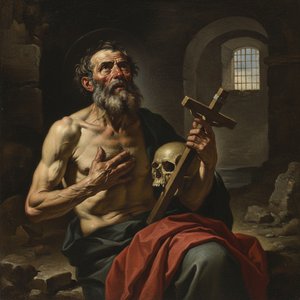
In this oil painting on canvas, Jusepe de Ribera presents us with a portrait of St. Peter. The subject, a central figure among the apostles of Jesus and recognized as the first Pope, is rendered with a profound sense of presence. Ribera focuses on the man himself, capturing the weight of his role and the character of his lived experience. There is a quiet intensity in the way the figure is presented, inviting a closer look at the weathered details of his countenance.
The work is a significant example of the Baroque style. Through this approach, the artist emphasizes the spiritual and human dimensions of the apostle. The depiction avoids idealization, opting instead for a directness that feels immediate. By focusing on the specific attributes of the saint, Ribera allows the subject to command the space, presenting a figure that is both a religious icon and a man of flesh and bone.
Composition and Visual Elements of the Portrait
The composition is built upon a stable pyramidal structure, with the head of St. Peter forming the apex of the form. He is presented from the waist up, his body turned slightly toward the viewer's left. In his right hand, he holds a book and a set of keys, objects that anchor the figure within the frame. This arrangement directs the eye upward toward his weathered features, creating a sense of quiet, grounded presence.
A strong light source enters from the left, illuminating his face and upper body while casting the rest of the figure into deep shadow. This light creates a sharp contrast against a background that is nearly black, pushing the subject forward into the viewer's space. The color palette is restrained, dominated by warm earth tones—ochre, brown, and gold—which emphasize the textures of his skin and the heavy folds of his clothing.
Technique and Artistic Style of the Work
The work is defined by a profound use of tenebrism, where the subject emerges from a nearly black background into a sharp, focused light. This dramatic chiaroscuro creates a sense of volume, pulling the figure forward and emphasizing the physical presence of the man. Such a heavy interplay of light and shadow reflects the influence of Caravaggio, grounding the religious subject in a palpable, earthly reality. The light source, positioned to the left, carves out the contours of the face and the weathered texture of the skin, casting deep shadows that heighten the emotional weight of the portrait.
Ribera’s approach to the medium is tactile and deliberate. He employs a technique of layering paint to build up depth, allowing the viewer to sense the physical weight of the drapery and the coarse nature of the beard. Visible brushstrokes are not hidden; instead, they contribute to the overall effect, lending a sense of immediacy to the rendering of the fabric and the aged features. Strong, defined lines delineate the eyes, nose, and mouth, providing a structural clarity that balances the more fluid, organic shapes of the figure. The result is a composition that feels both intensely personal and physically substantial.
Other Works by Jusepe de Ribera
The artist's exploration of this particular subject matter is reflected in several other significant pieces within our collection and major institutions. We hold St. Simeon 1 in our catalog, a work that speaks to the same profound human experience found in this portrait. Another notable piece in our collection is The Repentance of Saint Peter, which is currently housed in the Museum of Fine Arts, Lyon.
Beyond our own holdings, Ribera's preoccupation with the themes of remorse and spiritual weight is evident in other historical examples. The work known as Penitent St. Peter, dated about 1630, is held at the Kunsthistorisches Museum in Vienna. This piece shares a similar intensity in its depiction of the apostle's character. Additionally, The Tears of Saint Peter, which dates to 1612, is part of the collection at the Metropolitan Museum of Art in New York. These works collectively illustrate the artist's ability to capture the complexities of faith and the physical reality of the human condition through his characteristic use of light and shadow.
Kuriame muziejuje eksponuojamas karya St. Peter?
Museo del Prado
Madridas, Ispanija
Šimtmečių kvėpuojantis rūmų ansamblis: Nacionalinis Prado muziejus Peržengiant Nacionalinio Prado muziejaus Madride didingas vartus, tarsi įeini į gyvą kroniką – paminklą Ispanijos meninės raidos ir karališkosios mecenatybės. Tai ne tik šedevrų saugykla, bet ir rūmų ansamblis, kurio sienos atspindi Velaskeso, Gojos, El Greco ir daugelio kitų teptukų žymius ženklus. Iš pradžių Ferdinando VII sumanyme tai turėjo būti „Gamtos istorijos kabinetas“, tačiau ambicingas projektas buvo perorientuotas į vieną iš pasaulyje gerbiamiausių meno muziejų – vietą, kur praeities didybė sklandžiai susijungia su šiuolaikinės mokslinių tyrimų pulsavimu.


St. Peter dididžioja:resoliucija
Viešoji domenė: suregalis mirė 1652 m.
José de Ribera, St. Peter, Museo del Prado. Viešoji domenė.
Skaitmeninis ekspertas lygina spalvas su originaliu paveikslu ir retušuoja failą, tiksliai atkartojantys autoriaus brushwork stilių.
Pirkti didelės raiškos vaizdąDalykas St. Peter: klausimai
Kodėl „St. Peter“ autoriškos teisės statusas yra toks, koks yra?
„St. Peter“ – José de Ribera yra yra viešosios erdvės dalis – jo autorinė teisė pasibaigusi. Autorinės teisės galioja nuo mirties metų, kai šis kūrėjas mirė 1652 m.
Kokio meno kryžmės dalis yra „St. Peter“ – José de Ribera?
„St. Peter“ – José de Ribera priklauso Baroque stiliui. Ši dailės kryptis suteikia kūriniui stilistinį kontekstą.
Kokia yra „St. Peter“ – José de Ribera dominuojanti spalva?
Phthalo Green (#2d120e) yra pagrindinė kūrinio „St. Peter“ – José de Ribera spalva.
Ar „St. Peter“ saugoma kūrijėjo šalyje?
Taip – kūrinys saugomas autoriaus tėvynėje. José de Ribera gimtoji šalis yra Ispanija, o kūrinio „St. Peter“ originalas saugomas muziejuje, esančiame Ispanija.
Koks yra „St. Peter“ formatas?
„St. Peter“ – José de Ribera yra Portrait kompozicija. Prieš renkantis spausdinimo dydį, verta patikrinti proporcijas.
Ar „St. Peter“ pasižymi stipriais šviesos ir tamsos kontrastais?
Kūrinio „St. Peter“ – José de Ribera kontrasto lygis yra Bold.
Kokia „St. Peter“ kūrinio rūšis?
Kataloge „St. Peter“ – José de Ribera priskirtas kategorijai WallArt. Ši kategorija padeda rasti panašius kūrinius.
Kaip „St. Peter“ stilius susijęs su kūrėjo laikmečiu?
„St. Peter“ priklauso Baroque krypčiai, o jo kūrėjas dirbo Ankstyvasis modernusis laikotarpis laikotarpiu.
Kokiam istoriniam laikotarpiui priklauso „St. Peter“ – José de Ribera?
„St. Peter“ – José de Ribera sukurta Early Modern laikotarpiu. Šis laikotarpis suteikia kūriniui istorines aplinkybes.
Apie šį menininką, José de Ribera

1591–1652, Ispanija
José de Ribera
Gyvenimo Šešėliai ir Šviesos Žaismas: Jusepe de Ribera Kelias Jusepe de Ribera, dažnai vadinamas Lo Spagnoletto – “Mažuoju ispanu” – buvo įspūdingas Baroko epochos kūrėjas, kurio drobės pulsuodavo dramatišku intensyvumu ir atkakliu realizmu. Gimęs 1591 metais Xàtivoje, Ispanijoje, jis patyrė ilgą kelionę nuo valensietiškų šaknų iki XVII amžiaus Neapolio, kuris tuomet buvo valdytas Ispanijos, ir ten įsitvirtino kaip vienas reikšmingiausių to meto dailininkų. Ribera gyvenimas nebuvo tik artistinės plėtros kronika; tai buvo pasakojimas, supintas iš sunkumų, ambicijų ir tvirto įsipareigojimo atvaizduoti žmogaus būklę visoje jos žaliai sudėtingumoje. Nors ankstyvieji biografiniai duomenys lieka apgaubti tam tikra paslaptimi, žinome, kad apie 1607 metus jis atvyko į Italiją, iš pradžių apsigyvendamas Romoje, o vėliau 1616 metais persikėlęs į Neapolį – miestą, kuris tapo jo artistiniu namu ir unikalaus stiliaus kūrybos katilu.
Taip pat José de Ribera darbai
 Magdalena Ventura su husbandu ir sūnaus1631
 Krepšupėdė
 St. Onuphrius1637
 The Duel of Women (The Duel of Isabella de Carazzi and Diambra de Pettinella)1636
Esdai apie St. Peter
 Mastering the Shadows: The Dramatic Power of Chiaroscuro and Tenebrism in Baroque Fine ArtExplore the profound drama of chiaroscuro and tenebrism. Discover how masters like Caravaggio used light and shadow to sculpt emotion and v…
 Masterpieces of Light: The Top 25 Artworks by Duccio di BuoninsegnaJourney through the divine elegance of Duccio di Buoninsegna. Explore 25 iconic Sienese masterpieces, from the Maestà to the Rucellai Madon…
 Jusepe de Ribera: Dramatic Realism & Spiritual Intensity in the Spanish Golden AgeExplore the powerful Baroque paintings of Jusepe de Ribera, master of tenebrism and dramatic realism. Discover his spiritual intensity, inf…