Perjungti į spausdinamus版作品
 Skaityti daugiau







































 Dėl meno kūrinių ar reprodukcijų, kurių bet kuri pusė yra didesnė nei 105 cm (apie 41 inch), rėmas bus siunčiamas kaip išskaidytas surinkimo rinkinys. Šis metodas užtikrina saugų pristatymą ir apsaugo nuo transportavimo metu galimos žalos.


The Drama of the Pastoral: Capturing Movement in Dupre's Landscape
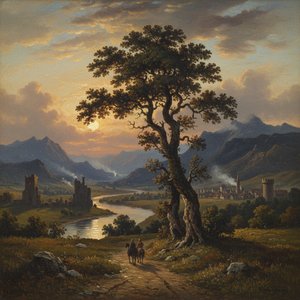
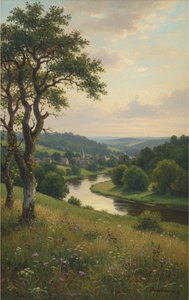
To stand before Jules Dupré’s Landscape with Cattle at Limousin is to be enveloped by a moment suspended between tranquility and impending drama. This magnificent oil on canvas, dating from 1837, transports the viewer deep into the heart of rural France. It is more than just a depiction of grazing cattle beneath an expansive sky; it is a masterful study in atmospheric tension. Duppré captures that fleeting energy inherent in nature—the subtle stir among the herd, the rustle within the foliage—all orchestrated under a sky that refuses to settle into mere placidity. The composition itself guides the eye across a rich tapestry of greens and browns, anchored by the strong horizontal sweep of the earth meeting the vastness above.
A Study in Light and Shadow: Technique and Chromatic Mastery
Technically, this piece showcases Duppré’s unique ability to manipulate light for maximum emotional effect. While the overall impression suggests a diffused, perhaps overcast day, it is within the interplay of light and shadow that the painting finds its true dynamism. The artist employs a dramatic chromatic structuring, contrasting brilliant highlights against deep, ominous cloud formations. One can almost feel the weight of those encroaching dark clouds pressing down upon the pastoral scene. The visible brushwork speaks to an energetic hand at work; it is not merely smooth illusion but a built-up materiality, particularly noticeable in the thick impasto that gives texture and palpable depth to the foliage and the grazing animals. This commitment to visible technique elevates the painting from mere representation to profound sensory experience.
Echoes of Influence: The Barbizon School Context
Within the context of the Barbizon School, Duppré carved out a distinct niche. While many of his peers explored lyrical beauty, Dupré possessed an almost dramatic soul, drawn instead to nature’s more tempestuous moods. His journey to England and his encounter with Constable are key to understanding this work; he absorbed the sense of raw movement characteristic of British landscape painting, integrating it into his own French sensibility. This synthesis results in a piece that feels both deeply rooted in classical observation and thrillingly modern in its emotional pitch. It is a dialogue between disciplined study and untamed feeling.
Symbolism and Emotional Resonance for the Modern Collector
For the contemporary admirer, this artwork offers more than just decorative beauty; it provides an emotional anchor. The subject matter—the cattle grazing peacefully—symbolizes a deep, enduring connection to the rhythms of rural life, a yearning for simplicity amidst modern complexity. Yet, the sky reminds us that nature is inherently powerful, capable of both sublime calm and sudden fury. Owning a reproduction of Landscape with Cattle at Limousin allows one to bring this carefully balanced tension into your own space. It serves as a constant, evocative reminder of the grandeur found in the natural world, making it a breathtaking focal point for any sophisticated interior design scheme or personal collection.
Klausimai ir atsakymai
Kokie yra originalaus „Landscape with Cattle at Limousin“ matmenys?
Įrašyti kūrinio „Landscape with Cattle at Limousin“ – Julis Dupre matmenys yra 79 x 131 cm. Kopijas galima užsisakyti kitais dydžiais, išlaikant tą pačius proporcijas.
Kokia buvo Julis Dupre amžius sukuriant „Landscape with Cattle at Limousin“?
Julis Dupre buvo 26 metų, kai 1837 m. sukūrė kūrinį „Landscape with Cattle at Limousin“. Amžius apskaičiuotas remiantis gimimo metais 1811.
Kokio dydžio „Landscape with Cattle at Limousin“ siūloma Living Room?
Living Room erdvėje „Landscape with Cattle at Limousin“ siūloma spausdinti Medium dydžiu.
Daugiau informacijos apie šį paveikslą
 Peržiūrėti realaus dydžio版
 Pasidalinti
 Dalintis
 Išsamiau
 Vadovas

 Atsisiųsti
 Panašūs eksponatai
 Rentgeno spindulių nuotrauka
 Automatinė diorama
 问答
问答 Statistika