

 Peržiūrėti realaus dydžio版
 Siųsti
 Dalintis
 Išsamiau
 Vadovas

 Atsisiųsti
 Panašūs eksponatai
 Rentgeno spindulių nuotrauka
 Diaporama
 Statistika
The Red Rigi
 Acrylic On Canvas
- WallArt
- Romanticism
 1842
1842 30.0 x 45.0 cm
 Nacionalinės Viktorijos galerija
 Rodyti daugiau
Rankų darbo aliejinės reprodukcijos
Rankiniu būdu tapytas aliejus ant droblio jūsų pageidaujamame dydį ir rėmuose – mūsų menininkų darbas pagal užsakymą. ( Perjungti į spausdinimą Perejti prie skaitmeninių vaizdų)




P118B $10

P118H $10

P118W $10

P438Z $10

P508JH $12

P508YH $12

P805H $10

P805Z $10

P919BZ $10

P919G $10

P919XJ $10

P959ZH $10

P968JZ $12

W106C $8

W218G $10

W218JH $8

W218Y $10

W307PJ $10

W316G $10

W316PJ $8

W316Y $10

W398PJ $8

W4111J $10

W500HY $15

W500JH $15

W692G $12

W849H $8

W940BG $15

W953PJ $8




Pasirinkite iš mūsų nustatytų dydžių, atitinkančių originalaus meno kūrinio proporcijas.

Galite įvesti savo matmenis, kad jie atitiktų konkretų rėmą ar erdvę. Jei pasirinktas dydis neatitinka originalaus paveikslėlio proporcijų, mes arba apkropsime meno kūrinį, arba papildysime tapybą rankomis dažytい elementais. Prieš pradėdami gamybą, jūsų patvirtinimui atsiųsime skaitmeninį maketą.
Atkreipkite dėmesį, kad ekrane rodomas vaizdas neatspindi tikrojo apkarpymo ar papildymo. Tik maketas tiksliai parodys galutinę kompoziciją.
Nors galima rinktis ir individualius dydžius, rekomenduojame pasirinkti matmenis iš nustatytos sąrašo, kad būtų išlaikytos originalios proporcijos.
Gavus užsakymą, OriginalUniqueArt.com komanda susisieks su klientu el. paštu dėl instrukcijų ir pateiks maketo pavyzdį
Pristatymas visame pasaulyje () per 3–4 savaites, o ne įprastai – per 5 savaites. (25 rugsėjis). Kokybė lieka nepakeičiama.

Nemokamas greitasis pristatymas visame pasaulyje

Aukštos kokybės lininis drobė

Pilnas siuntimo draudimas

Muitinės mokesčių grąžinimo garantija

Tikro spalvų atitikimo garantija

100 dienų grąžinimo politika (tik esant įtaigoms)

100% pinigų grąžinimo garantija

Nuolaida dideliems užsakymams
 Stiklo variantas prieinamas tik pasirinkus dydį iki 110 cm

The Red Rigi
Reprodukcijos technika
Reprodukcijos dydis
-


Visų pasirinktų variantų kaina
$ 300
A Symphony in Mist and Light: Unveiling Turner’s “The Red Rigi”
Joseph Mallord William Turner's "The Red Rigi," painted in 1842, isn’t merely a depiction of a Swiss mountain; it’s an immersive experience. This watercolor, one of four stunning studies capturing the majesty of Mount Rigi from Lake Lucerne, transcends simple landscape painting to become a profound meditation on light, atmosphere, and the ephemeral beauty of nature. Turner, already a master of capturing fleeting moments, sought to distill the essence of this iconic peak – not through precise detail, but through an evocative dance of color and texture that speaks directly to the soul.
The scene unfolds with breathtaking immediacy. The Rigi itself dominates the composition, its slopes rendered in layers of delicate washes—a blend of blues, purples, and greens that suggest both distance and a palpable sense of moisture. It’s not a sharply defined mountain; instead, Turner employs a technique he perfected during his Swiss sojourn: broken color, where thin layers of paint are applied to allow the underlying white paper to peek through. This creates an incredible luminosity, as if the very air itself is shimmering with reflected light. The foreground is dominated by the lake, its surface mirroring the sky and subtly blurring the boundaries between water and atmosphere. A scattering of small boats – a poignant detail hinting at human presence within this vast wilderness – adds a touch of scale and invites us to contemplate our own place in the grandeur of nature.
The Alchemy of Light: Turner’s Technique
Turner's mastery lies not just in his subject matter, but in his extraordinary ability to capture the *effects* of light. He wasn’t interested in a photographic representation; he aimed to convey the *feeling* of being present at that specific moment – bathed in the golden glow of the setting sun. The “red” of the title isn't literal; it’s an impression, a suggestion of warmth and intensity derived from the way the light interacts with the mountain’s surface. Notice how he uses subtle gradations of color to create a sense of depth and volume, building up the forms gradually through countless layers of translucent washes. He employs a technique known as ‘scumbling,’ where dry paint is brushed over wet paint, creating a hazy, atmospheric effect that further enhances the feeling of distance and mystery.
The use of white gouache – a highly pigmented opaque watercolor – is particularly noteworthy. Turner strategically scratched out areas of the paper with his fingernail to reveal the bright white ground beneath, adding highlights and intensifying the sense of luminosity. This delicate touch, combined with his masterful control of color and texture, elevates “The Red Rigi” beyond mere representation into a realm of pure visual poetry.
A Symbol of Transient Beauty
Mount Rigi itself held a particular significance for Turner during his Swiss travels. It’s not the tallest peak in the Alps, but its unique location – isolated and offering uninterrupted views – made it a favorite haunt for artists and tourists alike. Turner was captivated by its beauty and the way the light constantly shifted across its slopes. “The Red Rigi” can be interpreted as an allegory of time's relentless passage and the fleeting nature of beauty. The warm, vibrant colors suggest a moment of intense joy and wonder, while the misty atmosphere hints at the inevitable decay and transformation that awaits all things.
Furthermore, the inclusion of the boats adds another layer of meaning. They represent humanity’s desire to connect with nature, but also our vulnerability in the face of its overwhelming power. The smallness of the vessels against the vast backdrop of the mountain underscores the humbling reality of our existence.
Collecting a Masterpiece: Reproduction and Beyond
"The Red Rigi" is more than just a beautiful painting; it’s a testament to Turner's genius and his profound understanding of light, color, and atmosphere. Reproductions capture much of the original’s magic, offering a window into this extraordinary world. When selecting a reproduction, consider the quality of the print – archival inks and high-resolution paper are essential to faithfully reproduce Turner’s delicate washes and luminous effects. This artwork would be an exceptional addition to any collection, bringing a touch of Alpine serenity and artistic brilliance to your home or office.
Autoriaus biografija
The Luminary of Light: A Journey Through the Life and Art of J.M.W. Turner
Joseph Mallord William Turner, a name synonymous with the sublime power of landscape and the evocative dance of light, remains one of Britain’s most celebrated and influential artists. Born in Covent Garden, London, in 1775, Turner's journey from a barber’s son to a master painter was fueled by an innate talent, relentless dedication, and a visionary spirit that would forever alter the course of art history. From his earliest days sketching architectural details to his later, almost abstract explorations of atmosphere and color, Turner consistently pushed the boundaries of artistic expression. His formal training began at the Royal Academy Schools in 1789, where he quickly distinguished himself as a promising student. However, Turner was not content with merely replicating established styles; he sought to capture the very essence of nature – its raw power, its fleeting beauty, and its inherent drama. Early works reveal a meticulous attention to topographical detail, reflecting the prevailing artistic tastes of the time. Yet, even in these early pieces, hints of his future direction are visible—a sensitivity to light and shadow, a willingness to experiment with color, and an emerging fascination with the sublime. He was particularly drawn to the Romantic movement’s emphasis on emotion and imagination, rejecting the neoclassical preoccupation with reason and order.The Evolution of a Visionary: From Topography to Transcendence
Turner's artistic development was marked by constant experimentation and a growing desire to move beyond mere representation. Influenced by masters like Claude Lorrain and J.M.W. Cozens, he began to infuse his landscapes with a romantic sensibility, emphasizing emotional response over precise depiction. His travels throughout Europe, beginning in 1802, proved pivotal, exposing him to diverse landscapes and inspiring new approaches to composition and color. He wasn’t simply recording what he saw; he was interpreting it through the lens of his own unique vision. These expeditions broadened his artistic horizons and solidified his belief that art should strive for something beyond mere visual accuracy—a profound connection with the natural world and an expression of human experience. The early 19th century witnessed a shift in Turner's style towards greater expressiveness. His seascapes, in particular, became increasingly dramatic, capturing the fury and majesty of the ocean with unprecedented intensity. Paintings like “The Fighting Temeraire Tugged to Her Last Berth to Be Broken Up” (1839) are not merely depictions of a ship being towed to its final resting place; they are poignant meditations on mortality, loss, and the relentless march of progress. The use of light in this work is particularly striking—a golden sunset casting a melancholic glow over the scene, symbolizing the passing of an era. Turner skillfully employed *Impasto* technique – applying thick layers of paint to create textural surfaces that conveyed movement and emotion.A Master of Atmosphere: Light, Color, and the Sublime
Turner’s later works are characterized by an almost radical departure from traditional artistic conventions. He increasingly prioritized atmosphere and color over form and detail, creating paintings that seem to dissolve into pure light and energy. Works like “Rain, Steam and Speed – The Great Western Railway” (1844) exemplify this approach—a swirling vortex of color and motion that captures the dynamism of the industrial age. Critics were often baffled by these later works, but their influence on subsequent generations of artists would prove profound. Turner wasn’t simply painting landscapes; he was attempting to convey the very *feeling* of being in nature – the awe, the wonder, the terror—a pursuit that anticipated the Impressionists' focus on capturing fleeting moments and subjective perceptions.- Notable Works: “The Fighting Temeraire Tugged to Her Last Berth to Be Broken Up”, “Rain, Steam and Speed – The Great Western Railway”, “Ruins of Tintern Abbey”
- Influences: Claude Lorrain, J.M.W. Cozens
- Technique: Impasto (thick paint application), Atmospheric Perspective
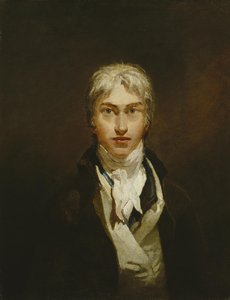
Viljamas Terneris
1775 - 1851 , Didžioji Britanija
Trumpa informacija apie kūrėją
- Artistic Movement Or Style: Romantizmas
- Artists Or Movements Influenced By This Artist: ['Claude Lorrain']
- Date Of Birth: Balandžio 23, 1775
- Date Of Death: Gruodžio 19, 1851
- Full Name: Joseph Mallord William Turner
- Nationality: Britas
- Notable Artworks:
- Šiovė Širmas
- Didžiojo vakarų geležinkelio paveiksla
- Place Of Birth: Londonas, Didžioji Britanija
Susiję straipsniai

10 Romantinių Peizažų Simbolių: Tapybos Majestatės Viršūnės
Atraskite 10 legendinių romantinio peizažo kūrinių! Pasinerkite į Claude Lorrain, Caspar David Friedrich ir J.M.W. Turner genijaus pasaulį. Išmokite apie tapybos meistriškumą bei gamtos grožį. Aukščiausios kokybės meno reprodukcijos – OriginalUniqueArt.com. Tyrinėkite kolekciją!

Ephemeral Visions: Exploring the Artistic Legacy & Contemporary Practice of Watercolor Painting
Explore the captivating world of watercolor painting! Discover its rich history, essential techniques, influential artists & collecting tips. A comprehensive guide for art enthusiasts from OriginalUniqueArt.

Ephemeral Visions: Exploring the Artistic Legacy & Nuances of Watercolor Painting
Explore the captivating world of watercolor painting! Discover its rich history, essential techniques, influential artists & collecting tips from art experts. A comprehensive guide for enthusiasts.

Ephemeral Visions: Exploring the History & Emotional Resonance of Watercolor Painting
Explore the captivating history of watercolor painting, from ancient techniques to modern masters like Kandinsky & Blake. Discover essential artists, collecting tips & the emotional power of this luminous medium. Expert insights for art enthusiasts.

Watercolor Wonders: 10 Masterpieces That Redefined Art History | OriginalUniqueArt
Journey through 10 legendary watercolor masterpieces by Sargent, Turner & Homer! Explore iconic landscapes, portraits & floral art that redefined history. Find museum-quality reproductions and curated decor ideas at OriginalUniqueArt.com.


