

 Peržiūrėti realaus dydžio版
 Siųsti
 Dalintis
 Išsamiau
 Vadovas

 Atsisiųsti
 Panašūs eksponatai
 Rentgeno spindulių nuotrauka
 Diaporama
 Statistika
Playing and Dancing Indians
 Oil On Canvas
- WallArt
- Post-Impressionism
 1960
1960- Modern
 59.0 x 69.0 cm
 Lithuanian Art Centre TARTLE
 Rodyti daugiau
Šiame puslapyje rodomas meno kūrinys yra saugomas autorių teisių įstatymais, todėl neturime teisės legaliai kurti ar parduoti jo identiškos reprodukcijos. Ši apsauga užtikrinama remiantis tokiais tarptautiniais susitarimais kaip Bernės konvencija ir pagal nacionalines įstatymų nuostatas, įskaitant tas, kurias nurodo JAV autoriškos teisės įstatymas – 17-asis skyrius.
Kaip pagarbią ir teisėtą alternatyvą, mes siūlome pagal užsakymą rankomis dažytus paveikslus, įkvėptus originalo. Mūsų įgudę ir profesionalūs menininkai kruopščiai tiria originalo stilių, nuotaiką ir meninę esmę, kad sukurtų naują, unikalią kūrinį, kuris sukelia tą paties jausmą – išlikdamas tuo tarciau originaliu, savarankišku kūrybiniu darbu.
Šis metodas visiškai atitinka autorių teises, nes jame nėra kūrinio kopijavimo ar dubliavimo. Tai yra kūrybinė reinterpretacija – naujas paveikslas, kurį įkvėpė originalas, tačiau kuris nėra jo identiškas.
Rankų darbo aliejinės reprodukcijos
Rankiniu būdu tapytas aliejus ant droblio jūsų pageidaujamame dydį ir rėmuose – mūsų menininkų darbas pagal užsakymą. ( Perjungti į spausdinimą Perejti prie skaitmeninių vaizdų)




P118B €10

P118H €10

P118W €10

P438Z €10

P508JH €12

P508YH €12

P805H €10

P805Z €10

P919BZ €10

P919G €10

P919XJ €10

P959ZH €10

P968JZ €12

W106C €8

W218G €10

W218JH €8

W218Y €10

W307PJ €10

W316G €10

W316PJ €8

W316Y €10

W398PJ €8

W4111J €10

W500HY €15

W500JH €15

W692G €12

W849H €8

W940BG €15

W953PJ €8




Pasirinkite iš mūsų nustatytų dydžių, atitinkančių originalaus meno kūrinio proporcijas.

Įveskite jums reikiamą plotį ir aukštį, kad paveikslas atitiktų jūsų rėmą ar sieną. Kadangi šis darbas yra rankinio darbo, siekiant išgauti kitokio formos dydį, paveikslas gali būti šiek tiek didesnis (nuo kraštų bus palikta daugiau erdvės) arba mažesnis – pasirinkite jums patogiausią variantą. Prieš pradedant tapyti, atsiųsime jums skaitmeninį maketą patvirtinimui. Šioje puslapio nuotraukoje matomas vaizdas nėra galutinis rezultatas – jį parodys tik sukurtas maketas.
Gavus užsakymą, OriginalUniqueArt.com komanda susisieks su klientu el. paštu dėl instrukcijų ir pateiks maketo pavyzdį
Pristatymas visame pasaulyje () per 3–4 savaites, o ne įprastai – per 5 savaites. (27 spalis). Kokybė lieka nepakeičiama.

Nemokamas greitasis pristatymas visame pasaulyje

Aukštos kokybės lininis drobė

Pilnas siuntimo draudimas

Muitinės mokesčių grąžinimo garantija

Tikro spalvų atitikimo garantija

100 dienų grąžinimo politika (tik esant įtaigoms)

100% pinigų grąžinimo garantija

Nuolaida dideliems užsakymams
 Stiklo variantas prieinamas tik pasirinkus dydį iki 110 cm

Playing and Dancing Indians
Reprodukcijos technika
Reprodukcijos dydis
-


Visų pasirinktų variantų kaina
€ 263
问答 (or more naturally for a website heading): Klausimai ir atsakymai
Kokia emocinė nuotaika lydi „Playing and Dancing Indians“ kūrinį, priskiriamą Post-Impressionism stiliui?
„Playing and Dancing Indians“ Joyful emocija akompaniuoja jo Post-Impressionism stiliui.
Kur galiu atsisiųsti „Playing and Dancing Indians“, autorius – Jonas Rimša?
Šio kūrinio „Playing and Dancing Indians“, autorius – Jonas Rimša vaizdą galite atsisiųsti iš puslapio Atsisiųsti: aukštos raiškos skaitmeninio vaizdo atsisiuntimas.
Kokie yra „Playing and Dancing Indians“, autorius – Jonas Rimša realūs dimensijų matiniai?
Originalaus kūrinio „Playing and Dancing Indians“, autorius – Jonas Rimša matmenys yra 59 x 69 cm.
Autoriaus biografija
A Lithuanian Soul Rooted in Bolivian Landscape
Jonas Rimša, a name that resonates with the profound depth of the Lithuanian diaspora, was an artist whose life story reads like an epic odyssey of cultural discovery and artistic resilience. Born in 1903 in Svetasiai, Lithuania, his early years were shaped by the rich heritage of the Suvalkija region. Though he initially followed a path dictated by familial duty—graduating from a prestigious sewing school in Vienna—his heart remained tethered to the canvas. This internal tug-of-war between obligation and passion eventually gave way to an unyielding pursuit of aesthetic truth, leading him far from his Baltic roots toward the vibrant landscapes of South America and the tropical allure of the Pacific.
His artistic formation was a tapestry woven from the finest European traditions. Under the tutelage of masters such as Pius Weloński in Warsaw, Antonin Mercié at the École nationale supérieure des Beaux-Arts in Paris, and Konstanty Laszczka at the Cracow Academy of Fine Arts, Rimša absorbed the essence of Impressionism and Post-Impressionism. These formative years provided him with a sophisticated technical foundation, yet it was his later travels that would truly define his creative voice. As he moved through Argentina, Bolivia, and Peru, his style underwent a remarkable metamorphosis. He transitioned from the structured realism influenced by the Spanish school to a more expressive, symbolic language that sought to capture the very spirit of the indigenous peoples and their ancestral traditions.
The Spirit of the Andes and the Gauguinesque Vision
Rimša’s connection to Bolivia was not merely professional but deeply spiritual. In the city of Sucre, he became a pillar of the local art community, establishing schools that nurtured a new generation of talent known as “Rimša’s Group.” His devotion to the region went beyond the classroom; he was a tireless advocate for his students, often personally funding their journeys to Europe to refine their crafts. This commitment to cultural enrichment earned him the highest civilian distinction in Bolivia, the prestigious Cóndor de los Andes award, and the profound honor of being named an Honorary Citizen of Bolivia.
Thematically, Rimša’s work is a breathtaking exploration of life, tradition, and nature. He found a deep spiritual affinity with the works of Paul Gauguin, particularly in his pursuit of "primitive" beauty. Just as Gauguin sought paradise in Tahiti, Rimša traveled to the Pacific islands in 1966, seeking an earthly Eden. His paintings from this period, such as the evocative In a Garden, reflect a mastery of color and a fascination with graphic ornamentality. Whether depicting the rhythmic vitality of Aymara dancers or the lush, verdant stillness of a tropical garden, his oeuvre is characterized by:
- Vibrant Color Palettes: Using light and hue to evoke emotional resonance and atmospheric depth.
- Cultural Symbiosis: A seamless blending of European Post-Impressionist techniques with the indigenous motifs of Latin America.
- Symbolic Depth: Moving beyond mere representation to capture the soul, customs, and ancient rhythms of the civilizations he encountered.
A Lasting Legacy of Artistic Exchange
The significance of Jonas Rimša lies in his ability to act as a bridge between worlds. He was a painter who refused to be confined by geography or nationality. His life’s work—comprising nearly 1,000 paintings and dozens of solo exhibitions—stands as a testament to the power of the artist to transcend borders. Through his eyes, the traditions of the Andes were elevated through a European lens, creating a unique aesthetic that remains vital and moving today. He remains one of the most vivid figures of the Lithuanian diaspora, an artist whose brushstrokes captured the enduring heartbeat of the landscapes and cultures he called home.

Jonas Rimša
1903 - 1978 , Lithuania
Trumpa informacija apie kūrėją
- Full Name: Jonas Rimša
- Nationality: Lithuanian
- Date Of Birth: 1903
- Date Of Death: 1978
- Place Of Birth: Svetasiai, Lithuania
- Notable Artworks: ['Tamure / Meilės šokis']
- Artistic Movement Or Style: Emotional expressionism
- Artists Who Influenced This Artist: ['Petras Rimša']
- Artists Or Movements Influenced By This Artist: ['Lithuanian diaspora art']
Susiję straipsniai

Impressionistic Realism's Finest: 10 Masterpieces for Your Home | OriginalUniqueArt
Journey through Impressionistic Realism with 10 iconic masterpieces by Monet, Renoir & Van Gogh. Explore art history, techniques & find museum-quality reproductions for your home at OriginalUniqueArt.com. Discover all masterpieces online!
Pierre'Auguste Renoir: 25 Šedevrai, Apšviečiantys Prancūzijos Grožį | OriginalUniqueArt
Atraskite 25 Pierre'Auguste Renoir šedevrus! Impresionizmo meistro paveikslai, kupini šviesos ir grožio. Meno istorija, technikos paslaptys ir įkvėpimas jūsų interjerui. Aukštos kokybės reprodukcijos – OriginalUniqueArt.com
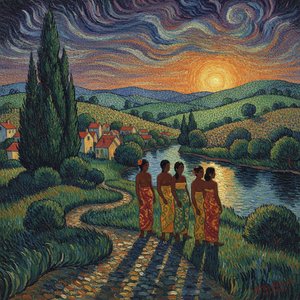
Beyond Impressionism: Exploring the Emotional Depth and Vibrant Mastery of Post-Impressionist Art
Discover the profound evolution of art beyond Impressionism. Explore the emotional depth, vibrant colors, and revolutionary techniques of Post-Impressionist masters like Van Gogh and Cézanne in this expert guide to art history's most expressive movement.

Post-Impressionizmo Deimantai: 10 Šedevrų Jūsų Namams
Atraskite 10 Post-Impresionizmo šedevrų! Van Gogas, Cézanne ir kiti genijai – jų kūriniai, istorijos bei spalvos. Įkvėpkite savo interjerui su OriginalUniqueArt.com aukščiausios kokybės reprodukcijomis. Išnagrinėkite visą kolekciją internete!

The Luminous Living Room: Curating Your Space with Timeless Impressionist Masterpieces
Transform your living room with the luminous beauty of Impressionist masterpieces. Discover museum-quality, hand-painted oil reproductions from Monet to Renoir, curated for the discerning collector seeking timeless elegance and soulful interior design.