

 Peržiūrėti realybėje
 Pasidalinti
 Dalintis
 Išsamiau

 Atsisiųsti
 Panašūs eksponatai
 Rentgeno nuotrauka
 Automatinė diorama
George Stephenson (1781–1848)
 Neoclassicism
 1847
1847 153.0 x 111.0 cm
 Institution of Mechanical Engineers
 Skaityti daugiau
Rankų darbo aliejinės reprodukcijos
Rankiniu būdu tapytas aliejus ant droblio jūsų pageidaujamame dydį ir rėmuose – mūsų menininkų darbas pagal užsakymą. ( Pirkti spaudinį Pirkti vaizdą)




































Pasirinkite iš mūsų nustatytų dydžių, atitinkančių originalaus meno kūrinio proporcijas.

Galite įvesti savo matmenis, kad jie atitiktų konkretų rėmą ar erdvę. Jei pasirinktas dydis neatitinka originalaus paveikslėlio proporcijų, mes arba apkropsime meno kūrinį, arba papildysime tapybą rankomis dažytい elementais. Prieš pradėdami gamybą, jūsų patvirtinimui atsiųsime skaitmeninį maketą.
Atkreipkite dėmesį, kad ekrane rodomas vaizdas neatspindi tikrojo apkarpymo ar papildymo. Tik maketas tiksliai parodys galutinę kompoziciją.
Nors galima rinktis ir individualius dydžius, rekomenduojame pasirinkti matmenis iš nustatytos sąrašo, kad būtų išlaikytos originalios proporcijos.
Gavus užsakymą, OriginalUniqueArt.com komanda susisieks su klientu el. paštu dėl instrukcijų ir pateiks maketo pavyzdį.
Pristatymas visame pasaulyje () per 3–4 savaites, o ne įprastai – per 5 savaites. (20 rugpjūtis). Kokybė lieka nepakeičiama.

Nemokamas greitasis pristatymas visame pasaulyje

Aukštos kokybės lininis drobė

Pilnas siuntimo draudimas

Muitinės mokesčių grąžinimo garantija

Tikro spalvų atitikimo garantija

60 dienų grąžinimo politika (tik esant gamyklinėms defektams)

100% pinigų grąžinimo garantija

Nuolaida už kelias reprodukcijas
 Stiklo variantas prieinamas tik pasirinkus dydį iki 110 cm

George Stephenson (1781–1848)
Reprodukcijos technika
Reprodukcijos matmenys
-


Galutinė kaina
$ 300
Autoriaus biografija
A Life Woven in Sound and Shadow: The Art of John Lindsay Lucas
John Lindsay Lucas, a name perhaps less familiar to the general public than some of his contemporaries, remains a quietly profound figure within the landscape of 20th-century British portraiture. Born in London on July 4th, 1807, into a family steeped in artistic and journalistic lineage – his father a writer and journalist, tracing back through naval service – Lucas’s early life was one of exposure to both the formal world of art and the vibrant currents of Victorian society. His apprenticeship under Samuel William Reynolds, a master of mezzotint engraving, provided him with a crucial technical foundation, while the influence of his mother, a woman of refined sensibilities, undoubtedly shaped his artistic eye. This grounding in craft combined with an innate sensitivity to human character would become the hallmark of his distinctive style. Lucas’s career unfolded during a period of immense social and political change – the rise of industrialization, the expansion of the British Empire, and the burgeoning movement for reform. He wasn't merely documenting the faces of the elite; he was capturing the spirit of an era, imbuing his portraits with a subtle awareness of the anxieties and aspirations that defined Victorian England. His early work, exemplified by his portrait of Mary Russell Mitford, showcased a nascent talent – a keen ability to render delicate features and capture fleeting expressions. However, it was his association with Henry Milton, a prominent patron and collector, that truly propelled him into the heart of London’s artistic circles. This connection opened doors to commissions from some of the most influential figures of the day: Queen Adelaide, Albert, Prince Consort (a subject he painted no less than four times), Princess Louise, and the formidable Duke of Wellington, who sat for him a remarkable eight times – a testament to Lucas's skill in conveying both dignity and vulnerability. His work graced the galleries of Sir Robert Peel’s contemporary portraits, solidifying his position as one of the era’s most sought-after portraitists.Technique and Style: A Master of Subtle Realism
Lucas's artistic approach was characterized by a remarkable restraint and an almost unnerving ability to capture the essence of his subjects without resorting to overt sentimentality or theatricality. He eschewed dramatic lighting and elaborate backgrounds, instead favoring a muted palette and a focus on capturing the subtle nuances of expression. His portraits are not merely likenesses; they are psychological studies, revealing glimpses into the inner lives of those who sat before him. He was particularly adept at portraying the weariness and quiet dignity of older subjects, imbuing them with a sense of profound experience. This is evident in his numerous depictions of the Duke of Wellington, where he doesn’t simply record the military hero's physical presence but also conveys the weight of years and battles fought. His technical skill was further demonstrated through his mezzotint engravings – intricate works that showcased his mastery of tonal shading and detail. The Nicholas Conyngham Tindal portrait, rendered in mezzotint, stands as a particularly compelling example of this artistry.Beyond the Salon: Lucas’s Influence and Legacy
While Lucas enjoyed considerable success within the established art world – exhibiting at the Royal Academy, the British Institution, and the Suffolk Street Gallery – his influence extended beyond the confines of the salon. His portraits were frequently reproduced in engravings, ensuring that his work reached a wider audience. Furthermore, he contributed to the burgeoning field of portrait photography, recognizing its potential as a means of disseminating images and documenting individuals. The meticulous detail and psychological insight evident in his portraits foreshadowed many of the techniques employed by later generations of artists. His legacy is not one of flamboyant innovation but rather of quiet mastery – a testament to the enduring power of observation, restraint, and a deep understanding of human nature.A Later Life and Unfinished Works
Lucas’s career spanned over six decades, culminating in his death at St John's Wood on April 30th, 1874. At the time of his passing, his estate was dispersed through auction, revealing a substantial body of work – 96 portraits at the Royal Academy, 13 at the British Institution, and eight at the Suffolk Street Gallery. Beyond portraiture, Lucas also dabbled in engraving, producing several prints after Sir Thomas Lawrence, including one of Queen Victoria’s Portuguese consort. His later years saw him exploring new avenues, including his involvement with experimental music and performance art, as evidenced by his collaboration with Dominique Gonzalez Foerster on the Performa 09 event. The work of John Lindsay Lucas offers a fascinating glimpse into Victorian England – a world of social upheaval, artistic innovation, and enduring human drama. His portraits remain powerful testaments to his skill, sensitivity, and profound understanding of the human condition.
john lindsay lucas
1807 - 1874
Trumpa informacija
- Artistic Movement Or Style: Portrait painting
- Artists Or Movements Influenced By This Artist: ['National Portrait Gallery']
- Artists Who Influenced This Artist: ['Samuel William Reynolds']
- Date Of Birth: July 4, 1807
- Date Of Death: April 30, 1874
- Full Name: John Lindsay Lucas
- Nationality: English
- Notable Artworks:
- Queen Adelaide
- Albert, Prince Consort
- Princess Royal
- Duke of Wellington
- Place Of Birth: London, England
Susiję straipsniai

Georges Braque: 25 Šedevrai, Keičiantys Jūsų Interjerą | OriginalUniqueArt
Atraskite 25 Georges Braque šedevrus! Kubizmo meistro paveikslai, interjero dekoras ir meno istorija. Meno reprodukcijos aukščiausia kokybe – OriginalUniqueArt.com. Išsamesnės informacijos rasite internetu.

Georges Seurat: 25 Šedevrai, Apšviečiantys Modernaus Meno Takus | OriginalUniqueArt
Atraskite 25 Georges Seurat šedevrus! Išsami analizė, istorijos ir įkvėpimas interjero dizainui. Pointilizmo meistras, impresionizmas ir chromoluminarizmas – viskas OriginalUniqueArt.com. Explore the full collection online!

John Singer Sargent's 25 Masterpieces: Portraits & Beyond | OriginalUniqueArt
Explore 25 iconic John Singer Sargent paintings – from dazzling portraits to Impressionist landscapes. Discover the stories behind Madame X, El Jaleo & more! Find museum-quality art reproductions and elevate your home decor with OriginalUniqueArt.com.

Džono Konsteblio Šedevrai: 25 Išskirtiniai Darbai Jūsų Interjerui | OriginalUniqueArt
Atraskite 25 įspūdingiausius Džono Konsteblio paveikslus! Romantizmo meistro gamtos vaizdai, Dedham Vale peizažai ir meno istorijos šedevrai. Meno reprodukcijos jūsų interjerui – OriginalUniqueArt.com
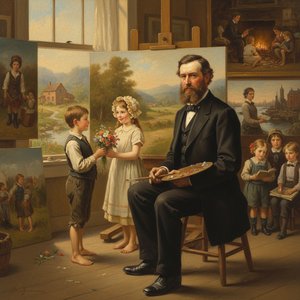
John George Brown: Capturing American Life & Sentiment in 19th-Century Genre Painting
Explore the captivating genre paintings of John George Brown, celebrated for his realistic depictions of 19th-century American life. Discover his legacy & find museum-quality reproductions at OriginalUniqueArt.

