
 Peržiūrėti realaus dydžio版
 Pasidalinti
 Dalintis
 Išsamiau
 Vadovas

 Atsisiųsti
 Panašūs eksponatai
 Rentgeno spindulių nuotrauka
 Automatinė diorama
 问答
问答 Statistika
Arab School


 Skaityti daugiau
Giclée / Meno spausdinimas
Muziejų lygio „giclée“ arba drobos spausdinimas: greita gamyba ir lankstios apdailos parinktys. ( Pirkti rankų darbo tapybą Perejti prie skaitmeninių vaizdų)




P118B €10

P118H €10

P118W €10

P438Z €10

P508JH €12

P508YH €12

P805H €10

P805Z €10

P919BZ €10

P919G €10

P919XJ €10

P959ZH €10

P968JZ €12

W106C €8

W218G €10

W218JH €8

W218Y €10

W307PJ €10

W316G €10

W316PJ €8

W316Y €10

W398PJ €8

W4111J €10

W500HY €15

W500JH €15

W692G €12

W849H €8

W940BG €15

W953PJ €8




Pasirinkite iš mūsų nustatytų dydžių, atitinkančių originalaus meno kūrinio proporcijas.

Įveskite jums reikiamą plotį ir aukštį, kad atvaizdas derėtų prie jūsų rėmo ar sienos. Spausdiną galima tik sumažinti, bet nepadidinti virš originalaus paveikslėlio dydžio, todėl keičiant proporcijas, dalis vaizdo prarandama. Prieš spausdinimą atsiųsime jums skaitmeninį maketą patvirtinimui. Šioje puslapio nuotraukoje matomas pjūvis nėra tikslus – jį rodo tik maketas.
Pristatymas visame pasaulyje () per 2 weeks, o ne įprastas 4/5 savaičių laikotarpis. (15 lapkritis)

Nemokamas greitasis pristatymas visame pasaulyje

Aukštos kokybės lininis drobė

Pilnas siuntimo draudimas

Muitinės mokesčių grąžinimo garantija

Tikro spalvų atitikimo garantija

100 dienų grąžinimo politika (tik esant įtaigoms)

100% pinigų grąžinimo garantija

Nuolaida dideliems užsakymams
 Stiklo variantas prieinamas tik pasirinkus dydį iki 110 cm

Arab School
Giclée / Meno spausdinimas
Reprodukcijos matmenys
-


Bendroji kaina
€ 72
A Window Into a World of Grace: John Frederick Lewis’s “Arab School”
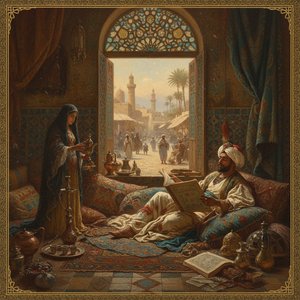
John Frederick Lewis's "Arab School," painted circa 1841-51, isn’t merely a depiction of a classroom; it’s a meticulously crafted portal into the heart of 19th-century Ottoman society. This watercolor and gouache masterpiece, now housed within the Metropolitan Museum of Art in New York City, offers a rare glimpse beyond the often sensationalized portrayals of the Middle East prevalent at the time, revealing instead a scene of quiet learning, dignified respect, and subtle social dynamics. Lewis, an English Orientalist painter who spent over a decade immersed in Cairo’s vibrant culture, possessed a remarkable ability to capture not just the outward appearance but also the underlying atmosphere of his subjects – a skill evident in every brushstroke of “Arab School.”
The painting immediately draws the eye toward the central figure: a man distinguished by his flowing white beard and traditional attire. He’s not a flamboyant scholar, nor is he presented as an exotic spectacle; rather, he embodies authority and wisdom – a respected teacher guiding a young student. His posture, upright and attentive, suggests a dedication to his role, while the boy's focused gaze speaks volumes about the value placed on education within this community. To his right, another individual, seated on the floor, demonstrates a profound respect for the teacher’s words, mirroring the reverence of the central figure. The composition isn’t static; it pulses with an unspoken conversation, a shared moment of intellectual engagement.
Orientalism and the Pursuit of Authenticity
Lewis's work firmly resides within the realm of Orientalist painting – a genre that flourished during the 19th century, fueled by European fascination with the East. However, unlike many of his contemporaries who often relied on stereotypes and romanticized depictions, Lewis sought to portray Middle Eastern life with a remarkable degree of accuracy and sensitivity. His extended sojourn in Cairo allowed him to observe local customs firsthand, master Arabic script, and adopt traditional dress – elements that profoundly influenced his artistic approach. He meticulously documented the architecture, furnishings, and clothing of the region, striving for an authentic representation that moved beyond superficial exoticism.
The inclusion of Arabic calligraphy on the walls of the schoolhouse is a crucial detail, underscoring the importance of literacy and religious learning within this setting. These intricate inscriptions aren’t merely decorative; they serve as a constant reminder of the cultural heritage being imparted to the students. The simple yet elegant design of the room – the worn wooden benches, the muted color palette, the single window framed by dark bars – speaks volumes about the practical realities of life in an Ottoman schoolhouse. It's a scene stripped of grandiosity, focusing instead on the quiet dignity of everyday learning.
Symbolism and Emotional Resonance
Beyond its realistic depiction of daily life, “Arab School” is rich with symbolic meaning. The window, framed by dark bars, subtly hints at the constraints imposed upon Ottoman society – a reminder of the political realities that shaped the lives of its inhabitants. Yet, within this seemingly restrictive environment, there’s an undeniable sense of hope and potential embodied in the faces of the students and teacher. The painting evokes a feeling of serenity and intellectual curiosity, suggesting a space where knowledge is valued and nurtured.
Lewis's masterful use of watercolor – its delicate washes, subtle gradations of color, and luminous effects – perfectly captures the atmosphere of the scene. The light filtering through the window creates a soft, diffused glow, illuminating the faces of the individuals within the room. This careful attention to detail, combined with Lewis’s profound understanding of his subject matter, results in a work that is both visually stunning and emotionally resonant. “Arab School” isn't just a painting; it’s a testament to the power of observation, empathy, and artistic skill – a timeless reminder of the enduring value of education and human connection.
Collecting a Legacy: Reproductions and Beyond
Reproductions of "Arab School" are available through various reputable art dealers and online platforms. When selecting a reproduction, consider the medium (canvas or print) and framing options to ensure it complements your interior design aesthetic. The original’s delicate watercolor technique is best replicated with high-quality archival materials that preserve color accuracy and prevent fading over time. Investing in a faithful reproduction allows you to bring this remarkable work of art into your home, celebrating Lewis's legacy and the rich cultural heritage he so beautifully captured.
Klausimai ir atsakymai
Kaip galiu įsigyti „Arab School“ – Johanas Frederikas Luisas spausdinį?
Šio kūrinio „Arab School“ – Johanas Frederikas Luisas spausdinį galite užsakyti tiesiogiai jo Kūrinio spausdinimas aukščiausia kokybe puslapio: aukščiausios kokybės spausdinys ant medžio siuvinėjamų audinių arba archyvinio kanvas tipo popieriaus.
Kokia technika buvo panaudota kūriniam darbui „Arab School“ – Johanas Frederikas Luisas?
Johanas Frederikas Luisas kūriniui „Arab School“ panaudojo Acrylic On Canvas techniką. Ši technika apibrėžė originalaus kūrinio medžiaginę prigimtį.
Kur galiu įsigyti „Arab School“ – Johanas Frederikas Luisas skaitmeninį vaizdą?
„Arab School“ galima įsigyti kaip aukštos raiškos skaitmeninio vaizdo atsisiuntimas, tiesiogiai savo Skaitmeninis vaizdas puslapio.
Autoriaus biografija
John Frederick Lewis: Orientalizmo Tapybos Gyvenimas
John Frederick Lewis, žymus anglų orientalistas tapytojas, gimė 1804 m. liepos 14 d. Londone. Jis buvo Frederico Christiano Lewiso sūnus – graviūrų meistro ir kraštovaizdžio tapytojo. Ši šeimos artistinė aplinka neabejotinai turėjo įtakos jo ankstyvam vystymuisi. Formalūs mokymai prasidėjo po Sir Thomas Lawrence’o globoja, kur jis tobulino savo įgūdžius kartu su kitais menininkais, tokiais kaip Edwin Landseer. Šis pamatinis laikotarpis suteikė jam stiprią technikų ir kompozicijos supratimą.
Kūrybinis Karjeros & Raidos Etapas
Lewiso kūrybinė karjera vyko per kelis skirtingus etapus, kuriuos pažymėjo besikeičiantys stiliai ir teminiai akcentai:
- Orientalistinis Periodas: Lewis pradėjo išsamią kelionę po Viduržemio regioną, kruopščiai fiksuodamas jo esmę detalizuotuose vandens spalvų paveiksluose ir aliejiniuose paveiksluose. Jis dažnai grįždavo prie kompozicijų, perteikdamas jas įvairiomis technikomis.
- Ispanijos & Maroko Įtaka (1832–1834): Kelionė po Ispaniją ir Maroką pasirodė esanti lemtinga. Jis sukūrė daugybę litografijų, vėliau išleistų pavadinimu “Sketches and Drawings of the Alhambra” (1835) ir “Lewis’s Sketches of Spain and Spanish Character” (1836).
- Egiptietiškas Periodas (1841–1851): Jo viešnagė Kaire buvo galbūt produktyviausia. Čia jis tobulino savo orientalistinį stilių, kurdamas labai detalius darbus, kuriuose vaizduojamos tiek realistinės buitinės scenos, tiek idealizuoti aukštosios Egipto visuomenės interjerai.
Žymiausi Darbai
Lewis sukūrė didžiulį darbų rinkinį, garsėjantį kruopščiu detalumu ir įtaikiu atmosferos perteikimu. Kai kurie žymiausi jo darbai apima:
- Bedvinas (Yale Center for British Art, New Haven) – Vandens spalvų paveikslas, pavyzdinis jo orientalistinio stiliaus kūrinys.
- Ramesseumo Griuvės Tebose (Yale Center for British Art, New Haven) – Demonstruoja nepaprastą dėmesį architektūros detalėms.
- Jauna Turkų Moteris (Yale Center for British Art, New Haven) – Kitas įspūdingas jo orientalistinio darbo pavyzdys.
- Harem Life in Constantinople - Detalus aliejinis paveikslas, vaizduojantis Osmanų buitinį gyvenimą.
Įtaka ir Artistinis Stilius
Lewiso stilių formavo keli veiksniai, ypač Sir Thomas Lawrence’o pabrėžimas portretams ir kompozicijai. Tačiau tiesioginė Vidurio Rytų kultūrų stebėjimas leido jam sukurti unikalų estetinį pobūdį, kuriam būdinga:
- Kruopščios Detalės: Įsipareigojimas tiksliai atvaizduoti tekstūras, raštus ir architektūrinius elementus.
- Turtinga Spalvų Paletė: Naudojant ryškias spalvas, įkvėptas kraštovaizdžių ir kostiumų, kuriuos jis sutiko.
- Buitinės Scenos & Interjero Vaizdai: Susitelkiant į kasdienį gyvenimą ir intymius buitinius aplinkos vaizdus.
Palikimas ir Istorinė Reikšmė
Lewiso indėlis į meno pasaulį slypi jo reikšmingame vaidmenyje kuriant orientalistinį tapybą. Jo kruopščios islamo architektūros, baldų ir kostiumų reprezentacijos nustatė naujus realizmo standartus šiame žanre. Jis padėjo populiarinti romantizuotą, tačiau detalią Vidurio Rytų viziją tarp Vakarų auditorijos. Grįžęs į Angliją 1851 metais, jis tęsė tapybą iki savo mirties rugpjūčio 15 dieną 1876 metais Walton-on-Thames.
Jo darbai ir toliau yra tiriami ir gerbiami dėl meninės vertės ir istorinio įžvalgumo apie XIX amžiaus suvokimą apie Orientą.

Johanas Frederikas Luisas
1805 - 1876 , Jungtinė Karalystė
Trumpa informacija
- Gimimo Data: 1804 m. liepos 14 d.
- Gimimo Vieta (Miestas Ir Šalis): Londonas, Jungtinė Karalystė
- Meninis Judėjimas/Stilius: Orientalizmas
- Mirties Data: 1876 m. rugpjūčio 15 d.
- Pilietybė: Britų
- Pilnas Vardas: John Frederick Lewis
- Įtakoję Menininkai: ['Ser Thomas Lawrence']
- Žymiausi Darbai:
- Bedvinas
- Ramesseumo griuvėsiai
- Jauna turkė
Susiję straipsniai
John Frederick Lewis: Orientalism, Detail & Genre Painting in 19th-Century British Art
Explore the captivating Orientalist paintings of John Frederick Lewis! Discover his mastery of detail, genre scenes & influence on 19th-century British art. Learn about his life, techniques & legacy at OriginalUniqueArt.

Ephemeral Visions: Exploring the Artistic Legacy & Contemporary Practice of Watercolor Painting
Explore the captivating world of watercolor painting! Discover its rich history, essential techniques, influential artists & collecting tips. A comprehensive guide for art enthusiasts from OriginalUniqueArt.

Ephemeral Visions: Exploring the History & Emotional Resonance of Watercolor Painting
Explore the captivating history of watercolor painting, from ancient techniques to modern masters like Kandinsky & Blake. Discover essential artists, collecting tips & the emotional power of this luminous medium. Expert insights for art enthusiasts.

John Singer Sargent's 25 Masterpieces: Portraits & Beyond | OriginalUniqueArt
Explore 25 iconic John Singer Sargent paintings – from dazzling portraits to Impressionist landscapes. Discover the stories behind Madame X, El Jaleo & more! Find museum-quality art reproductions and elevate your home decor with OriginalUniqueArt.com.

Watercolor Wonders: 10 Masterpieces That Redefined Art History | OriginalUniqueArt
Journey through 10 legendary watercolor masterpieces by Sargent, Turner & Homer! Explore iconic landscapes, portraits & floral art that redefined history. Find museum-quality reproductions and curated decor ideas at OriginalUniqueArt.com.