

 Peržiūrėti realaus dydžio版
 Siųsti
 Dalintis
 Išsamiau
 Vadovas

 Atsisiųsti
 Panašūs eksponatai
 Rentgeno spindulių nuotrauka
 Diaporama
 Statistika
Hudson River Scene


 Rodyti daugiau
Giclée / Meno spausdinimas
Muziejų lygio „giclée“ arba drobos spausdinimas: greita gamyba ir lankstios apdailos parinktys. ( Pirkti rankomis tapytą reprodukciją Perejti prie skaitmeninių vaizdų)




P118B €10

P118H €10

P118W €10

P438Z €10

P508JH €12

P508YH €12

P805H €10

P805Z €10

P919BZ €10

P919G €10

P919XJ €10

P959ZH €10

P968JZ €12

W106C €8

W218G €10

W218JH €8

W218Y €10

W307PJ €10

W316G €10

W316PJ €8

W316Y €10

W398PJ €8

W4111J €10

W500HY €15

W500JH €15

W692G €12

W849H €8

W940BG €15

W953PJ €8




Pasirinkite iš mūsų nustatytų dydžių, atitinkančių originalaus meno kūrinio proporcijas.

Galite nurodyti savo matmenis, kad vaizdas atitiktų konkretų rėmą ar erdvę. Jei pasirinktas dydis nesutaps su originalaus paveikslėlio proporcijomis, mes arba apkirpsime kūrinį, arba išplėsime vaizdą naudojant veideliu atspindėtą arba vientisą šoną. Skaitmeninis maketas bus išsiųstas jums patvirtinti prieš pradedant gamybą.
Atkreipkite dėmesį, kad ekrane matomas vaizdinys neatspindi tikrojo apkirpimo ar išplėtimo. Tik maketas tiksliai parodytų galutinę kompoziciją.
Nors galima rinktis ir individualius dydžius, rekomenduojame pasirinkti vieną iš išanksti nustatytų matmenų, kad būtų išlaikytos originalios proporcijos.
Pristatymas visame pasaulyje () per 2 weeks, o ne įprastas 4/5 savaičių laikotarpis. (8 spalis)

Nemokamas greitasis pristatymas visame pasaulyje

Aukštos kokybės lininis drobė

Pilnas siuntimo draudimas

Muitinės mokesčių grąžinimo garantija

Tikro spalvų atitikimo garantija

100 dienų grąžinimo politika (tik esant įtaigoms)

100% pinigų grąžinimo garantija

Nuolaida dideliems užsakymams
 Stiklo variantas prieinamas tik pasirinkus dydį iki 110 cm

Hudson River Scene
Giclée / Meno spausdinimas
Reprodukcijos dydis
-


Visų pasirinktų variantų kaina
€ 69
A Serene Vision of the Hudson Valley: John Frederick Kensett’s “Hudson River Scene”
John Frederick Kensett's "Hudson River Scene," painted in 1857, isn’t merely a landscape; it’s a carefully constructed meditation on light, tranquility, and the sublime beauty of the American wilderness. Belonging to the illustrious Hudson River School, a movement that profoundly shaped the course of American art, this painting embodies the core tenets of Luminism – an approach prioritizing atmospheric effects and subtle tonal variations over dramatic detail. Kensett, deeply influenced by the Romantic ideals of his time, sought not to represent nature as it *is*, but rather as it *feels*—a source of profound spiritual resonance.
The scene unfolds along the banks of the Hudson River, a quintessential vista of the New York countryside. Rolling hills, draped in a soft, hazy blue, recede into the distance, their contours softened by atmospheric perspective. A meandering river reflects the muted light of the sky, creating an illusion of infinite depth and mirroring the serenity above. Two figures, rendered with remarkable delicacy, are positioned near the center of the composition, suggesting a quiet moment of contemplation amidst this idyllic setting. Their presence isn’t intrusive; rather, they serve to anchor the viewer in the scene, inviting us to share their peaceful observation.
The Language of Light and Color
Kensett's mastery lies not just in his depiction of the landscape but also in his innovative use of color. He eschewed the bold, vibrant hues favored by some of his contemporaries, opting instead for a palette dominated by cool blues, greens, and grays. This restrained approach creates a sense of stillness and quietude, emphasizing the subtle shifts in light and shadow. The artist’s brushwork is remarkably delicate—almost invisible—allowing the colors to blend seamlessly into one another, mimicking the hazy atmosphere of a summer afternoon. He employed a technique known as “broken color,” applying thin layers of paint that refract light and create shimmering effects, particularly noticeable in the water and sky.
The painting’s luminosity – its ability to seem to glow from within – is a hallmark of Luminism. Kensett meticulously studied the way light interacts with different surfaces, capturing the ephemeral quality of sunlight filtering through trees or reflecting off the river's surface. This pursuit of atmospheric effects was deeply influenced by his travels in Europe, particularly his admiration for the Dutch Masters who excelled at depicting light and shadow.
A Reflection of Transcendentalist Ideals
"Hudson River Scene" is inextricably linked to the broader philosophical currents of the mid-19th century. The Hudson River School artists, including Kensett, were deeply influenced by the Transcendentalist movement, which emphasized the inherent goodness of humanity and the importance of connecting with nature. For these artists, the landscape wasn’t simply a picturesque backdrop; it was a conduit to spiritual truth. Kensett's paintings, like this one, aim to evoke a sense of awe and wonder, prompting viewers to contemplate their place within the vastness of the natural world.
The inclusion of the two figures adds another layer of meaning. They represent humanity’s ability to find solace and connection in nature—a theme central to Transcendentalist thought. Their quiet contemplation suggests a harmonious relationship between humans and the environment, reflecting an ideal of balance and serenity.
Collecting a Legacy: Reproduction and Beyond
Reproductions of “Hudson River Scene” offer a remarkable opportunity to bring this timeless masterpiece into your home or office. OriginalUniqueArt’s hand-painted reproductions meticulously recreate Kensett's delicate brushwork and nuanced color palette, capturing the essence of his original vision. Whether you seek an authentic work of art or a high-quality reproduction that evokes the spirit of the Hudson River School, this painting remains a powerful symbol of American landscape artistry and its enduring appeal.
Consider how this serene scene can complement your interior design—bringing a touch of tranquility and natural beauty to any space. The subtle colors and atmospheric effects create a calming atmosphere, perfect for relaxation or contemplation. “Hudson River Scene” is more than just a painting; it’s an invitation to connect with the timeless allure of the American wilderness.
问答 (or more naturally for a website heading): Klausimai ir atsakymai
Kada buvo sukurta „Hudson River Scene“?
„Hudson River Scene“, autorius – Johanas Frederikas Kensetas sukurtas 1857 m.
Kaip suformuota „Hudson River Scene“, autorius – Johanas Frederikas Kensetas spalvų kompozicija?
„Hudson River Scene“ kūryboje Statement kontrastas susilieja su Unified Palette harmonija.
Kiek metų buvo Johanas Frederikas Kensetas, kai sukūrė „Hudson River Scene“ 1857 m.?
Kai 1857 m. buvo sukurta „Hudson River Scene“, Johanas Frederikas Kensetas – gimęs 1816 m. – buvo 41 metų amžiaus.
Kuriam menininkui priskiriamas kūrinys „Hudson River Scene“?
„Hudson River Scene“ priskiriamas Johanas Frederikas Kensetas.
Kokią nasytintį ir intensyvumą demonstruoja „Hudson River Scene“, autorius – Johanas Frederikas Kensetas?
„Hudson River Scene“, autorius – Johanas Frederikas Kensetas spalvos pasižymi Balanced Soft nasyginimu ir Balanced intensyvumu.
Kaip galima panaudoti „Hudson River Scene“, autorius – Johanas Frederikas Kensetas namų interjere?
Naudojimas (Harmony) ir erdvė (Living Room) yra du rekomendacijos, nurodyti šiam kūriniui „Hudson River Scene“, autorius – Johanas Frederikas Kensetas.
Kokia bendra "Hudson River Scene" spalvų tonacija – šviesi ar tamsi?
Perceptinis „Hudson River Scene“, autorius – Johanas Frederikas Kensetas ryškumas yra balanced. Jį galima suderinti su intended erdvės apšvietimu.
Autoriaus biografija
Ankstyvieji Metai ir Formavimasis
Džonas Frederikas Kensetas, gimęs 1816 metų kovo 22 dieną Konektikuto valstijoje esančiame Češyre, buvo amerikiečių dailininkas ir graviūristas. Jo gyvenimas nuo pat ankstyvos jaunystės buvo skirtas gamtos grožio įamžinimui drobėje. Kensetas augo šeimoje, kur meno tradicijos turėjo didelę reikšmę – tėvas, Tomas Kensetas, taip pat buvo graviūristu. Būtent jis ir suteikė sūnui pirmąsias pamokas šioje srityje. Džonas Frederikas lankė Češyro akademiją, o vėliau dirbo graviūristu Naujene iki 1838 metų. Tačiau troškimas kurti tapybos darbus jį atvedė į Niujorką, kur jis pradėjo dirbti banknotų graviūrų srityje. 1840 metais Kensetas leidosi į svarbią kelionę – studijuoti tapybos Europoje, tobulindamas savo talentus kartu su Benjaminu Champney. Šis laikotarpis padėjo jam susiformuoti kaip menininkui ir atpažinti jo unikalų stilių.Niujorko Studija ir Luminizmo Stiliaus Išsivystymas
Įkūręs savo studiją Niujorke, Kensetas ėmėsi intensyvių kelionių po šiaurės rytinę JAV dalį bei Kolorado kalnus. Šios ekspedicijos tapo pagrindiniu įkvėpimo šaltiniu jo kūrybai. Jis siekė užfiksuoti kraštovaizdžių esmę, jų ramybę ir grožį. Kenseto stilius palaipsniui evoliucionavo nuo tradicinės Hadsono mokyklos tapybos link rafinuoto luminizmo. Luminizmas pasižymi subtiliomis šviesų ir šešėlių gradacijomis, nesąmoningais potepiais, perteikiančiais atmosferos kokybę bei gamtos transcendentalumą. Jo darbai atspindi gilų susijungimą su gamta ir siekį įamžinti jos magiją. Ypač svarbus tapytojo kūryboje yra paveikslas „Vašingtono kalnas iš Konvejaus slėnio“ (1851), kuris buvo įsigytas Amerikos meno sąjungos ir platinamas 13 tūkstančių abonentų. Kitas žymus darbas – „Eaton’s Neck, Long Island“ (1872) – puikus luminizmo stiliaus pavyzdys, saugomas Metropoliteno meno muziejaus Niujorke.Palikimas ir Indėlis į Amerikos Meną
Džonas Frederikas Kensetas buvo vienas iš Metropoliteno meno muziejaus įkūrėjų ir Nacionalinės dizaino akademijos pilnateis narys. Jo darbai sulaukė didelio pripažinimo jo gyvenimo laikais, o šiandien jie tebeturi įtakos kraštovaizdžio tapybai. Kensetas buvo žymus savo gebėjimu perteikti atmosferos šviesą ir ramybę drobėje. Jo kūryba atspindi amerikiečių gamtos grožį ir unikalią perspektyvą. Jis prisidėjo prie Hadsono mokyklos tradicijų plėtros, tačiau kartu sukūrė savitą stilių, kuris išskyrė jį tarp kitų menininkų. Kenseto darbai yra vertinami už jų techninę virtuoziškumą ir estetinę kokybę.Pagrindiniai Darbai ir Asociacijos
Svarbiausi darbai:- „Saulėlydžio dangus“ (apie 1870), Metropoliteno meno muziejus, Niujorkas
- „Trys mylių uostas“ (apie 1860), Fine Arts muziejus, Talahasė
- Tomas Koulas
- Benjaminas Champney
Kenseto Kūrybos Svarba Istorijoje
Džonas Frederikas Kensetas paliko neišdildomą pėdsaką Amerikos meno istorijoje. Jo darbai atspindi XIX amžiaus kraštovaizdžio tapybos tendencijas ir estetinį idealą. Luminizmo stilius, kurį jis puikiai įvaldė, padėjo perteikti gamtos grožį ir ramybę nauju būdu. Kenseto kūryba turėjo didelės įtakos vėlesniam kraštovaizdžio tapybos vystymuisi JAV. Jo darbai yra vertinami už jų techninę virtuoziškumą, estetinę kokybę ir gilų susijungimą su gamta. Kensetas buvo ne tik talentingas dailininkas, bet ir aktyvus meno bendrijos narys, prisidėjęs prie Metropoliteno meno muziejaus įkūrimo ir Nacionalinės dizaino akademijos veiklos. Jo palikimas tebeturi reikšmės šiuolaikinėje Amerikos meno kultūroje.
Johanas Frederikas Kensetas
1816 - 1872 , Jungtinės Amerikos Valstijos
Trumpa informacija apie kūrėją
- Gimimo Data: 1816 kovo 22 d.
- Gimimo Vieta: Cheshire, JAV
- Menininkai Kuriuos Įtakojo: ['Luminizmas']
- Meninis Stilius: Hudson River mokykla & Luminizmas
- Mirties Data: 1872 gruodžio 14 d.
- Pilietybė: Amerikietis
- Pilnas Vardas: John Frederick Kensett
- Įtakoję Menininkai:
- Thomas Cole
- Benjamin Champney
- Žymiausi Darbai:
- Mount Washington from the Valley of Conway
- Eaton's Neck, Long Island
Susiję straipsniai
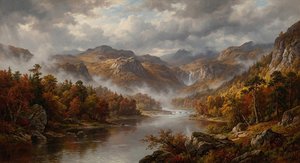
Hudson River School: 10 Šedevrai, Apibrėžę Amerikos Peizažo Meną
Atraskite 10 legendinių Hudson River School kūrinių! Thomas Cole, Frederic Church ir kiti meistrai sukuria nepakartojamą gamtos grožio vaizdą. Išmokite apie jų techniką ir įkvėpkite savo interjerą aukštos kokybės reprodukcijomis iš OriginalUniqueArt.com!

John Frederick Kensett: Luminosity, Landscape & the American Identity
Explore the luminous landscapes of John Frederick Kensett, a master of Luminism and key figure in the Hudson River School. Discover his serene paintings & enduring legacy with OriginalUniqueArt.
Robert Spencer: Luminism, Narrative & the American Landscape Tradition
Explore the captivating world of Luminism & the Hudson River School with our expert analysis. Discover the history, artists, and enduring beauty of 19th-century American landscape painting. Find museum-quality reproductions at OriginalUniqueArt.
Capturing the American Spirit: A Journey Through Iconic Landscapes and the Legacy of the Hudson River School
Explore the profound beauty of American art history. From the Hudson River School to iconic landscapes, discover a curated journey through the masterpieces that defined a nation's spirit and the enduring legacy of American Romanticism.
The Sublime Landscape: Exploring the Hudson River School Movement
Explore the captivating world of the Hudson River School! Discover the history, artists, and defining characteristics of this iconic American art movement. Learn about Romanticism's influence & find inspiration for your collection.


