
 Peržiūrėti realybėje
 Pasidalinti
 Dalintis
 Išsamiau

 Atsisiųsti
 Panašūs eksponatai
 Rentgeno nuotrauka
 Automatinė diorama
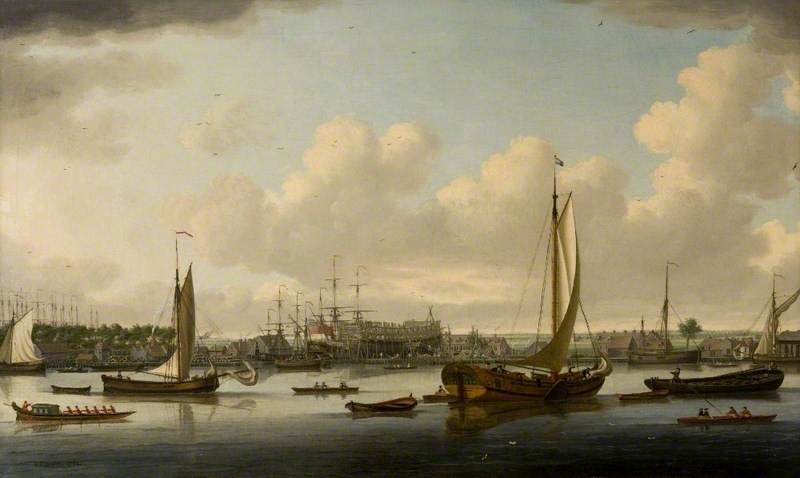
A Shipyard on the Thames
 1762
1762 56.0 x 95.0 cm
 Skaityti daugiau
Įsigykite aukštos skiriamosios raiškos, patobulintą skaitmeninį vaizdą, gerokai pranašesnį už internetinę peržiūrą.
Kiekvieną failą mūsų specialistai kruopščiai paruošia naudojant pažangias technologijas ir profesionalų rankinį retušavimą. Užtikriname, kad kiekvienas vaizdas pasižymėtų išskirtiniu aiškumu, tikslia spalvų atspalviu ir smulkiomis detalėmis.
Baigiamas failas el. paštu pristatomas per 72 valandas; jis optimizuotas nedelsiant naudojimui profesionalioje, redakcinėje ir spausdinimo aplinkoje. Tai ta pati kokybė, kuria pasitiki aukščiausios klasės dizaino studijos, leidyklos ir galerijos.
Skaitmeninis vaizdas
Atsisiųskite didelės raiškos failą asmeniniam naudojimui, spausdinimui ir kūrybiniams projektams. ( Pirkti spaudinį Pirkti rankomis tapytą paveikslą)
Kiekvieną skaitinio vaizdo užsakymą papildė
Profesionalus skaitmeninis pristatymas, garantuotas
Pasirinkę OriginalUniqueArt.com, jūs ne tik gaunate paveikslėlį – jūs gaunate profesionaliai patobudintą skaitmeninį kūrinį, sukurtą itin tikniai ir užtikrinantį pasitenkinimą. Štai viską, kas automatiškai pritékia jūsų užsakymui:

Greitas siuntimas el. paštu
Jūsų aukštos raiškos skaitmeninis vaizdo failas bus išsiųstas jums el. paštu per 72 valaudas nuo užsakymo – paruoštas naudojimui be jokių papildomų veiksmų.

Skaitmeninis failas su dirbtiniu intelektu
Jūsų meno kūrinys profesionaliai optimizuojamas naudojant pažangius dirbtinio intelekto įrankius ir rankinį redagavimą, užtikrinant maksimalią detalę, aiškumą ir spalvų tikslumą.

Nemokamas visam laikui pakartotinis siuntimas
Atsitiktinai ištrytikote ar praradote savo failą? Nebijokite – bet kuriuo metu atsiųsime jį jums vėl nemokamai.

Jokio importo mokesčio – niekada
Mėgaukitės savo meno kūriniu akimirka – skaitiniai failai visada yra neapmokestinami, todėl nereikės mokėti muitinės, mokesčių ar pristatymo mokesčių.

Spalvų tikslumo garantija
Naudodami profesionalią įrangą ir spalvų valdymo sistemas, užtikriname, kad jūsų skaitmeninis vaizdas kuo tiksliau atspindėtų originalias spalvas.

60 dienų pasitenkinimo garantija
Jei nebuvate patenkinti savo skaitinio vaizdo, per 60 dienų jį pertaisysime arba grąkinsime 100% sumą – be jokių klausimų.

100% pinigų grąžinimo garantija
Nepat 만족inti? Gaukite visą sumokėtą sumą per 60 dienų nuo skaitmeninio failo gavimo – be jokių papildomų klausimų.

Nuolaidos dideliems užsakymams
Pirkti 3 nuotraukas – pasiūla 10% - Pirkti 5 – pasiūla 15% - Pirkti 10 ir daugiau – pasiūla 20%. Puikiai tinka kūrybiniams projektams, galerijoms bei agentūroms.
Autoriaus biografija
The Shipwright of the Canvas: The Life of John Cleveley the Elder
In the heart of eighteenth-century London, amidst the rhythmic sounds of hammers and the scent of fresh timber at the Deptford Dockyard, a unique artistic vision was being forged. John Cleveley the Elder (c. 1712 – 1777) did not emerge from the polished studios of fine art academies, but rather from the practical, gritty reality of a shipwright’s workshop. Born in Southwark, his early life was defined by the tactile mastery of wood and iron. As a carpenter belonging to His Majesty’s Navy, Cleveley possessed an intimate, structural understanding of the vessels that dominated the seas of his era. This foundational knowledge would later become the very soul of his artistry, allowing him to transcend mere illustration and achieve a profound level of maritime realism that few of his contemporaries could replicate.
Cleveley’s journey is a testament to the power of observation. Without formal academic training, he relied on an innate ability to translate the technical complexities of naval architecture into evocative oil paintings. His dual vocation—working as a carpenter while developing his painterly hand—meant that every line of a hull and every tension in a mast was informed by firsthand experience. When one gazes upon his depictions of ships under construction, such as the celebrated Sixth-Rate on the Stocks, one does not merely see a painting; one witnesses the meticulous precision of a man who understood the weight, the grain, and the engineering of the maritime world.
A Mastery of Light, Sea, and Motion
The brilliance of Cleveley’s work lies in his ability to marry technical accuracy with an atmospheric sensitivity. While his compositions are anchored by the rigid geometry of naval construction, they are brought to life through a masterful use of light and shadow. He possessed a rare talent for capturing the mercurial nature of the sea—the way sunlight dances upon a cresting wave or how a heavy mist might shroud a distant frigate. In works like The Royal Caroline, painted in 1750, Cleveley demonstrates an extraordinary command over movement; the sails are not static objects but living entities, caught in a moment of energetic propulsion across the canvas.
His stylistic development allowed him to navigate various maritime themes, from the serene majesty of royal yachts to the visceral drama of naval engagements. He could pivot from the quiet, industrious atmosphere of the dockyards to the chaotic, salt-sprayed intensity of a storm. This versatility ensured his relevance among a wide range of patrons, including naval officers who sought accurate records of their vessels and collectors enamored by the romanticism of the high seas. His brushwork often balanced the fine detail required for ship portraits with a broader, more expressive touch when rendering the elements, creating a sense of depth and dimensionality that pulls the viewer into the very heart of the ocean.
Legacy and Historical Significance
The historical significance of John Cleveley the Elder extends far beyond his individual canvases. He was a pioneer of a genre that would come to define British visual identity during an age of naval supremacy. By documenting the evolution of shipbuilding and the grandeur of the Royal Navy, he provided a vital visual record of Britain's maritime ascendancy. His influence also echoed through his family; his son, John Cleveley the Younger, and his nephew, Robert Cleveley, continued this tradition of marine excellence, further cementing the Cleveley name as a cornerstone of British maritime art.
Today, the works of Cleveley the Elder serve as much more than historical artifacts. They are emotive windows into a vanished era of sail and timber. His ability to blend the technical precision of a craftsman with the poetic vision of an artist ensures that his legacy remains vibrant. Through his eyes, we do not just observe the ships of the eighteenth century; we feel the spray of the Atlantic, sense the tension of the rigging, and respect the enduring majesty of the sea.

john cleveley the elder
1712 - 1777
Trumpai apie šį kūrėją
- Artistic Movement Or Style: Marine Art
- Artists Or Movements Influenced By This Artist: ['Romanticism']
- Artists Who Influenced This Artist: ['Paul Sandby']
- Date Of Death: 1777
- Full Name: John Cleveley the Elder
- Nationality: English
- Notable Artworks:
- Sixth-Rate on the Stocks
- The Royal Yacht Caroline
- HMS Brune
- Cambridge
- Place Of Birth: Southwark, England

