

 Peržiūrėti realaus dydžio版
 Siųsti
 Dalintis
 Išsamiau
 Vadovas

 Atsisiųsti
 Panašūs eksponatai
 Rentgeno spindulių nuotrauka
 Diaporama
 Statistika
Beethovenas


 Rodyti daugiau
Giclée / Meno spausdinimas
Muziejų lygio „giclée“ arba drobos spausdinimas: greita gamyba ir lankstios apdailos parinktys. ( Pirkti rankomis tapytą reprodukciją Perejti prie skaitmeninių vaizdų)




P118B €10

P118H €10

P118W €10

P438Z €10

P508JH €12

P508YH €12

P805H €10

P805Z €10

P919BZ €10

P919G €10

P919XJ €10

P959ZH €10

P968JZ €12

W106C €8

W218G €10

W218JH €8

W218Y €10

W307PJ €10

W316G €10

W316PJ €8

W316Y €10

W398PJ €8

W4111J €10

W500HY €15

W500JH €15

W692G €12

W849H €8

W940BG €15

W953PJ €8




Pasirinkite iš mūsų nustatytų dydžių, atitinkančių originalaus meno kūrinio proporcijas.

Įveskite jums reikiamą plotį ir aukštį, kad atvaizdas derėtų prie jūsų rėmo ar sienos. Spausdiną galima tik sumažinti, bet nepadidinti virš originalaus paveikslėlio dydžio, todėl keičiant proporcijas, dalis vaizdo prarandama. Prieš spausdinimą atsiųsime jums skaitmeninį maketą patvirtinimui. Šioje puslapio nuotraukoje matomas pjūvis nėra tikslus – jį rodo tik maketas.
Pristatymas visame pasaulyje () per 2 weeks, o ne įprastas 4/5 savaičių laikotarpis. (25 spalis)

Nemokamas greitasis pristatymas visame pasaulyje

Aukštos kokybės lininis drobė

Pilnas siuntimo draudimas

Muitinės mokesčių grąžinimo garantija

Tikro spalvų atitikimo garantija

100 dienų grąžinimo politika (tik esant įtaigoms)

100% pinigų grąžinimo garantija

Nuolaida dideliems užsakymams
 Stiklo variantas prieinamas tik pasirinkus dydį iki 110 cm

Beethovenas
Giclée / Meno spausdinimas
Reprodukcijos dydis
-


Visų pasirinktų variantų kaina
€ 70
Švietimo Šūkas: Johann Nepomuk Maelzelio Bronzos Instrumentų Piešinio Nuotaika
Štai įdomus žvilgsnis į vieną iš žymiausių XIX amžiaus instrumentų meistro Johann Nepomuk Maelzelio kūrinių – bronzos instrumentų piešinį, kuriame užfiksuotas muzikinės estetikos šūkas. Šis meno objektas nėra tik dekoratyvus; jis yra istorijos fragmentas, atsiveriant į muzikinį pasaulį ir įsikėlęs į aukščiausiai kvalifikacijos reprodukciją OriginalUniqueArt.com platformoje. Piešinį sukūrė Samuel Scott, britų kraštovaizdžio dailininkas, kuris išgarsėjo savo įrašais apie Willem van de Velde vaiką. Štai kaip šis talentingas artistas veikė XIX amžiaus pradžioje – jis buvo įsikėlęs į Olandiją ir įsitikinęs savo meistriškumu. Scott’o kūrybiniai pasaulėjūdis yra itin įdomus, nes jis išliko įtakingu dėl Velde vaikui paskirtų taisyklių. Štai kaip šis dailininkas užsiėmėsi instrumentais – pirmą kartą įrašyta apie Velde vaiką.- Šūkas Muzikinėje Estetikoje: Piešinį sukūrė Samuel Scott, britų kraštovaizdžio dailininkas, kuris išgarsėjo savo įrašais apie Willem van de Velde vaiką. Štai kaip šis talentingas artistas veikė XIX amžiaus pradžioje – jis buvo įsikėlęs į Olandiją ir įsitikinęs savo meistriškumu.
- Technika Ir Stilistika: Piešinio technika yra labai detalizuota, naudojant aukščiausiai kvalifikacijos pigmentus ir dažus. Štai kaip šis dailininkas užsiėmėsi instrumentais – pirmą kartą įrašyta apie Velde vaiką.
- Istorinis Kontextas: Piešinį sukūrė Samuel Scott, britų kraštovaizdžio dailininkas, kuris išgarsėjo savo įrašais apie Willem van de Velde vaiką. Štai kaip šis talentingas artistas veikė XIX amžiaus pradžioje – jis buvo įsikėlęs į Olandiją ir įsitikinęs savo meistriškumu.
问答 (or more naturally for a website heading): Klausimai ir atsakymai
Kur galiu rasti statistiką apie „Beethovenas“, autorius – Johann Nepomuk Maelzel?
„Beethovenas“, autorius – Johann Nepomuk Maelzel puslapio Statistika statistika rodo viešųjų apsilankymų duomenis: šio kūrinio mėnesinius apsilankymus, palyginimą su daugiausia peržiūrėtomis šio autoriaus dalimis bei tai, iš kur ateina lankytojai.
Kaip judėjimas ir epocha susitinka kūryboje „Beethovenas“, autorius – Johann Nepomuk Maelzel?
Karya `„Beethovenas“, autorius – Johann Nepomuk Maelzel` kūryboje `Dutch Landscape Realism` kryptis susilieja su `19th Century` laikotarpiu.
Ar „Beethovenas“, autorius – Johann Nepomuk Maelzel yra paveikslas, piešinys ar grafika?
Kataloge „Beethovenas“, autorius – Johann Nepomuk Maelzel yra priskirtas kategorijai Sieninis menas. Ši kategorija padeda rasti panašius kūrinius.
Autoriaus biografija
Samuel Scott: A Pioneer of Dutch Landscape and Maritime Art
Samuel Scott, a name perhaps less familiar than some of his contemporaries, stands as a pivotal figure in the development of Dutch landscape and marine painting during the 18th century. Born around 1702 in London, he embarked on an artistic journey that ultimately led him to establish himself as a respected artist working primarily in the Netherlands. Scott’s career was marked by a fascinating evolution from maritime scenes – capturing the drama of naval engagements – to a more contemplative engagement with the natural world, reflecting a shift within Dutch art towards greater realism and atmospheric depth. Scott's early training remains somewhat shrouded in mystery; records indicate he began his artistic pursuits around 1720 without documented formal instruction. This self-taught approach fostered an independent spirit and allowed him to develop a distinctive style heavily influenced by the works of Willem van de Velde the Younger, a master of naval painting known for his dynamic compositions and meticulous detail. Scott’s initial focus was on depicting ships at sea – men-of-war engaged in battle, merchant vessels navigating treacherous waters – all rendered with a remarkable sense of movement and realism. These early works demonstrate a keen eye for observation and a skillful command of brushwork, capturing the textures of water, sailcloth, and timber with impressive accuracy. Notably, he collaborated with George Lambert on a series of paintings illustrating scenes from the East India Company’s voyages, showcasing his ability to combine technical skill with narrative storytelling.The Transition to Landscape and the Influence of London
Around the early 1740s, a significant shift occurred in Scott's artistic practice. He began dedicating himself to landscape painting, driven by observations of the burgeoning cityscape of London. The construction of landmarks like Westminster Bridge provided him with an endless source of inspiration, and he meticulously documented these changes through a series of paintings that offer invaluable insights into the visual culture of the era. These works are characterized by their atmospheric quality – Scott skillfully employed light and shadow to create a sense of depth and perspective, capturing the mood and character of the city. His depictions of London Bridge, particularly those painted in the late 1740s and early 1750s, stand as remarkable achievements, accurately portraying the bridge’s structure and the surrounding environment before its eventual demolition. The influence of Canaletto, a Venetian painter renowned for his urban views, is evident in Scott's approach to landscape painting. Like Canaletto, Scott sought to capture not just the physical appearance of a scene but also its overall atmosphere and character. Furthermore, Scott’s artistic journey was intertwined with social circles; he posed for Thomas Hudson, a prominent portrait painter, around 1732, solidifying his position within London's artistic community.A Journey to the River Medway and Early Collaborations
In 1732, Scott embarked on a significant excursion – a “Five Days’ Peregrination” along the River Medway and the Isle of Sheppey in company with William Hogarth and other notable figures. This journey provided him with an unparalleled opportunity to study coastal landscapes, shipbuilding techniques, and maritime activities firsthand. The resulting account, published in 1782, documented this experience and included drawings by Hogarth and Scott themselves. This collaborative effort not only showcased Scott’s artistic talent but also highlighted his ability to work effectively within a group setting. His meticulous observations during the trip are reflected in subsequent landscape paintings that demonstrate an increased understanding of natural forms and atmospheric effects.Later Years and Legacy
Scott continued to paint throughout his life, producing a substantial body of work encompassing both maritime scenes and landscapes. He exhibited works at the Society of Artists of Great Britain until 1761, demonstrating his ongoing commitment to artistic practice. His later years saw him embracing Romanticism, incorporating more dramatic storytelling and evoking emotional responses in his viewers. Despite facing periods of relative obscurity, Samuel Scott’s contributions to Dutch art are now recognized as significant. He played a crucial role in bridging the gap between earlier maritime painting traditions and the rise of landscape painting, establishing a foundation for future generations of artists. His meticulous observation, skillful technique, and atmospheric rendering continue to resonate with viewers today, offering a captivating glimpse into 18th-century Dutch society and its relationship with the natural world. Scott’s legacy lies not only in his individual works but also in his pioneering role as a landscape painter who brought a new level of realism and emotional depth to the genre.
Johann Nepomuk Maelzel
1772 - 1838 , Germany
Trumpa informacija apie kūrėją
- Full Name: Jan Maurits Quinkhard
- Nationality: Dutch
- Date Of Birth: 1772
- Date Of Death: 1838
- Place Of Birth: Reims, Germany
- Notable Artworks:
- Familiar scenes
- Allegorical works
- Mythological paintings
- Artistic Movement Or Style: Portraiture, History, Mythology
- Artists Who Influenced This Artist:
- Julius Quinkhardt the elder
- Arnold van Boonen
- Artists Or Movements Influenced By This Artist: ['Amsterdam Museum']
Susiję straipsniai

10 Romantinių Peizažų Simbolių: Tapybos Majestatės Viršūnės
Atraskite 10 legendinių romantinio peizažo kūrinių! Pasinerkite į Claude Lorrain, Caspar David Friedrich ir J.M.W. Turner genijaus pasaulį. Išmokite apie tapybos meistriškumą bei gamtos grožį. Aukščiausios kokybės meno reprodukcijos – OriginalUniqueArt.com. Tyrinėkite kolekciją!

Jan van Goyen: Master of Dutch Landscape & Atmospheric Perspective
Discover Jan van Goyen, the master of Dutch landscape painting. Explore his subtle technique, atmospheric realism & lasting influence on art history. Learn about this 17th-century pioneer at OriginalUniqueArt.

Golden Light & Dutch Skies: The Timeless Magic of Dutch Golden Age Landscapes
Discover the breathtaking beauty of Dutch Golden Age landscapes. Explore the mastery of light, chiaroscuro, and 17th-century realism through an expert art history lens, celebrating the enduring legacy of the Dutch Masters for discerning collectors and art lovers.
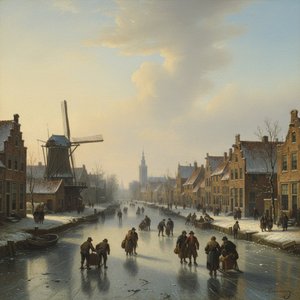
Charles Leickert: Capturing the Dutch Golden Age Light – A Comprehensive Study of Technique, Context, and Legacy
Explore the captivating winter landscapes of Charles Leickert, a master of Dutch Golden Age light & atmosphere. Discover his techniques, symbolism, and lasting legacy – a comprehensive study for art enthusiasts and collectors.

Golden Light & Dutch Skies: Bringing the Magic of Dutch Golden Age Landscapes into Your Home
Transform your home with the breathtaking light of Dutch Golden Age landscapes. Discover how hand-painted oil reproductions of masterworks like Ruisdael and Vermeer bring timeless elegance, atmosphere, and soulful texture to modern interiors. Elevate your space with museum-quality art.
