

 Peržiūrėti realaus dydžio版
 Siųsti
 Dalintis
 Išsamiau
 Vadovas

 Atsisiųsti
 Panašūs eksponatai
 Rentgeno spindulių nuotrauka
 Diaporama
 Statistika
Shell cart
 Oil On Canvas
- WallArt
- Dutch Hague School
 1890
1890- 19th Century
 473.0 x 400.0 cm
 Kunstmuseum
 Rodyti daugiau
Giclée / Meno spausdinimas
Muziejų lygio „giclée“ arba drobos spausdinimas: greita gamyba ir lankstios apdailos parinktys. ( Pirkti rankomis tapytą reprodukciją Perejti prie skaitmeninių vaizdų)




P118B €10

P118H €10

P118W €10

P438Z €10

P508JH €12

P508YH €12

P805H €10

P805Z €10

P919BZ €10

P919G €10

P919XJ €10

P959ZH €10

P968JZ €12

W106C €8

W218G €10

W218JH €8

W218Y €10

W307PJ €10

W316G €10

W316PJ €8

W316Y €10

W398PJ €8

W4111J €10

W500HY €15

W500JH €15

W692G €12

W849H €8

W940BG €15

W953PJ €8




Pasirinkite iš mūsų nustatytų dydžių, atitinkančių originalaus meno kūrinio proporcijas.

Galite nurodyti savo matmenis, kad vaizdas atitiktų konkretų rėmą ar erdvę. Jei pasirinktas dydis nesutaps su originalaus paveikslėlio proporcijomis, mes arba apkirpsime kūrinį, arba išplėsime vaizdą naudojant veideliu atspindėtą arba vientisą šoną. Skaitmeninis maketas bus išsiųstas jums patvirtinti prieš pradedant gamybą.
Atkreipkite dėmesį, kad ekrane matomas vaizdinys neatspindi tikrojo apkirpimo ar išplėtimo. Tik maketas tiksliai parodytų galutinę kompoziciją.
Nors galima rinktis ir individualius dydžius, rekomenduojame pasirinkti vieną iš išanksti nustatytų matmenų, kad būtų išlaikytos originalios proporcijos.
Pristatymas visame pasaulyje () per 2 weeks, o ne įprastas 4/5 savaičių laikotarpis. (10 spalis)

Nemokamas greitasis pristatymas visame pasaulyje

Aukštos kokybės lininis drobė

Pilnas siuntimo draudimas

Muitinės mokesčių grąžinimo garantija

Tikro spalvų atitikimo garantija

100 dienų grąžinimo politika (tik esant įtaigoms)

100% pinigų grąžinimo garantija

Nuolaida dideliems užsakymams
 Stiklo variantas prieinamas tik pasirinkus dydį iki 110 cm

Shell cart
Giclée / Meno spausdinimas
Reprodukcijos dydis
-


Visų pasirinktų variantų kaina
€ 69
A Moment Frozen in Time: Exploring Johan Hendrik Weissenbruch’s “Shell Cart”
The painting "Shell Cart," executed by Johan Hendrik Weissenbruch in 1890, stands as a testament to the artist's masterful command of late Impressionist technique and his unwavering dedication to capturing the essence of natural beauty. More than just a depiction of a seaside scene—a horse-drawn carriage traversing the sandy shore—it embodies a profound exploration of light, texture, and mood, reflecting the artistic sensibilities of its time and resonating with viewers today.The Painter's Vision: Impressionistic Brilliance
Weissenbruch’s artistic journey began amidst an environment rich in artistic influence. His father’s passion for painting exposed him to luminaries like Schelfhout and van Hove, artists who championed atmospheric landscapes—a stylistic approach that would indelibly shape Weissenbruch’s own vision. Johannes Low recognized his innate talent and provided crucial training at the Hague Academy of Art, fostering a connection with fellow artists committed to pushing the boundaries of artistic expression. This formative period instilled in him an appreciation for capturing fleeting moments of visual experience, prioritizing tonal variations and brushwork over precise representation.Technique and Texture: A Symphony of Brushstrokes
The painting’s remarkable quality lies primarily in its execution—a deliberate embrace of Impressionist principles. Weissenbruch skillfully employed a technique characterized by loose, expressive brushstrokes that prioritize texture and luminosity. Long strokes evoke the diffused glow of late afternoon sunlight bathing the beach, while shorter, overlapping strokes mimic the undulating movement of crashing waves. Dabs of brown and grey tones subtly convey the muted hues of the setting sun reflecting off the sand surface—a meticulous attention to detail that elevates the artwork beyond mere visual observation. The artist’s deliberate manipulation of paint surface contributes significantly to the painting's emotive power, inviting contemplation on the passage of time and the serenity of nature.Historical Context: Symbolism Within Landscape
Painted during a period marked by burgeoning interest in plein air painting—the practice of working outdoors directly from observation—"Shell Cart" aligns itself with broader artistic trends of its era. The Impressionists sought to depict reality as perceived by the senses, prioritizing subjective experience over academic conventions. Landscapes held particular significance for artists like Weissenbruch, serving not only as subjects for visual delight but also as vehicles for conveying deeper philosophical ideas about beauty and contemplation. The carriage itself—a symbol of movement and progress—contrasts subtly with the stillness of the beach, prompting reflection on humanity’s relationship to the natural world.Emotional Resonance: Capturing Tranquility
Ultimately, “Shell Cart” succeeds in transporting viewers to a moment of idyllic repose. The calm atmosphere conveyed by Weissenbruch's masterful brushwork and tonal palette evokes feelings of peace and contentment—a testament to his ability to translate visual impressions into emotionally resonant art. It’s a painting that invites us to savor the beauty of simplicity, reminding us of the restorative power of nature and the enduring fascination with capturing fleeting moments of sublime experience. Its legacy continues to inspire artists and collectors alike who appreciate the profound artistry embedded within this timeless landscape masterpiece.问答 (or more naturally for a website heading): Klausimai ir atsakymai
Kada buvo sukurta „Shell cart“?
„Shell cart“, autorius – Johan Hendrik Weissenbruch sukurtas 1890 m.
Kaip buvo sukurta „Shell cart“ ir kokio yra dydžio?
„Shell cart“ sukurta naudojant Oil On Canvas, o jos originalus matmuvas yra 473 x 400 cm.
Ką vaizduoja „Shell cart“, autorius – Johan Hendrik Weissenbruch ir kokią nuota sukelia?
„Shell cart“, autorius – Johan Hendrik Weissenbruch sujungia landscape, beach, carriage, horses, twilight, atmosphere, painting style ir Serene atmosferą.
Kas sukūrė „Shell cart“ ir kokia metais?
„Shell cart“ autorius yra Johan Hendrik Weissenbruch, o kūrinys datuojamas 1890 m.
Kuriam menininkui priskiriamas kūrinys „Shell cart“?
Kūrinį „Shell cart“ sukūrė Johan Hendrik Weissenbruch. Darbas katalogizuojamas Johan Hendrik Weissenbruch vardu.
Kur ir kokiam tikslui rekomenduojamas kūrinys „Shell cart"]?
Naudojimas (Accent) ir erdvė (Living Room) yra du rekomendacijos, nurodyti šiam kūriniui „Shell cart“, autorius – Johan Hendrik Weissenbruch.
Kokia buvo Johan Hendrik Weissenbruch amžius sukuriant „Shell cart"]?
Johan Hendrik Weissenbruch buvo 66 metų, kai 1890 m. sukūrė kūrinį „Shell cart“. Amžius apskaičiuotas remiantis gimimo metais 1824.
Autoriaus biografija
Pradiniai metai ir mokslas
Jan Hendrikas Weissenbruchas, gimęs 1824 m. birželio 19 d. Haaguje, Nyლlandijoje, kilo iš šeimos, gausiai įsipynėjos menine tradicija. Jo tėvas, Johannes Weissenbruchas, buvo šefas ir restauratorius, pasižymintis aistra tapybai – tai hobis, kuris jaunąjį Jan Hendriką paskatino anksti pajusti vizualiojo meno vertę. Tėvo kolekcijoje buvo pastebimų Andreas Schelfhout ir Bartholomäus van Hove darbai – menininkai, kurių atmosferiniai peizažai kruopščiai paveikė Weissenbruchą formavimo metais. Susidarymas su garsiais paveikslautojais nuo pačios pradžios formavo jo meninę jautrumą. Johannes Low, gerbiamas piešimo instruktorius, pastebėjo Jan Hendriko talentą ir 1843 m. suteikė jam neįvertojamą mokymą. Tuo pačiu metu jis užsirašė į vakarinę klasę Haagos meno akademijoje, kur mokė Bartholomäus van Hove, tobulindamas savo meninį išsilavinimą gyvybingoje kūrybinėje aplinkoje.Meninis stilius ir įtaginiai veiksniai
Pradinė Weissenbrucho meninė stilistika atspindėjo Romantizmo mokyklos estetiką – ypač itin kruopštų dėmesį detalėms, kurį rodė Schelfhoutas. Jo peizažai su neįtikėtinu tikslumu įamžino olandų dangaus didybę, atspindėdami Schelfhouto susižavėjimą Jacobu van Ruisdael, kurį jis sutiko vaikystėje lankydamas Haagos Mauritshuis muziejų. Šis susitikimas sustiprino Weissenbrucho fascinaciją XVII amario peizažų tapyba ir jos išraiškumo savybiėmis. Laikui bėgant, kai jo meninė vizija brandino, Weissenbruchas palaipsniui pradėjo naudoti laisvesnius traukus ir platesnę spalvų paletę – technikas, kurios suteikė jo paveikslams eterinę atmosferą, primenančią monumentalinius Ruisdaelio plėtra. Jis meistriškai sujungė romantinį idealizmą su impresionistiniu stebėjimu, sukurdamas išskirtinę stilių, kuris giliai rezonavo Habe mokyklos judėjime.Palikimas
Jan Hendrikas Weissenbruchas yra lygiavertė figūra olandų meno istorijoje – Habe mokyklos, klestėjusios tarp 1860 ir 1900 metų, pamatas. Jo akvarelės pasižymi delikatūs traukais ir giliu jautrumu natūraliai šviesai – savybiėmis, kurios įkvepia menininkus ir šiandien. Jis buvo pripažintas vienu svarbiausių savo laikų paveikslautojų, pelnędami pripažinimą tiek šalies viduje, tiek tarptautiniu mastu. Weissenbrucho įtaka išsivystė už jo paties kūrybos ribų; jis buvo mentoras tokiems žinomiesiems menininkams kaip Anton Mauve ir Victor Bauffe, formuodamas olandų peizažo tapybos kryptį dešimtmečiams į priekį. Jo palikimas slypi ne tik stebintuose vaizduotiniuose kūriniuose, bet ir jo indė Page, skatinant išskirtinės meninės tradicijos – tokios, kurioje prioritetas teikiam stebėjimui, emocijai ir evokuojančiam gamtos didybės vaizdymui – puoshivimą. Weissenbrucho paveikslai galima rasti muziejuose visoje Europoje, įskaitant Amsterdamo Rijksmuseum ir Haagos Mauritshuis, užtikrinant, kad jo meninė vizija išliktų kartoms.
Johan Hendrik Weissenbruch
1824 - 1903 , Nyderlandai
Trumpa informacija apie kūrėją
- Artistic Movement Or Style: Hagos mokykla
- Artists Or Movements Influenced By This Artist: ['Anton Mauve']
- Artists Who Influenced This Artist:
- Andreas Schelfhout
- Jacob van Ruisdael
- Date Of Birth: 1824 m. birželio 19 d.
- Full Name: Jan Hendrik Weissenbruch
- Nationality: Olandas
- Notable Artworks:
- Kelias šalia kanalo
- Peizažas su vėžimėliu netoli Schiedamo
- Miško vaizdas netoli Barbizon
- Place Of Birth: Haga, Nyლlandija
Susiję straipsniai
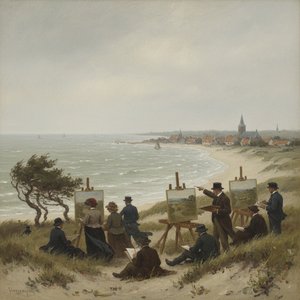
Capturing the Grey Light: A Masterclass in the Atmospheric Hague School Art Movement
Explore the ethereal beauty of the Hague School art movement. Discover how masters like Jan Weissenbruch captured the atmospheric grey light of the Dutch landscape through unparalleled technique and emotive, misty compositions.
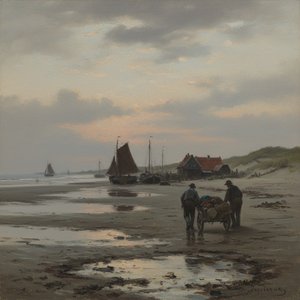
Jan Hendrik Weissenbruch: A Master of Dutch Realism & Atmospheric Light
Explore the captivating world of Jan Hendrik Weissenbruch, a master of Dutch Realism. Discover his atmospheric landscapes, influences, and legacy within the Hague School. Learn about this 19th-century artist's unique style & enduring impact.
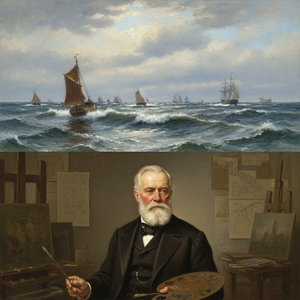
Hendrik Willem Mesdag: Pioneering Impressionism & the Dutch Maritime Tradition
Explore the life & work of Hendrik Willem Mesdag, a pioneer of Dutch Impressionism and leading figure of the Hague School. Discover his captivating seascapes and the immersive Panorama Mesdag – a true masterpiece.

The Hague School: Realism, Atmosphere & the Dawn of Dutch Impressionism
Explore the Hague School's pivotal role in Dutch art history. Discover realism, atmospheric landscapes & its influence on Impressionism. Learn about key artists like Mauve & Maris with OriginalUniqueArt.
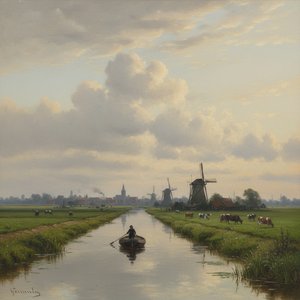
Johan Hendrik Weissenbruch: Capturing Dutch Light & Atmosphere – A Master of Realism
Discover Johan Hendrik Weissenbruch (1824-1903), a leading Dutch Hague School painter renowned for his atmospheric watercolours & oil landscapes. Explore his beautiful depictions of the Dutch countryside and skies – a master of light & detail.