

 Peržiūrėti realybėje
 Pasidalinti
 Dalintis
 Išsamiau

 Atsisiųsti
 Panašūs eksponatai
 Rentgeno nuotrauka
 Automatinė diorama
Abstract Composition (Composition abstraite)
 1934
1934 27.0 x 35.0 cm
 Skaityti daugiau
Įsigykite aukštos skiriamosios raiškos, patobulintą skaitmeninį vaizdą, gerokai pranašesnį už internetinę peržiūrą.
Kiekvieną failą mūsų specialistai kruopščiai paruošia naudojant pažangias technologijas ir profesionalų rankinį retušavimą. Užtikriname, kad kiekvienas vaizdas pasižymėtų išskirtiniu aiškumu, tikslia spalvų atspalviu ir smulkiomis detalėmis.
Baigiamas failas el. paštu pristatomas per 72 valandas; jis optimizuotas nedelsiant naudojimui profesionalioje, redakcinėje ir spausdinimo aplinkoje. Tai ta pati kokybė, kuria pasitiki aukščiausios klasės dizaino studijos, leidyklos ir galerijos.
Skaitmeninis vaizdas
Atsisiųskite didelės raiškos failą asmeniniam naudojimui, spausdinimui ir kūrybiniams projektams. ( Pirkti spaudinį Pirkti rankomis tapytą paveikslą)
Kiekvieną skaitinio vaizdo užsakymą papildė
Profesionalus skaitmeninis pristatymas, garantuotas
Pasirinkę OriginalUniqueArt.com, jūs ne tik gaunate paveikslėlį – jūs gaunate profesionaliai patobudintą skaitmeninį kūrinį, sukurtą itin tikniai ir užtikrinantį pasitenkinimą. Štai viską, kas automatiškai pritékia jūsų užsakymui:

Greitas siuntimas el. paštu
Jūsų aukštos raiškos skaitmeninis vaizdo failas bus išsiųstas jums el. paštu per 72 valaudas nuo užsakymo – paruoštas naudojimui be jokių papildomų veiksmų.

Skaitmeninis failas su dirbtiniu intelektu
Jūsų meno kūrinys profesionaliai optimizuojamas naudojant pažangius dirbtinio intelekto įrankius ir rankinį redagavimą, užtikrinant maksimalią detalę, aiškumą ir spalvų tikslumą.

Nemokamas visam laikui pakartotinis siuntimas
Atsitiktinai ištrytikote ar praradote savo failą? Nebijokite – bet kuriuo metu atsiųsime jį jums vėl nemokamai.

Jokio importo mokesčio – niekada
Mėgaukitės savo meno kūriniu akimirka – skaitiniai failai visada yra neapmokestinami, todėl nereikės mokėti muitinės, mokesčių ar pristatymo mokesčių.

Spalvų tikslumo garantija
Naudodami profesionalią įrangą ir spalvų valdymo sistemas, užtikriname, kad jūsų skaitmeninis vaizdas kuo tiksliau atspindėtų originalias spalvas.

60 dienų pasitenkinimo garantija
Jei nebuvate patenkinti savo skaitinio vaizdo, per 60 dienų jį pertaisysime arba grąkinsime 100% sumą – be jokių klausimų.

100% pinigų grąžinimo garantija
Nepat 만족inti? Gaukite visą sumokėtą sumą per 60 dienų nuo skaitmeninio failo gavimo – be jokių papildomų klausimų.

Nuolaidos dideliems užsakymams
Pirkti 3 nuotraukas – pasiūla 10% - Pirkti 5 – pasiūla 15% - Pirkti 10 ir daugiau – pasiūla 20%. Puikiai tinka kūrybiniams projektams, galerijoms bei agentūroms.
Autoriaus biografija
Early Life and Artistic Awakening
Jean Hélion, born Jean Bichier in 1904 in the rural Normandy village of Couterne, embarked on a path far removed from the world of fine art during his formative years. His childhood was initially marked by separation from his parents, spending eight years with his grandmother before rejoining them in Amiens. Though he dabbled in painting as a schoolboy—simple compositions on cardboard—poetry held his primary fascination. This early inclination towards lyrical expression would subtly inform his later visual work. A burgeoning interest in chemistry led him to enroll at the Institut Industriel du Nord in Lille, but this scientific pursuit proved short-lived; Hélion abandoned his studies in 1921 for Paris, drawn by a different kind of exploration—one focused on form and color rather than molecules and reactions. He supported himself as an architectural apprentice while continuing to write poetry, yet it was a profound encounter at the Louvre that irrevocably altered his trajectory. Immersing himself in the works of Nicolas Poussin and Philippe de Champaigne, he experienced what he termed a “great turning point,” abandoning his literary ambitions for the life of a painter. He enrolled at the Académie Adler to hone his skills, initially producing figurative paintings reminiscent of Soutine’s expressive intensity.The Embrace of Abstraction and Art Concret
The mid-1920s proved pivotal in Hélion's artistic development. A meeting with Otto Freundlich introduced him to the very concept of abstract art—a revelation that expanded his understanding of visual possibilities. The following year, he encountered Cubism through Joaquín Torres-García, a Uruguayan painter who became an important mentor. His first public exhibition in 1928 showcased still lifes bearing the hallmarks of Torres-García’s style: simplified forms and bold outlines. However, it was his involvement with Theo van Doesburg that truly propelled him towards abstraction. In 1930, Hélion co-founded Art Concret, a group dedicated to pure, non-objective art—a radical departure from representational traditions. The movement’s manifesto explicitly rejected any inspiration derived from nature or sentimentality, advocating for a universal visual language based on geometric principles. While initially aligning with this austere aesthetic, Hélion soon found himself questioning its limitations, sensing a disconnect between the rigid formalism and his own deeply felt need to connect art with reality. He became a leading figure in Abstraction-Création, further solidifying his reputation as an influential theorist and practitioner of abstract painting during the 1930s.A Transatlantic Journey and the Search for Modernity
In July 1936, Hélion embarked on a new chapter, relocating to the United States with his American wife, Jean Blair. He settled initially in New York before moving to Rockbridge Baths, Virginia, where he built a studio. This transatlantic journey marked not only a geographical shift but also a profound artistic one. While continuing to explore abstraction, Hélion increasingly felt drawn towards representation, recognizing that his work was evolving in that direction. His intellectual curiosity led him to the writings of Baudelaire, whose concept of modernity—a synthesis of the ephemeral and the eternal—deeply resonated with him. He identified Seurat and Léger as exemplars of this Baudelairian ideal, artists who successfully captured the fleeting essence of contemporary life within a timeless geometric framework. This realization triggered a radical transformation in his artistic approach, confounding expectations and setting him on a new course.The Rejection of Abstraction and Figurative Renaissance
By the late 1930s, Hélion had decisively rejected abstraction, embarking on a nearly five-decade-long exploration of figuration. This wasn’t merely a stylistic shift but a fundamental reorientation of his artistic philosophy. He sought to reconcile the geometric rigor he had embraced during the Art Concret period with the complexities and nuances of human experience. His paintings began to incorporate elements of everyday life—street scenes, interiors, portraits—rendered in a distinctive style characterized by flattened perspectives, bold colors, and a deliberate sense of artifice. During World War II, Hélion served in the French army, was captured by the Germans, and dramatically escaped. He eventually made his way to the United States again, where he lectured on his wartime experiences and published They Shall Not Have Me, a bestselling memoir that further cemented his reputation as an intellectual and artist of integrity.Legacy and Historical Significance
Jean Hélion’s artistic journey stands as a testament to the power of intellectual curiosity and the courage to challenge established norms. His early contributions to abstract art were significant, shaping the development of movements like Art Concret and influencing a generation of artists. However, his most enduring legacy lies in his bold rejection of abstraction and his subsequent exploration of figuration—a path that allowed him to synthesize geometric principles with the complexities of human experience. He was not only a gifted painter but also an eloquent critic and theorist whose writings continue to offer valuable insights into the challenges and possibilities of modern art. Hélion’s work remains a compelling example of artistic evolution, demonstrating the importance of intellectual rigor, emotional depth, and unwavering commitment to personal vision. His influence can be seen in the work of numerous contemporary artists who seek to bridge the gap between abstraction and representation, form and content, intellect and emotion.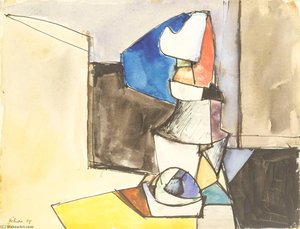
jean hélion
1904 - 1987
Trumpai apie šį kūrėją
- Artistic Movement Or Style: Abstract, Figurative
- Artists Who Influenced This Artist:
- Nicolas Poussin
- Philippe de Champaigne
- Joaquín Torres-García
- Date Of Birth: April 21, 1904
- Date Of Death: October 27, 1987
- Full Name: Jean Hélion
- Nationality: French
- Notable Artworks:
- Untitled
- Study for Luxembourg Scene
- Paperboard Saves Metal
- Place Of Birth: Couterne, France

