Meniu
NEMOKAMA MENO KONSULTACIJA
Peržiūrėti realybėjePeržiūrėti realybėje Peržiūrėti ARPeržiūrėti AR Pirkti spaudinį Pirkti spaudinįPirkti vaizdą Pirkti vaizdą PasidalintiPasidalinti
IšsamiauIšsamiau Pridėti į mėgstamiausius Pridėti į mėgstamiausius AtsisiųstiAtsisiųsti Panašūs eksponataiPanašūs eksponatai Rentgeno nuotraukaRentgeno nuotrauka Automatinė dioramaAutomatinė diorama

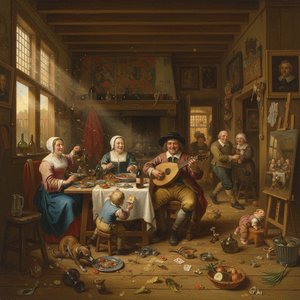
Dance in the Trattoria

Experience the lively social scene of Jan Miel's 17th-century masterpiece, Dance in the Trattoria; bring this Baroque gathering home today.

Jan Miel (1599-1664) was a Flemish painter active in Italy, known for his 'bamboccianti' genre scenes of Roman life & later classicizing history paintings. Court artist to Charles Emanuel II, Duke of Savoy.

Rankų darbo aliejinės reprodukcijos

Rankiniu būdu tapytas aliejus ant droblio jūsų pageidaujamame dydį ir rėmuose – mūsų menininkų darbas pagal užsakymą. (Pirkti spaudinį Pirkti spaudinįPirkti vaizdą Pirkti vaizdą)

P118B $10
P118H $10
P118W $10
P438Z $10
P508JH $12
P508YH $12
P805H $10
P805Z $10
P919BZ $10
P919G $10
P919XJ $10
P959ZH $10
P968JZ $12
W106C $8
W218G $10
W218JH $8
W218Y $10
W307PJ $10
W316G $10
W316PJ $8
W316Y $10
W398PJ $8
W4111J $10
W500HY $15
W500JH $15
W692G $12
W849H $8
W940BG $15
W953PJ $8

Standard
custom
CM
INCH

Pasirinkite iš mūsų nustatytų dydžių, atitinkančių originalaus meno kūrinio proporcijas.

plotis
aukštis

Galite įvesti savo matmenis, kad jie atitiktų konkretų rėmą ar erdvę. Jei pasirinktas dydis neatitinka originalaus paveikslėlio proporcijų, mes arba apkropsime meno kūrinį, arba papildysime tapybą rankomis dažytい elementais. Prieš pradėdami gamybą, jūsų patvirtinimui atsiųsime skaitmeninį maketą.
Atkreipkite dėmesį, kad ekrane rodomas vaizdas neatspindi tikrojo apkarpymo ar papildymo. Tik maketas tiksliai parodys galutinę kompoziciją.
Nors galima rinktis ir individualius dydžius, rekomenduojame pasirinkti matmenis iš nustatytos sąrašo, kad būtų išlaikytos originalios proporcijos.

Ką galima pakeisti (pavyzdžiai): Pakeisti veidą į kliento nuotrauką; Pridėti augintinį (pvz., pakeisti katę šunimi); Įtraukti paslėptą žinutę fone; Pakeisti fono kraštovaizdį ar elementus.
Gavus užsakymą, OriginalUniqueArt.com komanda susisieks su klientu el. paštu dėl instrukcijų ir pateiks maketo pavyzdį.

Pristatymas visame pasaulyje () per 3–4 savaites, o ne įprastai – per 5 savaites. (16 rugpjūtis). Kokybė lieka nepakeičiama.

why_choose_icon
Nemokamas greitasis pristatymas visame pasaulyje
why_choose_icon
Aukštos kokybės lininis drobė
why_choose_icon
Pilnas siuntimo draudimas
why_choose_icon
Muitinės mokesčių grąžinimo garantija
why_choose_icon
Tikro spalvų atitikimo garantija
why_choose_icon
60 dienų grąžinimo politika (tik esant gamyklinėms defektams)
why_choose_icon
100% pinigų grąžinimo garantija
why_choose_icon
Nuolaida už kelias reprodukcijas

Visų darbų kaina

$ 300

reproduction

Dance in the Trattoria

Reprodukcijos technika

Reprodukcijos matmenys

-

Galutinė kaina

$ 300

Trumpos informacija

  • Subject or theme: Social gathering/Dance
  • Title: Dance in the Trattoria
  • Year: 1647
  • Dimensions: 51 x 67 cm
  • Artist: Jan Miel

Karo viktorina

Kiekviename klausime yra tik vienas teisingas atsakymas.

Klausimas 1:
What is the title of the artwork being described?
Klausimas 2:
Approximately what year was 'Dance in the Trattoria' painted?
Klausimas 3:
Which artist is credited with painting 'Dance in the Trattoria'?
Klausimas 4:
The description suggests the painting depicts a lively atmosphere in which setting?
Klausimas 5:
Jan Miel's biography mentions that his style was influenced by a confluence of which two artistic traditions?

Kūrinio aprašymas

A Tapestry of Life in the Italian Courtyard

To gaze upon Jan Miel's "Dance in the Trattoria" is to be instantly transported across the centuries and into the warm, vibrant heart of an Italian gathering. This scene, rendered with masterful detail, captures more than just a moment; it encapsulates the very essence of communal joy and human connection. The composition buzzes with life—a lively tableau featuring at least thirteen figures gathered in what appears to be a sun-dappled courtyard or trattoria setting. One can almost hear the murmur of conversation, the clinking of unseen glasses, and the rhythm of an impromptu dance echoing through the space. Miel has gifted us a glimpse into a social ecosystem where every individual plays a part, contributing to the rich, palpable atmosphere.

Mastery in Monochrome: Technique and Atmosphere

Though this particular depiction is presented in striking black and white tones, one must appreciate the technical brilliance that underpins the drama. Miel’s handling of light and shadow—the interplay between illumination and deep shade across the figures and architectural elements—is breathtaking. The artist employs a technique that suggests both the robust realism of Flemish tradition and the dramatic flair characteristic of Baroque grandeur. Notice how the seating arrangements, the two benches flanking the scene, the central chair, and the dining table on the right anchor the composition while simultaneously allowing the human element to float above the mundane structure. This careful balance between static setting and dynamic action is a hallmark of Miel's genius.

The Social Fabric: Context and Symbolism

Dating from 1647, this painting serves as a rich document of genre life during the mid-seventeenth century. The varied attire of the assembled group hints at a fascinating cross-section of society—a mingling of different classes enjoying leisure time together. Symbolically, the gathering itself speaks to themes of community, pleasure, and the enduring human need for fellowship. It is an ode to shared experience. For the modern collector or designer, this piece offers more than mere decoration; it suggests a curated atmosphere of conviviality, perfect for evoking the spirit of grand entertaining within a home.

Bringing Baroque Warmth Home

Owning a reproduction of "Dance in the Trattoria" is to invite a piece of historical narrative into your own space. The emotional impact of this work is one of immediate warmth and nostalgic delight. It doesn't demand quiet contemplation; rather, it invites participation. Whether placed above a mantelpiece or used as an accent piece in a dining area, its lively energy acts as a visual catalyst, transforming a room into a place where stories are shared and laughter rings out. It is art that breathes life back into the stillness.


Autoriaus biografija

Jan Miel: Bridging Dutch Realism and Baroque Grandeur

Jan Miel (1599–1663) stands as a pivotal figure in the artistic landscape of the seventeenth century, embodying the fascinating confluence of Flemish tradition and Italian innovation. Born in Beveren, Belgium—though Antwerp and ‘s-Hertogenbosch remain contenders for his birthplace—Miel’s early life remains shrouded in relative obscurity, leaving biographical details sparse. However, what emerges from scholarly research is a remarkable artistic journey marked by stylistic evolution and collaborative endeavors that cemented his place within the vibrant cultural milieu of Rome and Turin.

His formative years were spent honing his craft primarily in Antwerp, where he absorbed the influences of prominent Flemish masters like Anthony van Dyck. While the precise scope of his training remains elusive, it undoubtedly instilled within him an appreciation for meticulous observation and refined technique—qualities that would characterize much of his subsequent oeuvre. This foundational grounding in classical draughtsmanship and portraiture provided the essential toolkit for a career that would eventually transcend regional boundaries.

The Roman Transformation and the Bamboccianti Spirit

Miel’s arrival in Rome around 1636 signaled a transformative moment in his artistic trajectory. He swiftly joined the Bentvueghels, an influential association of Dutch and Flemish artists residing in the Eternal City. Within this brotherhood, he adopted the memorable moniker ‘bieco’, a nickname reflecting his distinctive squinting gaze—a characteristic that would become synonymous with his artistic persona. This affiliation fostered deep connections within a broader artistic community deeply impacted by Pieter van Laert’s Bamboccianti style.

This movement was dedicated to depicting scenes of everyday life amongst the lower classes in Rome and its environs, eschewing the idealized grandeur of High Renaissance art for something far more visceral and immediate. Miel embraced this trend wholeheartedly, producing captivating genre paintings that captured the spirit of urban existence with remarkable realism and sensitivity. His works often featured:

  • Lively street scenes populated by travelers, merchants, and laborers.
  • A masterful use of light to evoke the dusty, sun-drenched atmosphere of Roman alleys.
  • The subtle interplay of human emotion within crowded, chaotic settings.
  • A meticulous attention to the textures of fabric, stone, and earth.

Evolution Toward Classicism and Courtly Grandeur

As his career progressed, Miel’s artistic vision underwent a significant metamorphosis. While he remained a master of the genre scene, he began to move away from the gritty realism of the Bamboccianti toward more classicizing history paintings. This shift reflected a broader trend in European art, where the raw energy of the Baroque was increasingly tempered by a desire for order, nobility, and classical allegory.

This evolution eventually led him to prestigious appointments, most notably serving as a court artist to Charles Emanuel II, Duke of Savoy. In the service of the Turin court, Miel’s work took on a more formal and magnificent character. The intimacy of his earlier Roman scenes gave way to compositions of greater scale and complexity, designed to reflect the power and prestige of his royal patron. This period represents the pinnacle of his professional achievement, where his Flemish roots in detail met the grand, sweeping narratives required by the European aristocracy.

The historical significance of Jan Miel lies in his ability to navigate these disparate worlds. He was an artist who could find beauty in the humble struggles of a Roman street urchin and dignity in the epic tales of antiquity. By bridging the gap between the meticulous realism of the North and the dramatic classicism of the South, Miel left an indelible mark on the seventeenth-century canon, ensuring his legacy as a true cosmopolitan of the Baroque era.

Jan Miel

Jan Miel

1599 - 1663 , Belgium

Trumpa informacija

  • Artistic Movement Or Style: Bamboccianti, Classicising
  • Artists Or Movements Influenced By This Artist: ['Pieter van Laer']
  • Artists Who Influenced This Artist: ['Anthony van Dyck']
  • Date Of Birth: 1599 Beveren Belgium
  • Date Of Death: 1663
  • Full Name: Jan Miel
  • Nationality: Flemish
  • Notable Artworks:
    • Landscape with a Battle between Two Rams
    • Roman Lime Kiln with Peasants Gambling
  • Place Of Birth: Beveren Belgium