
 Peržiūrėti realaus dydžio版
 Pasidalinti
 Dalintis
 Išsamiau
 Vadovas

 Atsisiųsti
 Panašūs eksponatai
 Rentgeno spindulių nuotrauka
 Automatinė diorama
 问答
问答 Statistika
PAYSAGE AVEC UNE TOUR


 Skaityti daugiau
Giclée / Meno spausdinimas
Muziejų lygio „giclée“ arba drobos spausdinimas: greita gamyba ir lankstios apdailos parinktys. ( Pirkti rankų darbo tapybą Perejti prie skaitmeninių vaizdų)




P118B €10

P118H €10

P118W €10

P438Z €10

P508JH €12

P508YH €12

P805H €10

P805Z €10

P919BZ €10

P919G €10

P919XJ €10

P959ZH €10

P968JZ €12

W106C €8

W218G €10

W218JH €8

W218Y €10

W307PJ €10

W316G €10

W316PJ €8

W316Y €10

W398PJ €8

W4111J €10

W500HY €15

W500JH €15

W692G €12

W849H €8

W940BG €15

W953PJ €8




Pasirinkite iš mūsų nustatytų dydžių, atitinkančių originalaus meno kūrinio proporcijas.

Įveskite jums reikiamą plotį ir aukštį, kad atvaizdas derėtų prie jūsų rėmo ar sienos. Spausdiną galima tik sumažinti, bet nepadidinti virš originalaus paveikslėlio dydžio, todėl keičiant proporcijas, dalis vaizdo prarandama. Prieš spausdinimą atsiųsime jums skaitmeninį maketą patvirtinimui. Šioje puslapio nuotraukoje matomas pjūvis nėra tikslus – jį rodo tik maketas.
Pristatymas visame pasaulyje () per 2 weeks, o ne įprastas 4/5 savaičių laikotarpis. (9 lapkritis)

Nemokamas greitasis pristatymas visame pasaulyje

Aukštos kokybės lininis drobė

Pilnas siuntimo draudimas

Muitinės mokesčių grąžinimo garantija

Tikro spalvų atitikimo garantija

100 dienų grąžinimo politika (tik esant įtaigoms)

100% pinigų grąžinimo garantija

Nuolaida dideliems užsakymams
 Stiklo variantas prieinamas tik pasirinkus dydį iki 110 cm

PAYSAGE AVEC UNE TOUR
Giclée / Meno spausdinimas
Reprodukcijos matmenys
-


Bendroji kaina
€ 72
The Serene Majesty of “PAYSAGE AVEC UNE TOUR” – A Dutch Golden Age Masterpiece
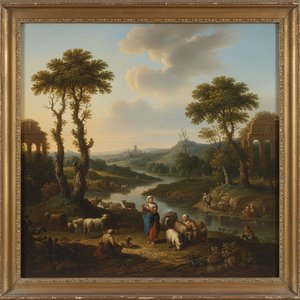
Jan Asselijn’s “PAYSAGE AVEC UNE TOUR,” a captivating landscape rendered in the rich, atmospheric style characteristic of the Dutch Golden Age, offers more than just a picturesque vista; it's an invitation to contemplate the harmony between humanity and nature. Painted around 1646-1647, likely during his formative years in Italy, this oil on panel masterpiece embodies the spirit of the era – a fascination with light, color, and the subtle nuances of the natural world, all filtered through a distinctly Dutch sensibility. The painting’s oval format immediately draws the viewer into its tranquil scene, establishing an intimate connection with the meticulously crafted landscape.A Vision of Italianate Pastoral
“PAYSAGE AVEC UNE TOUR” firmly places itself within the tradition of Italianate landscape painting that flourished during Asselijn's time. Influenced by artists like Claude Lorrain and Gaspard Poussin, he adopted a technique emphasizing atmospheric perspective – a masterful manipulation of color and detail to create an illusion of depth and distance. The distant mountains, rendered in softer hues and reduced detail, recede into the hazy horizon, while the foreground elements—a prominent tree, a winding path, and figures scattered amongst the foliage—are presented with remarkable clarity and precision. This juxtaposition creates a dynamic interplay between near and far, inviting the viewer to lose themselves within the scene’s expansive depth. The choice of an oval frame further enhances this immersive quality, framing the landscape like a cherished memory or a carefully curated vista.Technique and Materials: A Study in Light and Texture
Asselijn's skill lies not only in his compositional choices but also in his masterful handling of paint. The application is remarkably smooth, indicative of an oil painting on panel executed with considerable patience and control. Close examination reveals subtle gradations of color—a delicate shift from the earthy browns of the foreground to the lighter blues and greens of the distant mountains—that contribute significantly to the painting’s atmospheric effect. Noticeable are the carefully rendered textures: the rough bark of the tree, the undulating surface of the path, and the soft foliage all convey a tactile sense of realism. The use of light is particularly noteworthy; it's diffused and gentle, casting long shadows that add depth and drama to the scene without overwhelming the overall serenity.Symbolism and Emotional Resonance
Beyond its purely aesthetic qualities, “PAYSAGE AVEC UNE TOUR” carries a subtle symbolic weight. The prominent tree, often associated with strength and longevity, anchors the composition and serves as a visual symbol of resilience. The winding path invites contemplation and suggests a journey—both literal and metaphorical. The figures in the foreground, seemingly engaged in quiet activities, represent humanity’s connection to the land. The distant tower, partially obscured by mist, hints at exploration and the allure of the unknown. More interestingly, historical research has revealed that this painting was part of a larger series intended for the Cabinet de l'Amour, a lavishly decorated room in Paris, suggesting an intention to evoke feelings of peace and tranquility within a luxurious setting.A Timeless Appeal: Reproduction and Interior Design
“PAYSAGE AVEC UNE TOUR” remains a powerfully evocative work of art, its timeless appeal resonating with viewers across centuries. Reproductions capture the essence of Asselijn’s vision, offering an opportunity to bring this serene landscape into any interior space. Its harmonious color palette and balanced composition make it ideally suited for living rooms, studies, or bedrooms—creating a focal point that promotes relaxation and contemplation. Consider pairing it with complementary furnishings in natural tones to further enhance its tranquil atmosphere. The painting’s enduring beauty serves as a reminder of the power of art to transport us beyond our everyday lives and connect us with the wonders of the natural world.Klausimai ir atsakymai
Kokio erdvės spalvos derėtų prie „PAYSAGE AVEC UNE TOUR“ – Jan Aselijns spalvų?
„PAYSAGE AVEC UNE TOUR“ – Jan Aselijns Earthy spalvos dera su rekomenduojama erdvė: tai Hotel Lobby.
Kokią temą ir atmosferą sujungia „PAYSAGE AVEC UNE TOUR“ – Jan Aselijns?
„PAYSAGE AVEC UNE TOUR“ vaizduoja landscape, architecture, dutch art, italianate, golden age, rural scene, tower view, o jo perteikiama nuotaika yra Calm.
Ar galiu peržiūrėti „PAYSAGE AVEC UNE TOUR“ – Jan Aselijns prieš užsakant?
„PAYSAGE AVEC UNE TOUR“ Peržiūra interjere puslapio funkcija leidžia peržiūrėti kūrinį prieš užsakant.
Autoriaus biografija
Gyvenimo Kelias, Nukaltas Peizažų Tapyboje: Jan Asselijn Pasaulis
Jan Asselijn (tikrasis vardas Jean Asselin), gimęs apie 1610 metus Prancūzijos uostamiestyje Diepe, gyveno laikais, kupinais religinių permainų ir meninės kūrybos paieškų. Jo šeima, hugenotai, bėgdami nuo persekiojimų, persikėlė į Amsterdamą 1621 metais – gyvybingą prekybos centrą, klestėjusiame Nyderlandų Aukso amžiuje. Šis persikraustymas buvo lemtingas jaunajam Jeanui, jis pasinėrė į pasaulį, kuriame peizažo tapyba sparčiai tobulėjo, peržengiant tradicinius vaizdus link atmosferiškų ir emocionaliai rezonuojančių scenų. Pradžioje jis mokėsi pas Jan Martszen jaunąjį, ugdydamas įgūdžius karinių scenų tapyboje, tačiau netrukus atrado tikrą savo pašaukimą – grožio ir dramos perteikimą gamtos peizažuose bei gyvūnijos paveiksluose. Ankstyvas susipažinimas su olandiška šviesa ir plačiais dangais tapo ryškiu jo kūrybos bruožumu, tačiau būtent kelionė į Italiją padėjo jam galutinai susiformuoti meninei vizijai.Itališkas Apgaubimas Ir “Bentvueghels” Bendruomenė
Kaip ir daugelis ambicingų šiaurės Europos tapytojų, Asselijn ieškojo tobulumo Italijoje, tikslus atvykimo laikas nežinomas, tačiau manoma, kad tai įvyko po 1635 metų. Būtent ten jis visiškai pasinėrė į *itališkąjį* stilių – žanrą, kuriam būdingi saulės apšviesti vaizdai, klasikinės griuvėsiai ir pastorališkos scenos, kupinos romantikos. Jis prisijungė prie *Bentvueghels*, spalvingo Nyderlandų ir flamandų menininkų draugijos Romoje. Šie “Paukščiai”, kaip juos vadino, buvo žinomi dėl savo netradicinio elgesio, satyrinių pravardžių ir atsidavimo tapybai tiesiogiai gamtoje – atsisakydami studijų ribotumų. Šioje triukšmingoje bendruomenėje Asselijn gavo pravardę “Krabbetje” (mažasis krabas) dėl fizinės negalios, paveikusios jo ranką, tačiau jis klestėjo kūrybiškai. Jis įsisavino tokio menininko kaip Pieter van Laer (Bamboccio) įtaką, kurio romos valstiečių gyvenimo ir peizažų vaizdai giliai rezonavo su pačiu Asselijn besiformuojančiu stiliumi. Šis laikotarpis buvo lemiamas ugdant jo gebėjimą perteikti atmosferą, šviesą ir naratyvą kompozicijose.Šviesos Įvaldymo Meno Ir Simbolizmo Raktiniai Darbai
Asselijn grįžo į Amsterdamą su tobulintu įgūdžiu ir savitu balsu. Jo paveikslus charakterizuoja aiškumas ir meistriškas šviesos valdymas – savybės, greitai pelniusios jam pripažinimą. Nors jis kūrė istorines ir karines scenas, būtent jo peizažai ir gyvūnų paveikslai išskyrė jį iš kitų. “Grasinamas Gulbė”, nutapytas keturiasdešimtaisiais metais, išlieka jo garsiausiu darbu. Tai daugiau nei tik paukščio gynimo vaizdas – šis paveikslas tapo galinga Nyderlandų nacionalinės atsparos prieš išorinius grėsmijus simbolika. Uoliai savo lizdą sauganti gulbė, agresyviai atbaidanti įsibrovėlius, rezonavo su tuo metu vyravusia nerimu ir buvo interpretuojama kaip alegorija Johano de Witt, žymaus Nyderlandų valstybės veikėjo. Įdomu tai, kad vėliau paveikslo savininkai ant drobės pridėjo simbolinius įrašus – “Olandija” prie vieno iš kiaušinių ir “Valstybės priešas” šalia grasinančio šuns – dar labiau sustiprindami jo politinį kontekstą. Kiti svarbūs darbai apima “Kavalerijos Ataka Saulėlydyje”, demonstruojantį ankstesnį karinių scenų tapybos mokymąsi su dramatišku įspūdžiu, ir kaimo gyvenimo vaizdus, tokius kaip “Ganai su Galvijais Po Koliziejaus Arka Romoje”, kurie puikiai derina itališkus peizažus su gyvūnų studijomis. “Švento Antono Užtvankos Prarūva Prie Amsterdamo” parodo jo gebėjimą užfiksuoti nacionalinės krizės akimirką, atspindintį nuolatinę vandens grėsmę ir Nyderlandų žemės įsisavinimo sudėtingumą.Įtaka Ir Palikimas: Trūkstantis Įspūdis
Jan Asselijn poveikis apėjo ribas jo paties gausios kūrybos. Jį gerbė bendraamžiai, tokie kaip Rembrandt, kuris net sukūrė graviūras su menininku darbe – tačiau pastebima, kad šios graviūros užmaskuoja Asselijn rankas, galbūt jautriai pripažindami jo fizinę negalią. Jis taip pat buvo mentorius Frederik de Moucheron, kito žymaus Nyderlandų peizažisto, kuris toliau populiarino itališkąjį stilių. Asselijn novatoriškas požiūris į šviesą ir atmosferą turėjo įtakos kartai menininkų, keliant natūralizmo ir emocinio gilumo lygį peizažo tapyboje. Jo darbai dabar saugomi prestižiniuose rinkiniuose, tokiuose kaip Rijksmuseum Amsterdamas, užtikrinant jo palikimą kaip reikšmingą Nyderlandų Aukso amžiaus veikėją. Jis mirė gana jaunas, 1652 metais, tačiau paliko po save kūrinių rinkinį, kuris ir toliau žavi žiūrovus savo grožiu, drama ir subtiliais prasminiais sluoksniais.
Jan Aselijns
1610 - 1652 , Prancūzija
Trumpa informacija
- Artistic Movement Or Style: Itališkas peizažas
- Artists Or Movements Influenced By This Artist: ['Frederikas de Moucheron']
- Artists Who Influenced This Artist:
- Esaias van de Velde
- Bamboccio
- Rembrandt
- Date Of Birth: apie 1610
- Date Of Death: 1652
- Full Name: Jan Asselijn
- Nationality: Olandietis
- Notable Artworks:
- Grėsmingas gulbis
- Kavalerijos puolimas
- Place Of Birth: Diepas, Prancūzija
Susiję straipsniai

Golden Light & Dutch Skies: The Timeless Magic of Dutch Golden Age Landscapes
Discover the breathtaking beauty of Dutch Golden Age landscapes. Explore the mastery of light, chiaroscuro, and 17th-century realism through an expert art history lens, celebrating the enduring legacy of the Dutch Masters for discerning collectors and art lovers.

Masterpieces of Light: A Definitive Guide to the Landscapes of the Dutch Golden Age
Discover the luminous mastery of Dutch Golden Age landscapes. Our expert guide explores the atmospheric realism of masters like Van Goyen and Cuyp. Elevate your space with museum-quality, hand-painted oil reproductions from OriginalUniqueArt.com. Art history, beautifully realized.
Nicolaes Berchem: Dutch Golden Age Pastoralism & the Evolution of Landscape Painting
Explore the captivating world of Nicolaes Berchem, a leading Dutch Golden Age painter. Discover his idyllic landscapes, masterful technique & lasting influence on art history. Learn more at OriginalUniqueArt.

Olandijos Aukso Amžius: 10 Šedevrų, Apibrėžiančių Meną ir Stilių
Atraskite Olandijos Aukso Amži\u017us meninius šedevrus! 10 legendin\u017iŴ paveikslžiai – Rembrandto, Vermeerio ir kt. darbai. Sužnkitę j\u016ungo namus aukso amži\u017us grožiu! Āukrai, interjero dizainas – viskas OriginalUniqueArt.com. Ižirkite kolekciją internete!

Golden Light & Dutch Skies: Bringing the Magic of Dutch Golden Age Landscapes into Your Home
Transform your home with the breathtaking light of Dutch Golden Age landscapes. Discover how hand-painted oil reproductions of masterworks like Ruisdael and Vermeer bring timeless elegance, atmosphere, and soulful texture to modern interiors. Elevate your space with museum-quality art.