Perjungti į spausdinamus版作品
 Skaityti daugiau







































 Dėl meno kūrinių ar reprodukcijų, kurių bet kuri pusė yra didesnė nei 105 cm (apie 41 inch), rėmas bus siunčiamas kaip išskaidytas surinkimo rinkinys. Šis metodas užtikrina saugų pristatymą ir apsaugo nuo transportavimo metu galimos žalos.


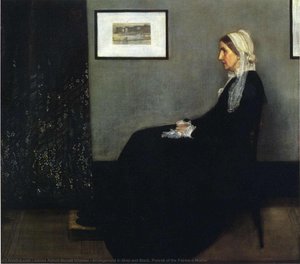
A Symphony in Gray: The Intimate World of Annie Seated
In the quietude of James Abbott McNeill Whistler’s 1859 masterpiece, “Annie Seated,” we encounter a moment suspended in time, far removed from the clamor of the industrial age. This delicate work is not merely a portrait of a young woman; it is a profound meditation on atmosphere and the beauty of restraint. Through a masterful command of monochrome tones, Whistler invites us into a private sanctuary where the boundaries between subject and space begin to dissolve. The figure, likely Annie Harriet Haden, sits with a poised yet vulnerable grace, her presence anchored by the simple geometry of a wooden chair against a neutral, receding wall. There is an undeniable intimacy in this composition, a sense that we are witnessing a fleeting, silent breath captured forever in graphite and ink.
The technical brilliance of this piece lies in its subtle complexity. Utilizing the meticulous technique of drypoint etching with pencil, Whistler achieved a textural richness that defies its monochromatic palette. By layering intricate hatching and crosshatching, he built up tonal gradations that mimic the soft grain of paper and the delicate folds of fabric. This approach allows for a play of light that feels diffused and ethereal, as if the scene is viewed through a gentle morning mist. The influence of Japonisme—the mid-19th-century European fascination with Japanese aesthetics—is palpable in the way Whistler prioritizes flat planes of tone and organic, flowing lines over heavy shadows or dramatic perspective. This stylistic choice lends the artwork a modern, almost minimalist elegance that remains strikingly relevant to contemporary tastes.
The Philosophy of Aestheticism and Emotional Resonance
To understand “Annie Seated,” one must understand Whistler’s radical rebellion against the Victorian era's obsession with moralizing art. During a time when paintings were expected to tell didactic stories or convey heavy-handed social messages, Whistler championed the creed of “art for art’s sake.” He believed that the primary purpose of a work was to evoke sensory pleasure and aesthetic harmony through color, form, and composition alone. In this drawing, there is no grand narrative or historical drama; instead, the emotional weight is carried by the subject's downward gaze and the quiet stillness of her posture. This creates a sense of profound introspection and melancholy, making the piece an ideal focal point for spaces designed for contemplation and peace.
For the discerning collector or interior designer, “Annie Seated” offers a timeless versatility. Its neutral, cream-and-gray palette acts as a sophisticated anchor in any room, complementing both classical and modern decor. Whether placed in a sunlit gallery or a moody, dimly lit study, the artwork brings with it an aura of intellectual depth and understated luxury. A high-quality reproduction of this work allows one to possess not just a beautiful image, but a piece of art history—a fragment of the movement that redefined the boundaries of modern beauty and taught us to find magic in the most subtle of shadows.
Klausimai ir atsakymai
Kokį Džeimsas Vistleris kūrybos etapą atspindi „Annie Seated“?
„Annie Seated“ priklauso Džeimsas Vistleris kūrybos karjeros Early etapui. Ši klasifikacija atspindi kūrinio ryšį su menininko evoliucija.
Kokie yra „Annie Seated“ reprodukcijos teisės Reading Public Museum kolekcijoje?
Originalus kūrinys „Annie Seated“ saugomas Reading Public Museum, o jo autorinė teisė yra yra viešosios erdvės dalis – jo autorinė teisė pasibaigusi.
Ar galiu peržiūrėti „Annie Seated“ – Džeimsas Vistleris prieš užsakant?
„Annie Seated“ Peržiūra interjere puslapio funkcija leidžia peržiūrėti kūrinį prieš užsakant.
Daugiau informacijos apie šį paveikslą
 Peržiūrėti realaus dydžio版
 Pasidalinti
 Dalintis
 Išsamiau
 Vadovas

 Atsisiųsti
 Panašūs eksponatai
 Rentgeno spindulių nuotrauka
 Automatinė diorama
 问答
问答 Statistika