Perjungti į spausdinamus版作品
 Skaityti daugiau







































 Dėl meno kūrinių ar reprodukcijų, kurių bet kuri pusė yra didesnė nei 105 cm (apie 41 inch), rėmas bus siunčiamas kaip išskaidytas surinkimo rinkinys. Šis metodas užtikrina saugų pristatymą ir apsaugo nuo transportavimo metu galimos žalos.


A Riotous Tableau of Flemish Revelry: Jacob Jordaens’ “The King Drinks”
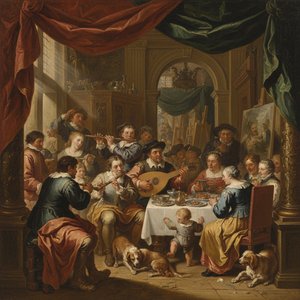
Jacob Jordaens' "The King Drinks," painted in 1640, isn’t merely a depiction of a feast; it’s a vibrant explosion of Baroque energy captured on canvas. This monumental oil painting, now residing within the Oldmasters Museum in Brussels, transports the viewer directly into the heart of a Twelfth Night celebration – a boisterous gathering steeped in tradition and overflowing with life. Jordaens, a key figure in the Antwerp School, masterfully employs his signature style to create an immersive scene that pulsates with movement, color, and a palpable sense of joyous excess.
The painting’s core is dominated by its dynamic composition – a carefully orchestrated chaos of figures engaged in a multitude of activities. Diagonal lines, created through the arrangement of tables laden with food, overflowing goblets, and the bodies of revelers, propel the eye across the canvas, drawing us into the swirling heart of the celebration. Jordaens’s masterful use of perspective flattens the space, lending an immediate and overwhelming sense of participation. The scene feels less like a distant observation and more like being thrust directly into the midst of the merriment – a truly immersive experience.
The Ritual of Twelfth Night: Symbolism in Excess
“The King Drinks” is deeply rooted in the traditions surrounding Twelfth Night, a pivotal event in the medieval calendar. This celebration marked the end of the old year and the beginning of the new, often involving elaborate feasts, games, and symbolic rituals. The central figure, crowned and holding a goblet high, embodies the role of the “Bean King” – a temporary ruler chosen to preside over the festivities. The abundance of food and drink—roast meats, overflowing platters, and goblets brimming with wine—is not simply decorative; it’s a potent symbol of prosperity, indulgence, and the shedding of old ways. The scattered beans themselves, remnants of the celebratory meal, represent the guiding star that led the Magi to the infant Jesus – a reminder of the religious significance underlying the secular revelry.
A Masterclass in Baroque Technique
Jordaens’s skill as a painter is immediately evident in his meticulous attention to detail and his masterful command of light and shadow. The figures are rendered with remarkable realism, each face capturing a distinct expression of delight, drunkenness, or mischievousness. Notice the subtle variations in texture – the rough weave of fabrics, the glistening sheen of wine, the smooth skin tones of the characters. Jordaens employs a dramatic chiaroscuro technique, utilizing strong contrasts between light and dark to heighten the sense of drama and create a palpable atmosphere of excitement. The brushstrokes are visible yet blended seamlessly, contributing to the painting’s rich texture and vibrant color palette.
A Window into 17th-Century Flemish Life
“The King Drinks” offers a fascinating glimpse into the social customs and values of 17th-century Flanders. The scene depicts a gathering that transcends mere entertainment; it's a celebration of community, tradition, and the release of pent-up energy. The inclusion of children amidst the revelry underscores the importance of family and the acceptance of boisterous behavior as part of the festive spirit. Jordaens’s work reflects a society where pleasure was not merely tolerated but actively embraced – a testament to the vibrant cultural landscape of Antwerp during his time. It's a painting that invites us to step back in time and experience, vicariously, the joyous chaos of a Twelfth Night celebration.
Klausimai ir atsakymai
Koks kontrastas pasižymi kūrinys „The King Drinks“ – Jacob Jordaens?
Šviesos ir tamsos kontrastas kūriniame „The King Drinks“ yra nurodytas kaip Statement. Kontrastas aprašo, kaip stipriai skiriasi šviesios ir tamsios sritys.
Ar „The King Drinks“ yra būdingas tam, ką Jacob Jordaens paprastai kūrė?
„The King Drinks“ vaizduoja feast, revelry, royalty, baroque, celebration, drinking, excess, dutch art, o įrašytos Jacob Jordaens temos yra rubens' influence, dynamic composition, flemish extravagance, opulent scenes, baroque drama, theatrical display, moral excess, indulgence critique. Šių dviejų lyginimas parodo, kaip šis kūrinys susijęs su įprastais šio kūrybinio veiksmo objektais.
Atsižvelgiant į kūrinio datą, prie kokios Jacob Jordaens karjeros etapos galima priskirti „The King Drinks“?
„The King Drinks“, sukurta 1638 m., priklauso Jacob Jordaens kūrybinio karjeros laikotarpio Mature Period.
Daugiau informacijos apie šį paveikslą
 Peržiūrėti realaus dydžio版
 Pasidalinti
 Dalintis
 Išsamiau
 Vadovas

 Atsisiųsti
 Panašūs eksponatai
 Rentgeno spindulių nuotrauka
 Automatinė diorama
 问答
问答 Statistika