

 Peržiūrėti realaus dydžio版
 Siųsti
 Dalintis
 Išsamiau
 Vadovas

 Atsisiųsti
 Panašūs eksponatai
 Rentgeno spindulių nuotrauka
 Diaporama
 Statistika
Landscape with Waterfall
 Oil On Canvas
- WallArt
- Baroque Landscape
 1668
1668 196.0 x 142.0 cm
 Rijksmuseum
 Rodyti daugiau
Rankų darbo aliejinės reprodukcijos
Rankiniu būdu tapytas aliejus ant droblio jūsų pageidaujamame dydį ir rėmuose – mūsų menininkų darbas pagal užsakymą. ( Perjungti į spausdinimą Perejti prie skaitmeninių vaizdų)




P118B €10

P118H €10

P118W €10

P438Z €10

P508JH €12

P508YH €12

P805H €10

P805Z €10

P919BZ €10

P919G €10

P919XJ €10

P959ZH €10

P968JZ €12

W106C €8

W218G €10

W218JH €8

W218Y €10

W307PJ €10

W316G €10

W316PJ €8

W316Y €10

W398PJ €8

W4111J €10

W500HY €15

W500JH €15

W692G €12

W849H €8

W940BG €15

W953PJ €8




Pasirinkite iš mūsų nustatytų dydžių, atitinkančių originalaus meno kūrinio proporcijas.

Įveskite jums reikiamą plotį ir aukštį, kad paveikslas atitiktų jūsų rėmą ar sieną. Kadangi šis darbas yra rankinio darbo, siekiant išgauti kitokio formos dydį, paveikslas gali būti šiek tiek didesnis (nuo kraštų bus palikta daugiau erdvės) arba mažesnis – pasirinkite jums patogiausią variantą. Prieš pradedant tapyti, atsiųsime jums skaitmeninį maketą patvirtinimui. Šioje puslapio nuotraukoje matomas vaizdas nėra galutinis rezultatas – jį parodys tik sukurtas maketas.
Gavus užsakymą, OriginalUniqueArt.com komanda susisieks su klientu el. paštu dėl instrukcijų ir pateiks maketo pavyzdį
Pristatymas visame pasaulyje () per 3–4 savaites, o ne įprastai – per 5 savaites. (27 spalis). Kokybė lieka nepakeičiama.

Nemokamas greitasis pristatymas visame pasaulyje

Aukštos kokybės lininis drobė

Pilnas siuntimo draudimas

Muitinės mokesčių grąžinimo garantija

Tikro spalvų atitikimo garantija

100 dienų grąžinimo politika (tik esant įtaigoms)

100% pinigų grąžinimo garantija

Nuolaida dideliems užsakymams
 Stiklo variantas prieinamas tik pasirinkus dydį iki 110 cm

Landscape with Waterfall
Reprodukcijos technika
Reprodukcijos dydis
-


Visų pasirinktų variantų kaina
€ 264
Jacob Isaackszoon van Ruysdael's "Landscape with Waterfall" – A Masterpiece of Dutch Serenity
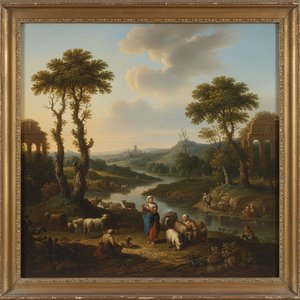
Painted in 1668 during the height of the Dutch Golden Age, Jacob Isaackszoon van Ruysdael’s “Landscape with Waterfall” is more than just a depiction of a natural scene; it's a profound meditation on tranquility and the sublime power of nature. This artwork, measuring 196 x 142 cm, exemplifies Ruysdael’s unparalleled skill in capturing the atmospheric nuances of the Dutch countryside – a skill that firmly established him as the pre-eminent landscape painter of his era. The scene unfolds with a quiet drama, a waterfall cascading over rugged rocks within a dense forest, inviting the viewer into a world of muted tones and subtle light.
Composition and Technique: A Study in Atmospheric Perspective
Ruysdael’s compositional mastery is immediately apparent. The painting adheres to the traditional Dutch Golden Age landscape format, skillfully dividing the canvas into foreground, middle ground, and background. The dominant waterfall, rendered with swirling brushstrokes of white and blue, anchors the lower portion, drawing the eye upwards through the scene. The artist employs a sophisticated use of atmospheric perspective – a technique crucial to creating depth in 17th-century paintings. Distant hills and structures are depicted in paler shades, subtly blurring as they recede into the distance, reinforcing the illusion of vast space. The careful layering of oil paint, characteristic of Ruysdael’s meticulous technique, allows for smooth transitions between tones and textures, particularly evident in the rendering of the foliage and the water itself. The use of horizontal lines – the riverbanks and horizon – provides a grounding element to the dynamic diagonal thrust of the cascading water.
Symbolism and Emotional Impact: The Language of Nature
Beyond its technical brilliance, “Landscape with Waterfall” resonates with profound symbolic meaning. Waterfalls have long been associated with themes of renewal, purification, and the relentless passage of time – concepts deeply ingrained in Western thought. Ruysdael’s depiction elevates these ideas to a visual statement, inviting contemplation on the cyclical nature of existence. The expansive landscape evokes feelings of peace, serenity, and awe at the grandeur of the natural world, reflecting the Dutch Golden Age's burgeoning interest in humanist philosophy and appreciation for the beauty of the earth. The absence of human figures further emphasizes this connection to untamed nature, allowing viewers to project their own emotions and interpretations onto the scene.
Historical Context and Artistic Style
Created in 1668, “Landscape with Waterfall” firmly places Ruysdael within the context of the Dutch Golden Age. This period witnessed an unprecedented flourishing of art, science, and commerce, fueled by wealth generated from global trade. Ruysdael’s landscapes were not merely decorative; they reflected a growing intellectual movement that valued observation, reason, and the pursuit of knowledge – qualities exemplified in his meticulous rendering of natural forms. His style, characterized by its realism and atmospheric effects, anticipated later developments in landscape painting, influencing generations of artists to come. The painting's palette—dominated by earthy browns, greens, and grays—is typical of Ruysdael’s work, contributing to the overall sense of quiet contemplation and understated beauty.
问答 (or more naturally for a website heading): Klausimai ir atsakymai
Kokias spalvas naudoja „Landscape with Waterfall“?
„Landscape with Waterfall“ spalvos sudaro Earthy paletę. Ši klasifikacija aprašo dominuojančias spalvų grupes.
Kas yra „Landscape with Waterfall“?
„Landscape with Waterfall“, autorius – Jakobas Isaakszonas Van Ruisdaelis vaizdeletas: dutch landscape, waterfall scene, ruisdael artwork, golden age art, forest setting, atmospheric perspective, landscape painting.
Ar „Landscape with Waterfall“ saugoma kūrijasio šalyje?
Ne – kūrinys saugomas užsienyje. kūrinys „Landscape with Waterfall“ saugomas Netherlands, o Jakobas Isaakszonas Van Ruisdaelis gimė Nyderlandai.
Autoriaus biografija
Ankstyvas gyvenimas ir karjeros pradžia
Jakobas Isaakszonas van Ruisdaelis, iškiliausias XVII amžiaus Nyderlandų tapytojas, grafikas ir etseris, gimė 1628 metais Harleme. Jis plačiai pripažįstamas kaip aukso amžiaus kraštovaizdžio tapybos pradininkas – laikotarpio, žymimo dideliu turtu ir kultūriniais pasiekimais. Ruisdaelio tėvas, Isaakszonas van Ruisdaelis, taip pat buvo dailininkas, tačiau jo darbai išlikę fragmentiškai, todėl sunku tiksliai įvertinti jo įtaką sūnaus kūrybai. Jaunasis Jakobas greitai parodė talentą piešimui ir tapybai, o jo ankstyvieji darbai atspindi mokymosi etapą, kuriame jis sekė savo amžininkų pavyzdžiu.
Kūrybinis stilius ir svarbiausi darbai
Van Ruisdaelio kūrybą apibūdina universalumas ir didelis produktyvumas. Jis vaizdavo įvairius kraštovaizdžio motyvus – nuo ramių Nyderlandų kaimo peizažų iki dramatiškų kalnų vaizdų, miesto panoramų ir jūrinių scenų. Nuo 1646 metų jis sukūrė daugybę nuostabių Nyderlandų kraštovaizdžių, kurie vėliau įgijo didingesnį charakterį po kelionės į Vokietiją 1650 metais. Kelionė turėjo lemiamą reikšmę jo kūrybai, suteikdama jam naujų įkvėpimo šaltinių ir galimybę pamatyti platesnius kraštovaizdžio horizontus. Vėlesni darbai, sukurti gyvenant ir dirbant Amsterdame, pasižymėjo miesto panoramomis ir jūrų vaizdais, dažnai dangui skiriant du trečdalius drobės ploto. Tai atspindi jo susidomėjimą atmosferos efektų perteikimu ir gamtos didybe.
- “Kritęs medis” – puikus pavyzdys, demonstruojantis Ruisdaelio meistriškumą vaizduojant šviesą ir kompoziciją. Šiame darbe jis subtiliai perteikia gamtos trapumą ir laikinojo grožio temą.
- “Haarlemo vaizdas su balinimų aikštelėmis” – iliustruoja jo gebėjimą užfiksuoti Nyderlandų kraštovaizdžio esmę. Šiame paveiksle Ruisdaelis atspindi miesto gyvenimo ritmą ir kasdienius įvykius.
- “Dam aikštės ir Damrako vaizdas Amsterdame” – pabrėžia jo talentą miestų tapyboje. Šiame darbe jis kruopščiai perteikia miesto architektūrą ir atmosferą, sukuriant įspūdingą panoramą.
Įtaka ir palikimas
Van Ruisdaelio įtaka kraštovaizdžio tapybos tradicijoms yra gili. Jo darbai turėjo didelį poveikį anglų romantikams, Barbizon mokyklai Prancūzijoje ir Hadsono upės mokyklai JAV. Jis įkvėpė daugybę Nyderlandų kraštovaizdžio tapytojų kartas. Ruisdaelio kūryba pasižymi subtiliu emociniu krūviu, gamtos didybės perteikimu ir filosofine interpretacija. Jo darbai ne tik atspindi XVII amžiaus Nyderlandų kraštovaizdį, bet ir kelia universalius klausimus apie žmogaus vietą pasaulyje ir gamtos trapumą.
Vėlesnis laikotarpis ir techninės inovacijos
Ruisdaelio vėlesni darbai pasižymi didesniu dėmesiu dangui ir atmosferos efektams. Jis eksperimentavo su šviesos ir šešėlio kontrastais, siekdamas perteikti gamtos dinamiką ir nuotaikas. Jo tapybos technika buvo labai savita – jis naudojo plonus dažų sluoksnius, sukuriant subtilius perėjimus ir spalvinius niuansus. Ruisdaelis taip pat buvo puikus etseris, kurio grafikos darbai papildo jo tapybos kūrybą. Jo etsai pasižymi didele detalumu ir preciziškumu, atspindint jo meistriškumą piešimo srityje.
Muziejai ir kolekcijos
Van Ruisdaelio darbai yra išsibarstę privačiose ir institucinėse kolekcijose visame pasaulyje. Žymiausios kolekcijos, kuriose galima pamatyti jo kūrinius:
- Nacionalinė galerija Londone.
- Rijksmuseum Amsterdame.
- Ermitažo muziejus Sankt Peterburge.
Van Ruisdaelio darbai yra vertinami už jų meninę kokybę, istorinę reikšmę ir filosofinį turinį. Jis liko vienu iš svarbiausių Nyderlandų aukso amžiaus tapytojų, įkvėpiančiu naujas kartas dailininkų ir meno mėgėjų.

Jakobas Isaakszonas Van Ruisdaelis
1628 - 1682 , Nyderlandai
Trumpa informacija apie kūrėją
- Gimimo Data: 1628 m.
- Gimimo Vieta: Haarlem, Nyderlandai
- Meninis Stilius: Olandijos aukso amžius
- Mirties Data: 1682 m.
- Pilietybė: Olandas
- Pilnas Vardas: Jacob Isaackszoon van Ruisdael
- Įtakoję Menininkai: ['Hendrick Vroom']
- Įtakoti Judėjimai: ['Anglų romantizmas']
- Žymiausi Darbai:
- View of Haarlem
- Waterfall landscape
- Amsterdam cityscape
Susiję straipsniai
Nicolaes Berchem: Dutch Golden Age Pastoralism & the Evolution of Landscape Painting
Explore the captivating world of Nicolaes Berchem, a leading Dutch Golden Age painter. Discover his idyllic landscapes, masterful technique & lasting influence on art history. Learn more at OriginalUniqueArt.

Golden Light & Dutch Skies: The Timeless Magic of Dutch Golden Age Landscapes
Discover the breathtaking beauty of Dutch Golden Age landscapes. Explore the mastery of light, chiaroscuro, and 17th-century realism through an expert art history lens, celebrating the enduring legacy of the Dutch Masters for discerning collectors and art lovers.

Mastering Light & Shadow: A Journey Through the Dutch Golden Age's Luminous Legacy
Embark on a cultural journey through the Dutch Golden Age. Explore the masterful interplay of light and shadow in 17th-century masterpieces, from Rembrandt to Vermeer, and discover how this era of profound realism continues to inspire fine art collectors today.

Golden Light & Dutch Skies: Bringing the Magic of Dutch Golden Age Landscapes into Your Home
Transform your home with the breathtaking light of Dutch Golden Age landscapes. Discover how hand-painted oil reproductions of masterworks like Ruisdael and Vermeer bring timeless elegance, atmosphere, and soulful texture to modern interiors. Elevate your space with museum-quality art.

Olandijos Aukso Amžius: 10 Šedevrų, Apibrėžiančių Meną ir Stilių
Atraskite Olandijos Aukso Amži\u017us meninius šedevrus! 10 legendin\u017iŴ paveikslžiai – Rembrandto, Vermeerio ir kt. darbai. Sužnkitę j\u016ungo namus aukso amži\u017us grožiu! Āukrai, interjero dizainas – viskas OriginalUniqueArt.com. Ižirkite kolekciją internete!

