Ecsalių versija
 Viskas apie Nr. 6







































 Dėl meno kūrinių ar reprodukcijų, kurių bet kuri pusė yra didesnė nei 105 cm (apie 41 inch), rėmas bus siunčiamas kaip išskaidytas surinkimo rinkinys. Šis metodas užtikrina saugų pristatymą ir apsaugo nuo transportavimo metu galimos žalos.


Number 6 by Jackson Pollock: A Deep Dive
- Title: Number 6
- Artist: Jackson Pollock
- Year: 1949
- Dimensions: 112 x 137 cm
- Medium: Oil on Canvas
The Essence of Abstract Expressionism
Number 6 stands as a pivotal work within Jackson Pollock's oeuvre and the broader movement of Abstract Expressionism. Emerging in post-World War II America, this style rejected traditional representational art, instead prioritizing spontaneous gesture and emotional expression. Abstract Expressionists sought to convey profound human experiences through non-figurative forms, reflecting a sense of anxiety, liberation, and existential questioning prevalent during that era. Pollock's contribution was particularly revolutionary, moving away from the easel and embracing a radical new technique.
Pollock’s Drip Technique: Action Painting in Motion
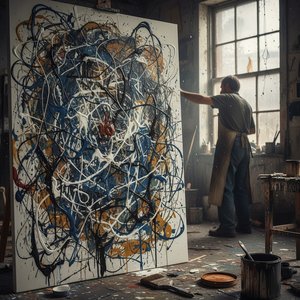
What truly sets Number 6 apart is Pollock’s groundbreaking “drip” or "pouring" technique. Rather than using brushes on an upright canvas, he laid the canvas flat on the floor and dripped, poured, and flung paint from above. This method allowed for a complete immersion in the creative process – Pollock literally moved around the canvas, engaging his entire body in the act of painting. This approach is often referred to as "action painting," emphasizing the physical energy and spontaneity inherent in the creation. The resulting composition isn't planned; it emerges organically from the interaction between paint, gravity, and the artist’s movements. Number 6 exemplifies this perfectly – a complex web of interwoven lines and colors that seem to pulsate with kinetic energy.
Symbolism and Emotional Resonance
While seemingly chaotic at first glance, Number 6 possesses an underlying structure and rhythm. The dense network of lines creates a sense of depth and complexity, drawing the viewer into its intricate details. The colors—ranging from blacks and whites to subtle shades of brown and gray—evoke a mood of introspection and contemplation. Some art historians interpret Pollock’s work as reflecting psychological states – the tangled web representing subconscious thoughts or emotions. Others see it as an exploration of pure form and color, divorced from any representational meaning. Regardless of interpretation, Number 6 evokes a powerful emotional response—a feeling of both exhilaration and unease, mirroring the complexities of the human condition.
Legacy and Enduring Appeal
Number 6 is more than just a painting; it’s a symbol of artistic innovation and a testament to Pollock's enduring influence. It challenged conventional notions of art-making and paved the way for future generations of artists to explore abstraction and expressive gesture. Its dynamic composition and emotional depth continue to captivate audiences worldwide, making it a highly sought-after artwork and a compelling subject for reproduction.
Klausimai ir atsakymai
Ar šis kūrinys Nr. 6 yra sukeitintas rankiniu būdu ar atspausdintas?
Ranko darbas: profesionalus pavežėjas rankiniu būdu nukopijuoja Nr. 6 aliejuje ant lino drobės.
Kokią dydį turėčiau pasirinkti darbui Nr. 6?
Originalo matmenys yra 112 x 137 cm. Dydviai svyra nuo 28.7 x 34.8 cm (€178) iki 199.6 x 242.2 cm (€1577); šioje pusėje pateiktoje lentelėje nurodyti pagrindiniai etapai ir jų kainos.
Kiek trunka pristatymas?
Pristatymas užtruks nuo 4 iki 5 savaičių, naudojant nemokamą ekspresinį siuntimą visame pasaulyje; šioje pusėje taip pat galite rinktis skubios gamybos variantą. Jūs galite grąžinti prekę per 100 dienų ir gauti visą sumokėtą sumą atgal, nepriklausomai nuo bet kokių sąlygų.
Kokia technika buvo naudojama kūriniui Nr. 6 autoriu Jackson Pollock?
Aliejus ant drobės
 Peržiūrėti realaus dydžio版

 Pasidalinti
 Dalintis
 Išsamiau
 Informacinė l lapelė


 Atsisiųsti
 Panašūs eksponatai
 Rentgeno spindulių nuotrauka
 Automatinė diorama
 问答

 Statistika