

 Peržiūrėti realaus dydžio版
 Siųsti
 Dalintis
 Išsamiau
 Vadovas

 Atsisiųsti
 Panašūs eksponatai
 Rentgeno spindulių nuotrauka
 Diaporama
 Statistika
Installation View


 Rodyti daugiau
Šiame puslapyje rodomas meno kūrinys yra saugomas autorių teisių įstatymais, todėl neturime teisės legaliai kurti ar parduoti jo identiškos reprodukcijos. Ši apsauga užtikrinama remiantis tokiais tarptautiniais susitarimais kaip Bernės konvencija ir pagal nacionalines įstatymų nuostatas, įskaitant tas, kurias nurodo JAV autoriškos teisės įstatymas – 17-asis skyrius.
Kaip pagarbią ir teisėtą alternatyvą, mes siūlome pagal užsakymą rankomis dažytus paveikslus, įkvėptus originalo. Mūsų įgudę ir profesionalūs menininkai kruopščiai tiria originalo stilių, nuotaiką ir meninę esmę, kad sukurtų naują, unikalią kūrinį, kuris sukelia tą paties jausmą – išlikdamas tuo tarciau originaliu, savarankišku kūrybiniu darbu.
Šis metodas visiškai atitinka autorių teises, nes jame nėra kūrinio kopijavimo ar dubliavimo. Tai yra kūrybinė reinterpretacija – naujas paveikslas, kurį įkvėpė originalas, tačiau kuris nėra jo identiškas.
Rankų darbo aliejinės reprodukcijos
Rankiniu būdu tapytas aliejus ant droblio jūsų pageidaujamame dydį ir rėmuose – mūsų menininkų darbas pagal užsakymą. ( Perjungti į spausdinimą Perejti prie skaitmeninių vaizdų)




P118B €10

P118H €10

P118W €10

P438Z €10

P508JH €12

P508YH €12

P805H €10

P805Z €10

P919BZ €10

P919G €10

P919XJ €10

P959ZH €10

P968JZ €12

W106C €8

W218G €10

W218JH €8

W218Y €10

W307PJ €10

W316G €10

W316PJ €8

W316Y €10

W398PJ €8

W4111J €10

W500HY €15

W500JH €15

W692G €12

W849H €8

W940BG €15

W953PJ €8




Pasirinkite iš mūsų nustatytų dydžių, atitinkančių originalaus meno kūrinio proporcijas.

Įveskite jums reikiamą plotį ir aukštį, kad paveikslas atitiktų jūsų rėmą ar sieną. Kadangi šis darbas yra rankinio darbo, siekiant išgauti kitokio formos dydį, paveikslas gali būti šiek tiek didesnis (nuo kraštų bus palikta daugiau erdvės) arba mažesnis – pasirinkite jums patogiausią variantą. Prieš pradedant tapyti, atsiųsime jums skaitmeninį maketą patvirtinimui. Šioje puslapio nuotraukoje matomas vaizdas nėra galutinis rezultatas – jį parodys tik sukurtas maketas.
Gavus užsakymą, OriginalUniqueArt.com komanda susisieks su klientu el. paštu dėl instrukcijų ir pateiks maketo pavyzdį
Pristatymas visame pasaulyje () per 3–4 savaites, o ne įprastai – per 5 savaites. (21 spalis). Kokybė lieka nepakeičiama.

Nemokamas greitasis pristatymas visame pasaulyje

Aukštos kokybės lininis drobė

Pilnas siuntimo draudimas

Muitinės mokesčių grąžinimo garantija

Tikro spalvų atitikimo garantija

100 dienų grąžinimo politika (tik esant įtaigoms)

100% pinigų grąžinimo garantija

Nuolaida dideliems užsakymams
 Stiklo variantas prieinamas tik pasirinkus dydį iki 110 cm

Installation View
Reprodukcijos technika
Reprodukcijos dydis
-


Visų pasirinktų variantų kaina
€ 262
A Desert Soul Captured: Inji Efflatoun's "Installation View"
The photograph presents a carefully orchestrated tableau – an “Installation View” as the caption suggests, capturing Inji Efflatoun’s work within the serene confines of a minimalist gallery space. It’s not merely a display of paintings; it’s a deliberate composition designed to invite contemplation and reveal the artist's profound connection to her Egyptian heritage. The stark white walls act as a powerful counterpoint to the vibrant, earthy tones and intricate patterns that dominate the artwork itself, drawing our attention directly to Efflatoun’s evocative vision.
The arrangement of the four canvases – a dynamic abstract piece, a small square study, a textured mid-scale work, and a larger, richly detailed composition – suggests a deliberate progression. It's as if we are invited on a journey through the artist’s creative process, from the immediate impact of color and form to a more nuanced exploration of human experience and the landscape that shaped her perspective. The muted grayscale of the photograph itself subtly enhances the intensity of the colors within the paintings, creating a visual dialogue between stillness and movement.
Echoes of Revolution: Context and Influences
To fully appreciate “Installation View,” it’s crucial to understand the historical and political context in which Inji Efflatoun created her art. Born in Cairo in 1924, she lived through a period of immense social upheaval – the rise of Egyptian nationalism, the tumultuous years under Gamal Abdel Nasser's regime, and the burgeoning feminist movement. Her life was marked by both periods of vibrant creativity and harrowing imprisonment for her political activism. This experience profoundly shaped her artistic vision, imbuing it with a raw honesty and a deep commitment to social justice.
Efflatoun’s early training under Kamel El Telmissany, a key figure in the Surrealist-influenced Art and Liberty Group, provided a crucial foundation. This group, dedicated to challenging established artistic conventions and advocating for political freedom, exposed Efflatoun to innovative techniques and a spirit of rebellion. Her work subsequently absorbed elements of Cubism and Surrealism, reflecting her desire to deconstruct traditional representations and explore the subconscious depths of human experience. The influence of Egyptian folk traditions, gleaned from her travels through rural areas like Nubia, further enriched her palette and subject matter, grounding her abstract explorations in a tangible connection to her homeland.
Symbolic Landscapes: Unveiling Meaning
The paintings themselves offer a rich tapestry of symbolic imagery. “Banana Trees,” “Flower Behind the Wall,” “Palm Trees,” “Mountains,” and “Workers” are not simply depictions of natural elements or labor scenes; they’re windows into Efflatoun's soul, reflecting her profound engagement with the realities of Egyptian life. The recurring motifs – trees, walls, mountains, and workers – represent a complex interplay of themes: resilience in the face of adversity, the struggle for survival, the beauty of the natural world, and the enduring spirit of the Egyptian people.
The small square painting, often interpreted as “Flower Behind the Wall,” is particularly poignant. It suggests that even amidst hardship and constraint, there remains a glimmer of hope and beauty – a reminder of the potential for growth and renewal. The larger composition featuring figures and patterns likely depicts scenes of rural labor, capturing the rhythmic movements and dignified endurance of the peasantry, while simultaneously hinting at the broader social inequalities that plagued Egyptian society.
A Legacy of Bold Vision
Inji Efflatoun’s “Installation View” is more than just a photograph; it's a testament to an artist who dared to challenge conventions and speak truth to power. Her work, imbued with passion, intellect, and a deep love for her country, continues to resonate today as a powerful reminder of the importance of social justice, artistic freedom, and the enduring beauty of the Egyptian landscape. Reproductions of her paintings offer a unique opportunity to bring this extraordinary vision into your home or office, serving as both a work of art and a poignant reflection on a remarkable life.
问答 (or more naturally for a website heading): Klausimai ir atsakymai
Kur galiu rasti statistiką apie „Installation View“, autorius – Inji Efflatoun?
Statistika apie „Installation View“, autorius – Inji Efflatoun pateikiama kūrinio Statistika puslapio: mėnesiniai kūrinio apsilankėjimai, kūrinio autorių darbų apsilankėjimai bei neseniai apsilankiusiųjų skirstymas pagal šalis ir kalbas.
Ar kūrinys „Installation View“, autorius – Inji Efflatoun yra ryškus ar tamsus?
Visapusiškai „Installation View“ įtvirtinta kaip brilliant. Perceptinis ryškumas apibūdina, koks kūrinys atrodo šviesus ar tamsus.
Kodėl „Installation View“ autoriškos teisės statusas yra toks, koks yra?
„Installation View“, autorius – Inji Efflatoun yra vis dar saugoma autorinės teisės. Autorinės teisės galioja nuo mirties metų, kai šis kūrėjas mirė 1989 m.
Autoriaus biografija
A Vision of Resilience: The Life and Art of Inji Efflatoun
In the vibrant and often turbulent landscape of twentieth-century Egyptian art, few figures command as much respect and profound emotional resonance as Inji Efflatoun. A pioneer of modern Egyptian art, her life was a seamless tapestry woven from the threads of creative brilliance and fierce political activism. Born in Cairo, Egypt, into a family with deep intellectual roots, Efflatoun emerged not merely as a painter, but as a leading spokeswoman for the Marxist-progressive-nationalist-feminist movement during the transformative decades of the 1940s and 1950s. Her work serves as a visceral testament to the struggles of her era, capturing the very soul of a nation in flux.
Her artistic journey was deeply informed by her early exposure to diverse social realities. Growing up in Cairo, she navigated environments ranging from the traditional and bourgeois to the radical intellectual circles of the Art and Freedom Group. Under the mentorship of figures like Kamel El Telmissany, she developed a foundation that allowed her to bridge the gap between aesthetic innovation and social commentary. Her canvases often act as windows into everyday Egyptian life, utilizing earthy tones and intricate patterns to evoke a sense of heritage and connection to the land.
The Canvas as Witness: Themes and Technique
Efflatoun’s oeuvre is characterized by its ability to transcend mere depiction, moving into the realm of the symbolic and the haunting. Her technique often merged the raw, energetic spirit of expressionism with a stark, skeletal minimalism. This approach is perhaps most powerfully realized in her later works, where she stripped away the unnecessary to focus on the essential agony of human existence. In masterpieces such as Workers, one encounters a harrowing scene of figures suspended against bare trees—a tableau that captures the heavy cost of political and social upheaval with a rhythmic yet unsettling movement.
Her subject matter frequently turned toward the dignity of labor and the resilience of the common person. In works like The Worker, she employed an impressionistic style and warm tones to capture the essence of rural labor. Yet, this warmth was often juxtaposed against the darker realities of her lived experience. The following elements define much of her visual language:
- Social Realism: A profound commitment to depicting the struggles of the working class and the impact of political shifts on the populace.
- Symbolic Landscapes: The use of skeletal trees, desolate landscapes, and stark silhouettes to mirror internal and national desolation.
- Textural Depth: An exploration of historical textures and the use of negative space to create a sense of profound depth and emotional gravity.
Artistry Amidst Adversity
The most defining period of Efflatoun’s life, and perhaps the most poignant for her artistic development, was her time in prison. Imprisoned by the Nasserite regime between 1959 and 1963 due to her communist ties, she found herself in a position where her art became a tool for documenting the unrenewable. This period of incarceration produced works that are often considered the highlight of her oeuvre, serving as both a documentary record of the oppression faced by political opponents and a secret window into the reality of women’s prisons.
These paintings from her imprisonment possess an extraordinary intensity, shedding light on a hidden reality through a lens of raw honesty. Her ability to transform the trauma of confinement into profound visual testimony solidified her historical significance. She did not merely paint the world she saw; she painted the weight of existence itself, ensuring that the sacrifices and the resilience of the Egyptian people would be etched into the annals of modern art history.

Inji Efflatoun
1924 - 1989 , Egypt
Trumpa informacija apie kūrėją
- Artistic Movement Or Style: Modern Egyptian art; Expressionism
- Artists Who Influenced This Artist: ['Kamel El Telmissany']
- Full Name: Inji Efflatoun
- Nationality: Egyptian
- Notable Artworks:
- The Worker
- Workers
- Installation View
- Place Of Birth: Cairo, Egypt
- Date Of Birth: 1924
- Date Of Death: 1989
Susiję straipsniai
Golden Hour on the Nile: Symbolism & Artistic Legacy of Egyptian Sunsets
Explore the rich symbolism of Egyptian sunset paintings & their artistic legacy. Discover how color, ritual, and landscape shaped ancient beliefs – a guide for discerning collectors.
Surrealist Expression: Unlocking the Power of Dreams and the Subconscious through Art History
Explore the profound depths of Surrealism. From Dalí’s dreamscapes to Magritte’s enigmas, master the history of the subconscious mind through our expert art guide and discover museum-quality oil reproductions of the world's most iconic surrealist masterpieces.
Pop Surrealism Unveiled: The Sophisticated Intersection of Vibrant Pop Art and Dreamlike Subconscious Landscapes
Explore the captivating world of Pop Surrealism. Discover how vibrant Pop Art meets dreamlike subconscious imagery through the works of masters like Jeff Soto and Ryan Heshka. An expert guide for discerning collectors seeking to understand this profound contemporary art movement.
Echoes of Revolution: Artistic Responses to the Tumultuous Year of 1917
Explore the powerful artistic responses to the 1917 Russian Revolution. Discover key artists like Chagall, Lotonina & Baratynsky and their enduring legacy. Learn about avant-garde movements, propaganda, and Stalin's impact on art.
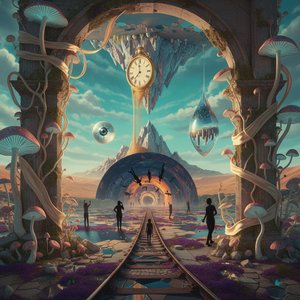
Dreamscapes & Disrupted Realities: Exploring Surrealism's Enduring Influence
Explore the fascinating world of Surrealism! Discover its origins, key artists like Dalí & Magritte, and enduring influence on art & culture. Expert insights & high-quality reproductions at OriginalUniqueArt.