
 Peržiūrėti realybėje
 Pasidalinti
 Dalintis
 Išsamiau

 Atsisiųsti
 Panašūs eksponatai
 Rentgeno nuotrauka
 Automatinė diorama
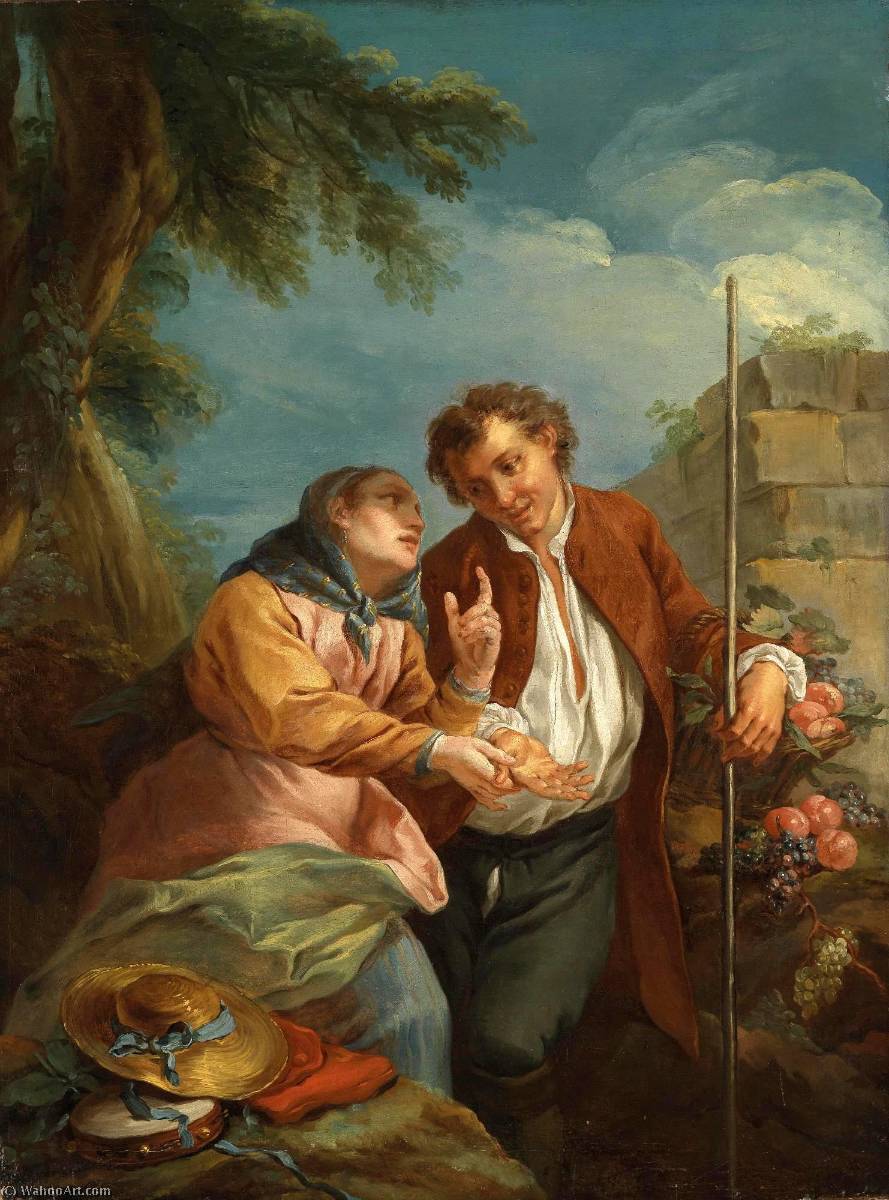
The Fortune Teller
 Skaityti daugiau
Giclée / Meno spausdinimas
Muziejų lygio „giclée“ arba drobos spausdinimas: greita gamyba ir lankstios apdailos parinktys. ( Pirkti rankomis tapytą paveikslą Pirkti vaizdą)




































Pasirinkite iš mūsų nustatytų dydžių, atitinkančių originalaus meno kūrinio proporcijas.

Galite nurodyti savo matmenis, kad vaizdas atitiktų konkretų rėmą ar erdvę. Jei pasirinktas dydis nesutaps su originalaus paveikslėlio proporcijomis, mes arba apkirpsime kūrinį, arba išplėsime vaizdą naudojant veideliu atspindėtą arba vientisą šoną. Skaitmeninis maketas bus išsiųstas jums patvirtinti prieš pradedant gamybą.
Atkreipkite dėmesį, kad ekrane matomas vaizdinys neatspindi tikrojo apkirpimo ar išplėtimo. Tik maketas tiksliai parodytų galutinę kompoziciją.
Nors galima rinktis ir individualius dydžius, rekomenduojame pasirinkti vieną iš išanksti nustatytų matmenų, kad būtų išlaikytos originalios proporcijos.
Pristatymas visame pasaulyje () per 2 weeks, o ne įprastas 4/5 savaičių laikotarpis. (23 rugpjūtis)

Nemokamas greitasis pristatymas visame pasaulyje

Aukštos kokybės lininis drobė

Pilnas siuntimo draudimas

Muitinės mokesčių grąžinimo garantija

Tikro spalvų atitikimo garantija

60 dienų grąžinimo politika (tik esant gamyklinėms defektams)

100% pinigų grąžinimo garantija

Nuolaida už kelias reprodukcijas
 Stiklo variantas prieinamas tik pasirinkus dydį iki 110 cm

The Fortune Teller
Giclée / Meno spausdinimas
Reprodukcijos matmenys
-


Galutinė kaina
$ 80
Autoriaus biografija
Hugues Taraval: A Pioneer of Rococo Decoration
Hugues Taraval (1729-1785) stands as a pivotal figure in the artistic landscape of 18th century France, particularly renowned for his contributions to decorative arts and mythological painting. Born in Paris amidst the burgeoning fervor of the Baroque era, Taraval’s artistic journey unfolded against the backdrop of a transformative period marked by aristocratic patronage and an embrace of opulent aesthetics—the Rococo style. His legacy resides not merely in individual canvases but in shaping the visual vocabulary of royal palaces and influencing generations of artists.- Early Life and Artistic Training:
- Family Background: Guillaume Taraval, a painter himself, instilled in Hugues a passion for artistic pursuits from an early age.
- Formal Education: Taraval’s studies commenced with Jean-Baptiste Marie Pierre and Charles-André van Loo at the Académie Royale de peinture et de sculpture, establishing him within the influential artistic circles of Paris.
The Triumph of Amphitrite: A Masterpiece of Rococo Composition
Taraval’s most celebrated work, “The Triumph of Amphitrite,” executed in 1780 for the Galerie d'Apollon at Versailles, exemplifies the stylistic hallmarks of Rococo. This monumental ceiling fresco depicts Zeus’ judgment over Amphitrite and Triton following Poseidon’s defiance—a narrative steeped in classical mythology rendered with breathtaking dynamism and intricate detail. The painting showcases Taraval’s masterful command of chiaroscuro, utilizing dramatic contrasts of light and shadow to heighten emotional impact and sculpt the figures within a swirling vortex of color and texture. Its grandeur reflects the aspirations of Louis XVI's court and cemented Taraval’s reputation as one of the era’s foremost decorators.Royal Commissions and Architectural Decoration
Beyond his paintings, Taraval secured prestigious commissions throughout France, transforming spaces like Bellevue Château in Meudon and the École Militaire of Paris into opulent showcases of Rococo artistry. His meticulous attention to detail extended beyond mere ornamentation; he conceived entire architectural schemes—including chandeliers—that harmoniously blended artistic vision with structural engineering. These projects underscored his belief that decoration should serve as an integral component of the building’s overall character.Influence and Legacy
Hugues Taraval's impact on French art extends far beyond his immediate output. He mentored younger artists, fostering a stylistic continuity that embraced the elegance and theatricality of Rococo. His work served as inspiration for subsequent generations of painters and decorators, shaping the visual culture of the late Enlightenment. Today, “The Triumph of Amphitrite” remains an enduring symbol of artistic achievement—a testament to Taraval’s ability to translate mythological narratives into visually arresting experiences.Further Exploration
For deeper insights into Hugues Taraval's life and oeuvre, consult scholarly publications such as Lee, Simon (1996). “Taraval”, vol. 30, p. 343, in The Dictionary of Art (34 volumes), edited by Jane Turner. New York: Grove. Also at Oxford Art Online. Riot (Delphine), Hugues Taraval: a state of the art, Master Thesis, University of Lille III, Lille, 2001 (Unpublished). Riot (Delphine), Hugues Taraval (1729-1785): Painter Ordinary King. (Article in preparation). Sources include Carl G. Laurin, Konsthistoria, Stockholm, 1919; and Riot (Delphine), Hugues Taraval (1729-1785): Painter Ordinary King. (Article in preparation).
hugues taraval
1729 - 1785
Trumpa informacija
- Artistic Movement Or Style: Rococo Art
- Artists Or Movements Influenced By This Artist: ['Louis XIV']
- Artists Who Influenced This Artist:
- Guillaume Taraval
- Jean-Baptiste Marie Pierre
- Charles-André van Loo
- Date Of Birth: February 27, 1729
- Full Name: Jean-Hugues Taraval
- Nationality: French
- Notable Artworks:
- Hercules
- Bacchus
- Place Of Birth: Paris, France

