Romanticism · 1800
Architecture with Figures (Hubertas Robertas, 1800)
Hubertas Robertas (1733–1808) sukūrė Architecture with Figures. Šis kūrinys datuojamas 1800 m. Šis kūrinys priklaulo Romanticism kieruliui. Pagaminta naudojant Oil On Paper. Eksponatas saugomas Statens Museum For Kunst Kopenhaga, Danija. Dimensijos – 86 × 106 cm.
- 1800
- Oil On Paper
- 86 × 106 cm
- Statens Museum For Kunst, Kopenhaga

 Peržiūrėti realaus dydžio版

 Rankinio darbo aliejinės imitacijos paveikslas
 Pasidalinti
 Dalintis
 Informacinė l lapelė


 Atsisiųsti
 Panašūs eksponatai
 Rentgeno spindulių nuotrauka
 Automatinė diorama
 问答

 Statistika
Architecture with Figures, trumpai
- Pavadinimas
- Architecture with Figures
- Autorius
- Hubertas Robertas (1733–1808)
- Dizainere/is gimęs
- Paryžius, Prancūzija
- Data
- 1800
- Mediumas
- Oil On Paper
- Matmenys
- 86 × 106 cm
- Kur galima pamatyti
- Statens Museum For Kunst, Kopenhaga, Danija
- Judėjimas
- Romanticism
- Laikotarpis
- 19th Century
- Tema
- architecture, figures, columns, ruins, sky, stone
Ką vaizduoja Architecture with Figures?
Identification of Architecture with Figures
Architecture with Figures is a painting by the French artist Hubert Robert. This work dates to about 1800. The artist, who was a member of the school of Romanticism, produced this piece during a period of significant transition in French art. Robert's background in both sculpture and painting informs the structural presence of the subjects within this composition.
The artwork depicts a scene of monumental classical ruins. The subject matter focuses on three figures—a standing man, a seated woman, and an older seated figure—who interact near a stone basin or altar. These figures are positioned amidst large-scale architectural elements, including massive columns and an arched structure. The scene is set under a vast, cloudy sky, with an obelisk visible in the distance to establish depth.
The visual presentation of the work relies on a monochromatic palette. It utilizes various shades of grey, black, and white to define the forms. This approach emphasizes the interplay of light and shadow across the textures of weathered stone, smooth marble, and soft fabric. The composition uses strong vertical lines from the columns and the obelisk to contrast with the curved lines of the arches and the draped clothing of the figures.
The Composition and Visual Elements
The composition is organized around large-scale architectural elements that establish a sense of monumental scale. On the right side, massive columns rise vertically, while an arched structure on the left side of the frame creates a boundary for the central scene. These structural components frame a central group of three figures positioned near a stone basin or altar. This group consists of a standing man, a seated woman, and an older seated figure engaged in interaction. In the background, an obelisk is placed in the distance, contributing to the receding perspective and the depth of the scene.
The color palette is monochromatic, utilizing various shades of grey, black, and white. This lack of hue emphasizes the interplay of light and shadow across the various surfaces. Dramatic lighting originates from a directional source, casting deep shadows and creating bright highlights on the textures of the weathered stone, the smooth marble, and the soft fabric of the draped clothing. The arrangement of lines reinforces the structural order, using strong verticality through the columns and the obelisk, contrasted by the curved lines of the classical arches and the organic forms of the figures and scattered flowers.
Technique and Artistic Method
The medium of this work appears to be a monochrome painting, likely executed in oil or wash on paper. The artist employs fine brushwork to render the intricate details of the architectural elements and the folds of the drapery. These precise strokes define the textures of the weathered stone and the soft surfaces of the fabric worn by the figures.
Robert frequently utilized the alla prima technique in his practice. This method involves applying paint in a direct and spontaneous manner. Such an approach allows for a sense of immediacy in the execution of the composition. The application of pigment creates a clear distinction between the solid, geometric forms of the columns and the more organic, fluid shapes of the human figures and scattered flowers.
The Artistic Style of Hubert Robert
Hubert Robert is noted for his landscape paintings and his development of the capriccio. These works consist of semi-fictitious, picturesque depictions of ruins located in Italy and France. His approach to these subjects involves a specific method of blending careful observation with a heightened imagination. This combination allows for the construction of theatrical atmospheres within the landscape. He often uses atmospheric perspective to soften distant horizons, which creates a sense of depth and space.
The artist's technique is characterized by a versatility that moves between the precision of a draftsman and the fluid touch of a painter. He frequently employed the alla prima technique, applying paint in a direct and spontaneous manner. This method contributes to the immediacy of his compositions. His work often utilizes light and shadow to manipulate the perception of space, using these elements to suggest a sense of history within the architectural forms.
Kuriame muziejuje eksponuojamas karya Architecture with Figures?
Statens Museum For Kunst
Kopenhaga, Danija
Statens Museum For Kunst istorija ir kilmė Statens Museum For Kunst savo genealogiją sieja su privačiais meno kolekcijais, sukauptais Danijos monarchų. Šios karališkos turtų pagrindas tapo tai, kas vėliau tapo didžiausiu meno muziejumi Danijoje. Nors institucijos šaknys yra susietos su šiais suverenų valdovų kolekcijais, jos oficialus įkūrimas žymėtas dviem svarbiomis datomis.


Architecture with Figures dididraudžios kokybės vaizdai

Viešoji domenė: suregalis mirė 1808 m.
Kiti dydžiai, iškarai ir citavimo informacija →Hubertas Robertas, Architecture with Figures (1800), Statens Museum For Kunst. Viešoji domenė.
Atsakimai į klausimus apie Architecture with Figures
Kur galima pamatyti „Architecture with Figures“ – Hubertas Robertas originalą?
Originalų kūrinį „Architecture with Figures“ galite pamatyti Statens Museum For Kunst, Kopenhaga, Danija.
Kuriem metais buvo sukurta „Architecture with Figures“ – Hubertas Robertas?
„Architecture with Figures“ – Hubertas Robertas sukurtas 1800 m.
Kokia technika buvo panaudota kūriniam darbui „Architecture with Figures“ – Hubertas Robertas?
„Architecture with Figures“ – Hubertas Robertas technika – Oil On Paper. Kopijos siekia atkartoti šios technikos vaizdą.
Kokie yra „Architecture with Figures“ – Hubertas Robertas realūs matmenys?
Įrašyti kūrinio „Architecture with Figures“ – Hubertas Robertas matmenys yra 86.0 x 106.0cm. Kopijas galima užsisakyti kitais dydžiais, išlaikant tą pačius proporcijas.
Kas yra „Architecture with Figures“?
„Architecture with Figures“ – Hubertas Robertas vaizdeletas: architecture, figures, columns, ruins, sky, stone, drapery.
Ar „Architecture with Figures“ – Hubertas Robertas vaizdą galima laisvai reprodukcijaoti?
„Architecture with Figures“ – Hubertas Robertas yra yra viešosios erdvės dalis – jo autorinė teisė pasibaigusi. Šis statusas nustato, kaip galima reprodukcijaus šio kūrinio vaizdą.
Kas sukūrė „Architecture with Figures“?
„Architecture with Figures“ priskiriamas Hubertas Robertas.
Kokio meno kryžmės dalis yra „Architecture with Figures“ – Hubertas Robertas?
„Architecture with Figures“ yra Romanticism stiliaus kūrinys. Šis dailos kryptis nurodo meninę tradiciją, kurios šis darbas yra dalis.
Kokio Hubertas Robertas kūrybos etapo dalis yra „Architecture with Figures“?
„Architecture with Figures“ atspindi Hubertas Robertas kūrybinį laikotarpį Late Period.
Apie šį menininką, Hubertas Robertas
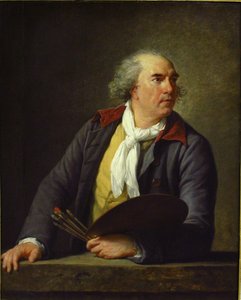
1733–1808, Prancūzija
Hubertas Robertas
Pranciškus Robertas: Griuvėsių Tapytojas ir Vizionierius Pranciškus Robertas, vardas neatsiejamas nuo įtaurių kraštovaizdžių ir romantiško griuvėsių žavesio, užima unikalų poziciją XVIII amžiaus prancūzų meno istorijoje. Gimęs Paryžiuje 1733 metais, jo gyvenimas rutuliavo kintančių artistinių stilių ir didžiulių istorių audrose – nuo rokokoko žaismingo elegantiškumo iki neoklasicizmo aušros, o galiausiai per Prancūzijos revoliucijos neramumus. Jis ne tik fiksavo nykimą; jis kūrė vizijas, derindamas stebėjimą su vaizduote, kad sukurtų scenas, rezonuojančias tiek nostalgija praeityje, tiek ateities lūkesčiu. Jo kelionė prasidėjo struktūruotame meno mokymo pasaulyje, pirmiausia po skulptoriaus Myšelio Anžo Slodco globoja, kuris atpažino Roberto talentą, tačiau protingai nukreipė jį į tapybą, pajutęs, kad jo tikrasis pašaukimas slypi šviesos, atmosferos ir subtilios formos poezijos užfiksavime.
Taip pat Hubertas Robertas darbai
 The Pont du Gard1787
 The Finding of the Laocoön1773
 Le port de Ripetta
 PROJET D'AMENAGEMENT DE LA GRANDE GALERIE DU LOUVRE

Esdai apie Architecture with Figures
 Hubert Robert: Picturing Ruins, Preserving Memory – A Study of Romantic Antiquarianism & Artistic InnovationExplore the captivating world of Hubert Robert, master of Romantic landscape painting & 'capriccio' ruins. Discover his historical context,…
 Vedute and Capriccio: Distinguishing Topographical Views from Architectural FantasyMaster the difference between veduta and capriccio through expert art history analysis. Explore the masters of Italian landscape art today.
 French artworks of the 1880sFrench Impressionist masterpieces by Claude Monet, Pierre-Auguste Renoir, and Georges Seurat. Find museum-quality reproductions on Original…