Perjungti į spausdinamus版作品
 Skaityti daugiau







































 Dėl meno kūrinių ar reprodukcijų, kurių bet kuri pusė yra didesnė nei 105 cm (apie 41 inch), rėmas bus siunčiamas kaip išskaidytas surinkimo rinkinys. Šis metodas užtikrina saugų pristatymą ir apsaugo nuo transportavimo metu galimos žalos.


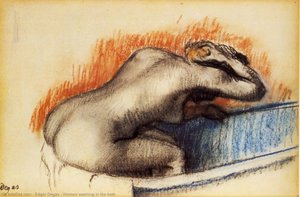
A Moment Frozen in Pastel Light – The Significance of Degas' Kneeling Nude
Edgar Degas, a name synonymous with ballet and fleeting impressions, remains one of the most influential figures in Impressionist art. His oeuvre transcends mere depiction; it captures an essence of movement and emotion that continues to resonate with audiences today. Among his numerous masterpieces, “Kneeling Nude,” created around 1888, stands as a particularly poignant example of his artistic prowess and unwavering commitment to portraying the human form with remarkable sensitivity.
- Subject Matter: The painting portrays a solitary woman kneeling on the ground, her head bowed in what appears to be contemplation or perhaps sorrow. This posture immediately conveys vulnerability and invites viewers to consider themes of introspection and quiet suffering – subjects rarely explored with such nuanced detail during Degas’s time.
- Style & Technique: Degas famously eschewed the label “Impressionist,” preferring a more descriptive term, yet his technique undeniably embodies the spirit of Impressionism. He skillfully utilized pastel crayons—a medium favored for its ability to achieve luminous color blends and subtle tonal variations—creating an ethereal atmosphere that contrasts sharply with the rigid conventions of academic painting.
Pastel’s Delicate Dance: Degas' Innovative Approach
Unlike oil paints, pastels offer unparalleled control over texture and luminosity. Degas meticulously layered pastel hues onto paper, achieving a velvety surface that captures the nuances of light and shadow with breathtaking accuracy. This technique allowed him to convey not only visual beauty but also an emotional depth rarely found in other mediums. The soft pastel colors—primarily muted pinks, creams, and blues—harmoniously blend together, creating a sense of tranquility while simultaneously hinting at underlying tension.
- Color Palette: Degas’s masterful color palette contributes significantly to the painting's emotive impact. The dominant hues evoke feelings of serenity and vulnerability, mirroring the woman’s posture and conveying a profound awareness of inner turmoil.
- Texture & Light: The pastel medium’s ability to render delicate textures—particularly in capturing the folds of fabric and the contours of skin—elevates “Kneeling Nude” beyond mere representation. Degas expertly manipulates light, casting soft shadows that accentuate the woman's form and deepen the painting’s psychological dimension.
Historical Context & Artistic Legacy
“Kneeling Nude” emerged during a period of artistic experimentation and intellectual ferment—the Belle Époque—characterized by a fascination with psychology and an interest in exploring human emotion. Degas's work aligns perfectly with the Impressionist movement’s desire to capture fleeting moments of experience, prioritizing subjective perception over objective observation.
- Influence: Degas’s innovative use of pastel has profoundly influenced subsequent generations of artists, inspiring them to embrace expressive mediums and prioritize emotional resonance.
- Symbolism: The kneeling posture itself carries symbolic weight—representing humility, submission, and perhaps a yearning for solace. It invites contemplation on themes of resilience and inner strength amidst adversity.
A Timeless Reflection of Human Vulnerability
"Kneeling Nude" continues to captivate viewers with its understated beauty and profound psychological depth. Its delicate pastel hues, masterful technique, and evocative composition encapsulate the essence of Impressionist art—a celebration of fleeting moments and an exploration of human emotion. At OriginalUniqueArt.com, you can acquire a stunning reproduction that faithfully preserves the original’s artistic integrity, allowing you to experience Degas's vision firsthand.
Klausimai ir atsakymai
Ar „Kneeling Nude“ bendroje apimatyje yra labiau šviesus ar tamsus kūrinys?
„Kneeling Nude“ bendroji ryškumas yra brilliant, o švytėjimas – Gentle Luminance.
Kaip kontrastas ir harmonija susilieja kūryboje „Kneeling Nude“?
„Kneeling Nude“ – Hilaire Germain Edgar Dega spalvų kompozicijoje Statement kontrastas susilieja su Strong Color Unity harmonija.
Kokiam meno stiliui priklauso „Kneeling Nude“ – Hilaire Germain Edgar Dega?
Kūrinio „Kneeling Nude“ – Hilaire Germain Edgar Dega stilius – Impressionist Painting. Ši klasifikacija leidžia šį darbą įtraukti į bendrą susijusių menininkų ir kūrinių kontekstą.
Daugiau informacijos apie šį paveikslą
 Peržiūrėti realaus dydžio版
 Pasidalinti
 Dalintis
 Išsamiau
 Vadovas

 Atsisiųsti
 Panašūs eksponatai
 Rentgeno spindulių nuotrauka
 Automatinė diorama
 问答
问答 Statistika