
 Peržiūrėti realybėje
 Pasidalinti
 Dalintis
 Išsamiau

 Atsisiųsti
 Panašūs eksponatai
 Rentgeno nuotrauka
 Automatinė diorama
Cristobal candle
 Skaityti daugiau
Įsigykite aukštos skiriamosios raiškos, patobulintą skaitmeninį vaizdą, gerokai pranašesnį už internetinę peržiūrą.
Kiekvieną failą mūsų specialistai kruopščiai paruošia naudojant pažangias technologijas ir profesionalų rankinį retušavimą. Užtikriname, kad kiekvienas vaizdas pasižymėtų išskirtiniu aiškumu, tikslia spalvų atspalviu ir smulkiomis detalėmis.
Baigiamas failas el. paštu pristatomas per 72 valandas; jis optimizuotas nedelsiant naudojimui profesionalioje, redakcinėje ir spausdinimo aplinkoje. Tai ta pati kokybė, kuria pasitiki aukščiausios klasės dizaino studijos, leidyklos ir galerijos.
Skaitmeninis vaizdas
Atsisiųskite didelės raiškos failą asmeniniam naudojimui, spausdinimui ir kūrybiniams projektams. ( Pirkti spaudinį Pirkti rankomis tapytą paveikslą)
Kiekvieną skaitinio vaizdo užsakymą papildė
Profesionalus skaitmeninis pristatymas, garantuotas
Pasirinkę OriginalUniqueArt.com, jūs ne tik gaunate paveikslėlį – jūs gaunate profesionaliai patobudintą skaitmeninį kūrinį, sukurtą itin tikniai ir užtikrinantį pasitenkinimą. Štai viską, kas automatiškai pritékia jūsų užsakymui:

Greitas siuntimas el. paštu
Jūsų aukštos raiškos skaitmeninis vaizdo failas bus išsiųstas jums el. paštu per 72 valaudas nuo užsakymo – paruoštas naudojimui be jokių papildomų veiksmų.

Skaitmeninis failas su dirbtiniu intelektu
Jūsų meno kūrinys profesionaliai optimizuojamas naudojant pažangius dirbtinio intelekto įrankius ir rankinį redagavimą, užtikrinant maksimalią detalę, aiškumą ir spalvų tikslumą.

Nemokamas visam laikui pakartotinis siuntimas
Atsitiktinai ištrytikote ar praradote savo failą? Nebijokite – bet kuriuo metu atsiųsime jį jums vėl nemokamai.

Jokio importo mokesčio – niekada
Mėgaukitės savo meno kūriniu akimirka – skaitiniai failai visada yra neapmokestinami, todėl nereikės mokėti muitinės, mokesčių ar pristatymo mokesčių.

Spalvų tikslumo garantija
Naudodami profesionalią įrangą ir spalvų valdymo sistemas, užtikriname, kad jūsų skaitmeninis vaizdas kuo tiksliau atspindėtų originalias spalvas.

60 dienų pasitenkinimo garantija
Jei nebuvate patenkinti savo skaitinio vaizdo, per 60 dienų jį pertaisysime arba grąkinsime 100% sumą – be jokių klausimų.

100% pinigų grąžinimo garantija
Nepat 만족inti? Gaukite visą sumokėtą sumą per 60 dienų nuo skaitmeninio failo gavimo – be jokių papildomų klausimų.

Nuolaidos dideliems užsakymams
Pirkti 3 nuotraukas – pasiūla 10% - Pirkti 5 – pasiūla 15% - Pirkti 10 ir daugiau – pasiūla 20%. Puikiai tinka kūrybiniams projektams, galerijoms bei agentūroms.
Autoriaus biografija
The Master of the Intricate Line: The Life of Hieronymus Wierix
In the bustling, vibrant heart of sixteenth-century Antwerp, a period defined by both immense artistic flourishing and profound religious upheaval, the name Hieronymus Wierix emerged as a hallmark of technical perfection. Born in 1553 into a lineage of celebrated engravers, Wierich was not merely an artist but a scion of a formidable dynasty. His brothers, Jan and Antoine, were equally vital to the Antwerp printmaking tradition, yet Hieronymus possessed a singular ability to translate complex theological narratives into miniature masterpieces of unparalleled precision. His early training under Jerome Manacker provided him with a rigorous foundation in the classical ideals of the Renaissance, but it was his immersion in the industrious atmosphere of the Plantin Press that truly forged his destiny. Joining the prestigious workshop of Christophe Plantin at the tender age of seventeen, Wierix began a prolific journey that would see him produce hundreds of engravings, each serving as a window into the spiritual and political soul of the Low Countries.
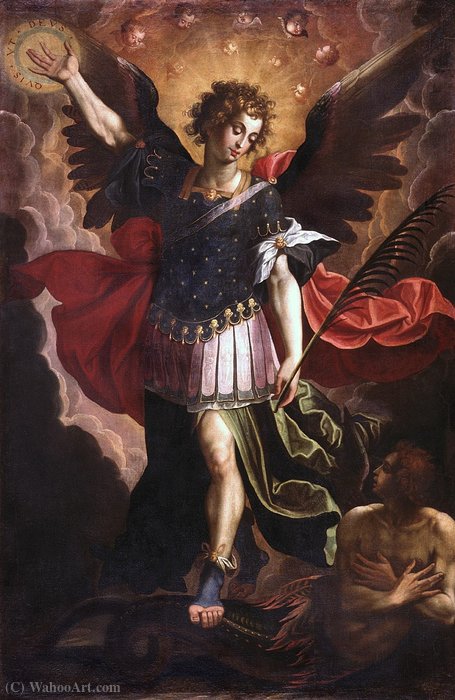
The artistry of Wierix is characterized by an almost hypnotic level of detail, often executed on a remarkably small scale. This intimacy requires the viewer to lean in, discovering a world where every cross-hatch and fine line contributes to a larger, more profound symbolic language. His work serves as a bridge between the meticulous, structured compositions of the Northern Renaissance—reminiscent of the legendary Albrecht Dürer—and the burgeoning emotional drama of the Baroque era. In works such as St Michael Slaying the Dragon, one can witness this transition; the composition possesses the structural integrity of the earlier masters, yet it is infused with a dynamic energy and a sense of divine struggle that anticipates the theatricality of the seventeenth century.
Symbolism, Sin, and the Sacred Narrative
Beyond mere technical virtuosity, Wierix was a master storyteller who utilized the medium of engraving to explore the deepest recesses of the human condition. His prints often functioned as visual sermons, designed to provoke contemplation on morality, virtue, and the eternal struggle between good and evil. This is perhaps most strikingly evident in his allegorical explorations of the Seven Deadly Sins. In his depiction of Acedia, Wierix employs a captivating visual narrative to illustrate the paralyzing nature of sloth and spiritual apathy. Through carefully orchestrated symbolism, he transforms a psychological state into a tangible, haunting image that resonates with both theological depth and artistic grace.
The artist’s repertoire also extended into the profound mysteries of the Christian faith, where he sought to render the divine in a way that was both accessible and awe-inspiring. His Earthly and Heavenly Trinity stands as a testament to his ability to weave complex theological concepts into a cohesive, textured visual experience. In these works, the interplay of light and shadow—achieved through masterful control of the burin—creates a sense of depth that makes the sacred figures appear almost tactile. This capacity to marry the intellectual rigor of humanist thought with the visceral impact of religious devotion allowed his prints to circulate widely across Europe, making him a vital agent in the dissemination of both art and ideology during the Dutch Revolt.
Legacy of an Antwerp Master
The historical significance of Hieronymus Wierix lies not only in the beauty of his individual plates but in his role as a cornerstone of the Flemish printmaking tradition. His career, spanning from the late sixteenth century into the early seventeenth, coincided with some of the most transformative decades in European history. As a member of the Wierix family, he helped establish Antwerp as the preeminent center for the production and distribution of high-quality prints, a legacy that influenced generations of engravers to follow. His ability to navigate the shifting political landscapes of his time—incorporating allegorical and even political themes into his work—demonstrates an artist who was deeply attuned to the pulse of his era.
Today, when we examine the works of Wierix, we see more than just relics of a bygone age; we see the pinnacle of a craft where the hand of the artist and the edge of the tool work in perfect harmony. His contributions can be summarized through several enduring achievements:
- Technical Mastery: The refinement of fine-line engraving techniques that allowed for unprecedented detail on a miniature scale.
- Cultural Influence: A significant role in the global dissemination of religious and humanist ideas through the medium of print.
- Stylistic Synthesis: The successful integration of Renaissance precision with Baroque emotional intensity.
- Dynastic Contribution: Strengthening the prestige of the Antwerp school of engraving through his collaboration with the Plantin Press.

Hieronymus Wierix
1553 - 1619

