

 Peržiūrėti realaus dydžio版
 Siųsti
 Dalintis
 Išsamiau
 Vadovas

 Atsisiųsti
 Panašūs eksponatai
 Rentgeno spindulių nuotrauka
 Diaporama
 Statistika
Classical Landscape with Figures
 Baroque
 71.0 x 112.0 cm
 Rodyti daugiau
Rankų darbo aliejinės reprodukcijos
Rankiniu būdu tapytas aliejus ant droblio jūsų pageidaujamame dydį ir rėmuose – mūsų menininkų darbas pagal užsakymą. ( Perjungti į spausdinimą Perejti prie skaitmeninių vaizdų)




































Pasirinkite iš mūsų nustatytų dydžių, atitinkančių originalaus meno kūrinio proporcijas.

Įveskite jums reikiamą plotį ir aukštį, kad paveikslas atitiktų jūsų rėmą ar sieną. Kadangi šis darbas yra rankinio darbo, siekiant išgauti kitokio formos dydį, paveikslas gali būti šiek tiek didesnis (nuo kraštų bus palikta daugiau erdvės) arba mažesnis – pasirinkite jums patogiausią variantą. Prieš pradedant tapyti, atsiųsime jums skaitmeninį maketą patvirtinimui. Šioje puslapio nuotraukoje matomas vaizdas nėra galutinis rezultatas – jį parodys tik sukurtas maketas.
Gavus užsakymą, OriginalUniqueArt.com komanda susisieks su klientu el. paštu dėl instrukcijų ir pateiks maketo pavyzdį
Pristatymas visame pasaulyje () per 3–4 savaites, o ne įprastai – per 5 savaites. (21 spalis). Kokybė lieka nepakeičiama.

Nemokamas greitasis pristatymas visame pasaulyje

Aukštos kokybės lininis drobė

Pilnas siuntimo draudimas

Muitinės mokesčių grąžinimo garantija

Tikro spalvų atitikimo garantija

100 dienų grąžinimo politika (tik esant įtaigoms)

100% pinigų grąžinimo garantija

Nuolaida dideliems užsakymams
 Stiklo variantas prieinamas tik pasirinkus dydį iki 110 cm

Classical Landscape with Figures
Reprodukcijos technika
Reprodukcijos dydis
-


Visų pasirinktų variantų kaina
€ 306
问答 (or more naturally for a website heading): Klausimai ir atsakymai
Kokia „Classical Landscape with Figures“, autorius – Henri Mauperché orientacija?
„Classical Landscape with Figures“, autorius – Henri Mauperché kūrinio formatas yra Landscape. Formatas aprašo kompozicijos proporcijas.
Kiek šviesos, kaip atrodo, atspindi „Classical Landscape with Figures“ spalvos?
„Classical Landscape with Figures“ spalvos pasižymi Dark šviesos intensyvumu.
Ar Henri Mauperché kūrinys „Classical Landscape with Figures“ yra viešosios nuoslegos, ir kodėl?
„Classical Landscape with Figures“, autorius – Henri Mauperché yra pripa принадле belongs to the public domain – jo autorinė teisė pasibaigusi. Autorinės teisės galioja nuo mirties metų, kai šis kūrėjas mirė 1736 m.
Autoriaus biografija
The Master of the French Landscape: The Life and Legacy of Henri Mauperché
In the golden age of 17th-century French art, few names evoke the serene grandeur of the Baroque era quite like Henri Mauperché. A painter whose brush captured both the rugged textures of the earth and the ethereal light of the heavens, Mauperché emerged as a pivotal figure in the evolution of classical landscape painting. Born in Paris around 1602, his early years were shaped by the vibrant artistic pulse of the French capital, yet it was his journey beyond the borders of France that would truly define his aesthetic vision. His travels to Rome in 1634 served as a transformative pilgrimage, exposing him to the timeless majesty of Italian antiquity and the profound influence of masters like Sébastien Bourdon. This encounter with the Bambochade style—a spirited blend of genre painting and landscape—infused his work with a unique vitality that balanced classical order with a touch of spontaneous charm.
Upon his return to Paris in 1639, Mauperché’s ascent within the royal circles was swift and spectacular. He possessed a rare ability to translate the spiritual and political ambitions of his patrons into visual poetry. His talent earned him the patronage of some of the most formidable figures in French history, including the legendary Cardinal Richelieu and Queen Anne of Austria. One of his most prestigious early commissions involved decorating the guard room and antechamber of the Palais-Cardinal, a task that required not only technical precision but also a profound understanding of how art could dignify a space of power. His work during this period helped establish him as a leading exponent of the classical landscape, a style characterized by its harmonious composition and its ability to evoke a sense of eternal peace.
A Symphony of Light and Devotion
The artistry of Mauperché is perhaps most deeply felt in his mastery of chiaroscuro—the dramatic interplay between shadow and illumination. While he was a skilled engraver, it was on the canvas that he truly explored the emotional depths of his subjects. His landscapes were rarely mere topographical studies; instead, they often served as stages for profound biblical narratives and pastoral allegories. In masterpieces such as “Landscape with Jephthah and his Daughter,” Mauperché utilizes the natural world to mirror human suffering and divine destiny. The rugged terrain and the heavy, atmospheric clouds do not merely surround the figures; they participate in the drama, echoing the anguish of sacrifice and the weight of religious devotion.
His technical development was marked by an incredible versatility, often moving between the structured elegance of classical architecture and the more fluid, capriccio style of imaginary landscapes. This ability to blend the real with the imagined allowed him to create worlds that felt both grounded in reality and elevated by myth. His brushwork, influenced by the meticulous realism learned from his early training, captured the delicate textures of flowing drapery, the weathered surfaces of ancient ruins, and the soft, warm glow of a setting sun. This dedication to detail ensured that even his most austere compositions possessed a tactile, living quality that captivated viewers across Europe.
Historical Significance and Artistic Triumph
The professional achievements of Henri Mauperché were nothing short of extraordinary for a landscape painter of his era. In 1648, he was admitted to the prestigious Académie Royale de Peinture et de Sculpture, and by 1655, he was named a Professor—an honor seldom bestowed upon those specializing in landscapes rather than portraiture or history painting. This elevation signaled a shift in the art world's perception, acknowledging that the landscape could carry as much intellectual and emotional weight as any human figure. Alongside contemporaries like Laurent de La Hyre, Mauperché played a crucial role in popularizing the classical landscape style of Claude Lorrain, helping to shape the visual language of French art for generations to come.
Though many of his grandest decorative works, such as those created for the Hôtel Lambert or the apartments at Fontainebleau, have tragically been lost to time, his surviving canvases remain enduring testaments to his genius. His legacy is found in the way he bridged the gap between the ruggedness of early Baroque expression and the refined elegance of French Classicism. Through his eyes, we see a world where nature is a vessel for the divine, and where every landscape tells a story of faith, beauty, and the eternal passage of time. He remains a cornerstone of the 17th-century canon, a painter who taught the world to find the sublime in the quiet corners of the earth.

Henri Mauperché
1644 - 1736 , France
Trumpa informacija apie kūrėją
- Full Name: Henri Mauperché
- Nationality: French
- Date Of Birth: 1644
- Date Of Death: 1736
- Place Of Birth: Paris, France
- Notable Artworks: ['Jephthah and daughter']
- Artistic Movement Or Style: Classical landscapes
- Artists Who Influenced This Artist: ['Nicolas Poussin']
- Artists Or Movements Influenced By This Artist: ['Baroque']
Susiję straipsniai

Baroko meno estetika: kaip suprasti XVII amžiaus dramą, šviesos žaidimą ir dinamišką judesį
Sužinokite baroko meno paslaptis, šviesos ir dramatos techniką. Atskleiskite XVII amžiaus meistriškumą su mūsų ekspertu.

Baroque Classicism: The Grandeur of Order and Drama in 17th-Century Art History
Explore the profound elegance of Baroque Classicism. Discover how 17th-century masters synthesized dramatic emotion with classical order through the lens of the Counter-Reformation and the works of legends like Carlo Maratta and Andrea Sacchi.

10 Romantinių Peizažų Simbolių: Tapybos Majestatės Viršūnės
Atraskite 10 legendinių romantinio peizažo kūrinių! Pasinerkite į Claude Lorrain, Caspar David Friedrich ir J.M.W. Turner genijaus pasaulį. Išmokite apie tapybos meistriškumą bei gamtos grožį. Aukščiausios kokybės meno reprodukcijos – OriginalUniqueArt.com. Tyrinėkite kolekciją!
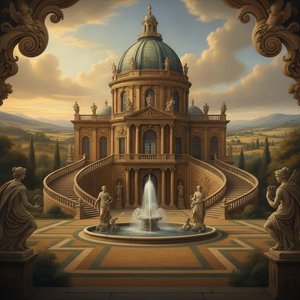
Baroque Classicism: Reconciling Drama & Order in 17th-Century Art
Explore the captivating world of Baroque Classicism! Discover its history, key artists like Caravaggio & Rubens, and defining characteristics. Expert insights & high-quality reproductions at OriginalUniqueArt.

Evocations of Place: A Historical Journey Through Landscape Art
Explore the rich history of landscape art with OriginalUniqueArt. Discover renowned artists, movements like Impressionism & Romanticism, and expert guidance for collecting timeless pieces. Find your perfect serene escape today!