
 Peržiūrėti realaus dydžio版
 Pasidalinti
 Dalintis
 Išsamiau
 Vadovas

 Atsisiųsti
 Panašūs eksponatai
 Rentgeno spindulių nuotrauka
 Automatinė diorama
 问答
问答 Statistika
Duet

- 101.0 x 81.0 cm


 Skaityti daugiau
Giclée / Meno spausdinimas
Muziejų lygio „giclée“ arba drobos spausdinimas: greita gamyba ir lankstios apdailos parinktys. ( Pirkti rankų darbo tapybą Perejti prie skaitmeninių vaizdų)




P118B €10

P118H €10

P118W €10

P438Z €10

P508JH €12

P508YH €12

P805H €10

P805Z €10

P919BZ €10

P919G €10

P919XJ €10

P959ZH €10

P968JZ €12

W106C €8

W218G €10

W218JH €8

W218Y €10

W307PJ €10

W316G €10

W316PJ €8

W316Y €10

W398PJ €8

W4111J €10

W500HY €15

W500JH €15

W692G €12

W849H €8

W940BG €15

W953PJ €8




Pasirinkite iš mūsų nustatytų dydžių, atitinkančių originalaus meno kūrinio proporcijas.

Įveskite jums reikiamą plotį ir aukštį, kad atvaizdas derėtų prie jūsų rėmo ar sienos. Spausdiną galima tik sumažinti, bet nepadidinti virš originalaus paveikslėlio dydžio, todėl keičiant proporcijas, dalis vaizdo prarandama. Prieš spausdinimą atsiųsime jums skaitmeninį maketą patvirtinimui. Šioje puslapio nuotraukoje matomas pjūvis nėra tikslus – jį rodo tik maketas.
Pristatymas visame pasaulyje () per 2 weeks, o ne įprastas 4/5 savaičių laikotarpis. (3 lapkritis)

Nemokamas greitasis pristatymas visame pasaulyje

Aukštos kokybės lininis drobė

Pilnas siuntimo draudimas

Muitinės mokesčių grąžinimo garantija

Tikro spalvų atitikimo garantija

100 dienų grąžinimo politika (tik esant įtaigoms)

100% pinigų grąžinimo garantija

Nuolaida dideliems užsakymams
 Stiklo variantas prieinamas tik pasirinkus dydį iki 110 cm

Duet
Giclée / Meno spausdinimas
Reprodukcijos matmenys
-


Bendroji kaina
€ 72
Hendrick Terbrugghen’s “Duet”: A Window into Dutch Baroque Sensuality
“Duet,” painted in 1628 by Hendrick Jansz ter Brugghen, is more than just a depiction of two young musicians; it's a vibrant snapshot of the burgeoning artistic and social landscape of the Dutch Golden Age. This captivating oil on canvas, now residing within the esteemed collection of the Louvre Museum in Paris, offers a glimpse into the world of Caravaggism – a movement that profoundly influenced Terbrugghen’s distinctive style and approach to portraying human emotion.
Ter Brugghen, born in 1588 in Overijssel, Netherlands, was deeply connected to the artistic currents of his time. His father, Jan Egbertsz ter Brugghen, served as secretary to Prince William the Silent, exposing young Hendrick to a world of courtly patronage and artistic refinement. This early exposure undoubtedly shaped his trajectory, leading him to study under Abraham Bloemaert, a prominent Mannerist painter, before embracing the dramatic intensity of Caravaggio’s style – characterized by intense contrasts of light and shadow, known as *chiaroscuro*. The Utrecht Caravaggisti group, of which Terbrugghen was a key member alongside Gerrit van Hondhorst and Dirck van Baburen, sought to capture the same emotional depth and dynamism found in Caravaggio's works, adapting them to the Dutch context.
A Symphony of Light and Color: Artistic Technique
The painting’s immediate impact lies in its masterful use of light. Terbrugghen expertly employs *chiaroscuro* to sculpt the figures, creating a dramatic interplay between illumination and shadow that draws the viewer's eye and imbues the scene with a palpable sense of drama. The strong directional lighting highlights the youthful faces of the musicians, emphasizing their expressions of joy and engagement. Notice how the light catches the feathered cap of the male figure, adding to his theatrical presence, while simultaneously casting subtle shadows across his face, hinting at an underlying intensity.
Terbrugghen’s brushwork is remarkably fluid and expressive. He utilizes loose, gestural strokes to convey movement and energy, particularly in the depiction of the lute and the flowing garments. The vibrant palette – dominated by rich reds, blues, and yellows – contributes significantly to the painting's overall dynamism. These colors aren’t merely decorative; they are carefully chosen to evoke a sense of warmth, sensuality, and youthful exuberance.
Symbolism and Social Context
Beyond its technical brilliance, “Duet” is rich in symbolic meaning. The lute itself, a prominent instrument in the Baroque era, was often associated with pleasure, music, and even eroticism. The young men’s attire – featuring flamboyant colors and feathered accessories – reflects the influence of theatrical traditions and suggests a world of entertainment and indulgence. The low-cut dress worn by the female musician is particularly noteworthy; it subtly challenges conventional notions of modesty, hinting at a playful disregard for social norms.
Furthermore, the scene can be interpreted as an allegory for harmony and balance – both musical and emotional. The two figures, engaged in a shared activity, represent a union of spirits, reflecting the broader humanist ideals prevalent during the Dutch Golden Age. The inclusion of the clock in the background subtly reminds us of the fleeting nature of time and the importance of savoring these moments of joy.
A Timeless Masterpiece: Emotional Resonance
“Duet” transcends its historical context to resonate with viewers today. The painting’s depiction of youthful exuberance, musical passion, and intimate connection evokes a powerful sense of nostalgia and delight. Terbrugghen's ability to capture the fleeting expressions of human emotion – the joy in the male musician’s gaze, the gentle affection in the female musician’s expression – is truly remarkable. It’s a painting that invites us to step into the scene, to feel the warmth of the music, and to share in the simple pleasures of companionship.
Reproductions of “Duet” offer an accessible way to experience this masterpiece firsthand, bringing its vibrant colors and captivating imagery into your home or office. Consider a high-quality reproduction to add a touch of Dutch Baroque elegance to any space – a reminder of the enduring power of art to inspire and uplift.
Klausimai ir atsakymai
Kokios formos ir kokie išmatavimai turi „Duet“ – Hendrick Terbrugghen?
„Duet“ – Hendrick Terbrugghen yra Portrait kompozicija, kurios originalūs matmenys yra 101 x 81 cm.
Ar „Duet“ – Hendrick Terbrugghen yra paveikslas, piešinys ar grafika?
Kataloge „Duet“ – Hendrick Terbrugghen priskirtas kategorijai WallArt. Ši kategorija padeda rasti panašius kūrinius.
Kada buvo sukurta „Duet“?
„Duet“ sukurta 1628 m. Ši data leidžia įvardyti kūrinį Hendrick Terbrugghen kūrybinėje karjeroje bei jo epochoje.
Autoriaus biografija
Iš ankstyvo gyvenimo ir įtakų
Hendrick Jansz Ter Brugghenas, išsalsius nutikęs holandijos orenkos laikų dailininkas, gimė 1588 m. Overijsel, Holandijoje. Jo tėvis, Jan Egbertsz Ter Brugghenas, dirbo kaip sekretorius Utrecht miesto teatrije pas princą Williamą Milmą. Šis patirtis tikėtina paveikino Hendrickio ankstyvę susidomėjimą mena.Menininkų karjera ir stilius
Ter Bruggheno meninis kelionė pradėjo jo studijuojant pas Abraham Bloemaertą, manieristų dailininką. Vėliau jis tapo vienu iš vadovaujių Utrecht caravaggisti grupės narių – holandijos dailininkų grupės, įkvėptų nuo Caravaggio. Jo kūriniai garsė dramatišku šviesos ir šešėlio naudojimu, kaip matyti joose piktavose, tokiose kaip Anunciacija (Alte Pinakothek, Münynė, Vokietija) ir Revelleris (Alte Pinakothek, Münynė, Vokietija).Žymūs kūriniai ir palikta medžiaga
- Dainuojantis lūto žoidiklis (Kremerio kolekcija, Amsterdamas, Holandija), autografinis replica iš piktavės Londono nacionalinėje galerijoje, rodoma jo gausia spalva.
- Anunciacija, maîtreso kūrinis, atspindintis jo įvaldą Caravaggio stilyje.
Muziejai ir kolekcijos, kurose rodomi Ter Bruggheno kūriniai
- Mauritshuis (Haagas, Holandija), su tokių darbų pavykimu kaip Nimfa ir satyras iš Sir Peter Paul Rubenso.
- Kremerio kolekcija (Amsterdamas, Holandija), saugo Ter Bruggheno Dainuojantis lūto žoidiklis.
- Išplėskite daugiau Ter Bruggheno darbų adresu OriginalUniqueArt.com
- Susipažinkite su holandijos orenkos laikų piktavėse ir jų įtakomis OriginalUniqueArt.com menininkų istorijos skyriuje
- Mokykis apie kitus menininkus, pavyzdžiui Dirck van Babureną, bendraštuvio Utrecht caravaggisti, adresu OriginalUniqueArt.com
Išvada
Ter Bruggheno misterijus gyvenimas ir jo didelė įtaka holandijos orenkos laikų piktavėse paliko ne ištrinkamą žymię menininkų istorijoje. Jo dramatiškas šviesos ir šešėlio naudojimas nuolat įkvepia tiek dailininkus, tiek meno mėgėjusius, panašindamas jį įdomią figūrą meno pasaulyje.
Hendrick Terbrugghen
1627 - 1629 , Neterlandės
Trumpa informacija
- Artistic Movement Or Style: Karevaggisto dailė
- Artists Or Movements Influenced By This Artist: Rembrandt van Rijn
- Artists Who Influenced This Artist: Abraham Bloemaert
- Date Of Birth: 1588
- Date Of Death: 2029年11月
- Full Name: Hendrick Jansz Terbrugghen
- Nationality: Holandietis
- Notable Artworks:
- Dainuojantis lūties žoidiklis
- Paskelbti
- David, pagaros iš Israelietės moterys
- Place Of Birth: Overijssel, Holandija
Susiję straipsniai

Olandijos Aukso Amžius: 10 Šedevrų, Apibrėžiančių Meną ir Stilių
Atraskite Olandijos Aukso Amži\u017us meninius šedevrus! 10 legendin\u017iŴ paveikslžiai – Rembrandto, Vermeerio ir kt. darbai. Sužnkitę j\u016ungo namus aukso amži\u017us grožiu! Āukrai, interjero dizainas – viskas OriginalUniqueArt.com. Ižirkite kolekciją internete!
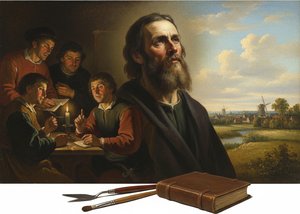
Hendrick Terbrugghen: Caravaggism, Spirituality & the Dutch Golden Age Painter's Evolving Style
Explore the captivating world of Hendrick Terbrugghen, a leading Dutch Golden Age painter influenced by Caravaggio. Discover his dramatic use of light, spiritual depth & lasting legacy. Learn more at OriginalUniqueArt.

Golden Age Reflections: Dutch Baroque Painting & Cultural Innovation
Explore the Dutch Golden Age of painting! Discover key artists like Vermeer & ter Borch, their innovative techniques, and the rich cultural context behind these Baroque masterpieces. Learn about collecting & appreciating this iconic art period.

Mastering Light & Shadow: A Journey Through the Dutch Golden Age's Luminous Legacy
Embark on a cultural journey through the Dutch Golden Age. Explore the masterful interplay of light and shadow in 17th-century masterpieces, from Rembrandt to Vermeer, and discover how this era of profound realism continues to inspire fine art collectors today.

Golden Light & Dutch Skies: The Timeless Magic of Dutch Golden Age Landscapes
Discover the breathtaking beauty of Dutch Golden Age landscapes. Explore the mastery of light, chiaroscuro, and 17th-century realism through an expert art history lens, celebrating the enduring legacy of the Dutch Masters for discerning collectors and art lovers.
