Meniu
Text size

() ·

A painting made for you, by hand

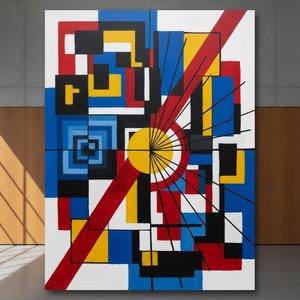
Metaesquema n.225

Rankų darbo aliejinės reprodukcijos

Rankiniu būdu tapytas aliejus ant droblio jūsų pageidaujamame dydį ir rėmuose – tai mūsų menininkų pagal užsakymą sukurtas darbas. ( Perjungti į spausdinamus版作品 Perejti prie skaitmeninių vaizdų)

Kolekcinio objekto aprašas

Explore 'Metaesquema n.225' by Helio Oiticica – an iconic Neo-Concrete painting featuring intricate lines and vibrant colors, reflecting Brazilian modernism & sensory experience.

Autoriaus biografija

Explore the vibrant world of Hélio Oiticica, a Brazilian Neo-Concrete artist known for his innovative use of color, environmental art, & immersive installations like Tropicália. Discover his influence on modern and contemporary art.

from ·

Chapter 1

How large should it be?

Slide to change the size; the picture on the left shows the frame at its real width. The proportions of the original are kept.

Standartinis dydis
pagal užsakymą
CM
INCH

Pasirinkite iš mūsų nustatytų dydžių, atitinkančių originalaus meno kūrinio proporcijas.

plotis
aukštis

Įveskite jums reikiamą plotį ir aukštį, kad paveikslas atitiktų jūsų rėmą ar sieną. Kadangi šis darbas yra rankinio darbo, siekiant išgauti kitokios formos dydį, paveikslas gali būti šiek tiek didesnis (nuo kraštų bus palikta daugiau erdvės) arba mažesnis – pasirinkite jums patogiausią variantą. Prieš pradedant tapyti, atsiųsime jums skaitmeninį maketą patvirtinimui. Šioje puslapio nuotraukoje matomas vaizdas nėra galutinis rezultatas – jį parodys tik sukurtas maketas.

Chapter 2

How should it arrive?

Choose the edges of the stretched canvas

Choose your frame

Corner sample of the WhiteWrap canvas edge finish, stretched on solidus medžio

**Improved version:**
solidus medis bars
White €1
Corner sample of the BlurSideWrap canvas edge finish, stretched on solidus medžio

**Improved version:**
solidus medis bars
Blurside €1
Corner sample of the ExtendedWrap canvas edge finish, stretched on solidus medžio

**Improved version:**
solidus medis bars
Extended €1
Corner sample of the P118B picture frame: lieto polistirolo detalės, 5 cm wide and 3 cm thick
P118B €10
Corner sample of the P118H picture frame: lieto polistirolo detalės, 5 cm wide and 3 cm thick
P118H €10
Corner sample of the P118W picture frame: lieto polistirolo detalės, 5 cm wide and 3 cm thick
P118W €10
Corner sample of the P438Z picture frame: lieto polistirolo detalės, 5.5 cm wide and 3.5 cm thick
P438Z €10
Corner sample of the P508JH picture frame: lieto polistirolo detalės, 7 cm wide and 3.5 cm thick
P508JH €12
Corner sample of the P508YH picture frame: lieto polistirolo detalės, 7 cm wide and 3.5 cm thick
P508YH €12
Corner sample of the P805H picture frame: lieto polistirolo detalės, 5 cm wide and 3.5 cm thick
P805H €10
Corner sample of the P805Z picture frame: lieto polistirolo detalės, 5 cm wide and 3.5 cm thick
P805Z €10
Corner sample of the P919BZ picture frame: lieto polistirolo detalės, 7 cm wide and 3.5 cm thick
P919BZ €10
Corner sample of the P919G picture frame: lieto polistirolo detalės, 7 cm wide and 3.5 cm thick
P919G €10
Corner sample of the P919XJ picture frame: lieto polistirolo detalės, 7 cm wide and 3.5 cm thick
P919XJ €10
Corner sample of the P959ZH picture frame: lieto polistirolo detalės, 5 cm wide and 3 cm thick
P959ZH €10
Corner sample of the P968JZ picture frame: lieto polistirolo detalės, 6 cm wide and 4 cm thick
P968JZ €12
Corner sample of the W106C picture frame: solidus medžio

**Improved version:**
solidus medis, 5 cm wide and 3 cm thick
W106C €8
Corner sample of the W218G picture frame: solidus medžio

**Improved version:**
solidus medis, 5 cm wide and 3 cm thick
W218G €10
Corner sample of the W218JH picture frame: solidus medžio

**Improved version:**
solidus medis, 5 cm wide and 3 cm thick
W218JH €8
Corner sample of the W218Y picture frame: solidus medžio

**Improved version:**
solidus medis, 5 cm wide and 3 cm thick
W218Y €10
Corner sample of the W307PJ picture frame: solidus medžio

**Improved version:**
solidus medis, 6 cm wide and 3 cm thick
W307PJ €10
Corner sample of the W316G picture frame: solidus medžio

**Improved version:**
solidus medis, 6 cm wide and 3 cm thick
W316G €10
Corner sample of the W316PJ picture frame: solidus medžio

**Improved version:**
solidus medis, 6 cm wide and 3 cm thick
W316PJ €8
Corner sample of the W316Y picture frame: solidus medžio

**Improved version:**
solidus medis, 6 cm wide and 3 cm thick
W316Y €10
Corner sample of the W398PJ picture frame: solidus medžio

**Improved version:**
solidus medis, 5 cm wide and 3 cm thick
W398PJ €8
Corner sample of the W4111J picture frame: solidus medžio

**Improved version:**
solidus medis, 6.5 cm wide and 3.5 cm thick
W4111J €10
Corner sample of the W500HY picture frame: solidus medžio

**Improved version:**
solidus medis, 7 cm wide and 5 cm thick
W500HY €15
Corner sample of the W500JH picture frame: solidus medžio

**Improved version:**
solidus medis, 7 cm wide and 5 cm thick
W500JH €15
Corner sample of the W692G picture frame: solidus medžio

**Improved version:**
solidus medis, 8 cm wide and 4 cm thick
W692G €12
Corner sample of the W849H picture frame: solidus medžio

**Improved version:**
solidus medis, 5 cm wide and 3 cm thick
W849H €8
Corner sample of the W940BG picture frame: solidus medžio

**Improved version:**
solidus medis, 7.5 cm wide and 4.5 cm thick
W940BG €15
Corner sample of the W953PJ picture frame: solidus medžio

**Improved version:**
solidus medis, 6 cm wide and 3.5 cm thick
W953PJ €8
Corner sample of the H24-GOLD picture frame: medžio skulptūra su gipso sluosniu, 10 cm wide and 6 cm thick
H24-GOLD €30
Corner sample of the H24-SILVER picture frame: medžio skulptūra su gipso sluosniu, 10 cm wide and 6 cm thick
H24-SILVER €30
Corner sample of the H36-GOLD picture frame: medžio skulptūra su gipso sluosniu, 15 cm wide and 6.5 cm thick
H36-GOLD €45
Corner sample of the H36-SILVER picture frame: medžio skulptūra su gipso sluosniu, 15 cm wide and 6.5 cm thick
H36-SILVER €45
Rėmo peržiūra
Įrėmintas

Moulding: . Overall size with the frame: .

Chapter 3

Who paints it, and should anything change?

Examples of what can be changed: Replace face with customer photo; Add pet (e.g., replace cat with dog); Include hidden message in background; Change background landscape or elements.
After order, OriginalUniqueArt.com team will email client for instructions and provide a mockup preview

Pristatymas visame pasaulyje () per 3–4 savaites, o ne įprastai – per 5 savaites. (30 spalis). Kokybė lieka nepakeičiama.

Chapter 4

The finishing touches

A nameplate, as in a museum?

Išgraviruotos bronzinės plokštelės detalės

This elegant plaque features the artist's name and the title of the artwork, finely engraved for a timeless presentation.

It is made from bronze with a refined, elegant finish. The text is precisely laser-engraved for a sharp and permanent result. Measuring 9x2 cm, the plaque is compact yet easy to read. It's built to be durable and scratch-resistant, offering a professional, museum-quality look. Mounting is simple thanks to the included adhesive backing.

Skaidrios akrilo plokštelės informacija

The plaque includes essential engraved details such as the artist's name, the title of the artwork, the date it was created, the type of media used-like oil on canvas or watercolor-a brief description of the piece, and a QR code that links to the complete artwork information.

It is crafted from clear acrylic, offering a sleek, modern appearance. The text is UV-engraved in black to ensure strong visual contrast. With a size of 10x15 cm, it ensures optimal readability. It comes equipped with two metal hooks for secure wall mounting. The plaque is designed to be weather-resistant, making it suitable for various environments, and it includes interactive features that work seamlessly with smartphone scanning.

Juodos akrilo plokštelės informacija

This elegant plaque includes engraved information such as the artist's name, the title of the artwork, the date it was created, the type of media used (like oil on canvas or watercolor), a short description of the artwork, and a QR code for quick access to more information.

The plaque itself is made from refined black acrylic with a premium finish. The text is laser-engraved in white for high contrast and readability. Its size is 10x15 cm, designed to be easy to read. It comes with two metal hooks for professional mounting. The design is sleek and fits any interior style. It is also weather-resistant and durable, with built-in digital integration for mobile compatibility.

A protective varnish?

When do you need it?

Chapter 5

Your painting, as you ordered it

Metaesquema n.225

Reprodukcijos technika

Reprodukcijos matmenys

-

Aukščiausios klasės meistras

Daugiau detalių, meistriškumo ir papildomo gamybos laiko

-

Reprodukcijos rėmėjimo parinktys

-

-

Dėl meno kūrinių ar reprodukcijų, kurių bet kuri pusė yra didesnė nei 105 cm (apie 41 inch), rėmas bus siunčiamas kaip išskaidytas surinkimo rinkinys. Šis metodas užtikrina saugų pristatymą ir apsaugo nuo transportavimo metu galimos žalos.

Reikalingas profesionalus surinkimas – tai nėra „pasidaryk pats“ (DIY) produktas.
Rinkinys turi būti surinktas, o drobė išplėsta naudojant patyrį profesionalų rėmininką, medžio klijus (nėra įtraukti į rinkinį), drobės plėšimo kleslę bei presas, kad rėmo rėžiai išliktų tiesūs, kol klijai išdžiūvus. Netinkamas surinkimas arba netolydus drobės įtampa gali negrįžtamai sugadinti meno kūrinį, todėl šie atvejai nėra užtraukiami mūsų garantijos.

  • Į komplektą įeina visi vientisos medienos elementai, tiksliai išpjauti pagal dydį.

  • Surmontinama naudojant pridėtus varžtus bei papildomai reikalingą medžio kliją kampų jungtims, kuris nėra pridėtas ir turi būti parinktas rėmininkui.

  • Reikalingi profesionalūs įrankiai, kurie nėra įtraukti į rinkinį: drobės kėlimo plytelės (stiprintuvai) ir klemiai, laikantys rėmo strygius tiesiu kampu, kol džiūsta lipas.

Svarbu:
Kampų jungtims reikalingi medžio klijai, barams reikia laikyti naudojant presas, kol klijai visiškai išdžiūvės, o surinktam rėmui įtempiamai privilgti būtinos drobės įtempimo plytযুক্ত. Šios priemonės į rinkinį neįtrauktos. Prieš užsakydami šio dydžio rinkinį, rekomenduojame pasimalkoti patyrusiu rėmų meistru.

Pavadinimo lentelė

-

-

Apsauginis lakas

Blizgus lakas (ryškina spalvas, saugo nuo šviesos ir drėgmės)

-

Personalizuoti kūrinį

Ką galima pakeisti (pavyzdžiui): pakeisti veidą klientui skirta nuotrauka; pridėti augintinį (pvz., katę pakeisti šuniu); įtraukti paslėptą žinutę fone; pakeisti fono kraštovaizdį ar elementus.

-

Skubiai

Pristatymas visame pasaulyje () per 3–4 savaites, o ne įprastai – per 5 savaites. (30 spalis). Kokybė lieka nepakeičiama.

-

Skubus pristatymas

Pristatymas visame pasaulyje () per 5 weeks. (6 lapkritis).

Įskaičiuota

Bendroji kaina

€ 265

Visos kainos suma € 265

Stiklo variantas prieinamas tik pasirinkus dydį iki 110 cm

Included with every order

  • Nemokamas greitasis pristatymas visame pasaulyje
  • Aukštos kokybės lininis drobė
  • Pilnas siuntimo draudimas
  • Muitinės mokesčių grąžinimo garantija
  • Tikro spalvų atitikimo garantija
  • 100 dienų grąžinimo politika (tik esant įtaigoms)
  • 100% pinigų grąžinimo garantija
  • Nuolaida dideliems užsakymams

A Symphony of Lines: Deconstructing Reality with Helio Oiticica’s Metaesquema n.225

Helio Oiticica, a pivotal figure in Brazilian art and a pioneer of environmental art, invites us into a world where the boundaries between painting, space, and perception dissolve within Metaesquema n.225 (1957). This captivating work, housed at the Centro Cultural Banco do Brasil Rio de Janeiro, isn’t merely a painting; it's an orchestrated exploration of interconnectedness, a visual meditation on the very act of seeing. Oiticica, deeply influenced by both European modernism and the vibrant traditions of his native Brazil – particularly the rhythmic movements of the batuque dances – sought to move beyond traditional artistic constraints, creating art that actively engages with the viewer’s experience.

Metaesquema n.225 by Helio Oiticica

Image: Metaesquema n.225 by Helio Oiticica (WikiArt)

Neo-Concrete and the Embrace of Phenomenology

Oiticica’s work is firmly rooted in the Neo-Concrete movement, a Brazilian artistic response to the rigid formalism of Concrete Art. Unlike its predecessor, which prioritized objective geometric forms, Neo-Concrete sought to capture the subjective experience of reality – the way we perceive and interact with our surroundings. Metaesquema n.225 exemplifies this philosophy perfectly. The intricate network of lines isn’t intended to represent a fixed image but rather to evoke a state of being, a dynamic interplay between order and chaos, structure and fluidity. Oiticica believed that art should be more than just representation; it should actively shape the viewer's perception.

The Language of Ink: Technique and Process

Executed in ink on cardstock, Metaesquema n.225 reveals a remarkable control over line and form. The artist’s hand guides the ink with deliberate precision, creating a dense tapestry of interconnected lines that seem to pulse with energy. Notice how the varying thicknesses and densities of the lines contribute to the overall sense of depth and complexity. Oiticica's meticulous approach suggests a deep understanding of color theory and spatial relationships – principles he explored extensively in his later “Invencao” monochromes, where he sought to embody light itself. The choice of cardstock provides a subtle textural contrast to the smooth flow of the ink, further enhancing the work’s tactile quality.

Symbolism and Emotional Resonance

While seemingly abstract, Metaesquema n.225 is rich in symbolic meaning. The interconnected lines can be interpreted as representing the complex web of relationships that connect us to one another and to the world around us. The overall composition evokes a sense of dynamism and movement – a feeling of being caught within a swirling vortex of ideas and emotions. Oiticica’s work invites contemplation, prompting viewers to consider their own place within this intricate network. It's not simply a visual puzzle but an invitation to engage in a deeply personal dialogue with the artwork.

A Legacy of Environmental Art

Metaesquema n.225 stands as a crucial precursor to Oiticica’s later, more immersive environmental works, such as his “Penetrables” and “Parangolés.” These pieces – often involving large-scale installations that viewers could physically enter or interact with – pushed the boundaries of artistic practice even further, blurring the lines between art and life. Oiticica's exploration of color, space, and human interaction continues to resonate today, solidifying his position as a visionary artist who fundamentally reshaped the landscape of contemporary art.

Klausimai ir atsakymai

Ar „Metaesquema n.225“ – Hélio Oiticica spalvos yra ryškios ar blėdžios?

„Metaesquema n.225“ – Hélio Oiticica spalvos pasižymi Balanced Soft nasyginimu ir Vivid intensyvumu.

Kokio Hélio Oiticica kūrybos etapo priklauso „Metaesquema n.225“ (1957)?

„Metaesquema n.225“, sukurta 1957 m., priklauso Hélio Oiticica kūrybinio karjeros laikotarpio Neo-Concrete Period.

Kam rekomenduojama „Metaesquema n.225“ – Hélio Oiticica reprodukcija?

Rekomenduojamas „Metaesquema n.225“ spausdinio naudojimas yra Statement.

More about this painting

Peržiūrėti realaus dydžio版 Peržiūrėti AR realybėje Perjungti į spausdinamus版作品 Perejti prie skaitmeninių vaizdų Pasidalinti
Išsamiau Vadovas Pridėti į mėgstamiausius Atsisiųsti Panašūs eksponatai Rentgeno spindulių nuotrauka Automatinė diorama Q&A Statistika

In numbers

  • 1957the year it was painted
  • 29frames to choose from
  • standard sizes, in its own proportions
  • 5weeks to paint and deliver it

About the original

Hélio Oiticica

Hélio Oiticica

1937 - 1980, Brazil

Quick facts about Hélio Oiticica

  • Full Name: Hélio Oiticica
  • Nationality: Brazilian
  • Date Of Birth: 1937
  • Date Of Death: 1980
  • Place Of Birth: Rio de Janeiro, Brazil
  • Notable Artworks:
    • Metaesquema n.225
    • Tropicália
  • Artistic Movement Or Style: Neo-Concrete
  • Artists Who Influenced This Artist: ['Adriano leite ribeiro']
  • Artists Or Movements Influenced By This Artist: ['Lygia Pape']

Autoriaus biografija

The Architect of Experience: The Life and Vision of Hélio Oiticica

To encounter the work of Hélio Oiticica is not merely to view an object, but to enter a living, breathing world. Born in 1937 in the vibrant, culturally dense landscape of Rio de Janeiro, Oiticica emerged from an intellectual lineage that prepared him to dismantle the very boundaries of the canvas. The son of a photographer and entomologist, and the grandson of a prominent anarchist leader, he grew up immersed in a spirit of inquiry and social transformation. His early artistic training under Ivan Serpa at the Museum of Modern Art in Rio provided him with a foundation in geometric abstraction, yet Oiticica’s destiny was never to remain within the confines of two-dimensional tradition. He sought instead a way to bridge the gap between the sterile perfection of European Constructivism and the raw, rhythmic pulse of Brazilian life.

As a central figure in the Neo-Concrete movement, Oiticica participated in a radical rebellion against the rigid, mathematical constraints of previous avant-garde movements. Alongside peers like Lygia Clark, he helped forge an aesthetic that prioritized poetry, subjectivity, and the physical presence of the viewer. He moved away from the idea of art as a window to be looked through, proposing instead that art should be an environment to be inhabited. This shift was deeply informed by his fascination with the batuques—the ritualistic Afro-Brazilian dances of Bahia—and the sensory richness of the streets of Rio. For Oiticica, color was not just a pigment on a surface; it was a spatial force, a weight, and a texture that could envelop the human body.

From Metaesquemas to the Immersive Tropicália

The evolution of Oiticica’s technique is a journey from the controlled to the chaotic, from the grid to the groove. His early Metaesquemas (1957–1958) showcased a mastery of color and form, utilizing gouaches where hues were broken into irregular shapes within a structured grid. However, this formalist precision soon gave way to much more daring explorations. He began to develop his Penetráveis (Penetrables), large-scale installations that invited the audience to physically walk through, touch, and inhabit the artwork. These structures transformed the viewer from a passive observer into an active participant, a concept he termed "supersensoriality."

Perhaps his most enduring legacy is the concept of Tropicália, a term he coined in 1967 to describe an artwork that captured the kaleidoscopic, often contradictory essence of Brazilian identity. This movement was not just an aesthetic style but a cultural manifesto, blending high modernism with the popular, the kitsch, and the visceral. His Parangolés—vibrant, wearable sculptures made from fabric, plastic, and found materials—demanded that the wearer dance to activate the art. In these works, the distinction between the creator and the consumer dissolved; the art only truly existed in the moment of movement, rhythm, and human interaction.

A Legacy of Freedom and Participation

Oiticica’s career was marked by a relentless pursuit of freedom, both artistic and political. During his period of exile in New York following Brazil’s military dictatorship, he continued to push the limits of medium and message. His Cosmococa series, created in collaboration with Neville D’Almeida, utilized slide projections, music, and interactive objects to create a sensory collage that challenged the boundaries of memory and perception. Even as his work became more complex and multimedia-driven, the fundamental constant remained: an unwavering commitment to the physical nature of color and its ability to trigger profound emotional responses.

Though his life was tragically cut short in 1980, Oiticica’s impact on contemporary art remains immeasurable. He paved the way for installation art, performance art, and relational aesthetics, teaching generations of artists that the most powerful medium is the human experience itself. His work stands as a testament to the idea that art should not be a static monument to the past, but a dynamic, participatory force capable of reshaping our perception of space, society, and ourselves.

Trumpa informacija

  • Movement: Neo-Concretism
  • Medium: Ink on cardstock
  • Influences: Brazilian art
  • Year: 1957
  • Location: Centro Cultural Banco do Brasil

Karo viktorina

Kiekviename klausime yra tik vienas teisingas atsakymas.

Klausimas 1:
What artistic movement is Hélio Oiticica most closely associated with?
Klausimas 2:
The painting 'Metaesquema n.225' prominently features:
Klausimas 3:
In what year was 'Metaesquema n.225' created?
Klausimas 4:
Where is 'Metaesquema n.225' currently displayed?
Klausimas 5:
Hélio Oiticica's work often explored the relationship between: