Perjungti į spausdinamus版作品
 Skaityti daugiau







































 Dėl meno kūrinių ar reprodukcijų, kurių bet kuri pusė yra didesnė nei 105 cm (apie 41 inch), rėmas bus siunčiamas kaip išskaidytas surinkimo rinkinys. Šis metodas užtikrina saugų pristatymą ir apsaugo nuo transportavimo metu galimos žalos.


Self-Portrait (Man with Pipe)
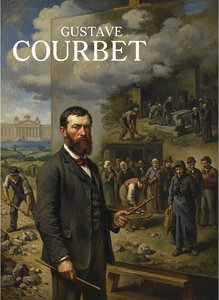
Gustave Courbet, a pioneering French painter, is renowned for his contributions to the Realist movement in 19th-century art. His works often depicted everyday life and challenged traditional artistic conventions. One of his notable pieces is Self-Portrait (Man with Pipe), created in 1848.The Painting
Self-Portrait (Man with Pipe) measures 45 x 37 cm and is executed in oil on canvas. It is housed at the Musée Fabre in Montpellier, France. The painting features Courbet himself, sporting a beard and wearing a blue shirt. His gaze is directed downward, suggesting deep contemplation or melancholy. In the background, another figure is visible, though their identity remains unclear. Courbet’s approach to portraying reality was revolutionary for its time. Rejecting the idealized depictions favored by Romantic artists, he insisted on capturing the world as it appeared – unvarnished and honest. The meticulous detail with which Courbet rendered his facial features and expression underscores this commitment to truthful representation. This wasn't merely about depicting a likeness; it was about conveying the inner life of the subject, mirroring the artist’s own psychological state.Artistic Significance
This self-portrait exemplifies Courbet’s unwavering dedication to Realism. By eschewing embellishment and focusing on observable details, he dismantled the conventions of academic painting and paved the way for subsequent artistic movements like Impressionism and Cubism. The subdued palette—dominated by earthy browns and blues—further reinforces this stylistic choice, reflecting the artist's desire to capture the essence of his surroundings without resorting to theatrical color schemes.Courbet’s Influence
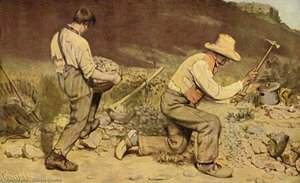
Gustave Courbet played a pivotal role in shaping modern art movements. His independence and willingness to challenge established norms profoundly impacted artists who followed him, fostering a spirit of experimentation and rejecting artistic dogma. He championed the depiction of ordinary subjects—laborers, peasants, landscapes—transforming the visual arts into a vehicle for social commentary and elevating the status of vernacular life.Other Notable Works
- Man with Pipe (56 x 47 cm, Museu Nacional de Arte Antiga, Lisbon, Portugal) - Burial at Ornans (315 x 668 cm, Musée d’Orsay, Paris, France) - Portrait of the Artist (also known as Man with a Pipe) (45 x 37 cm, Musée Fabre, Montpellier, France)For those interested in exploring more of Courbet’s works, Self-Portrait (Man with Pipe) and other paintings by Gustave Courbet can be found on OriginalUniqueArt. The museum collection at Musée Fabre also offers a rich experience for art enthusiasts.
Klausimai ir atsakymai
Ar galima atsisiųsti „Self-Portrait (Man with Pipe)“ aukštos raiškos vaizdą?
Norėdami gauti „Self-Portrait (Man with Pipe)“ – Gustavas Kurbė skaitmeninį failą, užsisakykite aukštos raiškos skaitmeninio vaizdo atsisiuntimas jo Skaitmeninis vaizdas puslapio.
Kokiam meno stiliui priklauso „Self-Portrait (Man with Pipe)“ – Gustavas Kurbė?
„Self-Portrait (Man with Pipe)“ – Gustavas Kurbė priklauso Realism stiliui. Ši dailės kryptis suteikia kūriniui stilistinį kontekstą.
Ar „Self-Portrait (Man with Pipe)“ bendroje apimatyje yra labiau šviesus ar tamsus kūrinys?
Įrašytos „Self-Portrait (Man with Pipe)“ – Gustavas Kurbė reikšmės: šviesos intensyvumas – gilių šešėlių zona, luminansas – Tamsus.
 Peržiūrėti realaus dydžio版
 Pasidalinti
 Dalintis
 Išsamiau
 Vadovas

 Atsisiųsti
 Panašūs eksponatai
 Rentgeno spindulių nuotrauka
 Automatinė diorama
 Q&A
Q&A Statistika