

 Peržiūrėti realybėje
 Pasidalinti
 Dalintis
 Išsamiau

 Atsisiųsti
 Panašūs eksponatai
 Rentgeno nuotrauka
 Automatinė diorama
 Statistika
Gothic letters from a model book
 Watercolor
- WallArt
- Gothic
 1390
1390- Late Medieval
 26.0 x 18.0 cm
 Biblioteca Civica
 Skaityti daugiau
Rankų darbo aliejinės reprodukcijos
Rankiniu būdu tapytas aliejus ant droblio jūsų pageidaujamame dydį ir rėmuose – mūsų menininkų darbas pagal užsakymą. ( Perejti prie spausdinimo Perejti prie skaitmeninio vaizdo)




P118B $10

P118H $10

P118W $10

P438Z $10

P508JH $12

P508YH $12

P805H $10

P805Z $10

P919BZ $10

P919G $10

P919XJ $10

P959ZH $10

P968JZ $12

W106C $8

W218G $10

W218JH $8

W218Y $10

W307PJ $10

W316G $10

W316PJ $8

W316Y $10

W398PJ $8

W4111J $10

W500HY $15

W500JH $15

W692G $12

W849H $8

W940BG $15

W953PJ $8




Pasirinkite iš mūsų nustatytų dydžių, atitinkančių originalaus meno kūrinio proporcijas.

Galite įvesti savo matmenis, kad jie atitiktų konkretų rėmą ar erdvę. Jei pasirinktas dydis neatitinka originalaus paveikslėlio proporcijų, mes arba apkropsime meno kūrinį, arba papildysime tapybą rankomis dažytい elementais. Prieš pradėdami gamybą, jūsų patvirtinimui atsiųsime skaitmeninį maketą.
Atkreipkite dėmesį, kad ekrane rodomas vaizdas neatspindi tikrojo apkarpymo ar papildymo. Tik maketas tiksliai parodys galutinę kompoziciją.
Nors galima rinktis ir individualius dydžius, rekomenduojame pasirinkti matmenis iš nustatytos sąrašo, kad būtų išlaikytos originalios proporcijos.
Gavus užsakymą, OriginalUniqueArt.com komanda susisieks su klientu el. paštu dėl instrukcijų ir pateiks maketo pavyzdį.
Pristatymas visame pasaulyje () per 3–4 savaites, o ne įprastai – per 5 savaites. (17 rugsėjis). Kokybė lieka nepakeičiama.

Nemokamas greitasis pristatymas visame pasaulyje

Aukštos kokybės lininis drobė

Pilnas siuntimo draudimas

Muitinės mokesčių grąžinimo garantija

Tikro spalvų atitikimo garantija

100 dienų grąžinimo politika (tik esant įtaigoms)

100% pinigų grąžinimo garantija

Nuolaida už kelias reprodukcijas
 Stiklo variantas prieinamas tik pasirinkus dydį iki 110 cm

Gothic letters from a model book
Reprodukcijos technika
Reprodukcijos matmenys
-


Galutinė kaina
$ 425
Autoriaus biografija
A Master of the Lombard Gothic
Giovannino de’ Grassi remains one of the most captivating enigmas of the late medieval period, a figure whose brushstrokes breathed life into the prestigious Visconti court of Milan. Born around 1350, his life was lived within the vibrant, ambitious atmosphere of the Lombardy region during a time of profound artistic transformation. While the historical record offers only fragmented glimpses of his personal journey, the sheer brilliance of his surviving illuminations speaks volumes of a master at the height of his powers. He operated in an era where the transition from the rigid structures of the Middle Ages to the burgeoning naturalism of the early Renaissance was beginning to stir, and de’ Grassim stood at the very heart of this aesthetic evolution.
The artistic soul of de’ Grassi was undoubtedly shaped by the rich traditions of the Visconti school. Scholars often point to the influence of Maestro Benedetto Tempesta, a contemporary known for his vivid depictions of the natural world, as a primary catalyst for Giovannino’s development. Under such tutelage, de’ Grassi learned to marry the decorative elegance of the Gothic style with an almost scientific devotion to detail. His work is characterized by a unique ability to weave intricate geometric patterns and heraldic symbols into compositions that feel remarkably alive, capturing the essence of flora, fauna, and the fantastical creatures that populated the medieval imagination.
The Splendor of the Visconti Hours
The pinnacle of de’ Grassi’s career is inextricably linked to the creation of the Visconti Hours, a monumental liturgical manuscript commissioned by the powerful Gian Galeazzo Visconti. This work serves as a definitive testament to his technical virtuosity and remains one of the most opulent achievements in the history of manuscript illumination. Within these pages, de’ Grassi achieved a level of detail that was unprecedented for his time. His ability to render delicate floral borders and complex heraldic emblems created a visual language of power and piety, where every stroke of gold leaf and pigment served to glorify both the divine and the ducal lineage.
Beyond the grand scale of liturgical books, de’ Grassi’s talent extended into more intimate and experimental realms. His work on model books and notebooks reveals a different facet of his genius—one focused on the study of form and symbol. In these smaller-scale works, we encounter:
- Gothic Letters: Intricate illuminations where letters are transformed into miniature landscapes populated by fantastical creatures and symbolic designs, showcasing his mastery of calligraphic art.
- Animal Studies: Remarkable monochrome illustrations that demonstrate a profound understanding of anatomy and movement, capturing the raw energy of hunting scenes and symbolic beasts with startling clarity.
Legacy and Historical Significance
The historical significance of Giovannino de’ Grassi lies in his role as a bridge between eras. He took the established decorative language of the Gothic period and infused it with a burgeoning sense of naturalism that would eventually pave the way for the Renaissance. His meticulous observations of the natural world—the curve of a leaf, the texture of fur, or the tension in a predator's muscle—foreshadowed the humanistic focus on empirical reality that would soon dominate European art. Though his life ended around 1398, leaving behind a legacy shrouded in the mists of the 14th century, his influence endured through the very manuscripts that continue to enchant collectors and historians today. He remains a luminous figure of the Lombardy masters, an artist who captured the fleeting beauty of the medieval world with eternal precision.

giovannino de' grassi
1350 - 1398 , Italy
Trumpa informacija
- Artistic Movement Or Style: Gothic Illuminations
- Date Of Birth: ca. 1350
- Date Of Death: 1398
- Full Name: Giovannino de' Grassi
- Nationality: Italian
- Notable Artworks:
- Psalm 118:81
- Animal studies from a notebook
- Gothic letters from a model book
- Place Of Birth: Milan, Italy
Susiję straipsniai

Beyond Borders: The Spiritual & Stylistic Innovations of International Gothic Art
Explore the exquisite beauty & spiritual depth of International Gothic art. Discover key artists like Simone Martini & Pol de Limbourg, its origins, symbolism, and lasting influence on European painting. Expert insights at OriginalUniqueArt.
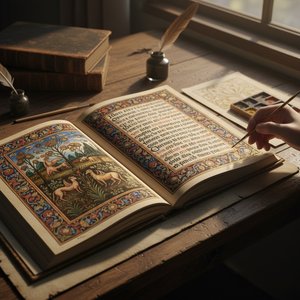
Whispers of History: Capturing the Timeless Beauty of Illuminated Manuscripts in Art
Embark on a journey through time with our deep dive into the exquisite beauty of illuminated manuscripts. Discover the sacred artistry, precious materials, and enduring legacy of medieval illumination in this cultural exploration for history lovers.

Francisco Goya Šedevrai: 25 Išskirtiniai Darbai Jūsų Interjerui | OriginalUniqueArt
Atraskite 25 įspūdingiausius Francisco Goya šedevrus! Ispanų romantizmo meistro paveikslai, portretai ir juodoji tapyba. Įkvėpkite interjerui su aukštos kokybės Goya reprodukcijomis | OriginalUniqueArt.com
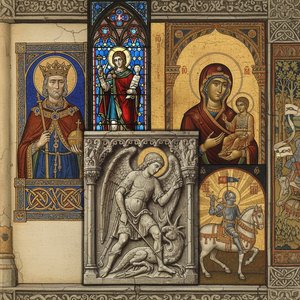
Illuminating Faith & Power: A Journey Through Medieval Art (c. 500 – c. 1500)
Explore the rich history of Medieval Art (c. 500 – c. 1500) with OriginalUniqueArt. Discover Byzantine mosaics, Gothic cathedrals & Renaissance masterpieces. Expert insights & museum-quality reproductions.
International Gothic: The Elegant Dawn of European Art and the Mastery of Illuminated Manuscripts
Explore the exquisite elegance of International Gothic art. Discover the mastery of illuminated manuscripts, the brilliance of gold leaf, and the legacy of the Limbourg Brothers in this expert guide to Europe's sophisticated medieval dawn.