
 Peržiūrėti realybėje
 Pasidalinti
 Dalintis
 Išsamiau

 Atsisiųsti
 Panašūs eksponatai
 Rentgeno nuotrauka
 Automatinė diorama
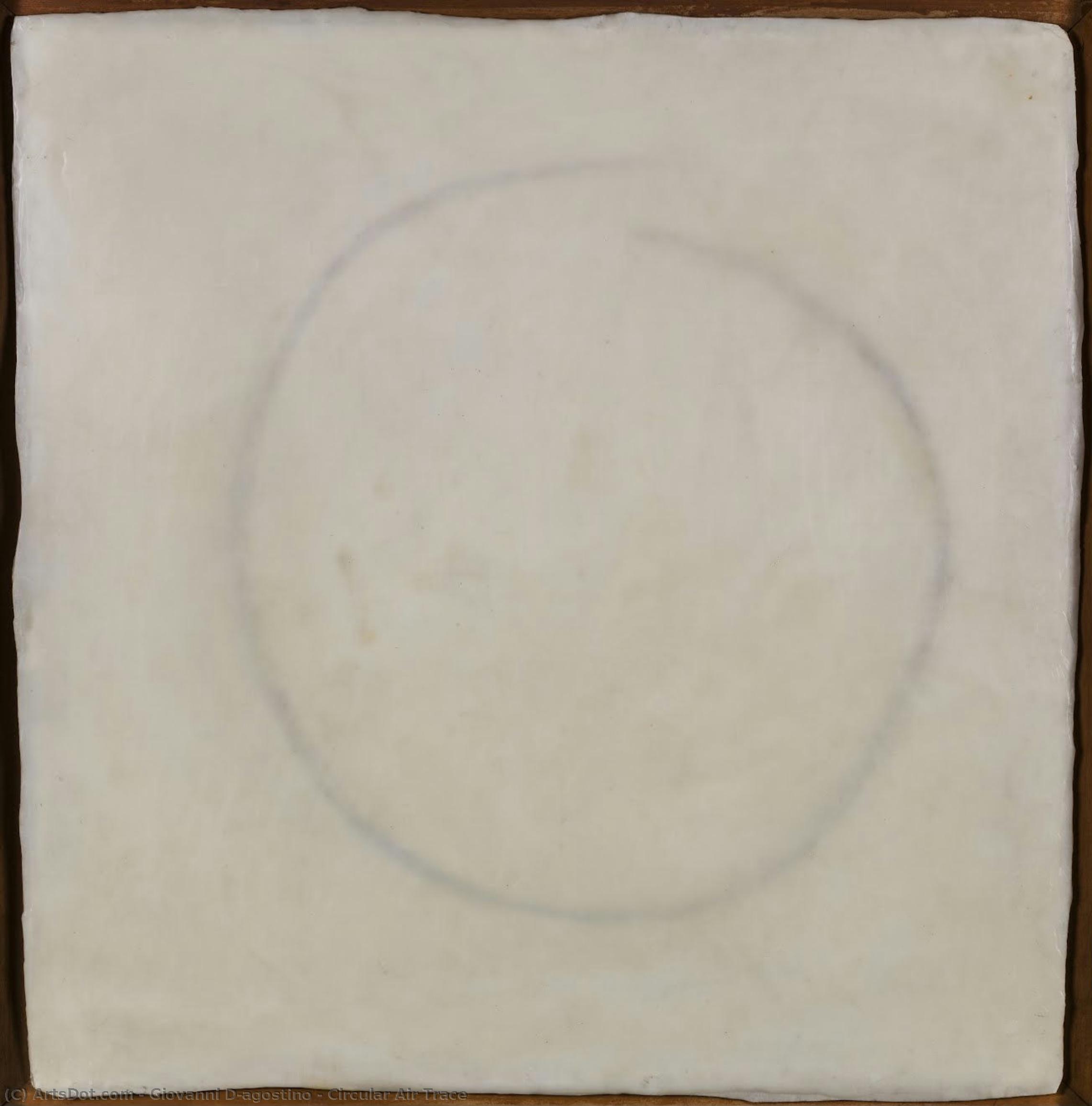
Circular Air Trace
 Oil On Canvas
- WallArt
- Minimalist
 1980
1980- Modern
 97.0 x 93.0 cm
 Galleria d'Arte Moderna Achille Forti
 Skaityti daugiau
Rankų darbo aliejinės reprodukcijos
Rankiniu būdu tapytas aliejus ant droblio jūsų pageidaujamame dydį ir rėmuose – mūsų menininkų darbas pagal užsakymą. ( Pirkti spaudinį Pirkti vaizdą)




P118B $10

P118H $10

P118W $10

P438Z $10

P508JH $12

P508YH $12

P805H $10

P805Z $10

P919BZ $10

P919G $10

P919XJ $10

P959ZH $10

P968JZ $12

W106C $8

W218G $10

W218JH $8

W218Y $10

W307PJ $10

W316G $10

W316PJ $8

W316Y $10

W398PJ $8

W4111J $10

W500HY $15

W500JH $15

W692G $12

W849H $8

W940BG $15

W953PJ $8




Pasirinkite iš mūsų nustatytų dydžių, atitinkančių originalaus meno kūrinio proporcijas.

Galite įvesti savo matmenis, kad jie atitiktų konkretų rėmą ar erdvę. Jei pasirinktas dydis neatitinka originalaus paveikslėlio proporcijų, mes arba apkropsime meno kūrinį, arba papildysime tapybą rankomis dažytい elementais. Prieš pradėdami gamybą, jūsų patvirtinimui atsiųsime skaitmeninį maketą.
Atkreipkite dėmesį, kad ekrane rodomas vaizdas neatspindi tikrojo apkarpymo ar papildymo. Tik maketas tiksliai parodys galutinę kompoziciją.
Nors galima rinktis ir individualius dydžius, rekomenduojame pasirinkti matmenis iš nustatytos sąrašo, kad būtų išlaikytos originalios proporcijos.
Gavus užsakymą, OriginalUniqueArt.com komanda susisieks su klientu el. paštu dėl instrukcijų ir pateiks maketo pavyzdį.
Pristatymas visame pasaulyje () per 3–4 savaites, o ne įprastai – per 5 savaites. (18 rugpjūtis). Kokybė lieka nepakeičiama.

Nemokamas greitasis pristatymas visame pasaulyje

Aukštos kokybės lininis drobė

Pilnas siuntimo draudimas

Muitinės mokesčių grąžinimo garantija

Tikro spalvų atitikimo garantija

60 dienų grąžinimo politika (tik esant gamyklinėms defektams)

100% pinigų grąžinimo garantija

Nuolaida už kelias reprodukcijas
 Stiklo variantas prieinamas tik pasirinkus dydį iki 110 cm

Circular Air Trace
Reprodukcijos technika
Reprodukcijos matmenys
-


Galutinė kaina
$ 300
Kūrinio aprašymas
The Geometry of Stillness: Exploring Circular Air Trace
To stand before Circular Air Trace is to encounter a moment suspended in time, a visual breath captured on canvas. This piece eschews the drama of narrative or the complexity of figurative representation, instead offering a profound meditation through pure geometry. The eye is immediately drawn to the pristine white circle, perfectly centered within its square embrace. It is an object of exquisite simplicity, yet one that demands deep contemplation. The composition itself—the dialogue between the contained circle and the surrounding void—speaks volumes about balance, focus, and the inherent order underlying apparent chaos.
A Dialogue in Line and Tone
The technical mastery evident here lies not in opulent brushwork, but in restraint. A thin, almost hesitant brown line defines both the perimeter of the central circle and the outer edge of the canvas itself, creating a delicate framing device. This linearity is crucial; it suggests a hand guiding the eye with utmost care. The background, rendered in textured off-white or cream tones, possesses a subtle grit that contrasts beautifully with the smooth expanse of the white form. While the artist’s historical context—Giovanni d'Agostino, whose life spanned the early 14th century—suggests an era rooted in monumental sculpture and fresco, this work feels like a deliberate departure, perhaps echoing later modernist sensibilities while retaining a foundational sense of craftsmanship.
Symbolism Woven into Form
In art history, nothing carries such weight as the circle. It has been universally understood as the symbol of eternity, wholeness, and unity—a perfect cycle with no discernible beginning or end. By isolating this form against a muted backdrop, Circular Air Trace invites the viewer to project their own sense of completeness onto the canvas. The minimalist approach strips away distraction, leaving only the pure concept: the continuous loop. It is an abstract whisper about infinity, making it a potent piece for any space intended for quiet reflection or intellectual gathering.
Integrating Modern Minimalism into Classic Spaces
For the discerning collector or interior designer, this artwork offers unparalleled versatility. Its restricted palette of white, cream, and warm brown ensures that it will harmonize with nearly any existing decor scheme, whether you are curating a sleek, contemporary loft or adding a touch of refined abstraction to a classically appointed room. The subtle texture visible in the paint application hints at an underlying depth, preventing the piece from feeling sterile. It is a sophisticated anchor—a point of calm visual repose that elevates a space without ever shouting for attention.
Autoriaus biografija
Giovanni d'Agostino: Life and Legacy
Early Life and Training
Giovanni d'Agostino (also known as Agostino di Giovanni) was an Italian architect and sculptor active between 1310 and 1347, born in Siena around 1285. His origins lie within a Sienese family with a tradition of sculpting and architecture. Early biographical accounts, notably those by Giorgio Vasari, suggest he initially trained in the workshop of Giovanni Pisano. However, modern scholarship proposes an apprenticeship under Camaino di Crescentino, father to Tino di Camaino, as more likely.
Collaborations and Artistic Development
D'Agostino’s career was characterized by frequent collaboration with other artists. He wasn’t a solitary figure but thrived within the workshop system common during his time. A significant partnership was formed with Agnolo di Ventura, culminating in their joint execution of the cenotaph of Guido Tarlati in the Cathedral of Arezzo (signed and dated 1330). This work is considered one of his major achievements.
- Vasari also mentions collaborations on commissions from the commune of Siena, including the Porta Romana and the iconic Torre del Mangia. Documentation confirms D'Agostino’s involvement in the construction of the Torre del Mangia in 1339.
- He was further involved in constructing fortifications at Massa Marittima, demonstrating his versatility beyond purely sculptural work.
Major Works and Style
While individual attribution can be challenging due to collaborative practices, D'Agostino’s contributions are evident in several key works:
- Cenotaph of Guido Tarlati (Arezzo Cathedral): A prime example of his sculptural skill and collaboration with Agnolo di Ventura. It provides valuable insight into 14th-century aristocratic culture.
- Torre del Mangia (Siena): His involvement in this iconic tower showcases his architectural capabilities and contribution to the Sienese skyline.
- Porta Romana (Siena): Another example of his architectural work, contributing to the city’s fortifications.
D'Agostino’s style reflects the transition from earlier Gothic forms towards a more refined and naturalistic approach. His figures, while still rooted in medieval conventions, display increasing attention to detail and anatomical accuracy.
Influences and Legacy
D'Agostino was influenced by both Giovanni Pisano and Camaino di Crescentino, absorbing elements of their respective styles. He, in turn, passed on his skills to his sons, Giovanni and Domenico, who also became sculptors, continuing the family tradition.
His work represents a crucial link in the development of Sienese art during the 14th century, bridging the gap between earlier Gothic traditions and the emerging Renaissance aesthetic. Although not as widely celebrated as some of his contemporaries, D'Agostino’s contributions were significant to the artistic landscape of Siena and Tuscany.Death and Historical Significance
The exact date of Giovanni d'Agostino’s death is unknown, but a document dated June 27, 1347, indicates he was no longer living. His work remains as a testament to the artistic vitality of Siena during the Gothic period, and his collaborations exemplify the communal nature of art production in medieval Italy.

Giovanni d'Agostino
1285 - 1347 , Italy
Trumpa informacija
- Birth Date: c. 1285
- Birth Place: Siena, Italy
- Death Date: 1347
- Influenced: Giovanni di Agostino (son), Domenico di Agostino (son)
- Influenced By: Giovanni Pisano, Camaino di Crescentino
- Movement: Gothic art
- Name: Giovanni d'Agostino
- Nationality: Italian
- Notable Works: Cenotaph of Guido Tarlati, Torre del Mangia, Porta Romana
Susiję straipsniai

Geometrinės Abstrakcijos Šedevrai: 10 Kūrinių, Pakeitusių Meną | OriginalUniqueArt.com
Atraskite 10 geometrinės abstrakcijos šedevrų – nuo Mondriano iki Malevičiaus! Sužinokite apie Piet Mondrian, Kazimir Malevič ir kitus menininkus. Meno kūriniai jūsų interjerui | OriginalUniqueArt.com
Fernand Léger: 25 Šedevrai, Apibrėžę Moderniąją Meninę Viziją | OriginalUniqueArt
Atraskite 25 įspūdingiausius Fernand Léger šedevrus! Kubizmo meistro paveikslai, atspindintys pramonės amžių ir modernaus meno spalvas. Meno reprodukcijos interjerui – OriginalUniqueArt.com

Kandinsky's Masterpieces: 25 Paintings That Define Abstract Art | OriginalUniqueArt
Journey through Wassily Kandinsky's 25 most iconic abstract paintings. Explore his revolutionary use of color, form & spiritual expressionism. Find museum-quality Kandinsky reproductions and elevate your home decor with OriginalUniqueArt.com. Discover all masterpieces on OriginalUniqueArt.com!

Neo-Abstract Art: The High-Impact Evolution of Modern Visual Energy and Geometric Sophistication
Discover the power of Neo-Abstract art. Explore how bold geometric forms and high-impact visual energy are redefining modern design. Learn to curate sophisticated, high-energy spaces with the latest trends in contemporary abstraction and structural color.
Minimalist Masterpieces: 10 Artworks for Serene Home Decor | OriginalUniqueArt
Find serenity with 10 minimalist masterpieces! Explore Agnes Martin, Rothko & more. Discover the stories behind iconic abstract art, neutral palettes & calming designs. Museum-quality reproductions at OriginalUniqueArt.com – elevate your home decor today!

