

 Peržiūrėti realaus dydžio版
 Siųsti
 Dalintis
 Išsamiau
 Vadovas

 Atsisiųsti
 Panašūs eksponatai
 Rentgeno spindulių nuotrauka
 Diaporama
 Statistika
Camera obscura
 Acrylic
- WallArt
- Impressionism
 1700
1700 22.0 x 38.0 cm
 Korero muziejus
 Rodyti daugiau
Giclée / Meno spausdinimas
Muziejų lygio „giclée“ arba drobos spausdinimas: greita gamyba ir lankstios apdailos parinktys. ( Pirkti rankomis tapytą reprodukciją Perejti prie skaitmeninių vaizdų)




P118B €10

P118H €10

P118W €10

P438Z €10

P508JH €12

P508YH €12

P805H €10

P805Z €10

P919BZ €10

P919G €10

P919XJ €10

P959ZH €10

P968JZ €12

W106C €8

W218G €10

W218JH €8

W218Y €10

W307PJ €10

W316G €10

W316PJ €8

W316Y €10

W398PJ €8

W4111J €10

W500HY €15

W500JH €15

W692G €12

W849H €8

W940BG €15

W953PJ €8




Pasirinkite iš mūsų nustatytų dydžių, atitinkančių originalaus meno kūrinio proporcijas.

Įveskite jums reikiamą plotį ir aukštį, kad atvaizdas derėtų prie jūsų rėmo ar sienos. Spausdiną galima tik sumažinti, bet nepadidinti virš originalaus paveikslėlio dydžio, todėl keičiant proporcijas, dalis vaizdo prarandama. Prieš spausdinimą atsiųsime jums skaitmeninį maketą patvirtinimui. Šioje puslapio nuotraukoje matomas pjūvis nėra tikslus – jį rodo tik maketas.
Pristatymas visame pasaulyje () per 2 weeks, o ne įprastas 4/5 savaičių laikotarpis. (24 spalis)

Nemokamas greitasis pristatymas visame pasaulyje

Aukštos kokybės lininis drobė

Pilnas siuntimo draudimas

Muitinės mokesčių grąžinimo garantija

Tikro spalvų atitikimo garantija

100 dienų grąžinimo politika (tik esant įtaigoms)

100% pinigų grąžinimo garantija

Nuolaida dideliems užsakymams
 Stiklo variantas prieinamas tik pasirinkus dydį iki 110 cm

Camera obscura
Giclée / Meno spausdinimas
Reprodukcijos dydis
-


Visų pasirinktų variantų kaina
€ 70
Canaletto’s Camera Obscura: A Window Into Venetian Vision
The artist Giovanni Antonio Canaletto, commonly known as Canaletto (1697 – 1768), stands as one of the most celebrated figures in eighteenth-century Venetian painting. His meticulous depictions of Venice—the canals shimmering under sunlight, the palaces adorned with opulent decoration—captivate viewers even today. But beyond their aesthetic beauty lies a fascinating secret: Canaletto’s unparalleled accuracy stems from a technique that predates photography – the camera obscura. This ingenious device, essentially a darkened room equipped with a pinhole aperture and a mirror, allowed him to capture the essence of his surroundings with remarkable precision, shaping not only his artistic output but also influencing the broader understanding of perspective and visual representation.- The Device Itself: Canaletto’s camera obscura wasn't merely a tool; it was a conceptual breakthrough. Constructed from wood and glass, it functioned by projecting an inverted image of the outside world onto a surface within—typically tracing paper or canvas—positioned opposite to the pinhole. This method ensured that the artist could faithfully reproduce architectural details and atmospheric effects without resorting to laborious sketching techniques.
- A Reflection of Scientific Curiosity: Canaletto’s embrace of the camera obscura reflects the burgeoning scientific interest in optics during his lifetime. Astronomers and mathematicians alike were experimenting with similar instruments, attempting to unravel the mysteries of light and vision. Canaletto's use of this technique wasn't simply artistic expediency; it represented a conscious engagement with contemporary intellectual debates about how we perceive reality.
- Venetian Landscape Painting: The camera obscura profoundly impacted Canaletto’s style. By allowing him to observe the scene from multiple viewpoints simultaneously, he achieved a level of realism previously unattainable. His paintings—particularly those capturing the grandeur of St Mark's Square and the Doge’s Palace—are characterized by subtle gradations of color, masterful shading, and an astonishingly accurate depiction of architectural proportions.
- Symbolism Beyond Technique: Canaletto’s camera obscura technique wasn’t just about achieving visual accuracy; it also conveyed a deeper symbolic message. The darkened room represented introspection and contemplation—a deliberate distancing from the immediate sensory experience to gain access to a more profound understanding of the world around him. This approach mirrored the philosophical currents of the Enlightenment, emphasizing reason and observation as pathways to knowledge.
- Legacy in Photography: Canaletto’s pioneering use of the camera obscura foreshadowed the invention of photography centuries later. By demonstrating that it was possible to capture an image without direct contact with the subject matter—a feat previously considered impossible—he fundamentally altered our conception of artistic representation and paved the way for a new era of visual art.
Notable Works Featuring Camera Obscura Technique
Canaletto’s mastery of perspective is evident in several iconic paintings, including “The Stonemason’s Yard” (c. 1725), where he meticulously rendered the textures and colors of the building materials with astonishing detail. Similarly, his depiction of St Mark's Square—particularly the Doge’s Palace—captures the shimmering light reflecting off the facades and windows, achieved through careful observation and skillful blending of pigments. These paintings stand as testament to Canaletto’s unwavering commitment to capturing the beauty and complexity of Venice with unparalleled accuracy – a feat made possible by his ingenious use of the camera obscura.Exploring Canaletto's Influence on Later Artists
Canaletto’s innovative approach to landscape painting resonated deeply with artists who followed him, notably Francesco Guardi and Michele Marieschi. These painters adopted similar techniques—primarily employing atmospheric perspective and meticulous detail—to convey the grandeur of Venetian vistas. Canaletto’s legacy extends beyond his own artistic achievements; he established a precedent for realistic representation that continues to inspire artists today, demonstrating that observation and careful technique can unlock profound insights into capturing the essence of visual experience.Reproductions & Inspiration
High-quality reproductions of Canaletto's paintings offer an exceptional opportunity to appreciate his artistic genius and immerse oneself in the atmosphere of eighteenth-century Venice. Consider framing a print alongside a photograph taken from one of Canaletto’s original viewpoints—a powerful gesture that honors both the artist’s pioneering technique and the enduring beauty of Venetian landscapes. Let Canaletto's Camera Obscura serve as a reminder that true artistic vision requires not only skill but also an unwavering dedication to observing and interpreting the world around us.问答 (or more naturally for a website heading): Klausimai ir atsakymai
Į kokį kambarį rekomenduojamas „Camera obscura“, autorius – Kanaleto?
Rekomenduojama erdvė kūriniui „Camera obscura“, autorius – Kanaleto yra Living Room. Šią rekomendaciją, žinoma, galima pritaikyti prie jūsų interjero.
Koks kontrastas yra darbe „Camera obscura“, autorius – Kanaleto?
„Camera obscura“, autorius – Kanaleto pasižymi Statement kontrastu tarp švesių ir tamsių paviršių.
Kokia yra „Camera obscura“ paletės ryškumas?
Kūrinys „Camera obscura“, autorius – Kanaleto užfiksuotas su Muted nasyginimu.
Autoriaus biografija
Ankstyvas gyvenimas ir meninis ugdymas
Giovanni Antonio Canal, plačiau žinomas kaip Canaletto, gimė 1697 metų spalio 18 dieną Venecijoje, Italijoje. Jo tėvas, Bernardo Canal, buvo teatro scenografijų tapytojas, o motina – Artemisia Barbieri. Būtent tėvas pirmasis suteikė jaunajam Giovanni meninio ugdymo pagrindus, mokydamas piešimo ir dažymo subtilybių. Šis ankstyvas įsisavinimas padėjo pamatus būsimam Canaletto talentui ir aistrai vaizduoti Venecijos grožį.
Kelionė į Romą ir meistriškumo įgijimas
1718 metais Canaletto išvyko į Romą, kur dirbo kuriant dekoracijas dviem Alessandro Scarlatti operoms. Ši patirtis turėjo didžiulės reikšmės jo meninei plėtrai. Romos atmosfera, kupina istorijos ir meno tradicijų, paskatino jį eksperimentuoti su perspektyva ir kompozicija. Grįžęs į Veneciją, Canaletto ėmė kurti savo firminiu stiliumi – topografiniais vaizdais, kurie vėliau atnešė jam šlovę. Jo paveikslai nebuvo tik paprasti miesto peizažai; jie buvo kruopščiai apgalvotos kompozicijos, perteikiančios Venecijos dvasią ir atmosferą.
Žymiausi darbai ir bendradarbiavimas
Canaletto paliko po savęs daugybę išskirtinių kūrinių. Tarp jų ypač svarbūs:
- “Akmenų klojėjų kiemas” (apie 1725 m.) – šis darbas demonstruoja jo ankstyvąjį talentą ir kruopštumą.
- “Regata Didžiajame kanale” – ryškus Venecijos viešųjų ceremonijų vaizdas, perteikiantis miesto gyvybę ir šventinę atmosferą.
- “Eton College” (1746–1756 m.) – liudijimas jo įtakai Anglijoje. Canaletto aktyviai bendradarbiavo su savo sūnėnu Bellotto, kuris taip pat tapo žymiu menininku.
Meninis stilius ir technika
Canaletto pasižymėjo itin tiksliu perspektyvos naudojimu bei kruopščiais parengiamaisiais piešiniais. Kai kurie ekspertai mano, kad jis galbūt naudojo camera obscura technologiją siekdamas topografinio tikslumo. Tačiau svarbiausia jam buvo kompozicijos kūrimas – jo darbai nebuvo tikslūs miesto vaizdų atspindžiai, bet ir vizualiai įspūdingi meno kūriniai. Jis meistriškai perteikė šviesos ir šešėlių žaidimą, sukuriant realistinius ir kartu romantiškus Venecijos peizažus.
Palikimas ir kolekcijos
Canaletto darbai saugomi įvairiuose muziejuose visame pasaulyje, o Londono Nacionalinė galerija yra viena svarbiausių vietų, kur galima apžiūrėti jo kūrinius. Jo palikimas tęsiasi per daugybę menininkų, kuriuos jis įkvėpė, įtvirtindamas jo poziciją kaip vieną iš didžiausių venecietiškos peizažinės tapybos meistrų. Canaletto paveikslai – tai ne tik istorinis dokumentas apie XVIII amžiaus Veneciją, bet ir nuostabūs meno kūriniai, kuriuose atsispindi miesto grožis, atmosfera ir dvasi.
- Norėdami apžiūrėti Canaletto darbus, apsilankykite https://OriginalUniqueArt.com/@/giovanni-antonio-canal
- Sužinokite daugiau apie Canaletto Wikipedia
- Atraskite venecietiškosios meno grožį Palumbo-Fossati kolekcijoje (Venecija, Italija)
Atskleiskite meno pasaulį adresu https://OriginalUniqueArt.com ir sužinokite daugiau biografijų bei meno kūrinių.
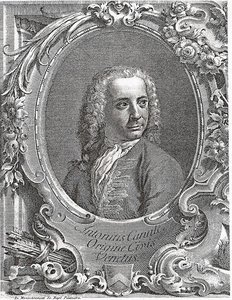
Kanaleto
1697 - 1768 , Italija
Trumpa informacija apie kūrėją
- Gimimo Data: 1697 spalio 18 d.
- Gimimo Vieta: Venecija, Italija
- Meninis Stilius: Vedute Venecijoje
- Mirties Data: 1768 balandžio 19 d.
- Pilietybė: Italas
- Pilnas Vardas: Giovanni Antonio Canal
- Turėjo Įtakos: ['Giovanni Paolo Pannini']
- Įtakojo: ['Tintoretto']
- Žymiausi Darbai:
- The Stonemason's Yard
- Regatta on the Grand Canal
- Eton College
Susiję straipsniai

The Enduring Legacy of Oil on Canvas: Technique, History & Aesthetic Impact
Explore the rich history & techniques of oil painting – from Renaissance masters to Impressionism. Discover pigments, layering methods, and why this timeless medium endures. Expert insights for artists & art enthusiasts.

Giovanni Antonio Canal (Canaletto): A Venetian Master of Light, Space & Societal Observation
Explore the life & art of Giovanni Antonio Canal (Canaletto), a Venetian master renowned for his breathtaking cityscapes. Discover his techniques, legacy, and captivating depictions of 18th-century Venice & London.

The Dramatic Flourish: Exploring the Baroque Movement's Enduring Legacy in Art History
Explore the dramatic world of Baroque art! Discover iconic artists like Caravaggio & Rubens, defining techniques, and its lasting impact on art history. Expert insights for collectors & enthusiasts at OriginalUniqueArt.

The Enduring Power of Painting: A Historical & Contemporary Exploration of Form and Emotion
Explore the rich history & enduring techniques of oil painting with OriginalUniqueArt. Discover masterpieces, learn about art collecting, and find authentic handmade reproductions crafted by skilled artists.

Baroko Dramatizmas: Elegancijos ir Emocijų Įnešimas į Šiuolaikinius Interjerus
Atraskite baroko dramatiškumą! Meno konsultacijos, rankų darbo reprodukcijos ir patarimai, kaip įnešti eleganciją bei emocijas į jūsų interjerą su OriginalUniqueArt.com. Kokybė garantuota!


