Peržiūrėti realaus dydžio版
 Siųsti
 Dalintis
 Išsamiau
 Vadovas

 Atsisiųsti
 Panašūs eksponatai
 Rentgeno spindulių nuotrauka
 Diaporama
 Statistika
Three Philosophers


 Rodyti daugiau
Rankų darbo aliejinės reprodukcijos
Rankiniu būdu tapytas aliejus ant droblio jūsų pageidaujamame dydį ir rėmuose – mūsų menininkų darbas pagal užsakymą. ( Perjungti į spausdinimą Perejti prie skaitmeninių vaizdų)




P118B €10

P118H €10

P118W €10

P438Z €10

P508JH €12

P508YH €12

P805H €10

P805Z €10

P919BZ €10

P919G €10

P919XJ €10

P959ZH €10

P968JZ €12

W106C €8

W218G €10

W218JH €8

W218Y €10

W307PJ €10

W316G €10

W316PJ €8

W316Y €10

W398PJ €8

W4111J €10

W500HY €15

W500JH €15

W692G €12

W849H €8

W940BG €15

W953PJ €8




Pasirinkite iš mūsų nustatytų dydžių, atitinkančių originalaus meno kūrinio proporcijas.

Įveskite jums reikiamą plotį ir aukštį, kad paveikslas atitiktų jūsų rėmą ar sieną. Kadangi šis darbas yra rankinio darbo, siekiant išgauti kitokio formos dydį, paveikslas gali būti šiek tiek didesnis (nuo kraštų bus palikta daugiau erdvės) arba mažesnis – pasirinkite jums patogiausią variantą. Prieš pradedant tapyti, atsiųsime jums skaitmeninį maketą patvirtinimui. Šioje puslapio nuotraukoje matomas vaizdas nėra galutinis rezultatas – jį parodys tik sukurtas maketas.
Gavus užsakymą, OriginalUniqueArt.com komanda susisieks su klientu el. paštu dėl instrukcijų ir pateiks maketo pavyzdį
Pristatymas visame pasaulyje () per 3–4 savaites, o ne įprastai – per 5 savaites. (26 spalis). Kokybė lieka nepakeičiama.

Nemokamas greitasis pristatymas visame pasaulyje

Aukštos kokybės lininis drobė

Pilnas siuntimo draudimas

Muitinės mokesčių grąžinimo garantija

Tikro spalvų atitikimo garantija

100 dienų grąžinimo politika (tik esant įtaigoms)

100% pinigų grąžinimo garantija

Nuolaida dideliems užsakymams
 Stiklo variantas prieinamas tik pasirinkus dydį iki 110 cm

Three Philosophers
Reprodukcijos technika
Reprodukcijos dydis
-


Visų pasirinktų variantų kaina
€ 263
A Venetian Enigma: Unraveling the Layers of “Three Philosophers”
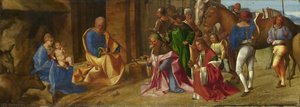
Giorgione’s “Three Philosophers,” painted around 1509, isn't merely a portrait; it’s an invitation to a silent conversation across centuries. The painting, shrouded in mystery and speculation, resides within a captivating web of historical accounts, artistic interpretations, and tantalizing symbolism. Originally conceived as a monumental work for the Venetian merchant Taddeo Contarini, its journey through time – from the opulent collections of Venice to the Brussels court – has subtly altered its appearance, notably with a significant reduction on the left side, diminishing the original expansive landscape but intensifying the focus on the figures themselves. This deliberate alteration speaks volumes about the artist’s intent and the evolving tastes of his patrons.
The scene unfolds within a carefully constructed space: three men, rendered in a palette dominated by earthy tones – ochre, umber, and subtle greens – stand before a rugged cliff face, its weathered rocks providing a dramatic backdrop. The figures are dressed in rich, crimson robes, a striking contrast to the muted landscape, drawing immediate attention to their presence. The youngest man, seated and holding compasses and a square—tools of a painter, perhaps?—suggests an engagement with artistic practice itself. His posture is contemplative, his gaze directed inward, while the central figure, clad in a dark robe, gestures towards the horizon, seemingly lost in thought. The eldest, identifiable by his flowing garments and the book he clutches, exudes an air of learned authority.
The Allure of *Sfumato* and Giorgione’s Unique Style
Giorgione's mastery lies not just in his subject matter but also in his revolutionary technique. He employed a masterful use of *sfumato*, a subtle blurring of lines and edges, creating an atmospheric haze that softens the forms and imbues the scene with a dreamlike quality. This is particularly evident in the rendering of the landscape – the rocks are not sharply defined but rather emerge from the mist, contributing to the painting’s overall sense of mystery. The figures themselves possess a remarkable softness, their features rendered with an almost ethereal grace. Giorgione's approach departed significantly from the more linear and precise styles prevalent at the time, prioritizing mood and atmosphere over strict anatomical accuracy.
The interplay of light and shadow is crucial to the painting’s impact. Giorgione expertly manipulates chiaroscuro – the dramatic contrast between light and dark – to sculpt the forms and create a sense of depth. The figures are bathed in a diffused, golden light that seems to emanate from an unseen source, casting long shadows across the landscape and highlighting their contemplative postures. This masterful use of light not only enhances the painting’s visual appeal but also contributes to its evocative atmosphere.
Decoding the Symbols: Who Are These Philosophers?
The enduring fascination with “Three Philosophers” stems from the persistent debate surrounding the identity of the figures depicted. While initially identified as "philosophers," a multitude of interpretations have been proposed over the centuries, each offering a compelling narrative. The most common theories suggest they represent the Three Kings, astronomers, or even representatives of three distinct religions. More recently, the Pythagorean school – Pythagoras, Thales, and Pherecydes—has gained traction, fueled by the presence of the painter’s tools and astronomical texts.
The compasses and square, undeniably significant, have been interpreted as symbols of artistic creation, but their placement also hints at a deeper intellectual engagement. The varied attire of the figures – suggesting origins from different lands—could represent diverse philosophical schools or cultural influences. The book held by the eldest figure further reinforces this notion of learned discourse and contemplation. Ultimately, Giorgione’s deliberate ambiguity invites viewers to project their own interpretations onto the scene, transforming it into a mirror reflecting the viewer's own intellectual curiosity.
A Timeless Masterpiece: Reproduction and Artistic Legacy
"Three Philosophers" remains a testament to Giorgione’s genius—a painting that transcends its historical context and continues to captivate audiences today. OriginalUniqueArt offers meticulously crafted, hand-painted reproductions of this iconic work, allowing you to experience the depth, nuance, and emotional resonance of Giorgione's masterpiece in your own space. Our reproductions faithfully capture the *sfumato* technique, the atmospheric lighting, and the subtle symbolism that define this enigmatic portrait. Whether for a grand salon or a personal study, a OriginalUniqueArt reproduction of “Three Philosophers” is an investment in art history, a celebration of Venetian artistry, and a window into a world of timeless contemplation.
问答 (or more naturally for a website heading): Klausimai ir atsakymai
Kokia „Three Philosophers“, autorius – Džordžonė suvokiamas ryškumas?
Visapusiškai „Three Philosophers“ įtvirtinta kaip deep_shadow. Perceptinis ryškumas apibūdina, koks kūrinys atrodo šviesus ar tamsus.
Ar „Three Philosophers“, autorius – Džordžonė vaizdą galima laisvai reprodukcijaoti?
„Three Philosophers“, autorius – Džordžonė yra pripa принадле belongs to the public domain – jo autorinė teisė pasibaigusi. Šis statusas nustato, kaip galima reprodukcijaus šio kūrinio vaizdą.
Kokią temą ir atmosferą sujungia „Three Philosophers“, autorius – Džordžonė?
„Three Philosophers“, autorius – Džordžonė vaizdelioje atspindžiami philosophy, renaissance, landscape, figures, composition, mystery, color, sukurti Calm nuotaika. Tematika ir atmosfera kartu apibūdina šį kūrinį.
Autoriaus biografija
Venecijos Enigma: Giorgionės Gyvenimas ir Palikimas
Giorgis Barbarelis iš Kastelfranko, žinomas pasauliui kaip Giorgionė, tebėra vienas elipsiškiausių ir patraukliausių figūrų renesanso mene. Gimė mažame Kastelfranko Veneto miestelyje netoli Venecijos maždaug 1477 ar 1478 metais – tikslaus gimimo metai tebėra diskutuojami – jo tragiškai trumpa, apie 1510 metus pasibaigusi gyvenimo istorija, nepaisant menkaverčio palikimo, sužadina amžiną susidomėjimą. Skirtingai nuo daugelio jo to laikmečio bendraautorių, kuriems skirbiama išsami biografinė informacija, Giorgionės istorija apipinta paslaptimis, sudaryta iš retų istorinių užrašų ir Giorgio Vasario dažnai romantizuotų apysakymų. Iš to, ką žinome, galima spręsti, kad tai buvo žmogus, giliai panardęs į Venecijos kultūros sroves – miestą, kuris skatino meninę inovaciją ir jautrumą grožiui. Tikėtina, kad mokytojavo pas Giovanni Bellini, žinomą venecijietiško meno atstovą, perimdamos tradicijas prieš imdamasis savo unikalios kelionės. Ankstyvosios užsakytos kompozicijos apėmė garbių asmenybių, tokių kaip Dožas Agostino Barbarigo, portretus, rodantį iškart pasireiškusią talentą atpažinti panašumus ir statusą. Tačiau būtent atsisakęs įprastinių temų ir revoliucinis požiūris į tapybą padarė Giorgionę tikru novatorium.Poetiški Vizualai: Stilius ir Inovacija
Giorgionės meninis stilius pažymėjo reikšmingą atsiskyrimą nuo vyraujančios Florencijos krypties, kuri pabrėžia linijinę perspektyvą ir tikslų piešinį. Jis gynė spalvas, atmosferą ir įkvepiančią nuotaiką, tapusias Venecijos mokyklos požymiais. Jo technika apėmė kontūrų sušvelninimą, subtilių tonų gradacijų – *sfumato* – naudojimą atmosferos efektams kurti bei visumos harmonijos prioritetą prieš kruopštų detalizavimą. Šis pasirinkimas nebuvo tik technologinis sprendimas; tai atspindėjo fundamentalią meninę perspektyvą. Giorgionė siekė ne realybės atkartojimo, bet jos esmės, trumpalaikių emocijų ir poetiškos rezonanso užfiksavimo. Jo paveikslai dažnai pasižymi paslaptingais motyvais ir dviprasmiškais naratyvais, kviečiant žiūrovus į kontempliacijos pasaulį, o ne siūlant aiškias istorijas. Audra, galbūt jo garsiausias darbas, puikiai tai iliustruoja. Scena – karys ir krūtimi maitinanti motina tarp audringo kraštovaizdžio – jau šimtmečius stebina meno istorikus, o jos reikšmė tebėra viliojančiai nepasiekiamas dalykas. Panašiai Pastoralinis koncertas (Fête champêtre) pristato idilišką muzikantų susitikimą pastoralinėje aplinkoje, vertinamas ne dėl konkretaus naratyvo, bet dėl harmoningos kompozicijos ir lyrinio kokybės. Šie darbai nebuvo skirti sprendžiamoms galvosūkčiams; jie turėjo sužadinti jausmus, nuotaikas ir stebėjimo pojūtį.Šedevrai ir Nuolatinis Įtaka
Nepaisant riboto produktyvumo dėl ankstyvos mirties, Giorgionė paliko nedidelį, tačiau giliai paveikų kūrinių rinkinį. Mieganti Venera, tikriausiai baigta su Titiano pagalba po Giorgionės mirties, yra ikonografinis dievybės atvaizdas, kuriame pasižymi spalvų ir formų meistriškumu. Lengvas poza ir minkšti odos tonai įkūnija venecijietišką jauslingumo ir grožio vertinimą. Kiti reikšmingi darbai apima Juditę, ankstyvojo stiliaus pavyzdį, bei portretus, atskleisiančius gebėjimą užfiksuoti savo subjektų charakterį ir esmę. Giorgionės įtaka išsiplėtė gerokai už jo pačių paveikslų ribų. Jis buvo mokytojas Titianui, kuris tapo vienu garsiausių Aukštojo Renesanso menininkų, pernešdamas Giorgionės naujoves spalvų ir atmosferiškos tapybos srityse. Spalvų ir atmosferos pabrėžimas giliai paveikė Venecijos tapybos raidos eigą, atskirdamas ją nuo Florencijų tradicijų ir įtvirtindamas Venetiją kaip svarbų meninės naujovės centrą.Nuolatinis Palikimas: Giorgionės Istorinė Priežastis
Nepaisant trumpo karjeros, Giorgionė užima kertinį vaidmenį meno istorijoje. Jis sujungė ankstesnes Venecijos tradicijas ir Titiano bei vėlesnių meistrų naujoves, fundamentaliai pakeitęs italų tapybos eigą. Jo poetiškas nuotaikos, atmosferos efektų ir dviprasmiški naratyvai atidarė kelią naujiems meniniams tyrimams ir įkvėpė daugybės kartų menininkus. Pats paslaptis, apipynęs jo gyvenimą ir kūrybą, prisidėjo prie jo nuolatinio mistikos ir patrauklumo. Jis tebėra meno laisvės, naujovės ir įtūkių galios simbolis – dailininkas, kuris drįso pirmenybę suteikti jausmams prieš formas, atmosferai prieš tikslumą ir poezijai prieš naratyvus.Pagrindiniai Giorgionės Darbai
- Audra (apie 1506–1508 m.)
- Pastoralinis koncertas (Fête champêtre) (apie 1509 m.)
- Mieganti Venera (apie 1510 m.)
- Juditė (1504 m.)
- Venecijietiškų ponų portretas

Džordžonė
1477 - 1510 , Italija
Trumpa informacija apie kūrėją
- Gimimo Data: 1477/78 m.
- Gimimo Vieta: Castelfranco Veneto, Italija
- Meninis Stilius: Venecijos renesansas
- Mirties Data: 1510 m.
- Pilnas Vardas: Giorgio Barbarelli da Castelfranco
- Poveikį Darė:
- Giovanni Bellini
- Mantegna
- Tautybė: Italikas
- Įtaką Patyrė: ['Ticianas']
- Žymiausi Kūriniai:
- Audra
- Pastoralinis koncertas
- Mieganti Venera
Susiję straipsniai

10 Romantinių Peizažų Simbolių: Tapybos Majestatės Viršūnės
Atraskite 10 legendinių romantinio peizažo kūrinių! Pasinerkite į Claude Lorrain, Caspar David Friedrich ir J.M.W. Turner genijaus pasaulį. Išmokite apie tapybos meistriškumą bei gamtos grožį. Aukščiausios kokybės meno reprodukcijos – OriginalUniqueArt.com. Tyrinėkite kolekciją!

Giorgione: Enigma and Innovation in Early Venetian Renaissance Painting
Explore the enigmatic world of Giorgione, a pivotal figure in the Venetian Renaissance. Discover his innovative techniques, iconic paintings like 'The Tempest', and lasting influence on art history. Learn more at OriginalUniqueArt.

Evocations of Place: A Historical Journey Through Landscape Art
Explore the rich history of landscape art with OriginalUniqueArt. Discover renowned artists, movements like Impressionism & Romanticism, and expert guidance for collecting timeless pieces. Find your perfect serene escape today!

Džono Konsteblio Šedevrai: 25 Išskirtiniai Darbai Jūsų Interjerui | OriginalUniqueArt
Atraskite 25 įspūdingiausius Džono Konsteblio paveikslus! Romantizmo meistro gamtos vaizdai, Dedham Vale peizažai ir meno istorijos šedevrai. Meno reprodukcijos jūsų interjerui – OriginalUniqueArt.com

Venetian Renaissance: The Mastery of Color, Light, and the Art of Colorito
Explore the luminous mastery of the Venetian Renaissance. Discover how masters like Titian and Giorgione revolutionized art through colorito, light, and atmosphere. An expert guide to the golden age of Italian painting for collectors and enthusiasts.