Peržiūrėti realaus dydžio版
 Pasidalinti
 Dalintis
 Išsamiau
 Vadovas

 Atsisiųsti
 Panašūs eksponatai
 Rentgeno spindulių nuotrauka
 Automatinė diorama
 问答
问答 Statistika
Moses' Trial by Fire


 Skaityti daugiau
Giclée / Meno spausdinimas
Muziejų lygio „giclée“ arba drobos spausdinimas: greita gamyba ir lankstios apdailos parinktys. ( Pirkti rankų darbo tapybą Perejti prie skaitmeninių vaizdų)




P118B €10

P118H €10

P118W €10

P438Z €10

P508JH €12

P508YH €12

P805H €10

P805Z €10

P919BZ €10

P919G €10

P919XJ €10

P959ZH €10

P968JZ €12

W106C €8

W218G €10

W218JH €8

W218Y €10

W307PJ €10

W316G €10

W316PJ €8

W316Y €10

W398PJ €8

W4111J €10

W500HY €15

W500JH €15

W692G €12

W849H €8

W940BG €15

W953PJ €8




Pasirinkite iš mūsų nustatytų dydžių, atitinkančių originalaus meno kūrinio proporcijas.

Įveskite jums reikiamą plotį ir aukštį, kad atvaizdas derėtų prie jūsų rėmo ar sienos. Spausdiną galima tik sumažinti, bet nepadidinti virš originalaus paveikslėlio dydžio, todėl keičiant proporcijas, dalis vaizdo prarandama. Prieš spausdinimą atsiųsime jums skaitmeninį maketą patvirtinimui. Šioje puslapio nuotraukoje matomas pjūvis nėra tikslus – jį rodo tik maketas.
Pristatymas visame pasaulyje () per 2 weeks, o ne įprastas 4/5 savaičių laikotarpis. (7 lapkritis)

Nemokamas greitasis pristatymas visame pasaulyje

Aukštos kokybės lininis drobė

Pilnas siuntimo draudimas

Muitinės mokesčių grąžinimo garantija

Tikro spalvų atitikimo garantija

100 dienų grąžinimo politika (tik esant įtaigoms)

100% pinigų grąžinimo garantija

Nuolaida dideliems užsakymams
 Stiklo variantas prieinamas tik pasirinkus dydį iki 110 cm

Moses' Trial by Fire
Giclée / Meno spausdinimas
Reprodukcijos matmenys
-


Bendroji kaina
€ 72
A Venetian Enigma: Unveiling Giorgione’s “Moses’ Trial by Fire”
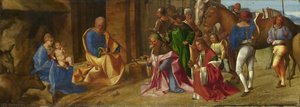
Giorgione’s “Moses’ Trial by Fire,” a painting shrouded in the mists of Venetian history and artistic mystery, is not merely a depiction of a biblical narrative; it's an invitation into a world of subtle emotion, atmospheric depth, and a nascent shift in Renaissance painting. Born Giorgio Barbarelli da Castelfranco in 1477, Giorgione’s tragically brief life – he died at just thirty-two or thirty-three – left behind a remarkably small body of work, each piece imbued with an almost haunting quality. “Moses’ Trial by Fire,” created around 1502-1505 and currently residing in the Uffizi Gallery in Florence, exemplifies this enigmatic genius. The painting draws its subject from Josephus's *Antiquities*, transforming a pivotal moment of faith and divine judgment into a profoundly contemplative scene.
The composition itself is deceptively simple yet remarkably powerful. Moses, rendered with an almost ethereal grace, stands at the center, not as a heroic figure of action, but as a man confronting an unknown future. He’s surrounded by a gathering – individuals whose faces are deliberately obscured, their identities subsumed into the painting's overall mood. The setting is equally evocative: a landscape bathed in a diffused light, suggesting neither day nor night, creating a timeless and otherworldly atmosphere. The trees, rendered with loose brushstrokes, seem to lean inwards, drawing the viewer into the scene, while distant mountains provide a dramatic backdrop, hinting at both earthly constraints and divine expanse.
The Language of Light and Shadow: Giorgione’s Venetian Innovation
What truly distinguishes “Moses’ Trial by Fire” is Giorgione's masterful manipulation of light and shadow. He eschews the sharp contrasts favored by earlier Renaissance painters, opting instead for a soft, atmospheric quality that became a hallmark of the Venetian school. This technique—often referred to as *sfumato*—blurs outlines and creates a sense of hazy depth, lending the scene an almost dreamlike quality. The light itself seems to emanate from within the painting, illuminating the figures with a gentle radiance rather than casting harsh shadows. This deliberate blurring wasn’t simply stylistic; it reflected Giorgione's interest in capturing not just what *was* seen, but also the *feeling* of being present at that moment – a core tenet of Venetian art.
Giorgione’s use of color is equally subtle and evocative. He employs muted earth tones—ochres, browns, and greens—to create a sense of harmony and tranquility. The absence of vibrant hues contributes to the painting's overall mood of quiet contemplation. Notice how he uses variations in tone to suggest texture – the rough bark of the trees, the folds of Moses’ garments, even the implied surface of the ground beneath his feet. This attention to detail elevates the scene beyond a simple illustration and transforms it into a richly textured visual experience.
Symbolism and Spiritual Resonance
Beyond its technical brilliance, “Moses’ Trial by Fire” is laden with symbolic meaning. The trial itself represents not just a test of Moses's faith but also a broader exploration of human vulnerability in the face of divine judgment. The obscured faces of the onlookers suggest that this event transcends individual identity and speaks to the shared experience of humanity before God. The crown, cast aside by Moses as an infant, symbolizes the rejection of worldly power and the embrace of spiritual authority – a potent image reflecting the core tenets of Christianity.
Furthermore, the painting’s ambiguous setting—neither clearly day nor night—can be interpreted as representing the liminal space between earthly existence and the realm of eternity. It's a moment suspended in time, inviting viewers to contemplate the mysteries of faith, destiny, and the enduring power of human spirit. The choice of depicting this pivotal event from Josephus’ *Antiquities* also highlights Giorgione’s engagement with classical sources and his desire to infuse biblical narratives with a distinctly Venetian sensibility.
Bringing “Moses’ Trial by Fire” Home: A Reproduction for the Soul
OriginalUniqueArt.com offers meticulously crafted, hand-painted oil reproduction of Giorgione's "Moses’ Trial by Fire," allowing you to experience the profound beauty and emotional resonance of this masterpiece in your own space. Our skilled artists replicate every nuance of Giorgione’s technique—the subtle sfumato, the atmospheric lighting, the delicate color palette—with unparalleled precision. A reproduction from OriginalUniqueArt.com is more than just a print; it's a tangible connection to one of the Renaissance’s most enigmatic and influential figures. It’s an opportunity to bring a touch of Venetian mystery and spiritual contemplation into your home, a testament to the enduring power of art.
Klausimai ir atsakymai
Kaip kontrastas ir harmonija susilieja kūryboje „Moses' Trial by Fire“?
„Moses' Trial by Fire“ – Džordžonė spalvų analizėje fiksuojamas Statement kontrastas ir Balanced Harmony harmonija.
Kokia technika panaudota kūriniui „Moses' Trial by Fire"]?
„Moses' Trial by Fire“ technika – Oil On Panel.
Kas yra „Moses' Trial by Fire“?
„Moses' Trial by Fire“ – Džordžonė temos apima moses, trial by fire, renaissance, josephus, venetian art, light, shadow, testament. Kartu jie apibendrina šio kūrinio tematiką.
Autoriaus biografija
Venecijos Enigma: Giorgionės Gyvenimas ir Palikimas
Giorgis Barbarelis iš Kastelfranko, žinomas pasauliui kaip Giorgionė, tebėra vienas elipsiškiausių ir patraukliausių figūrų renesanso mene. Gimė mažame Kastelfranko Veneto miestelyje netoli Venecijos maždaug 1477 ar 1478 metais – tikslaus gimimo metai tebėra diskutuojami – jo tragiškai trumpa, apie 1510 metus pasibaigusi gyvenimo istorija, nepaisant menkaverčio palikimo, sužadina amžiną susidomėjimą. Skirtingai nuo daugelio jo to laikmečio bendraautorių, kuriems skirbiama išsami biografinė informacija, Giorgionės istorija apipinta paslaptimis, sudaryta iš retų istorinių užrašų ir Giorgio Vasario dažnai romantizuotų apysakymų. Iš to, ką žinome, galima spręsti, kad tai buvo žmogus, giliai panardęs į Venecijos kultūros sroves – miestą, kuris skatino meninę inovaciją ir jautrumą grožiui. Tikėtina, kad mokytojavo pas Giovanni Bellini, žinomą venecijietiško meno atstovą, perimdamos tradicijas prieš imdamasis savo unikalios kelionės. Ankstyvosios užsakytos kompozicijos apėmė garbių asmenybių, tokių kaip Dožas Agostino Barbarigo, portretus, rodantį iškart pasireiškusią talentą atpažinti panašumus ir statusą. Tačiau būtent atsisakęs įprastinių temų ir revoliucinis požiūris į tapybą padarė Giorgionę tikru novatorium.Poetiški Vizualai: Stilius ir Inovacija
Giorgionės meninis stilius pažymėjo reikšmingą atsiskyrimą nuo vyraujančios Florencijos krypties, kuri pabrėžia linijinę perspektyvą ir tikslų piešinį. Jis gynė spalvas, atmosferą ir įkvepiančią nuotaiką, tapusias Venecijos mokyklos požymiais. Jo technika apėmė kontūrų sušvelninimą, subtilių tonų gradacijų – *sfumato* – naudojimą atmosferos efektams kurti bei visumos harmonijos prioritetą prieš kruopštų detalizavimą. Šis pasirinkimas nebuvo tik technologinis sprendimas; tai atspindėjo fundamentalią meninę perspektyvą. Giorgionė siekė ne realybės atkartojimo, bet jos esmės, trumpalaikių emocijų ir poetiškos rezonanso užfiksavimo. Jo paveikslai dažnai pasižymi paslaptingais motyvais ir dviprasmiškais naratyvais, kviečiant žiūrovus į kontempliacijos pasaulį, o ne siūlant aiškias istorijas. Audra, galbūt jo garsiausias darbas, puikiai tai iliustruoja. Scena – karys ir krūtimi maitinanti motina tarp audringo kraštovaizdžio – jau šimtmečius stebina meno istorikus, o jos reikšmė tebėra viliojančiai nepasiekiamas dalykas. Panašiai Pastoralinis koncertas (Fête champêtre) pristato idilišką muzikantų susitikimą pastoralinėje aplinkoje, vertinamas ne dėl konkretaus naratyvo, bet dėl harmoningos kompozicijos ir lyrinio kokybės. Šie darbai nebuvo skirti sprendžiamoms galvosūkčiams; jie turėjo sužadinti jausmus, nuotaikas ir stebėjimo pojūtį.Šedevrai ir Nuolatinis Įtaka
Nepaisant riboto produktyvumo dėl ankstyvos mirties, Giorgionė paliko nedidelį, tačiau giliai paveikų kūrinių rinkinį. Mieganti Venera, tikriausiai baigta su Titiano pagalba po Giorgionės mirties, yra ikonografinis dievybės atvaizdas, kuriame pasižymi spalvų ir formų meistriškumu. Lengvas poza ir minkšti odos tonai įkūnija venecijietišką jauslingumo ir grožio vertinimą. Kiti reikšmingi darbai apima Juditę, ankstyvojo stiliaus pavyzdį, bei portretus, atskleisiančius gebėjimą užfiksuoti savo subjektų charakterį ir esmę. Giorgionės įtaka išsiplėtė gerokai už jo pačių paveikslų ribų. Jis buvo mokytojas Titianui, kuris tapo vienu garsiausių Aukštojo Renesanso menininkų, pernešdamas Giorgionės naujoves spalvų ir atmosferiškos tapybos srityse. Spalvų ir atmosferos pabrėžimas giliai paveikė Venecijos tapybos raidos eigą, atskirdamas ją nuo Florencijų tradicijų ir įtvirtindamas Venetiją kaip svarbų meninės naujovės centrą.Nuolatinis Palikimas: Giorgionės Istorinė Priežastis
Nepaisant trumpo karjeros, Giorgionė užima kertinį vaidmenį meno istorijoje. Jis sujungė ankstesnes Venecijos tradicijas ir Titiano bei vėlesnių meistrų naujoves, fundamentaliai pakeitęs italų tapybos eigą. Jo poetiškas nuotaikos, atmosferos efektų ir dviprasmiški naratyvai atidarė kelią naujiems meniniams tyrimams ir įkvėpė daugybės kartų menininkus. Pats paslaptis, apipynęs jo gyvenimą ir kūrybą, prisidėjo prie jo nuolatinio mistikos ir patrauklumo. Jis tebėra meno laisvės, naujovės ir įtūkių galios simbolis – dailininkas, kuris drįso pirmenybę suteikti jausmams prieš formas, atmosferai prieš tikslumą ir poezijai prieš naratyvus.Pagrindiniai Giorgionės Darbai
- Audra (apie 1506–1508 m.)
- Pastoralinis koncertas (Fête champêtre) (apie 1509 m.)
- Mieganti Venera (apie 1510 m.)
- Juditė (1504 m.)
- Venecijietiškų ponų portretas

Džordžonė
1477 - 1510 , Italija
Trumpa informacija
- Gimimo Data: 1477/78 m.
- Gimimo Vieta: Castelfranco Veneto, Italija
- Meninis Stilius: Venecijos renesansas
- Mirties Data: 1510 m.
- Pilnas Vardas: Giorgio Barbarelli da Castelfranco
- Poveikį Darė:
- Giovanni Bellini
- Mantegna
- Tautybė: Italikas
- Įtaką Patyrė: ['Ticianas']
- Žymiausi Kūriniai:
- Audra
- Pastoralinis koncertas
- Mieganti Venera
Susiję straipsniai

Giorgione: Enigma and Innovation in Early Venetian Renaissance Painting
Explore the enigmatic world of Giorgione, a pivotal figure in the Venetian Renaissance. Discover his innovative techniques, iconic paintings like 'The Tempest', and lasting influence on art history. Learn more at OriginalUniqueArt.

Jacopo Tintoretto: 25 Šedevrai Venecijetiško Dramatizmo | OriginalUniqueArt.lt
Atraskite Jacopo Tintoretto 25 įspūdingiausius kūrinius! Venecijos mokyklos dramatiškumas, renesanso tapybos šedevrai ir baroko menas – viskas vienoje kolekcijoje. Meno istorija, paveikslų reprodukcijos interjerui. Explore the full collection online!

Venetian Renaissance: The Golden Age of Color, Light, and Luminous Artistry
Embark on a journey through the Venetian Renaissance. Discover how masters like Giorgione and Titian revolutionized art through luminous color and light. Explore the profound legacy of the Venetian School and its enduring influence on the world of fine art.

The Golden Light of Innovation: Exploring the Venetian Renaissance Art Movement (1430–1580)
Explore the Golden Age of Venetian art (1430–1580). Discover Giorgione, Titian & Tintoretto's techniques, the 'colorito' revolution, and lasting influence. Expert insights for collectors & enthusiasts.

Venetian Renaissance: The Mastery of Color, Light, and the Art of Colorito
Explore the luminous mastery of the Venetian Renaissance. Discover how masters like Titian and Giorgione revolutionized art through colorito, light, and atmosphere. An expert guide to the golden age of Italian painting for collectors and enthusiasts.