 Skaityti daugiau


 Dėl meno kūrinių ar reprodukcijų, kurių bet kuri pusė yra didesnė nei 105 cm (apie 41 inch), rėmas bus siunčiamas kaip išskaidytas surinkimo rinkinys. Šis metodas užtikrina saugų pristatymą ir apsaugo nuo transportavimo metu galimos žalos.


Daugiau informacijos apie šį paveikslą
Teksto dydis

() ·
Jūsų paties, rankumių darbas
Rankų darbo aliejinės reprodukcijos
Rankiniu būdu tapytas aliejus ant droblio jūsų pageidaujamame dydį ir rėmuose – tai mūsų menininkų pagal užsakymą sukurtas darbas. ( Perjungti į spausdinamus版作品 Perejti prie skaitmeninių vaizdų)
Autoriaus biografija
Giorgio Cavallon (1904-1989): Pioneer of American Abstraction & founding member of American Abstract Artists. Explore his luminous geometric paintings and pivotal role in the New York School.
nuo ·
1 skyrius
Kokio dydžio turėtų būti?
Slinkite, kad pakeistumėte dydį; kairėje pusėje esančiame paveikslėlyje rodomas tikrasis rėmo plotis. Originalios proporcijų išlaikomos.
Standartinis dydis
pagal užsakymą
CM
INCH
Pasirinkite iš mūsų nustatytų dydžių, atitinkančių originalaus meno kūrinio proporcijas.
Kraunami dydžiai...

plotis
aukštis
Įveskite jums reikiamą plotį ir aukštį, kad paveikslas atitiktų jūsų rėmą ar sieną. Kadangi šis darbas yra rankinio darbo, siekiant išgauti kitokios formos dydį, paveikslas gali būti šiek tiek didesnis (nuo kraštų bus palikta daugiau erdvės) arba mažesnis – pasirinkite jums patogiausią variantą. Prieš pradedant tapyti, atsiųsime jums skaitmeninį maketą patvirtinimui. Šioje puslapio nuotraukoje matomas vaizdas nėra galutinis rezultatas – jį parodys tik sukurtas maketas.
2 skyrius
Kokia būda yra siunčiamas?
Pasirinkite ištempto drobės kraštus
Pasirinkite rėmelį

Baltas apasutojimas €1

Išblėstantis šonas €1

Išplėstinis €1

P118B €10

P118H €10

P118W €10

P438Z €10

P508JH €12

P508YH €12

P805H €10

P805Z €10

P919BZ €10

P919G €10

P919XJ €10

P959ZH €10

P968JZ €12

W106C €8

W218G €10

W218JH €8

W218Y €10

W307PJ €10

W316G €10

W316PJ €8

W316Y €10

W398PJ €8

W4111J €10

W500HY €15

W500JH €15

W692G €12

W849H €8

W940BG €15

W953PJ €8

H24-GOLD €30

H24-SILVER €30

H36-GOLD €45

H36-SILVER €45
Įrėmintas
Rėmo apvadas: . Bendras dydis su rėmu: .
3 skyrius
Kas jį vaizduoja ir ar turėtų kažkas pasikeisti?
Pavyzdžiai, ką galima pakeisti: pakeisti veidą nuotrauka su klientu; pridėti augintinį (pvz., pakeisti kucingą šuniu); įtraukti paslaptingą žinutę fone; pakeisti fono kraštotvę ar elementus.
Gavus užsakymą, OriginalUniqueArt.com komanda susisieks su klientu el. paštu dėl nurodymų ir pateiks preliminarią maketą.
Gavus užsakymą, OriginalUniqueArt.com komanda susisieks su klientu el. paštu dėl nurodymų ir pateiks preliminarią maketą.
Pristatymas visame pasaulyje () per 3–4 savaites, o ne įprastai – per 5 savaites. (15 lapkritis). Kokybė lieka nepakeičiama.
4 skyrius
Paskutinės detalės
Pavadinimo plokštelė, kaip muziejuje?
Išgraviruotos bronzinės plokštelės detalės
This elegant plaque features the artist's name and the title of the artwork, finely engraved for a timeless presentation.
It is made from bronze with a refined, elegant finish. The text is precisely laser-engraved for a sharp and permanent result. Measuring 9x2 cm, the plaque is compact yet easy to read. It's built to be durable and scratch-resistant, offering a professional, museum-quality look. Mounting is simple thanks to the included adhesive backing.
Skaidrios akrilo plokštelės informacija
The plaque includes essential engraved details such as the artist's name, the title of the artwork, the date it was created, the type of media used-like oil on canvas or watercolor-a brief description of the piece, and a QR code that links to the complete artwork information.
It is crafted from clear acrylic, offering a sleek, modern appearance. The text is UV-engraved in black to ensure strong visual contrast. With a size of 10x15 cm, it ensures optimal readability. It comes equipped with two metal hooks for secure wall mounting. The plaque is designed to be weather-resistant, making it suitable for various environments, and it includes interactive features that work seamlessly with smartphone scanning.
Juodos akrilo plokštelės informacija
This elegant plaque includes engraved information such as the artist's name, the title of the artwork, the date it was created, the type of media used (like oil on canvas or watercolor), a short description of the artwork, and a QR code for quick access to more information.
The plaque itself is made from refined black acrylic with a premium finish. The text is laser-engraved in white for high contrast and readability. Its size is 10x15 cm, designed to be easy to read. It comes with two metal hooks for professional mounting. The design is sleek and fits any interior style. It is also weather-resistant and durable, with built-in digital integration for mobile compatibility.
Apsauginis lakas?
Kada jums reikia?
5 skyrius
Jūsų paveikslas, tiksliai taip, kaip užsakėte
Untitled
Reprodukcijos technika
Reprodukcijos matmenys
-
Aukščiausios klasės meistras
Daugiau detalių, meistriškumo ir papildomo gamybos laiko
-
Reprodukcijos rėmėjimo parinktys
-
-
Dėl meno kūrinių ar reprodukcijų, kurių bet kuri pusė yra didesnė nei 105 cm (apie 41 inch), rėmas bus siunčiamas kaip išskaidytas surinkimo rinkinys. Šis metodas užtikrina saugų pristatymą ir apsaugo nuo transportavimo metu galimos žalos.
Reikalingas profesionalus surinkimas – tai nėra „pasidaryk pats“ (DIY) produktas.
Rinkinys turi būti surinktas, o drobė išplėsta naudojant patyrį profesionalų rėmininką, medžio klijus (nėra įtraukti į rinkinį), drobės plėšimo kleslę bei presas, kad rėmo rėžiai išliktų tiesūs, kol klijai išdžiūvus. Netinkamas surinkimas arba netolydus drobės įtampa gali negrįžtamai sugadinti meno kūrinį, todėl šie atvejai nėra užtraukiami mūsų garantijos.
Į komplektą įeina visi vientisos medienos elementai, tiksliai išpjauti pagal dydį.
Surmontinama naudojant pridėtus varžtus bei papildomai reikalingą medžio kliją kampų jungtims, kuris nėra pridėtas ir turi būti parinktas rėmininkui.
Reikalingi profesionalūs įrankiai, kurie nėra įtraukti į rinkinį: drobės kėlimo plytelės (stiprintuvai) ir klemiai, laikantys rėmo strygius tiesiu kampu, kol džiūsta lipas.
Svarbu:
Kampų jungtims reikalingi medžio klijai, barams reikia laikyti naudojant presas, kol klijai visiškai išdžiūvės, o surinktam rėmui įtempiamai privilgti būtinos drobės įtempimo plytযুক্ত. Šios priemonės į rinkinį neįtrauktos. Prieš užsakydami šio dydžio rinkinį, rekomenduojame pasimalkoti patyrusiu rėmų meistru.
Pavadinimo lentelė
-
-
Apsauginis lakas
Blizgus lakas (ryškina spalvas, saugo nuo šviesos ir drėgmės)
-
Personalizuoti kūrinį
Ką galima pakeisti (pavyzdžiui): pakeisti veidą klientui skirta nuotrauka; pridėti augintinį (pvz., katę pakeisti šuniu); įtraukti paslėptą žinutę fone; pakeisti fono kraštovaizdį ar elementus.
-
Skubiai
Pristatymas visame pasaulyje () per 3–4 savaites, o ne įprastai – per 5 savaites. (15 lapkritis). Kokybė lieka nepakeičiama.
-
Skubus pristatymas
Pristatymas visame pasaulyje () per 5 weeks. (22 lapkritis).
Įskaičiuota
Bendroji kaina
€ 267
Stiklo variantas prieinamas tik pasirinkus dydį iki 110 cm
Pridedama prie kiekvieno užsakymo
- Nemokamas greitasis pristatymas visame pasaulyje
- Aukštos kokybės lininis drobė
- Pilnas siuntimo draudimas
- Muitinės mokesčių grąžinimo garantija
- Tikro spalvų atitikimo garantija
- 100 dienų grąžinimo politika (tik esant įtaigoms)
- 100% pinigų grąžinimo garantija
- Nuolaida dideliems užsakymams
 Peržiūrėti realaus dydžio版
 Pasidalinti
 Dalintis
 Išsamiau
 Vadovas

 Atsisiųsti
 Panašūs eksponatai
 Rentgeno spindulių nuotrauka
 Automatinė diorama
 问答
问答 Statistika
Skaičiais
- 1961metai, kai buvo nupiežta
- 29pasirinkimo rėmai
- standartinės dydžio, savo proporcijomis
- 5savaitės sugryžti ir pristatyti
Apie originalą

- 142.0 x 122.0 cm

Šis kūrinys yra saugomas autorinės teisės
Šiame puslapyje rodomas meno kūrinys yra saugomas autorių teisių įstatymais, todėl neturime teisės legaliai kurti ar parduoti jo identiškos reprodukcijos. Ši apsauga užtikrinama remiantis tokiais tarptautiniais susitarimais kaip Bernės konvencija ir pagal nacionalines įstatymų nuostatas, įskaitant tas, kurias nurodo JAV autoriškos teisės įstatymas – 17-asis skyrius.
Kaip pagarbią ir teisėtą alternatyvą, mes siūlome pagal užsakymą rankomis dažytus paveikslus, įkvėptus originalo. Mūsų įgudę ir profesionalūs menininkai kruopščiai tiria originalo stilių, nuotaiką ir meninę esmę, kad sukurtų naują, unikalią kūrinį, kuris sukelia tą paties jausmą – išlikdamas tuo tarciau originaliu, savarankišku kūrybiniu darbu.
Šis metodas visiškai atitinka autorių teises, nes jame nėra saugomo kūrinio kopijavimo ar dubliavimo. Tai yra kūrybinė reinterpretacija – naujas paveikslas, kurį įkvėpė originalas, tačiau kuris nėra jo identiškas.
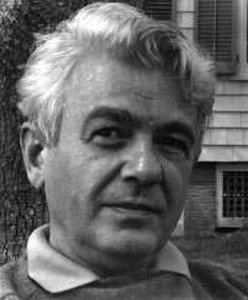
Giorgio Cavallon
1904 - 1989, Italy
Trumpa informacija apie Giorgio Cavallon
- Full Name: Giorgio Cavallon
- Nationality: Italian-American
- Date Of Birth: 1904
- Date Of Death: 1989
- Place Of Birth: Sori, Italy
- Notable Artworks:
- Country Scene
- Untitled (1958)
- Artistic Movement Or Style: Abstract Expressionism
- Artists Who Influenced This Artist:
- Hans Hofmann
- Arshile Gorky
- Charles Hawthorne
- Artists Or Movements Influenced By This Artist: ['Abstract Expressionism']
Autoriaus biografija
A Life Bridging Worlds: The Artistic Journey of Giorgio Cavallon
Giorgio Cavallon’s story is one of graceful transition and quiet innovation, a testament to the power of artistic vision shaped by both Old World heritage and New World opportunity. Born in 1904 in the small Italian town of Sori, near Vicenza, his early life was uprooted at age sixteen when he immigrated to the United States with his family. This displacement, coupled with a naturalized citizenship achieved in 1929, instilled within him a unique dual perspective – an Italian sensibility filtered through the burgeoning energy of American modernism. He carried this duality not as a conflict, but as a source of nuanced understanding that would subtly permeate his artistic explorations. His initial years were marked by practical necessity; he worked in factories while pursuing private art instruction, demonstrating a dedication to creative growth even amidst challenging circumstances. This commitment led him to the National Academy of Design in New York City in 1926, and subsequently to Provincetown, Massachusetts, where studying under Charles Hawthorne proved pivotal. Hawthorne’s direct painting approach—a focus on observing and capturing light and color directly onto the canvas—laid a foundational element for Cavallon's future style.Formative Influences and the Rise of Abstraction
The 1930s were a period of crucial development for Cavallon, marked by both economic hardship and artistic awakening. His involvement with the Works Progress Administration’s Federal Art Project (WPA/FAP) provided not only employment but also an invaluable mentorship under Arshile Gorky. This exposure to emerging abstract tendencies was transformative, opening his eyes to new possibilities beyond representational art. Simultaneously, he immersed himself in the teachings of Hans Hofmann, attending evening classes from 1934 onwards. Hofmann’s emphasis on the materiality of paint – its texture, weight, and spatial relationships – profoundly shaped Cavallon's understanding of form and color. It was within this intellectual climate that Cavallon co-founded the American Abstract Artists (AAA) in 1936, a group dedicated to championing abstract art at a time when it faced considerable resistance. The AAA’s core belief, articulated by Juan Gris, centered on achieving poetic effect through “beautiful elements” rather than relying on traditional subject matter. This commitment to structural quality and intellectual beauty became a guiding principle in Cavallon's own artistic practice.A Lyrical Geometry: Defining the Cavallon Style
Cavallon’s artistic style evolved gradually, yet consistently demonstrated a lyrical geometric abstraction. He moved away from purely representational imagery, not towards the explosive energy of some of his Abstract Expressionist contemporaries, but toward a more contemplative exploration of form and color. His paintings are characterized by luminous color fields, delicate spatial relationships, and a subtle interplay of light and shadow. While often described as geometric, his abstractions were never rigid or cold; they possessed an organic quality, evoking landscapes and natural phenomena without directly depicting them. There’s a sense of atmosphere and depth in his work, achieved through carefully layered colors and nuanced tonal variations. This ability to suggest rather than state explicitly became a hallmark of his mature style. He wasn't interested in the purely intellectual exercise of geometric form; instead, he sought to imbue those forms with emotional resonance and poetic suggestion.Integration into the New York School and Lasting Legacy
By the late 1940s, Cavallon was firmly integrated into the vibrant artistic community that would become known as the New York School. He joined the “Artists’ Club” in 1949 and participated in the landmark Ninth Street Show in 1951 – a pivotal event that brought national recognition to this new wave of American art. His consistent inclusion in subsequent invitational annuals solidified his position within the movement, though he maintained a distinct artistic voice separate from the more gestural styles of Pollock or de Kooning. Cavallon’s contribution lies not in initiating a radical break with tradition, but in serving as a crucial bridge between earlier abstraction and the full flowering of Abstract Expressionism. He helped pave the way for the acceptance of American art on an international stage, particularly in Paris during the 1950s. Giorgio Cavallon continued to paint and exhibit his work throughout his life, residing in Manhattan until his death in 1989 at the age of eighty-five. His legacy endures as a significant figure in the development of American abstract art—a quiet innovator who demonstrated an unwavering commitment to formal exploration, intellectual rigor, and the enduring power of lyrical abstraction.Susiję straipsniai

10 Iconic Graphite Masterpieces That Redefined the Art World
Explore 10 iconic graphite masterpieces that redefined art history. Discover the full collection online at OriginalUniqueArt.com.

Color & Emotion: The 25 Most Iconic Masterpieces by Mark Rothko
Immerse yourself in the profound emotion of Abstract Expressionism. Explore 25 iconic Mark Rothko masterpieces, from his signature color fields to timeless museum classics. Find inspiration for your collection or decor with OriginalUniqueArt.com’s premium art reproductions. Discover all masterpieces on OriginalUniqueArt.com
Color & Emotion: The Top 25 Masterpieces by Mark Rothko
Immerse yourself in the profound emotion of Mark Rothko's greatest works. Explore 25 iconic Abstract Expressionist masterpieces, from color field textures to legendary canvases. Find inspiration for museum-quality art reproductions and decor. Discover all masterpieces on OriginalUniqueArt.com.

Mastering Emotion: The Top 25 Mark Rothko Artworks to Know
Explore 25 iconic Mark Rothko masterpieces and the soul of Color Field painting. Discover the full collection on OriginalUniqueArt.com.