 Peržiūrėti realaus dydžio版
 Pasidalinti
 Dalintis
 Išsamiau
 Vadovas

 Atsisiųsti
 Panašūs eksponatai
 Rentgeno spindulių nuotrauka
 Automatinė diorama
 问答
问答 Statistika
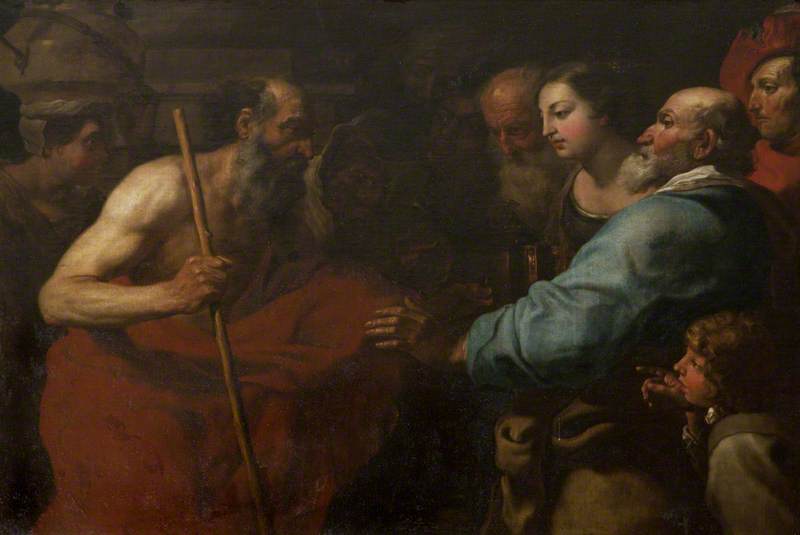
Diogenes with His Lantern

- 115.0 x 163.0 cm

 Skaityti daugiau
Gaukite spausdinimui paruoštą failą, kurio kokybė gerokai viršija internetinę peržiūrą. Kiekvienas mūsų parduodamas skaitmeninis vaizdas yra ištrauktas iš aukštos raiškos pagrindinio failo mūsų duomenų bazėje — paprastai jis siekia nuo 5 000 iki 15 000 pikselių plotio — todėl galite drąsiai spausdinti didelius formatus, apkirpti vaizdą ar reprodukcija užtikrins visas smulkias detales.
Mūsų studijoje nė viena kopija nelieka neapdorota. Skaitmeninio vaizdo ekspertas, lygiu su originaliu paveikslu, patikrina spalvas ir, jei reikia, jas koreguoja, o tada profesionaliais retušavimo įrankiais padidina aiškumą bei detales — visada išlaikydamas ištikimybę autoriaus teptuko traukoms ir stiliui. Rezultatas – vaizdas, kuris atrodo kaip tikras paveikslas, o ne kaip su filtrais apdorotas skenavimas.
Patvirtinate prieš užsakymo pabaigą: mūsų ekspertas per 72 valandas el. laišku atsiųsta vaizdą jūsų peržiūrai. Nepasitenkinate rezultatu? Paprašykite patobulinimų ar pataisymų arba prašykite pinigų grąžinimo, jei kokybė neatitinka jūsų lūkesčių.
Ši kokybė yra patikima leidybos įstaigoms, dizaino studijoms, galerijoms ir spaudos įmonėms.
Skaitmeninis vaizdas
Atsisiųskite didelės raiškos failą asmeniniam naudojimui, spausdinimui ir kūrybiniams projektams. ( Perjungti į spausdinamus版作品 Pirkti rankų darbo tapybą)
Kiekvieną skaitinio vaizdo užsakymą papildė
Profesionalus skaitmeninis vaizdų pristatymas, garantuotas
Pasirinkę OriginalUniqueArt.com, jūs ne tik gaunate paveikslėlį – jūs gaunate profesionaliai patobudintą skaitmeninį kūrinį, sukurtą itin tikniai ir užtikrinantį pasitenkinimą. Štai viską, kas automatiškai pritékia jūsų užsakymui:

Greitas pristatymas el. paštu
Jūsų aukštos raiškos skaitmeninis vaizdo failas bus išsiųstas el. paštu per 72 valandas nuo užsakymo – jis bus paruoštas naudoti be jokių papildomų veiksmų.

Dirbtiniu intelektu tobulintas skaitmeninis failas
Jūsų meno kūrinys profesionaliai optimizuojamas naudojant pažangius dirbtinio intelekto įrankius ir rankinį redagavimą, užtikrinant maksimalią detalę, aiškumą ir spalvų tikslumą.

Nemokamas visam laikui pakartotinis siuntimas
Atsitiktinai ištrytikote ar praradote savo failą? Nebijokite – bet kuriuo metu atsiųsime jį jums vėl nemokamai.

Jokio importo mokesčio – niekada
Mėgaukitės savo meno kūrynu be jokių muitinės mokesčių, įkainų ar pristatymo išlaidų – skaitiniai failai visada yra neapmokestinami.

Spalvų tikslumo garantija
Naudodami profesionalią įrangą ir spalvų valdymo sistemas, užtikriname, kad jūsų skaitmeninis vaizdas kuo tiksliau atspindėtų originalias spalvas.

100 dienų patikimumo garantija
Jei nebuvosite patenkinti įsigyto skaitmeninio vaizdo, mes jį tališkai koreguosime arba grąžinsime 100% sumą per 100 dienų – be jokių klausimų.

100% pinigų grąžinimo garantija
Nesitenkinate? Gaukite visą sumokėtą sumą per 100 dienų nuo skaitmeninio failo gavimo – be jokių papildomų klausimų.

Nuolaidos dideliems užsakymams
Pirkti 3 nuotraukas – 10% nuolaida – Pirkti 5 – 15% nuolaida – Pirkti 10 ir daugiau – 20% nuolaida. Puikiai tinka kūrybiniams projektams, galerijoms bei agentūroms.
Autoriaus biografija
Early Life and Apprenticeship in Genoa
Gioacchino Assereto, born in Genoa around 1600, emerged as a pivotal figure in the city’s artistic landscape during the early Baroque period. His journey began at the tender age of twelve when he entered the workshop of Luciano Borzone, a respected painter known for his religious works and dynamic compositions. This initial apprenticeship laid the foundation for Assereto's technical skills, but it was his subsequent training with Giovanni Andrea Ansaldo, beginning around 1614, that truly shaped his artistic direction. Ansaldo’s studio provided a more rigorous environment, fostering a deeper understanding of anatomy, perspective, and the nuances of oil painting. Crucially, Assereto also benefited from attending the *Accademia del Nudo*, an institution established by Giancarlo Doria dedicated to the study of the human form through life drawing – a practice essential for mastering the realistic depiction of figures that would become a hallmark of his style. Genoa in this era was a bustling port city, a crossroads of cultures and ideas, and Assereto’s early exposure to diverse influences undoubtedly contributed to his evolving artistic sensibility. He quickly established himself as a promising talent within the Genoese art scene, absorbing the prevailing trends while simultaneously forging his own unique path.The Roman Sojourn and Embracing Caravaggism
By 1639, Assereto’s reputation had grown sufficiently to warrant a journey to Rome – a pilgrimage undertaken by many aspiring artists of the time seeking inspiration from the masters and exposure to new artistic currents. This trip proved transformative for the Genoese painter. He immersed himself in the studios of various Roman artists, encountering works that broadened his horizons and challenged his existing aesthetic principles. Notably, he connected with fellow Genoese painters already working in Rome, including Luca Saltarello, Giovanni Maria Bottalla, Giovanni Benedetto Castiglione, and Giovanni Andrea Podestà, forming a network of artistic exchange. However, the most profound impact came from his engagement with the burgeoning realism of Caravaggio’s followers. The dramatic use of *chiaroscuro* – the stark contrast between light and shadow – and the intensely naturalistic portrayal of figures captivated Assereto. He began to incorporate these elements into his own work, moving away from the more idealized forms of earlier Baroque painting towards a grittier, more emotionally resonant style. This embrace of Caravaggism wasn’t merely stylistic; it reflected a broader shift in artistic priorities, emphasizing direct observation and psychological depth over elaborate ornamentation.Mature Style and Genoese Commissions
Returning to Genoa, Assereto embarked on a period of prolific activity, securing numerous commissions that cemented his position as the city’s leading history painter. The 1640s saw him particularly engaged in fresco work, adorning churches and palazzi with large-scale compositions depicting religious narratives and historical events. His paintings from this decade demonstrate a masterful command of both *chiaroscuro* and *sfumato*, creating a sense of drama and atmosphere that drew viewers into the scene. He wasn’t simply replicating Caravaggio's techniques, however; Assereto infused his work with a distinctly Genoese sensibility – a heightened attention to detail in costumes and settings, reflecting the city’s mercantile culture and its appreciation for material wealth. His success was such that he established a busy studio, producing numerous copies of his works, often under the guidance of his son, Giuseppe Assereto. This proliferation of copies speaks not only to the demand for his paintings but also to their inherent appeal – they resonated with contemporary audiences who valued both technical skill and emotional impact.Legacy and Historical Significance
Raffaele Soprani, a prominent Genoese biographer writing during Assereto’s lifetime, lauded him as “incomparable,” a testament to the artist's widespread recognition and influence. While perhaps an exaggeration, Soprani’s praise reflects the genuine esteem in which Assereto was held by his peers and patrons. His paintings stand as compelling examples of Baroque art in Genoa, bridging the gap between earlier traditions and the more radical innovations of Caravaggism. He excelled at depicting both religious and historical subjects, but it was his portraits that often revealed a keen psychological insight into his sitters. Assereto’s contribution lies not only in his technical virtuosity – his ability to render textures, light, and shadow with remarkable precision – but also in his capacity to imbue his paintings with emotion and narrative power. He left behind a substantial body of work that continues to captivate viewers today, offering a glimpse into the artistic and cultural life of 17th-century Genoa. His influence can be seen in the works of subsequent Genoese painters, who continued to explore the dramatic possibilities of *chiaroscuro* and realism. Assereto’s paintings remain vital for understanding the development of Baroque art in Italy, showcasing a unique blend of local traditions and international influences.
Gioacchino Assereto
1600 - 1649
Trumpa informacija
- Artistic Movement Or Style: Baroque, Caravaggism
- Artists Or Movements Influenced By This Artist: ['Giuseppe Assereto']
- Artists Who Influenced This Artist:
- Luciano Borzone
- Giovanni Andrea Ansaldo
- Date Of Birth: 1600
- Date Of Death: 1649
- Full Name: Gioacchino Assereto
- Nationality: Italian
- Notable Artworks: ['The Lamentation']
- Place Of Birth: Genoa, Italy