Baroque Landscape
Landscape (Gillis Van Coninxloo)
Gillis Van Coninxloo (1544–1607) sukūrė Landscape. Šis kūrinys priklaulo Baroque Landscape kieruliui. Pagaminta naudojant Oil On Copper. Eksponatas saugomas Museo del Prado Madridas, Ispanija. Dimensijos – 24 × 19 cm.
- Oil On Copper
- 24 × 19 cm
- Museo del Prado, Madridas

 Peržiūrėti realaus dydžio版

 Rankinio darbo aliejinės imitacijos paveikslas
 Pasidalinti
 Dalintis
 Informacinė l lapelė


 Atsisiųsti
 Panašūs eksponatai
 Rentgeno spindulių nuotrauka
 Automatinė diorama
 问答

 Statistika
Landscape, trumpai
- Pavadinimas
- Landscape
- Autorius
- Gillis Van Coninxloo (1544–1607)
- Dizainere/is gimęs
- Antverpenas, Belgija
- Mediumas
- Oil On Copper
- Matmenys
- 24 × 19 cm
- Kur galima pamatyti
- Museo del Prado, Madridas, Ispanija
- Judėjimas
- Baroque Landscape
- Tema
- landscape, flemish style, baroque art, forest scene, castle architecture, atmospheric perspective
Ką vaizduoja Landscape?
A Flemish Master’s Woodland Reverie: Gillis van Coninxloo's “Landscape”
Gillis van Coninxloo’s “Landscape,” a captivating oil on copper panel, transports the viewer to a realm of serene contemplation within a meticulously rendered Flemish forest. Painted around 1598, this work stands as a pivotal example of the artist’s mastery in capturing the atmospheric depth and intricate detail characteristic of the early 16th-century Golden Age. More than just a depiction of nature, it's an invitation to lose oneself within a carefully constructed world of light, shadow, and subtle symbolism – a testament to van Coninxloo’s profound understanding of both landscape painting and the human experience.
The scene unfolds before us with remarkable realism. A dense thicket of trees dominates the foreground, their leaves rendered with an almost obsessive attention to detail; each vein, each curl of bark, is painstakingly observed and faithfully reproduced. These trees aren’t merely static elements; they create a palpable sense of depth, drawing the eye into the heart of the forest. Beyond them, a modest collection of buildings – likely farmhouses or small dwellings – nestles amongst the foliage, suggesting a quiet rural existence. The architecture is understated yet solid, reflecting a pragmatic approach to building within this natural setting. In the distance, a formidable castle rises above the horizon, its imposing silhouette anchoring the composition and hinting at notions of power, protection, and perhaps even isolation.
The Alchemy of Light and Shadow: Technique and Style
Van Coninxloo’s technical skill is immediately apparent in his masterful use of oil on copper. This medium allowed for a remarkable level of detail and luminosity – the surface retains a subtle sheen that enhances the richness of the colors and creates an almost three-dimensional effect. The artist employs a technique known as “chiaroscuro,” skillfully manipulating light and shadow to sculpt the forms and create a dramatic sense of depth. Notice how the sunlight filters through the trees, dappling the ground in pools of brightness while simultaneously casting deep shadows beneath the foliage. This interplay of light and dark isn’t merely decorative; it imbues the scene with a palpable atmosphere – a feeling of both tranquility and mystery.
Stylistically, “Landscape” aligns itself with the Flemish tradition of landscape painting, yet van Coninxloo departs from some of the more rigid conventions of the time. While influenced by the Northern Mannerist style—characterized by its emphasis on detail and symbolic imagery—he introduces a greater sense of naturalism and emotional resonance. The composition is carefully balanced, creating a harmonious whole that invites contemplation. The muted color palette – dominated by greens, browns, and grays – contributes to the overall feeling of serenity and timelessness.
A Window into 16th-Century Life and Belief
To fully appreciate “Landscape,” it’s important to consider its historical context. Painted during a period of religious upheaval and political instability in the Netherlands, this work reflects both the anxieties and the enduring values of the era. The castle, for instance, can be interpreted as a symbol of authority – whether representing secular power or divine protection. The humble dwellings nestled within the forest suggest a connection to the land and a reverence for rural life. Furthermore, the dense woodland itself has long been associated with themes of solitude, introspection, and the spiritual realm.
Interestingly, this painting was originally housed in the Museo del Prado in Madrid, Spain, a testament to its enduring appeal across national boundaries. The artist’s biography reveals a fascinating journey – from Antwerp to Germany and eventually Amsterdam—reflecting the shifting political landscape of the time. His work served as a bridge between artistic styles, incorporating elements of Mannerism while embracing the burgeoning realism of the Dutch Golden Age.
A Timeless Masterpiece: Reproduction and Inspiration
Reproductions of “Landscape” capture only a fraction of its original impact. The subtle nuances of light, texture, and atmosphere are difficult to replicate fully, but OriginalUniqueArt’s hand-painted reproductions strive to honor the artist's vision with remarkable fidelity. This piece offers an exceptional opportunity for interior designers seeking to evoke a sense of tranquility and connection to nature – imagine it adorning a study or a living room, providing a focal point that invites contemplation. Collectors will find “Landscape” to be a valuable addition to any art collection, representing a significant moment in the history of Flemish landscape painting.
For further exploration, we encourage you to visit the linked resources:
Kuriame muziejuje eksponuojamas karya Landscape?
Museo del Prado
Madridas, Ispanija
Šimtmečių kvėpuojantis rūmų ansamblis: Nacionalinis Prado muziejus Peržengiant Nacionalinio Prado muziejaus Madride didingas vartus, tarsi įeini į gyvą kroniką – paminklą Ispanijos meninės raidos ir karališkosios mecenatybės. Tai ne tik šedevrų saugykla, bet ir rūmų ansamblis, kurio sienos atspindi Velaskeso, Gojos, El Greco ir daugelio kitų teptukų žymius ženklus. Iš pradžių Ferdinando VII sumanyme tai turėjo būti „Gamtos istorijos kabinetas“, tačiau ambicingas projektas buvo perorientuotas į vieną iš pasaulyje gerbiamiausių meno muziejų – vietą, kur praeities didybė sklandžiai susijungia su šiuolaikinės mokslinių tyrimų pulsavimu.


Landscape dididraudžios kokybės vaizdai
Viešoji domenė: suregalis mirė 1607 m.
Gillis Van Coninxloo, Landscape, Museo del Prado. Viešoji domenė.
Atsakimai į klausimus apie Landscape
Kur šiandien galima pamatyti kūrinį „Landscape“ – Gillis Van Coninxloo?
Originalus „Landscape“ – Gillis Van Coninxloo saugomas Museo del Prado, Madridas, Ispanija. Kopija leidžia šį kūrinį eksponuoti namuose.
Kokia technika buvo panaudota kūriniam darbui „Landscape“ – Gillis Van Coninxloo?
„Landscape“ – Gillis Van Coninxloo technika – Oil On Copper. Kopijos siekia atkartoti šios technikos vaizdą.
Kokie yra originalaus „Landscape“ matmenys?
Įrašyti kūrinio „Landscape“ – Gillis Van Coninxloo matmenys yra 24 x 19 cm. Kopijas galima užsisakyti kitais dydžiais, išlaikant tą pačius proporcijas.
Ką vaizduoja „Landscape“ – Gillis Van Coninxloo?
„Landscape“ – Gillis Van Coninxloo vaizdeletas: landscape, flemish style, baroque art, forest scene, castle architecture, atmospheric perspective, detailed rendering.
Ar „Landscape“ yra viešosios teisės kūrinys?
Autorių teisių statusas kūriniui „Landscape“ – Gillis Van Coninxloo: kūrinys priklauso yra viešosios erdvės dalis – jo autorinė teisė pasibaigusi. Tai nulemia, ar galima laisvai reprodukciuoti šį vaizdą.
Kas sukūrė „Landscape“?
„Landscape“ priskiriamas Gillis Van Coninxloo.
Kokio meno kryžmės dalis yra „Landscape“ – Gillis Van Coninxloo?
„Landscape“ yra Baroque Landscape stiliaus kūrinys. Šis dailos kryptis nurodo meninę tradiciją, kurios šis darbas yra dalis.
Kokio Gillis Van Coninxloo kūrybos laikotarpio priklauso „Landscape“?
„Landscape“ atspindi Gillis Van Coninxloo kūrybinį laikotarpį Late Baroque.
Ar Gillis Van Coninxloo kūrinys „Landscape“ yra viešosios nuoslegos ir kodėl?
„Landscape“, kurį sukūrė Gillis Van Coninxloo, yra yra viešosios erdvės dalis – jo autorinė teisė pasibaigusi. Autorinės teisės apsaugos terminai skaičiuojami nuo autoriaus mirties, o Gillis Van Coninxloo mirė 1607 m.
Apie šį menininką, Gillis Van Coninxloo
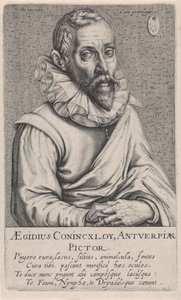
1544–1607, Belgija
Gillis Van Coninxloo
A Master of the Verdant Realm Gillis van Coninxloo stands as a pivotal figure in the evolution of Northern landscape art, serving as a vital bridge between the intricate Mannerist traditions and the burgeoning atmospheric depth of the early Baroque. Born in Antwerp, Belgium, his life was deeply intertwined with the rich artistic lineage of the Low Countries. The son of a painter, he was immersed in a world where craftsmanship and natural observation were paramount. His early training under masters such as Pieter Coecke van Aelst the Younger and Lenaert Kroes provided him with a rigorous foundation, but it was his time working in the workshop of Gillis Mostaert that truly allowed his talent to flourish, permitting him to contribute to professional works while honing his unique vision.
Apie Gillis Van Coninxloo Žinomiausi Gillis Van Coninxloo darbai
Taip pat Gillis Van Coninxloo darbai
 Jonah Preaching to the Ninevites1583
 Woodland with Saint Jerome1583
 Landscape with the judgment of Midas1598
 Landscape with the Judgement of Paris1610
Esdai apie Landscape
 Masterpieces of Jan van Goyen: Top 25 Iconic Dutch LandscapesExplore 25 iconic Jan van Goyen landscapes from the Dutch Golden Age. Discover these tonal masterpieces on OriginalUniqueArt.com.
 Chiaroscuro & Shadows: The High-Impact Power of Moonlight in Masterpiece LandscapesMaster the drama of chiaroscuro and moonlight in classical landscapes. Explore the power of light and shadow now.
 Masterpieces of Nature: The Top 25 Artworks by Jacob van RuisdaelExplore 25 iconic Jacob van Ruisdael landscapes. Discover the soul of Dutch Golden Age art. Explore the full collection online at OriginalU…