 Ecsalių versija
 Viskas apie Josiah Quincy







































 Dėl meno kūrinių ar reprodukcijų, kurių bet kuri pusė yra didesnė nei 105 cm (apie 41 inch), rėmas bus siunčiamas kaip išskaidytas surinkimo rinkinys. Šis metodas užtikrina saugų pristatymą ir apsaugo nuo transportavimo metu galimos žalos.


Josiah Quincy’s Gaze: A Portrait of Early American Ambition
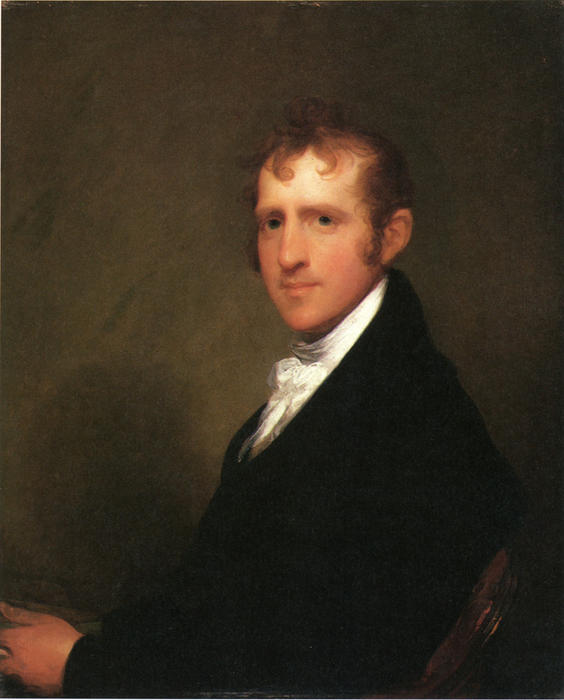
Gilbert Stuart's portrait of Josiah Quincy, completed in 1824, is more than just a likeness; it’s a carefully constructed embodiment of the burgeoning intellectual and political landscape of early America. The painting captures not merely Quincy’s physical appearance but also his perceived character – a blend of astute observation, civic duty, and quiet dignity that defined his influential career as a lawyer, diplomat, and mayor of Boston.
The composition itself is meticulously balanced. Quincy sits in a three-quarter pose, his gaze direct and unwavering, inviting the viewer into an intimate conversation across time. The dark, rich tones of his coat and shirt create a sense of gravitas, while the subtle highlights on his face draw attention to his intelligent eyes and thoughtful expression. Stuart’s masterful use of light and shadow – particularly around the edges of Quincy's form – lends the portrait a remarkable depth and realism, suggesting both strength and vulnerability. The restrained background, deliberately muted in dark hues, serves to amplify the subject’s presence, focusing our attention entirely on his commanding figure.
Neoclassical Precision: A Window into 19th-Century Portraiture
Stuart's style firmly places this portrait within the Neoclassicism movement, a trend that swept through Europe and America in the late 18th and early 19th centuries. Rooted in the ideals of ancient Greece and Rome, Neoclassical art emphasized order, clarity, and rationalism. This is evident in Stuart’s precise rendering of Quincy's features – each line and curve meticulously observed and faithfully reproduced. The formal arrangement of the figure, reminiscent of classical sculpture, further reinforces this connection to antiquity.
Technically, the painting showcases Stuart’s exceptional skill with oil paints. He employed a layering technique, building up thin glazes of color to achieve subtle gradations of tone and texture. This meticulous approach allowed him to capture the nuances of Quincy's skin, clothing, and the reflective quality of his spectacles – details that contribute significantly to the portrait’s lifelike appearance. The use of a smooth, polished surface further enhances the sense of realism, creating an almost tactile experience for the viewer.
A Man of Letters and Public Service
Josiah Quincy Sr. (1772-1861) was a pivotal figure in Boston’s intellectual and political life. A lawyer, diplomat, and prominent member of the Massachusetts legislature, he championed education reform and advocated for civic engagement. His portrait reflects his status as a respected public servant – a man dedicated to the betterment of his community and nation. The dark coat, with its high collar, suggests an official role, while his thoughtful expression hints at the weighty responsibilities he carried.
Interestingly, Quincy was also a noted letter writer and intellectual, known for his sharp wit and insightful observations on social and political issues. The portrait captures not just his outward appearance but also the essence of his character – a blend of intellect, integrity, and civic virtue. It’s a testament to Stuart's ability to convey personality through visual representation.
Symbolism and Legacy
Beyond its technical brilliance, the painting is rich in subtle symbolism. The spectacles, perched on Quincy’s nose, represent his intellectual pursuits and his commitment to reason. The dark clothing can be interpreted as a symbol of seriousness and responsibility – reflecting his role as a public official. And perhaps most powerfully, Quincy's direct gaze invites us to contemplate the legacy of this influential figure and the enduring values he championed.
Today, Gilbert Stuart’s portrait of Josiah Quincy remains a captivating work of art, offering a glimpse into the world of early American politics and intellectual life. It stands as a testament to Stuart's artistic skill and his ability to capture not just likeness but also character – a timeless portrayal of a man who shaped the destiny of Boston and contributed significantly to the nation’s growth.
Klausimai ir atsakymai
Ar šis kūrinys Josiah Quincy yra sukeitintas rankiniu būdu ar atspausdintas?
Ranko darbas: profesionalus pavežėjas rankiniu būdu nukopijuoja Josiah Quincy aliejuje ant lino drobės.
Kokią dydį turėčiau pasirinkti darbui Josiah Quincy?
Dydviai svyra nuo 35.2 x 28.4 cm (€179) iki 244.9 x 197.3 cm (€1587); šioje pusėje pateiktoje lentelėje nurodyti pagrindiniai etapai ir jų kainos.
Kiek trunka pristatymas?
Pristatymas užtruks nuo 4 iki 5 savaičių, naudojant nemokamą ekspresinį siuntimą visame pasaulyje; šioje pusėje taip pat galite rinktis skubios gamybos variantą. Jūs galite grąžinti prekę per 100 dienų ir gauti visą sumokėtą sumą atgal, nepriklausomai nuo bet kokių sąlygų.
Kur yra originalas kūrinio Josiah Quincy?
Originalas yra Museum of Fine Arts kolekcijoje, Bostonas.
Kokia technika buvo naudojama kūriniui Josiah Quincy autoriu Gilbertas Stuartas?
Oil On Canvas
 Peržiūrėti realaus dydžio版

 Pasidalinti
 Dalintis
 Išsamiau
 Informacinė l lapelė


 Atsisiųsti
 Panašūs eksponatai
 Rentgeno spindulių nuotrauka
 Automatinė diorama
 问答

 Statistika


