Pirkti atspaudą Pirkti skaitmeninį paveikslą
 Pasidalinti
 Dalintis
 Išsamiau
 Pridėti į mėgstamiausius

 Atsisiųsti
 Panašūs eksponatai
 Rentgeno nuotrauka
 Automatinė diorama
Korn


 Skaityti daugiau
Rankų darbo aliejinės reprodukcijos
Rankiniu būdu tapytas aliejus ant droblio jūsų pageidaujamame dydį ir rėmuose – mūsų menininkų darbas pagal užsakymą.




P118B $10

P118H $10

P118W $10

P438Z $10

P508JH $12

P508YH $12

P805H $10

P805Z $10

P919BZ $10

P919G $10

P919XJ $10

P959ZH $10

P968JZ $12

W106C $8

W218G $10

W218JH $8

W218Y $10

W307PJ $10

W316G $10

W316PJ $8

W316Y $10

W398PJ $8

W4111J $10

W500HY $15

W500JH $15

W692G $12

W849H $8

W940BG $15

W953PJ $8




Pasirinkite iš mūsų nustatytų dydžių, atitinkančių originalaus meno kūrinio proporcijas.

Galite įvesti savo matmenis, kad jie atitiktų konkretų rėmą ar erdvę. Jei pasirinktas dydis neatitinka originalaus paveikslėlio proporcijų, mes arba apkropsime meno kūrinį, arba papildysime tapybą rankomis dažytい elementais. Prieš pradėdami gamybą, jūsų patvirtinimui atsiųsime skaitmeninį maketą.
Atkreipkite dėmesį, kad ekrane rodomas vaizdas neatspindi tikrojo apkarpymo ar papildymo. Tik maketas tiksliai parodys galutinę kompoziciją.
Nors galima rinktis ir individualius dydžius, rekomenduojame pasirinkti matmenis iš nustatytos sąrašo, kad būtų išlaikytos originalios proporcijos.
Gavus užsakymą, OriginalUniqueArt.com komanda susisieks su klientu el. paštu dėl instrukcijų ir pateiks maketo pavyzdį.
Pristatymas visame pasaulyje () per 3–4 savaites, o ne įprastai – per 5 savaites. (22 liepa). Kokybė lieka nepakeičiama.

Nemokamas greitasis pristatymas visame pasaulyje

Aukštos kokybės lininis drobė

Pilnas siuntimo draudimas

Muitinės mokesčių grąžinimo garantija

Tikro spalvų atitikimo garantija

60 dienų grąžinimo politika (tik esant gamyklinėms defektams)

100% pinigų grąžinimo garantija

Nuolaida už kelias reprodukcijas
 Stiklo variantas prieinamas tik pasirinkus dydį iki 110 cm

Korn
Reprodukcijos technika
Reprodukcijos matmenys
-


Galutinė kaina
-
Kūrinio aprašymas
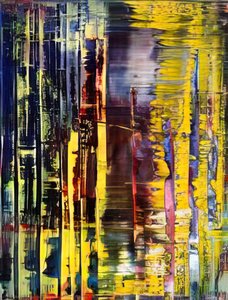
Gerhard Richter’s ‘Korn’: A Burst of Abstract Energy
Created in 1982, ‘Korn’ (Grain) is a compelling example of Gerhard Richter's mastery of abstract expressionism. This dynamic painting showcases his signature gestural style and profound exploration of color, texture, and the very act of painting itself.Decoding the Abstract Form
‘Korn’ eschews traditional representation, offering instead a vibrant field of layered colors and energetic brushstrokes. There is no discernible subject matter in the conventional sense; rather, Richter invites viewers to engage directly with the *physicality* of the paint and the emotional resonance of its application. The composition feels deliberately unbalanced, creating a visual tension that draws the eye across the canvas. Fragmented shapes and loose lines intersect and overlap, fostering a sense of constant movement and spontaneity.Technique & Materials: Impasto and Layering
Richter’s technique in ‘Korn’ is characterized by a generous use of oil paint applied with both brush and squeegee – a hallmark of his abstract work. The *impasto*—thickly layered paint—creates a rich, tactile surface that begs to be experienced beyond the visual. This layering isn't merely about building up texture; it’s also about obscuring and revealing, creating depth and complexity within the seemingly chaotic arrangement. The diffuse lighting suggests an indoor studio environment, emphasizing the intimate connection between artist and canvas.Historical Context: Post-War German Art
Gerhard Richter emerged as a significant figure in post-war German art, grappling with questions of history, memory, and representation. Born in Dresden in 1932, he experienced firsthand the devastation of World War II and the subsequent division of Germany. His artistic journey began under the constraints of Socialist Realism in East Germany before he defected to West Germany in 1961. ‘Korn’, created during a period of established international recognition, reflects Richter’s ongoing exploration of abstraction as a means of both liberation *and* questioning artistic conventions. He deliberately avoided clear narratives or political statements, instead focusing on the inherent qualities of painting itself.Symbolism & Emotional Impact
While ‘Korn’ resists definitive interpretation, its energetic composition and vibrant palette evoke powerful emotions. The swirling colors and dynamic brushwork can be seen as representing internal turmoil, a burst of creative energy, or even the chaotic nature of modern life. The title itself, “Korn” (Grain), is intriguing. It could allude to organic forms, the building blocks of life, or perhaps the granular texture of the paint itself – a subtle reminder of the material reality underlying the abstract image. Ultimately, the painting’s symbolism remains open-ended, allowing viewers to project their own experiences and interpretations onto its surface.Collecting & Interior Design
‘Korn’ is held in prestigious collections, including the Daros Collection in Zurich and the Kunstsammlung Nordrhein-Westfalen in Düsseldorf. Its bold colors and dynamic composition make it a striking focal point for any space.- For collectors: ‘Korn’ represents a pivotal moment in Richter's career and exemplifies his innovative approach to abstract painting.
- For interior designers: The painting’s vibrant energy can inject life into modern interiors, while its complex texture adds depth and sophistication. It pairs well with minimalist furnishings or serves as a counterpoint to more traditional décor.
Autoriaus biografija
A Life Shaped by Division: The Early Years and Artistic Formation of Gerhard Richter
Gerhard Richter’s story is inextricably linked to the fractured history of 20th-century Germany. Born in Dresden in 1932, his childhood unfolded under the shadow of a rising National Socialist regime. This formative period, marked by displacement – his family moved several times during the war years – instilled within him a profound sense of uncertainty and a questioning spirit that would permeate his artistic practice for decades to come. The idyllic landscapes of his early upbringing in Reichenau and Waltersdorf were soon disrupted by conflict, leaving an indelible mark on his psyche. His father, though not a fervent supporter of the Nazi party, navigated the complexities of life under authoritarian rule as a schoolteacher, while his mother fostered a love for literature and music within the family. This duality – a pragmatic acceptance of circumstance alongside a yearning for cultural expression – became a defining characteristic of Richter’s own artistic approach. He began formal training at the Dresden Academy of Fine Arts in 1951, initially immersed in the tradition of socialist realism demanded by the East German state. However, even within this constrained environment, a desire for artistic freedom simmered beneath the surface, fueled by a growing dissatisfaction with ideological constraints and a longing to explore more expansive creative possibilities.Escaping Constraints: Düsseldorf and the Exploration of Style
The year 1961 proved pivotal. Richter, along with his wife Marianne Eufinger, made the daring decision to flee East Germany, seeking refuge in the burgeoning art scene of Düsseldorf. This move marked a radical shift in his artistic trajectory. The West German landscape offered a liberating environment where experimentation and innovation were not only permitted but actively encouraged. In Düsseldorf, he encountered a vibrant community of artists grappling with questions of identity, representation, and the legacy of history. He quickly began to dismantle the rigid stylistic conventions of socialist realism, embarking on a period of intense exploration that would define his early mature work. This era saw him oscillate between seemingly disparate approaches – from photorealism, meticulously recreating photographic images with astonishing precision, to abstract compositions characterized by bold colors and dynamic brushstrokes. His collaboration with Sigmar Polke led to the coining of the term ‘Capitalist Realism,’ a deliberately ambiguous label that reflected their shared skepticism towards established artistic norms and their appropriation of imagery from advertising and mass media. This period wasn’t about finding *a* style, but rather questioning the very notion of stylistic coherence, embracing contradiction as a fundamental principle.Blurring Boundaries: Photorealism, Abstraction, and the Power of Chance
Richter's artistic vocabulary expanded throughout the 1960s and beyond, encompassing a remarkable range of techniques and themes. His photorealistic paintings, often based on family photographs or newspaper images, are not merely copies of reality but rather investigations into the nature of perception and representation. By meticulously rendering these images with an almost clinical detachment, he forces viewers to confront the inherent ambiguity of photographic truth. Simultaneously, Richter delved deeper into abstraction, creating canvases layered with vibrant colors and gestural marks. These abstract works are often created using a unique technique involving squeegees – tools typically used for cleaning windows – which he drags across the surface of the canvas, manipulating the paint in unpredictable ways. This embrace of chance and spontaneity is central to his artistic philosophy, allowing him to relinquish control and invite unexpected outcomes. His ‘Color Charts,’ systematic arrangements of colored squares, further challenge traditional notions of artistic expression, questioning the very definition of painting itself. These works are not about individual aesthetic preferences but rather about exploring the inherent properties of color and its organizational possibilities.Legacy and Influence: A Master of Contemporary Art
Gerhard Richter’s impact on contemporary art is undeniable. His willingness to challenge conventions, his relentless experimentation with technique, and his profound engagement with historical and political themes have established him as one of the most important artists of our time. He has consistently resisted easy categorization, defying attempts to pigeonhole his work into a single stylistic framework. This refusal to be defined, coupled with his technical virtuosity and intellectual rigor, has earned him widespread critical acclaim and commercial success – his paintings regularly fetch record prices at auction. His influence can be seen in the work of countless artists who have followed in his footsteps, drawn to his innovative techniques and his unwavering commitment to artistic exploration. Richter’s legacy is not simply about creating beautiful objects; it's about expanding the possibilities of painting itself. He remains a vital force in contemporary art, continuing to inspire and provoke audiences with his challenging and deeply resonant work.
Gerhardas Richter
1932 - , Vokietija
Trumpa informacija
- Artistic Movement Or Style: Fotorealizmas ir abstrakcija
- Artists Who Influenced This Artist:
- Pablo Picasso
- Jean Arp
- Date Of Birth: Vasario 9 d.
- Full Name: Gerhard Richter
- Nationality: Vokiečių
- Notable Artworks:
- Abstraktas Bild (610-1)
- Gilbert
- S. su vaiką
- Place Of Birth: Dresdenas, Vokietija
Susiję straipsniai

Morris Louis: Pioneering Color Field Painting & Abstract Expressionism's Legacy
Explore the groundbreaking abstract expressionism of Morris Louis, a pioneer of Color Field painting. Discover his innovative techniques, influential series & lasting legacy in post-war American art. Learn more at OriginalUniqueArt.
Jacob Kainen: A Pioneer of American Color Field Painting & Abstract Expressionism
Explore the life & work of Jacob Kainen, a pivotal figure in American Abstract Expressionism and Color Field painting. Discover his journey from Social Realism to vibrant abstraction and lasting influence on 20th-century art.

Carl Newman: Exploring Abstraction's Spiritual Resonance Through Color Field Painting
Explore the profound spiritual resonance of Color Field Painting with insights into Rothko, Newman & Still. Discover the techniques & legacy of this influential abstract art movement.

Gene Davis: Chromatic Explorations of Color Field Painting & the Washington Color School
Explore the vibrant world of Gene Davis and the Washington Color School. Discover his iconic stripe paintings, innovative techniques, and lasting impact on American abstract art. A deep dive for collectors & enthusiasts.
Beatrice Parsons: A Study in Abstract Expressionism & the Poetics of Color Field Painting
Explore the captivating world of Beatrice Parsons, a pioneering British abstract expressionist. Discover her journey from garden watercolors to evocative color field paintings and learn about her place within art history.