Cubist Exploration
White Bird (Georges Braque)
Georges Braque (1882–1963) sukūrė White Bird. Šis kūrinys priklauso Cubist Exploration kieruliui. Pagaminta naudojant Lithography.
- Lithography

 Peržiūrėti

 Rankinio darbo aliejinės imitacijos paveikslas
 Pasidalinti
 Dalintis
 Informacinė lLapelė


 Atsisiųsti
 Panašūs eksponatai
 Rentgeno spindulių nuotrauka
 Automatinė diorama
 Klausimai ir atsakymai

 Statistika
White Bird, trumpai
- Pavadinimas
- White Bird
- Autorius
- Georges Braque (1882–1963)
- Autorius gimęs
- Aržantėjus, Prancūzija
- Technika
- Lithography
- Judėjimas
- Cubist Exploration
- Laikotarpis
- Modern
- Tema
- geometric form, blue circle motif, bird symbolism, black background, visual contrast, cubist composition
Ką vaizduoja White Bird?
A Symphony of Form: The Essence of Georges Braque’s White Bird
In the vast landscape of early twentieth-century modernism, few works possess the quiet, arresting power of Georges Braque’s “White Bird.” To gaze upon this piece is to witness a moment of profound stillness captured within the radical movement of Cubism. The composition is deceptively minimalist, centered around a striking blue circle that serves as a celestial or perhaps terrestrial window, housing a solitary white bird poised in mid-flight. As the avian figure drifts toward the upper right corner, it creates a sense of directional energy that pulls the viewer’s eye across the canvas, inviting a meditative contemplation of movement and space. The stark, dramatic contrast between the luminous blue, the pristine white of the bird, and the deep, enveloping black background creates an atmospheric tension that is both haunting and beautiful.
The brilliance of this work lies in its ability to embody the core tenets of Cubist philosophy through a simplified visual language. While Braque, alongside his collaborator Pablo Picasso, is often celebrated for the complex, fractured geometries of Analytical Cubism, “White Bird” showcases a more lyrical, essentialist approach. Here, the artist utilizes lithography—a technique prized for its ability to render velvety textures and subtle tonal gradations—to achieve a surface that feels both tactile and ethereal. The precision of the print allows the bold blue to resonate with a vibrant intensity, while the white of the bird remains sharp and clean, embodying the "fragmented harmony" that Braque sought to master during his most revolutionary years.
Historical Resonance and Symbolic Depth
To understand “White Bird,” one must look back to the fertile artistic soil of France at the turn of the century. Born in Argenteuil, Braque’s early life was steeped in the practicalities of craftsmanship, having learned much from his father’s work as a house painter and decorator. This foundational understanding of pigment, structure, and surface would later allow him to dismantle traditional perspective with such surgical precision. Created during the height of the Cubist revolution between 1908 and 1912, this piece reflects a period when artists were no longer content to merely mirror reality; they sought to interrogate it. The bird becomes more than a biological subject; it serves as a symbol of freedom, transcendence, and the fleeting nature of perception itself.
For the discerning collector or interior designer, “White Bird” offers an unparalleled opportunity to introduce a piece of art history into a contemporary space. Its graphic strength makes it a versatile anchor for modern decor, capable of commanding attention in a minimalist gallery-style room or adding a sophisticated layer of intellectual depth to a classic study. The artwork does not merely decorate a wall; it transforms the environment, offering a window into the very moment when the foundations of modern art were being rewritten. Owning a high-quality reproduction of this masterpiece allows one to live with the enduring legacy of Braque’s vision—a vision where simplicity meets profound complexity, and where a single bird in flight can encapsulate the infinite possibilities of the human gaze.
White Bird dididraudžios kokybės vaizdai
Apsaugotas autoriškomis teisėmis: šie failai skirti asmeniniam peržiūrėjimui, o ne perraštiniam naudojimui.
Georges Braque, White Bird.
Atsakimai į klausimus apie White Bird
Kokia technika sukurta „White Bird“ – Georges Braque?
Georges Braque kūriniui „White Bird“ panaudojo Lithography techniką. Ši technika apibrėžė originalaus kūrinio medžiaginę prigimtį.
Ką vaizduoja „White Bird“ – Georges Braque?
„White Bird“ – Georges Braque vaizdeletas: geometric form, blue circle motif, bird symbolism, black background, visual contrast, cubist composition, minimal aesthetic.
Ar „White Bird“ – Georges Braque vaizdą galima laisvai reprodukcijaoti?
„White Bird“ – Georges Braque yra vis dar saugoma autorineje teisėje. Šis statusas nustato, kaip galima reprodukcijaus šio kūrinio vaizdą.
Kas yra „White Bird“ kūrybos autorius?
Kūrinį „White Bird“ sukūrė Georges Braque. Darbas katalogizuojamas Georges Braque vardu.
Kokiam stiliui priklauso „White Bird“?
„White Bird“ yra Cubist Exploration stiliaus kūrinys. Šis dailos kryptis nurodo meninę tradiciją, kurios šis darbas yra dalis.
Kokio Georges Braque kūrybos etapo dalis yra „White Bird“?
„White Bird“ atspindi Georges Braque kūrybinį laikotarpį Cubist Synthesis.
Kodėl „White Bird“ autoriškos teisės statusas yra toks, koks yra?
„White Bird“, kurį sukūrė Georges Braque, yra vis dar saugoma autorineje teisėje. Autorinės teisės apsaugos terminai skaičiuojami nuo autoriaus mirties, o Georges Braque mirė 1963 m.
Kokią vietą Georges Braque kūrybos ešėlyje užima „White Bird“?
„White Bird“ kartu su kitais Georges Braque kūriniais pasižymi Cubist Exploration stiliumi ir tamsiomis temomis: deconstructionist cubist vision, exploring spatial relationships, symbolic representation nature, influenced picasso’s breakthrough, central piece artistic legacy.
Kaip „White Bird“ tema susiję su įprastomis Georges Braque tematikos temos?
„White Bird“ vaizduoja geometric form, blue circle motif, bird symbolism, black background, visual contrast, cubist composition, minimal aesthetic, o įrašytos Georges Braque temos yra deconstructionist cubist vision, exploring spatial relationships, symbolic representation nature, influenced picasso’s breakthrough, central piece artistic legacy. Šių dviejų lyginimas parodo, kaip šis kūrinys susijęs su įprastais šio kūrybinio veiksmo objektais.
Apie menininką Georges Braque
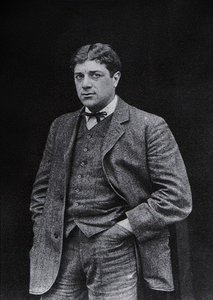
1882–1963, Prancūzija
Georges Braque
Early Life and Artistic Foundations Georges Braque, gimęs Argenteuil mieste Francijoje 1882 metais, įvykdė kelionę į meno pasaulį, kurią iš tikrųjų simbolizavo XX amžiaus meno vystymosi kraštovaizdis. Jo vaikystė šeimoje, kurioje veikė namų dažytojai ir dekoratorių meistrai, ne tik suteikė jam praktinę meistriškumą medžiagoms, bet ir ankstyvą įvertinimą formasiai ir struktūrai. Nepaisant pradėti vykti savo tėvo keliu, Braque’s šlovingos kūrybinės instinkcijos greitai vedė jį į akademinę mokslą Argenteuil mieste Francijoje 1882 metais. Pervažiuodamas Paryžiui 1902 metais, Braque tęsė savo studijas Humberto akademijoje, prisijungdamas prie Paryžiaus meno gyvenimo šlovingos aplinkos.
Taip pat Georges Braque darbai
 Mandola1910
 Vyras su gitara1914
 L'Estako namai
 Harbor in Normandy1909
Esdai apie White Bird
 Spontaneity and Matter: Distinguishing CoBrA from Art InformelMaster the differences between CoBrA and Art Informel with our expert guide. Learn to identify these post-war movements today.
 French artworks of the 1950sIconic French works by Matisse, Braque, and Dubuffet define this era. Explore the full collection online at OriginalUniqueArt.com.
 Georges Braque: 25 Šedevrai, Keičiantys Jūsų Interjerą | OriginalUniqueArtAtraskite 25 Georges Braque šedevrus! Kubizmo meistro paveikslai, interjero dekoras ir meno istorija. Meno reprodukcijos aukščiausia kokybe…