Cubist
untitled (Georges Braque)
Georges Braque (1882–1963) sukūrė untitled. Šis kūrinys priklaulo Cubist kieruliui. Pagaminta naudojant Oil On Canvas.
- Oil On Canvas

 Peržiūrėti realaus dydžio版

 Rankinio darbo aliejinės imitacijos paveikslas
 Pasidalinti
 Dalintis
 Informacinė l lapelė


 Atsisiųsti
 Panašūs eksponatai
 Rentgeno spindulių nuotrauka
 Automatinė diorama
 问答

 Statistika
untitled, trumpai
- Pavadinimas
- untitled
- Autorius
- Georges Braque (1882–1963)
- Dizainere/is gimęs
- Aržantėjus, Prancūzija
- Mediumas
- Oil On Canvas
- Judėjimas
- Cubist
- Laikotarpis
- Modern
- Tema
- geometric shapes, monochrome palette, fragmented composition, chair arrangement, analytical cubism, spatial illusion
Ką vaizduoja untitled?
The Architecture of Perception: Deconstructing Reality in Braque’s Vision
In the quiet revolution that redefined the boundaries of modern vision, Georges Braque’s “untitled (7718)” emerges as a profound meditation on the nature of sight itself. This seminal work of Analytic Cubism does not merely present a still life; it orchestrates a complex symphony of fragmented forms and muted tones that challenge the viewer to look beyond the surface. At first glance, one perceives the familiar—a chair, perhaps, adorned with the humble artifacts of daily existence: vases, books, bottles, and a bowl. Yet, as the eye lingers, the solidity of these objects begins to dissolve into a rhythmic dance of geometric planes. Braque invites us into a world where the boundaries between object and space are intentionally blurred, creating an immersive experience that transcends mere representation.
The mastery of this piece lies in its radical technique, a meticulous deconstruction of form that was revolutionary for the dawn of the 20th century. Eschewing the vibrant, emotive colors of Fauvism, Braque employs an austere and sophisticated palette dominated by grayscale, subtle browns, and soft beiges. This monochromatic approach serves a higher intellectual purpose: it strips away the distraction of color to focus the viewer's attention on the structural integrity of the composition. Through layered brushstrokes and a careful interplay of light and shadow, the artist creates a sense of depth through overlapping triangles, rectangles, and cubes. The result is a tactile, textured surface that feels both intellectually rigorous and deeply contemplative.
A Legacy of Innovation and Emotional Resonance
To understand this artwork is to understand the historical seismic shift occurring in Paris around 1908. Influenced by the structural lessons of Cézanne, Braque sought to capture the essence of an object from multiple viewpoints simultaneously. This was not a pursuit of visual accuracy, but an exploration of how we perceive reality through time and movement. The painting embodies the scientific and mathematical fascinations of its era, reflecting a desire to find the underlying geometric truth within the chaos of the physical world. There is a profound sense of order hidden within the apparent fragmentation, a structured logic that guides the gaze across the canvas along vertical axes and angular intersections.
For the discerning collector or interior designer, this reproduction offers more than just a decorative element; it provides a focal point of intellectual depth and quiet elegance. The somber, muted atmosphere of the piece lends itself beautifully to sophisticated spaces, where its complex textures can interact with natural light to create an aura of timelessness. Whether placed in a contemporary studio or a classic study, Braque’s work evokes a sense of introspection and stability. It is a piece that does not shout for attention but rather commands it through its subtle complexity, making it an enduring choice for those who appreciate art that stimulates the mind as much as it delights the eye.
untitled dididraudžios kokybės vaizdai
Protected by copyright: these files are for personal reference, not a licence to republish.
Georges Braque, untitled.
Atsakimai į klausimus apie untitled
Kokia technika buvo panaudota kūriniam darbui „untitled“ – Georges Braque?
„untitled“ technika – Oil On Canvas.
Ką vaizduoja „untitled“ – Georges Braque?
Darbos „untitled“ temos yra geometric shapes, monochrome palette, fragmented composition, chair arrangement, analytical cubism, spatial illusion, texture variation.
Ar „untitled“ yra viešosios teisės kūrinys?
Autorių teisių statusas kūriniui „untitled“ – Georges Braque: kūrinys priklauso vis dar saugoma autorineje teisėje. Tai nulemia, ar galima laisvai reprodukciuoti šį vaizdą.
Kas sukūrė „untitled“?
„untitled“ priskiriamas Georges Braque.
Kokio meno kryžmės dalis yra „untitled“ – Georges Braque?
„untitled“ – Georges Braque priklauso Cubist stiliui. Ši dailės kryptis suteikia kūriniui stilistinį kontekstą.
Kokio Georges Braque kūrybos laikotarpio priklauso „untitled“?
„untitled“ atspindi Georges Braque kūrybinį laikotarpį Mature Period.
Kodėl „untitled“ autoriškos teisės statusas yra toks, koks yra?
„untitled“, kurį sukūrė Georges Braque, yra vis dar saugoma autorineje teisėje. Autorinės teisės apsaugos terminai skaičiuojami nuo autoriaus mirties, o Georges Braque mirė 1963 m.
Kaip kūrinys „untitled“ dera su Georges Braque temomis ir stiliumi?
„untitled“ kartu su kitais Georges Braque kūriniais pasižymi Cubist stiliumi ir tamsiomis temomis: analytical cubism, formal experimentation, spatial distortion, geometric reduction, legacy braque’s contribution.
Kokią vietą Georges Braque pasikartojančių temų tarėje užima „untitled“?
„untitled“ vaizduoja geometric shapes, monochrome palette, fragmented composition, chair arrangement, analytical cubism, spatial illusion, texture variation, o įrašytos Georges Braque temos yra analytical cubism, formal experimentation, spatial distortion, geometric reduction, legacy braque’s contribution. Šių dviejų lyginimas parodo, kaip šis kūrinys susijęs su įprastais šio kūrybinio veiksmo objektais.
Apie šį menininką, Georges Braque
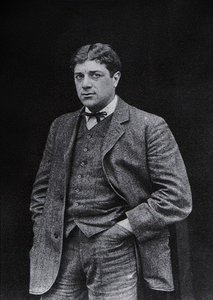
1882–1963, Prancūzija
Georges Braque
Early Life and Artistic Foundations Georges Braque, gimęs Argenteuil mieste Francijoje 1882 metais, įvykdė kelionę į meno pasaulį, kurią iš tikrųjų simbolizavo XX amžiaus meno vystymosi kraštovaizdis. Jo vaikystė šeimoje, kurioje veikė namų dažytojai ir dekoratorių meistrai, ne tik suteikė jam praktinę meistriškumą medžiagoms, bet ir ankstyvą įvertinimą formasiai ir struktūrai. Nepaisant pradėti vykti savo tėvo keliu, Braque’s šlovingos kūrybinės instinkcijos greitai vedė jį į akademinę mokslą Argenteuil mieste Francijoje 1882 metais. Pervažiuodamas Paryžiui 1902 metais, Braque tęsė savo studijas Humberto akademijoje, prisijungdamas prie Paryžiaus meno gyvenimo šlovingos aplinkos.
Taip pat Georges Braque darbai
 Mandola1910
 Vyras su gitara1914
 L'Estako namai
 Harbor in Normandy1909
Esdai apie untitled
 From Cézanne to Cubism: The Revolutionary Evolution of Modern Art's Structural VisionExplore the profound transition from Cézanne’s structural Post-Impressionism to the revolutionary fractured forms of Cubism. A sophisticate…
 Mastering Cubism: The Top 25 Georges Braque ArtworksJourney through the revolutionary world of Georges Braque. Explore 25 iconic Cubist masterpieces, from geometric abstractions to timeless s…
 Georges Braque: The Architect of Form and the Soul of Cubist RevolutionExplore the profound legacy of Georges Braque, a master of Cubism. Discover how his technical craftsmanship and collaboration with Picasso …