

 Peržiūrėti realybėje
 Pasidalinti
 Dalintis
 Išsamiau

 Atsisiųsti
 Panašūs eksponatai
 Rentgeno nuotrauka
 Automatinė diorama
 Statistika
Still life BACH


 Skaityti daugiau
Giclée / Meno spausdinimas
Muziejų lygio „giclée“ arba drobos spausdinimas: greita gamyba ir lankstios apdailos parinktys. ( Pirkti rankomis tapytą paveikslą Perejti prie skaitmeninio vaizdo)




P118B $10

P118H $10

P118W $10

P438Z $10

P508JH $12

P508YH $12

P805H $10

P805Z $10

P919BZ $10

P919G $10

P919XJ $10

P959ZH $10

P968JZ $12

W106C $8

W218G $10

W218JH $8

W218Y $10

W307PJ $10

W316G $10

W316PJ $8

W316Y $10

W398PJ $8

W4111J $10

W500HY $15

W500JH $15

W692G $12

W849H $8

W940BG $15

W953PJ $8




Pasirinkite iš mūsų nustatytų dydžių, atitinkančių originalaus meno kūrinio proporcijas.

Galite nurodyti savo matmenis, kad vaizdas atitiktų konkretų rėmą ar erdvę. Jei pasirinktas dydis nesutaps su originalaus paveikslėlio proporcijomis, mes arba apkirpsime kūrinį, arba išplėsime vaizdą naudojant veideliu atspindėtą arba vientisą šoną. Skaitmeninis maketas bus išsiųstas jums patvirtinti prieš pradedant gamybą.
Atkreipkite dėmesį, kad ekrane matomas vaizdinys neatspindi tikrojo apkirpimo ar išplėtimo. Tik maketas tiksliai parodytų galutinę kompoziciją.
Nors galima rinktis ir individualius dydžius, rekomenduojame pasirinkti vieną iš išanksti nustatytų matmenų, kad būtų išlaikytos originalios proporcijos.
Pristatymas visame pasaulyje () per 2 weeks, o ne įprastas 4/5 savaičių laikotarpis. (8 rugsėjis)

Nemokamas greitasis pristatymas visame pasaulyje

Aukštos kokybės lininis drobė

Pilnas siuntimo draudimas

Muitinės mokesčių grąžinimo garantija

Tikro spalvų atitikimo garantija

100 dienų grąžinimo politika (tik esant įtaigoms)

100% pinigų grąžinimo garantija

Nuolaida už kelias reprodukcijas
 Stiklo variantas prieinamas tik pasirinkus dydį iki 110 cm

Still life BACH
Giclée / Meno spausdinimas
Reprodukcijos matmenys
-


Galutinė kaina
$ 80
A Fragmented Echo: Georges Braque’s “Still Life BACH” – A Study in Abstract Musicality
Georges Braque's "Still Life BACH," created in 1912, isn’t a straightforward depiction of a musical figure or a collection of instruments. Instead, it’s an intensely personal and profoundly evocative exploration of the spirit of Johann Sebastian Bach through the lens of early Cubism and Constructivism. This monochromatic drawing, rendered primarily in shades of brown and grey with delicate pencil lines, feels less like a portrait and more like a captured fragment – a sonic echo translated into visual form. The piece immediately draws the viewer in with its geometric precision and the subtle textures of the paper itself, hinting at the artist’s background as a house painter and decorator; this grounding in materiality is crucial to understanding his later abstract explorations.
The composition is deliberately asymmetrical, built from stacked rectangular shapes that subtly suggest architectural elements or, perhaps more powerfully, musical notation. These forms aren't meant to be read literally as buildings or notes, but rather as the underlying structure of Bach’s music – its harmonic progressions and rhythmic patterns. The prominent “BACH” inscription, centrally positioned, acts not just as a title but as an anchor, grounding the abstraction in the artist’s subject matter. Braque masterfully employs linear and angular lines, contributing to a sense of controlled chaos, mirroring the complexity and intellectual rigor inherent in Bach's compositions.
Decoding the Language of Line: Technique and Style
The technique employed is primarily pencil drawing, executed with a remarkable attention to detail. Braque utilizes hatching and cross-hatching extensively to create tonal variations – building up layers of grey to suggest depth and form without relying on traditional shading or perspective. This method, characteristic of both Cubism and Constructivism, breaks down objects into their fundamental geometric components, presenting them in an unconventional arrangement. The lack of a conventional horizon line further emphasizes this deconstruction, inviting the viewer to actively participate in constructing meaning from the fragmented forms.
The deliberate absence of strong highlights or shadows contributes to the piece’s contemplative mood. Instead, Braque focuses on the interplay of light and dark within the pencil strokes themselves, creating a sense of diffused illumination that feels both intellectual and emotionally resonant. The texture of the paper is not merely a background element; it's integral to the artwork’s aesthetic, adding a tactile quality and reinforcing the connection between the artist’s craft and his subject.
Symbolism and Historical Context: A Bridge Between Craft and Innovation
“Still Life BACH” emerged during a period of intense artistic experimentation – the early years of Cubism and Constructivism. Braque, along with Pablo Picasso, was grappling with how to represent reality in a new way, moving away from traditional perspective and embracing abstraction. This piece can be seen as a bridge between his earlier, more representational work and his later, fully abstract explorations. The choice of Bach – a composer revered for his mathematical precision and intellectual depth – reflects this interest in structure and order.
Symbolically, the fragmented forms likely represent the deconstruction of musical ideas into their constituent parts, mirroring Braque’s own approach to artistic representation. The piece isn't simply about Bach; it’s about the *idea* of Bach – his legacy as a master of harmony and form. It speaks to the enduring power of music to stimulate thought and inspire creativity.
Bringing “Still Life BACH” Home: A Reproduction for the Connoisseur
OriginalUniqueArt offers meticulously crafted, hand-painted reproductions of Georges Braque’s "Still Life BACH," allowing you to experience this captivating artwork in your own space. Our skilled artisans replicate Braque's nuanced technique and textural approach with exceptional fidelity, ensuring that every detail – from the delicate pencil lines to the subtle variations in tone – is faithfully reproduced. Whether displayed in a modern gallery or incorporated into a sophisticated interior design scheme, this reproduction captures the essence of Braque’s artistic vision, offering a powerful statement of intellectual curiosity and aesthetic appreciation. Explore our high-resolution reproductions today and bring the fragmented echo of Bach's genius into your world.
Autoriaus biografija
Early Life and Artistic Foundations
Georges Braque, gimęs Argenteuil mieste Francijoje 1882 metais, įvykdė kelionę į meno pasaulį, kurią iš tikrųjų simbolizavo XX amžiaus meno vystymosi kraštovaizdis. Jo vaikystė šeimoje, kurioje veikė namų dažytojai ir dekoratorių meistrai, ne tik suteikė jam praktinę meistriškumą medžiagoms, bet ir ankstyvą įvertinimą formasiai ir struktūrai. Nepaisant pradėti vykti savo tėvo keliu, Braque’s šlovingos kūrybinės instinkcijos greitai vedė jį į akademinę mokslą Argenteuil mieste Francijoje 1882 metais.
Pervažiuodamas Paryžiui 1902 metais, Braque tęsė savo studijas Humberto akademijoje, prisijungdamas prie Paryžiaus meno gyvenimo šlovingos aplinkos. Čia jis susitikęs su artistas Marie Laurencin ir Francis Picabia, kuriuos įvykdė šlovingą kūrybinę instinkciją Francijoje 1882 metais.
The Embrace of Fauvism and the Dawn of Cubism
Braque’s pasirinkimas fauvistinių principų – išraiškos spalvos ir emocijų – yra įvykdė šlovingą kūrybinę instinkciją Francijoje 1882 metais. Šis laikotarpis buvo pažymiškas eksperimentais su spalvomis Paryžiui 1902 metais.
Švietimo akademijoje Humberto Paryžiui 1902 metais, Braque tęsė savo studijas Paryžiaus meno gyvenimo šlovingą aplinkos. Čia jis susitikęs su artistas Marie Laurencin ir Francis Picabia, kuriuos įvykdė šlovingą kūrybinę instinkciją Francijoje 1882 metais.
Innovation Through Fragmentation and Collage
Švietimo akademijoje Humberto Paryžiui 1902 metais, Braque tęsė savo studijas Paryžiaus meno gyvenimo šlovingą aplinkos. Čia jis susitikęs su artistas Marie Laurencin ir Francis Picabia, kuriuos įvykdė šlovingą kūrybinę instinkciją Francijoje 1882 metais.
Švietimo akademijoje Humberto Paryžiui 1902 metais, Braque tęsė savo studijas Paryžiaus meno gyvenimo šlovingą aplinkos. Čia jis susitikęs su artistas Marie Laurencin ir Francis Picabia, kuriuos įvykdė šlovingą kūrybinę instinkciją Francijoje 1882 metais.
Later Years and Enduring Legacy
Švietimo akademijoje Humberto Paryžiui 1902 metais, Braque tęsė savo studijas Paryžiaus meno gyvenimo šlovingą aplinkos. Čia jis susitikęs su artistas Marie Laurencin ir Francis Picabia, kuriuos įvykdė šlovingą kūrybinę instinkciją Francijoje 1882 metais.
Švietimo akademijoje Humberto Paryžiui 1902 metais, Braque tęsė savo studijas Paryžiaus meno gyvenimo šlovingą aplinkos. Čia jis susitikęs su artistas Marie Laurencin ir Francis Picabia, kuriuos įvykdė šlovingą kūrybinę instinkciją Francijoje 1882 metais.
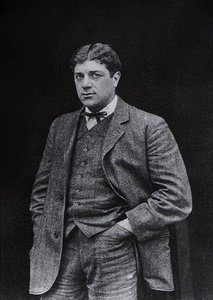
Žoržas Brakas
1882 - 1963 , Prancūzija
Trumpa informacija
- Artistic Movement Or Style: Kubizmo ir Fauvizmo
- Artists Who Influenced This Artist:
- Henri Matisse
- André Derain
- Pablo Picasso
- Date Of Birth: 1882-05-13
- Date Of Death: 1963
- Full Name: Georges Braque
- Nationality: Prancūzas
- Notable Artworks:
- Žinomas namai L'Estaque
- Kantrybė
- Violonas ir Paletė
- Place Of Birth: Argenteuil, Prancūzija
Susiję straipsniai

Georges Seurat: 25 Šedevrai, Apšviečiantys Modernaus Meno Takus | OriginalUniqueArt
Atraskite 25 Georges Seurat šedevrus! Išsami analizė, istorijos ir įkvėpimas interjero dizainui. Pointilizmo meistras, impresionizmas ir chromoluminarizmas – viskas OriginalUniqueArt.com. Explore the full collection online!

Cubist Still Life: Redefining Reality Through Fragmented Forms and Geometric Abstraction
Explore the profound evolution of Cubist still life, from Cézanne's structural foundations to the fragmented brilliance of Braque and Léger. Discover how geometric abstraction redefined reality through a sophisticated lens of form, color, and modern artistic mastery.
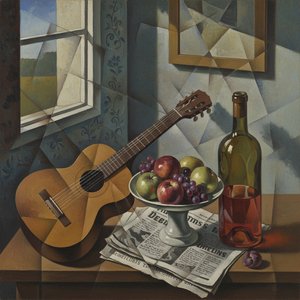
Deconstructing Reality: A Comprehensive Exploration of Cubist Still Life
Explore the revolutionary world of Cubist Still Life with OriginalUniqueArt. Discover Picasso & Braque's groundbreaking techniques, its philosophical roots, and lasting impact on modern art. Expert insights for collectors.

Fragmented Reality: A Guide to the Power and Perspective of Cubist Still Life Art
Explore the profound depth of Cubist still life art. Our expert guide delves into the revolutionary techniques of Picasso and Braque, offering art enthusiasts a deep understanding of fragmented reality, geometric form, and the enduring power of Cubism in fine art.

Georges Braque: 25 Šedevrai, Keičiantys Jūsų Interjerą | OriginalUniqueArt
Atraskite 25 Georges Braque šedevrus! Kubizmo meistro paveikslai, interjero dekoras ir meno istorija. Meno reprodukcijos aukščiausia kokybe – OriginalUniqueArt.com. Išsamesnės informacijos rasite internetu.


