Georgian Portraiture
Peter Romney (Džordžas Romisas)
Džordžas Romisas (1734–1802) sukūrė Peter Romney. Šis kūrinys priklaulo Georgian Portraiture kieruliui. Pagaminta naudojant Acrylic On Canvas. Eksponatas saugomas National Portrait Gallery Londras, Jungtinė Karalystė.
- Acrylic On Canvas
- National Portrait Gallery, Londras

 Peržiūrėti realaus dydžio版

 Rankinio darbo aliejinės imitacijos paveikslas
 Pasidalinti
 Dalintis
 Informacinė l lapelė


 Atsisiųsti
 Panašūs eksponatai
 Rentgeno spindulių nuotrauka
 Automatinė diorama
 问答

 Statistika
Peter Romney, trumpai
- Pavadinimas
- Peter Romney
- Autorius
- Džordžas Romisas (1734–1802)
- Dizainere/is gimęs
- Doltonas, Jungtinė Karalystė
- Mediumas
- Acrylic On Canvas
- Kur galima pamatyti
- National Portrait Gallery, Londras, Jungtinė Karalystė
- Judėjimas
- Georgian Portraiture
- Tema
- portraiture, gentleman, clothing, british society, 18th century, conversation
Ką vaizduoja Peter Romney?
The Enigmatic Figure: An Exploration of George Romney's "Unknown Man"
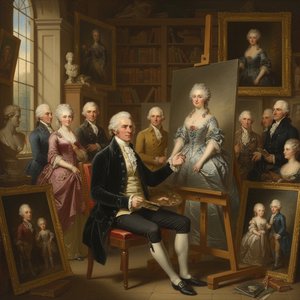
George Romney’s 1765 portrait, often referred to as “Unknown Man,” is far more than a simple likeness. It’s a carefully constructed tableau of Georgian society, brimming with subtle gestures and intellectual curiosity. Painted during a pivotal period of artistic and social change in Britain, the work offers a rare glimpse into the mind of a man contemplating his place within a rapidly evolving world. The painting depicts a gentleman, dressed in the fashionable attire of the era – a dark blue jacket, waistcoat, breeches, and buckled shoes – seated at an easel before a drafting table laden with geometric diagrams. His gaze is direct, almost challenging, as he turns to face the viewer, inviting us into his private thoughts.
The initial impression might be one of formality, but closer inspection reveals layers of complexity. Romney masterfully employs chiaroscuro – the dramatic contrast between light and shadow – to sculpt the figure’s form and draw attention to key details. The subtle shading around the eyes suggests a contemplative mood, while the precise rendering of his hands, poised over the drafting tools, speaks volumes about his intellectual pursuits. The background is deliberately muted, focusing entirely on the subject and reinforcing the sense of intimacy within the scene.
A Study in Georgian Intellectualism
Romney’s “Unknown Man” isn't merely a portrait; it’s a visual argument about the nature of art itself. The diagrams on the drafting table, reminiscent of mathematical principles and architectural designs, hint at a debate taking place – a discussion between Romney’s brothers, Peter and James, regarding the theoretical foundations of painting. Peter, depicted gesturing towards the geometric forms, advocates for a rational, structured approach to artistic creation, drawing parallels with the precision of mathematics and design. James, standing behind him, counters this argument by pointing to a classical bust, suggesting that true artistry should be rooted in tradition and precedent – a reverence for the masters of antiquity.
This internal dialogue is brilliantly captured through Romney’s skillful use of composition and gesture. The brothers' postures and expressions convey their differing viewpoints with remarkable subtlety. The painting reflects the broader intellectual currents of the Georgian era, a time marked by an intense interest in reason, science, and classical learning. It was a period where artists were grappling with questions about the role of art in society and the relationship between beauty, truth, and knowledge.
Technique and Context: Romney’s Signature Style
Romney's technique is characterized by its remarkable realism and psychological depth. He possessed an extraordinary ability to capture not just the outward appearance of his subjects but also their inner lives. His portraits were renowned for their immediacy and emotional resonance, a quality that quickly established him as one of the most sought-after artists of his day.
The painting’s provenance is significant. It was part of the collection of Sir George Beaumont, a prominent figure in Georgian society and a patron of the arts. Beaumont's collection reflected his own intellectual interests, showcasing works that celebrated reason, learning, and classical ideals. The portrait’s journey through subsequent collections underscores its enduring appeal as a symbol of Georgian sophistication and artistic achievement.
A Portrait of Quiet Contemplation
Ultimately, “Unknown Man” is a poignant meditation on the complexities of human experience. It invites us to consider not just the subject's identity but also his thoughts, feelings, and aspirations. Romney’s masterful handling of light, shadow, and gesture creates a powerful sense of intimacy, drawing us into this quiet moment of intellectual reflection. It remains a compelling testament to the artist’s skill and a valuable window into the social and cultural landscape of Georgian England – a timeless image that continues to resonate with viewers today.
Kuriame muziejuje eksponuojamas karya Peter Romney?
National Portrait Gallery
Londras, Jungtinė Karalystė
Origins and History of the National Portrait Gallery The National Portrait Gallery was established in 1856, conceived as a grand statement of national pride. It holds the distinction of being arguably the first national public gallery in the world dedicated specifically to portraits. While the institution was founded in the mid-19th century, the official opening of the museum took place on January 15, 1859.


Peter Romney dididraudžios kokybės vaizdai
Viešoji domenė: suregalis mirė 1802 m.
Džordžas Romisas, Peter Romney, National Portrait Gallery. Viešoji domenė.
Atsakimai į klausimus apie Peter Romney
Kuriam muziejui priklauso originalus „Peter Romney“?
Originalų kūrinį „Peter Romney“ galite pamatyti National Portrait Gallery, Londras, Jungtinė Karalystė.
Kokia technika sukurta „Peter Romney“ – Džordžas Romisas?
Džordžas Romisas kūriniui „Peter Romney“ panaudojo Acrylic On Canvas techniką. Ši technika apibrėžė originalaus kūrinio medžiaginę prigimtį.
Kokios temos atsispindi kūrynioje „Peter Romney“ – Džordžas Romisas?
„Peter Romney“ – Džordžas Romisas temos apima portraiture, gentleman, clothing, british society, 18th century, conversation, romney. Kartu jie apibendrina šio kūrinio tematiką.
Ar „Peter Romney“ – Džordžas Romisas vaizdą galima laisvai reprodukcijaoti?
Kalbant apie autorišką teisę, „Peter Romney“ yra yra viešosios erdvės dalis – jo autorinė teisė pasibaigusi.
Kas sukūrė „Peter Romney“?
„Peter Romney“ kūrybinį darbą sukūrė Džordžas Romisas. Šioje puslapio informacijoje aprašomas Džordžas Romisas originalus kūrinys.
Kokiam meno stiliui priklauso „Peter Romney“ – Džordžas Romisas?
„Peter Romney“ – Džordžas Romisas priklauso Georgian Portraiture stiliui. Ši dailės kryptis suteikia kūriniui stilistinį kontekstą.
Kokio Džordžas Romisas kūrybos laikotarpio priklauso „Peter Romney“?
„Peter Romney“ priklauso Džordžas Romisas kūrybos karjeros Early Career etapui. Ši klasifikacija atspindi kūrinio ryšį su menininko evoliucija.
Kokia yra autorinės teisės situacijos priežastis kūriniam darbui „Peter Romney“ – Džordžas Romisas?
Autorinės teisės statusas kūriniui „Peter Romney“ – yra viešosios erdvės dalis – jo autorinė teisė pasibaigusi – nustatomas remiantis to, kad menininkas mirė 1802 m.
Ar „Peter Romney“ liko savo kūrėjo tėvynėje?
Taip – kūrinys saugomas autoriaus tėvynėje. Džordžas Romisas gimtoji šalis yra Jungtinė Karalystė, o kūrinio „Peter Romney“ originalas saugomas muziejuje, esančiame Jungtinė Karalystė.
Apie šį menininką, Džordžas Romisas

1734–1802, Jungtinė Karalystė
Džordžas Romisas
A Life in Portraiture: The Šiuolaikinė Menų Kultūra George Romney (1734–1802) išsikėlė į šlovę kaip vienas iš žymiausiųjų britiškių portretinių meistrų savo laikštėje. Jo kelias nuo kambarinio meistro sūnaus iki aukščiausiosios Britanijos aristokratijos favoritas yra įtraukiantis istorijų ciklas apie gimtą talentą ir nepriekaištingą ambiciją. Ankstyvieji gyvenimai beveik nesuteikė įspūdžių apie meno kelią, kurį jis pasirinko; pradžioje jis buvo mokomas savo tėvo, tačiau švietimo įvairovė ir iš tikrųjų įsikėlęs žvilkus į piešimą buvo Christopher Steele, vietinis portretininkas, kuris studijavo Paryžiui. Šis mokymasis buvo reikšminės svarbos Romney švietimui ir pirmą kartą susipažinti su europiečių meno tradicijomis.
Taip pat Džordžas Romisas darbai
 Lady Hamilton as Circe1782
 Portrait of Emma Hart [later Lady Hamilton] as Miranda1785
 Portrait of John Wesley1789
 Portrait of Vice-Admiral Sir Hyde Parker, 5th Baronet1782
Esdai apie Peter Romney
 Sir William Beechey: Portraiture, Patronage & Shaping Georgian SocietyExplore the life & art of Sir William Beechey, a leading British portraitist of the Georgian era. Discover his royal commissions, aristocra…
 Romantic Realism's Finest: 10 Masterpieces for Your Home | OriginalUniqueArtExplore 10 defining masterpieces of Romantic Realism! Discover Courbet, Millet & Daumier's powerful paintings—capturing emotion and social …
 Mastering Elegance: The Top 25 Iconic Portraits by George RomneyStep into the elegance of 18th-century Britain with our curated guide to George Romney's top 25 masterpieces. Explore iconic portraits and …