Realism · 1825
Self-Portrait (Džordžas Čineri, 1825)
Džordžas Čineri (1774–1852) sukūrė Self-Portrait. Šis kūrinys datuojamas 1825 m. Šis kūrinys priklauso Realism kieruliui. Pagaminta naudojant Oil On Canvas. Eksponatas saugomas Metropolitano meno muziejus Niujorkas, JAV. Matmenys – 22 × 18 cm.
- 1825
- Oil On Canvas
- 22 × 18 cm
- Metropolitano meno muziejus, Niujorkas

 Peržiūrėti

 Rankinio darbo aliejinės imitacijos paveikslas
 Pasidalinti
 Dalintis
 Informacinė lLapelė


 Atsisiųsti
 Panašūs eksponatai
 Rentgeno spindulių nuotrauka
 Automatinė diorama
 Klausimai ir atsakymai

 Statistika
Self-Portrait, trumpai
- Pavadinimas
- Self-Portrait
- Autorius
- Džordžas Čineri (1774–1852)
- Autorius gimęs
- Londonas, Jungtinė Karalystė
- Data
- 1825
- Technika
- Oil On Canvas
- Dalių matmenys
- 22 × 18 cm
- Kur galima pamatyti
- Metropolitano meno muziejus, Niujorkas, JAV
- Judėjimas
- Realism
- Laikotarpis
- 19th Century
- Tema
- portrait, self-reflection, spectacles, fur collar, china, 1825
Ką vaizduoja Self-Portrait?
Identification of the Self-Portrait by George Chinnery
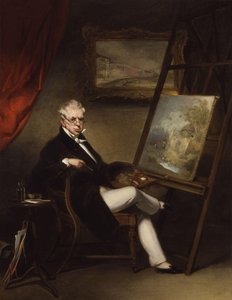
This work is a Self-Portrait by the artist George Chinnery. It represents a significant moment in his career, painted during his time in China between 1825 and 1828. Among the dozen self-portraits Chinnery produced throughout his life, this particular likeness is noted for being his most intimate and engaging. It offers a rare, personal glimpse into the character of a man known for his wit and his volatile, eccentric nature.
The piece was executed during a period of transition for the artist. Having moved to southern China due to mounting debts, Chinnery used his brush to document not only the landscapes and people of the region but also his own shifting circumstances. This specific portrait captures a sense of introspection that distinguishes it from his more formal commissions for the British community in India or the merchants of Macau.
Visual Composition and Subject Matter
The composition is centered on the subject's face and upper torso, presenting a middle-aged man in a moment of quiet introspection. He is positioned with his body turned slightly toward the viewer’s right, though his presence remains immediate and direct. A pair of spectacles rests upon his face, and a dark, textured fur collar frames his neck, adding a sense of weight and substance to his figure. His expression is serious, lending a somber quality to the encounter.
The color palette is restrained, relying heavily on a foundation of browns, ochres, and muted reds. These tones harmonize with the subject's warm brown skin tone, creating a cohesive and grounded atmosphere. Behind him, the background is intentionally blurred, suggesting the presence of a distant landscape without providing specific topographical detail. This lack of clarity in the distance pushes the figure forward, ensuring the viewer's attention remains fixed on the character of the man himself.
Technique and Artistic Style
This oil-on-canvas portrait is defined by a tactile, physical presence. The artist employs a technique characterized by loose brushwork and a heavy use of impasto, where the paint is applied thickly to build up the surface. This layered approach does more than just apply color; it creates a sense of volume and form, allowing the light to catch the ridges of the pigment. Such a method gives the work a textured, almost sculptural quality that emphasizes the physicality of the medium.
The style leans toward realism, yet it is executed through expressive brushstrokes that prioritize character over photographic precision. Rather than relying on smooth, blended transitions, the artist uses visible marks to define the contours of the face and the deep folds of the clothing. These lines work in tandem with the play of light and shadow to establish the subject's features. The result is a work that feels immediate and deeply personal, capturing a specific mood through the very texture of the paint itself.
History and Provenance of the Work
This intimate likeness was painted in China during the years 1825–28. It carries a distinguished lineage, having once belonged to Benjamin Chew Wilcox. A businessman involved in the opium trade, Wilcox was a prominent figure who also commissioned a full-length portrait of himself from the artist.
The provenance of the work connects it to the significant commercial history of the region. It is currently held within the collection of The Hong Kong and Shanghai Banking Corporation Ltd. This placement ensures the piece remains linked to the historical networks that the artist navigated throughout his residency in Asia.
Kuriame muziejuje eksponuojama karya Self-Portrait?
Metropolitano meno muziejus
Niujorkas, JAV
Metropolitano meno muziejaus kilmė ir istorija Metropolitano meno muziejus gimė iš vizijos, kurią dalijosi verslininkai, finansininkai bei išckiausi menininkai ir mąlotojai. Įsilaužus institucijai 1870 metais, ji pradėjo ieškoti nuolatinės vietos savo augančiai kolekcijai. Prieš įsikurę dabartinėje vietoje, muziejus trumpam apsenė vone West 14th gatvėje esančiame Douglas Mansion dvoriuose.


Self-Portrait dididraudžios kokybės vaizdai

Viešoji domenė: suregalis mirė 1852 m.
Kiti dydžiai, iškarai ir citavimo informacija →Džordžas Čineri, Self-Portrait (1825), Metropolitano meno muziejus. Viešoji domenė
Atsakimai į klausimus apie Self-Portrait
Kuriam muziejui priklauso originalus „Self-Portrait“?
Kūrinys „Self-Portrait“ – Džordžas Čineri rodomas Metropolitano meno muziejus, Niujorkas, JAV. Muziejaus informacija nuoroda į originalą, o ne į reprodukciją.
Kokia yra „Self-Portrait“ – Džordžas Čineri kūrybos data?
„Self-Portrait“ – Džordžas Čineri sukurtas 1825 m.
Kokia technika panaudota kūriniui „Self-Portrait"]?
„Self-Portrait“ – Džordžas Čineri technika – Oil On Canvas. Kopijos siekia atkartoti šios technikos vaizdą.
Kokie yra „Self-Portrait“ – Džordžas Čineri realūs matmenys?
Įrašyti kūrinio „Self-Portrait“ – Džordžas Čineri matmenys yra 22 x 18 cm. Kopijas galima užsisakyti kitais dydžiais, išlaikant tą pačius proporcijas.
Kokios temos atsispindi kūrynioje „Self-Portrait“ – Džordžas Čineri?
„Self-Portrait“ – Džordžas Čineri temos apima portrait, self-reflection, spectacles, fur collar, china, 1825, british art, eccentric figure. Kartu jie apibendrina šio kūrinio tematiką.
Ar „Self-Portrait“ – Džordžas Čineri priklauso viešosios teisės domenui?
Autorių teisių statusas kūriniui „Self-Portrait“ – Džordžas Čineri: kūrinys priklauso yra viešosios erdvės dalis – jo autorinė teisė pasibaigusi. Tai nulemia, ar galima laisvai reprodukciuoti šį vaizdą.
Kas sukūrė „Self-Portrait“?
„Self-Portrait“ kūrybinį darbą sukūrė Džordžas Čineri. Šioje puslapio informacijoje aprašomas Džordžas Čineri originalus kūrinys.
Kokiam meno stiliui priklauso „Self-Portrait“ – Džordžas Čineri?
„Self-Portrait“ – Džordžas Čineri priklauso Realism stiliui. Ši dailės kryptis suteikia kūriniui stilistinį kontekstą.
Kokio Džordžas Čineri kūrybos etapo dalis yra „Self-Portrait“?
„Self-Portrait“ atspindi Džordžas Čineri kūrybinį laikotarpį Mature Period.
Apie menininką Džordžas Čineri
1774–1852, Jungtinė Karalystė
Džordžas Čineri
Pradinys gyvenimas ir mokslas (1774–1801) Gimimas: Lymdonas, Jungtinė Karalystė, 1774 m. Šeimyninė kilmė: Jo tėvas buvo Gurney stenogramos sistemos eksponentas. Meninė edukacija: Studijavo Londono Karališkajame akademijos mokyklose, kas suteikė tvirtą klasikinės technikos ir meninių principų pagrindą. Pradinė karjera: Pasižeminė kaip menininkas Airijoje, prieš persikeliant į Madrasą (Čennai) 1atra 1802 m.
Taip pat Džordžas Čineri darbai
 Portrait of Nathan Dunn1830
 Portrait of a Gentleman1800
 A Man Called W. C. Hunter1825
 Portrait of Harriet Low1833

Esdai apie Self-Portrait
 Reflecting the Self: A History of Portraiture & Psychological InsightExplore the fascinating history of self-portraiture from Renaissance masters like Dürer & Rembrandt to modern interpretations. Discover the…
 Masterpieces of Henri Fantin-Latour: The Top 25 Essential ArtworksExplore the top 25 masterpieces of Henri Fantin-Latour. From floral studies to realism, discover the full collection on OriginalUniqueArt.c…
 German artworks of the 1910sGerman Expressionism in the 1910s features powerful works by Franz Marc, Max Beckmann, and Ernst Ludwig Kirchner. View the collection at Or…