

 Peržiūrėti realybėje
 Pasidalinti
 Dalintis
 Išsamiau

 Atsisiųsti
 Panašūs eksponatai
 Rentgeno nuotrauka
 Automatinė diorama
Two Models
 Expressionism
 60.0 x 96.0 cm
 Skaityti daugiau
Giclée / Meno spausdinimas
Muziejų lygio „giclée“ arba drobos spausdinimas: greita gamyba ir lankstios apdailos parinktys. ( Pirkti rankomis tapytą paveikslą Pirkti vaizdą)




































Pasirinkite iš mūsų nustatytų dydžių, atitinkančių originalaus meno kūrinio proporcijas.

Galite nurodyti savo matmenis, kad vaizdas atitiktų konkretų rėmą ar erdvę. Jei pasirinktas dydis nesutaps su originalaus paveikslėlio proporcijomis, mes arba apkirpsime kūrinį, arba išplėsime vaizdą naudojant veideliu atspindėtą arba vientisą šoną. Skaitmeninis maketas bus išsiųstas jums patvirtinti prieš pradedant gamybą.
Atkreipkite dėmesį, kad ekrane matomas vaizdinys neatspindi tikrojo apkirpimo ar išplėtimo. Tik maketas tiksliai parodytų galutinę kompoziciją.
Nors galima rinktis ir individualius dydžius, rekomenduojame pasirinkti vieną iš išanksti nustatytų matmenų, kad būtų išlaikytos originalios proporcijos.
Pristatymas visame pasaulyje () per 2 weeks, o ne įprastas 4/5 savaičių laikotarpis. (29 rugpjūtis)

Nemokamas greitasis pristatymas visame pasaulyje

Aukštos kokybės lininis drobė

Pilnas siuntimo draudimas

Muitinės mokesčių grąžinimo garantija

Tikro spalvų atitikimo garantija

60 dienų grąžinimo politika (tik esant gamyklinėms defektams)

100% pinigų grąžinimo garantija

Nuolaida už kelias reprodukcijas
 Stiklo variantas prieinamas tik pasirinkus dydį iki 110 cm

Two Models
Giclée / Meno spausdinimas
Reprodukcijos matmenys
-


Galutinė kaina
$ 80
Autoriaus biografija
A Visionary of Light and Loss: The Life of Georg Mayer-Marton
The life of Georg Mayer-Marton (1897–1960) serves as a profound testament to the resilience of the human spirit amidst the turbulent currents of twentieth-century history. Born in Győr, Hungary, during the twilight of the Austro-Hungarian Empire, his early years were steeped in the cultural richness of Central Europe. Like many of his generation, the shadows of conflict soon descended upon him; his service in the Austro-Hungarian army during World War I left an indelible mark on his psyche, a weight that would later manifest in the expressive, often somber depths of his artistic vision. This early exposure to the fragility of existence became a foundational element of his creative identity, informing a style that sought to find beauty within the fractured landscapes of memory and displacement.
Mayer-Marton’s formal artistic journey began in earnest following the Great War, as he pursued rigorous training at the prestigious Academy of Fine Arts in Vienna and later in Munich. It was in the vibrant, avant-garde atmosphere of interwar Vienna that he truly found his voice. His ascent within the art world was remarkably swift; he became a central figure in the Hagenbund, a progressive society of artists where he served as both secretary and vice-precedent. During this period, his work began to bridge the gap between classical tradition and modern expressionism, characterized by a masterful command of oil, watercolor, and graphic media. His ability to weave complex narratives through color and form earned him recognition across Europe, with his works finding homes in the esteemed galleries of Budapest, Vienna, Prague, and Rome.
Exile, Resilience, and the Byzantine Spirit
The trajectory of Mayer-Marton’s life was irrevocably altered by the rise of Nazism. The Anschluss of 1938 and the implementation of the Nuremberg Laws forced him into a harrowing exile. Alongside his wife, he fled to England, leaving behind not only his homeland but also much of his established career. This period of displacement was marked by profound personal tragedy, most notably the loss of his parents during the Holocaust. Yet, even in the face of such overwhelming grief, Mayer-Marton’s creative impulse remained unextinguished. Though the London Blitz brought further devastation—destroying his studio and a lifetime of irreplaceable artwork—he continued to find solace in the act of creation.
In England, Mayer-Marton underwent a fascinating stylistic evolution. He became a pioneer of the Byzantine mosaic technique within the United Kingdom, drawing inspiration from his earlier studies in Ravenna, Italy. This fascination with the spiritual and the eternal allowed him to channel his experiences of loss into something monumental and enduring. His later years, spent settling in Liverpool, saw him serving as a senior lecturer at the College of Art, where he passed his knowledge to a new generation. His work from this era often reflects a synthesis of his diverse influences:
- Expressive Brushwork: A technique that utilized thick impasto and fluid motion to evoke raw emotion.
- Spiritual Symbolism: The integration of mosaic-like patterns and Byzantine aesthetics to explore themes of transcendence.
- Emotional Depth: A palette that could shift from the cool, melancholic blues of an abstract waterfall to the poignant, humanistic focus of his portraits.
Ultimately, the legacy of Georg Mayer-Marton is one of profound historical significance. He stands as a bridge between the lost world of the Austro-Hungarian intelligentsia and the modern European landscape. His art does not merely document a life lived through war and exile; it captures the very essence of survival, transforming the scars of history into a luminous tapestry of light, color, and enduring human dignity.

georg mayer marton
1897 - 1960
Trumpa informacija
- Artistic Movement Or Style: Expressionism
- Artists Or Movements Influenced By This Artist: ['Byzantine mosaic']
- Artists Who Influenced This Artist: ['Franz Marc']
- Date Of Birth: June 3, 1897
- Date Of Death: August 8, 1960
- Full Name: Georg Mayer Marton
- Nationality: Hungarian
- Notable Artworks:
- Self Portrait
- Llanthony Valley
- Waterfall
- Place Of Birth: Győr, Hungary
Susiję straipsniai

The Enduring Legacy of Oil on Canvas: Technique, History & Aesthetic Impact
Explore the rich history & techniques of oil painting – from Renaissance masters to Impressionism. Discover pigments, layering methods, and why this timeless medium endures. Expert insights for artists & art enthusiasts.

Oil on Canvas: A Historical & Technical Exploration of a Timeless Artistic Medium
Explore the rich history & enduring techniques of oil painting on canvas. Discover the science behind its longevity, conservation practices, and contemporary relevance. Expert insights for art enthusiasts.

The Enduring Allure of the Nude: A Historical & Artistic Exploration of the Human Form
Explore the captivating history of nude art! Discover iconic paintings & artists from classical to modern eras. Uncover symbolism, techniques & find museum-quality reproductions at OriginalUniqueArt.

The Enduring Power of Painting: A Historical & Contemporary Exploration of Form and Emotion
Explore the rich history & enduring techniques of oil painting with OriginalUniqueArt. Discover masterpieces, learn about art collecting, and find authentic handmade reproductions crafted by skilled artists.
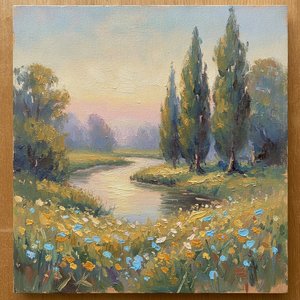
The Timeless Charm of Oil on Board: Reimagining Texture and Light through the Impressionist Lens
Discover the profound intimacy of oil on panel. Explore how Impressionist masters used rigid supports to capture light, texture, and impasto depth through exquisite, handmade oil reproductions for discerning collectors.

