
 Peržiūrėti realybėje
 Pasidalinti
 Dalintis
 Išsamiau

 Atsisiųsti
 Panašūs eksponatai
 Rentgeno nuotrauka
 Automatinė diorama
Wild Weather
 Oil On Canvas
- WallArt
- Contemporary Realism
 1930
1930 76.0 x 122.0 cm
 Metropolitano muziejus
 Skaityti daugiau
Giclée / Meno spausdinimas
Muziejų lygio „giclée“ arba drobos spausdinimas: greita gamyba ir lankstios apdailos parinktys. ( Perejti prie rankinio darbo paveikslėlio Perjungti į vaizdą)




P118B $10

P118H $10

P118W $10

P438Z $10

P508JH $12

P508YH $12

P805H $10

P805Z $10

P919BZ $10

P919G $10

P919XJ $10

P959ZH $10

P968JZ $12

W106C $8

W218G $10

W218JH $8

W218Y $10

W307PJ $10

W316G $10

W316PJ $8

W316Y $10

W398PJ $8

W4111J $10

W500HY $15

W500JH $15

W692G $12

W849H $8

W940BG $15

W953PJ $8




Pasirinkite iš mūsų nustatytų dydžių, atitinkančių originalaus meno kūrinio proporcijas.

Galite nurodyti savo matmenis, kad vaizdas atitiktų konkretų rėmą ar erdvę. Jei pasirinktas dydis nesutaps su originalaus paveikslėlio proporcijomis, mes arba apkirpsime kūrinį, arba išplėsime vaizdą naudojant veideliu atspindėtą arba vientisą šoną. Skaitmeninis maketas bus išsiųstas jums patvirtinti prieš pradedant gamybą.
Atkreipkite dėmesį, kad ekrane matomas vaizdinys neatspindi tikrojo apkirpimo ar išplėtimo. Tik maketas tiksliai parodytų galutinę kompoziciją.
Nors galima rinktis ir individualius dydžius, rekomenduojame pasirinkti vieną iš išanksti nustatytų matmenų, kad būtų išlaikytos originalios proporcijos.
Pristatymas visame pasaulyje () per 2 weeks, o ne įprastas 4/5 savaičių laikotarpis. (11 rugpjūtis)

Nemokamas greitasis pristatymas visame pasaulyje

Aukštos kokybės lininis drobė

Pilnas siuntimo draudimas

Muitinės mokesčių grąžinimo garantija

Tikro spalvų atitikimo garantija

60 dienų grąžinimo politika (tik esant gamyklinėms defektams)

100% pinigų grąžinimo garantija

Nuolaida už kelias reprodukcijas
 Stiklo variantas prieinamas tik pasirinkus dydį iki 110 cm

Wild Weather
Giclée / Meno spausdinimas
Reprodukcijos matmenys
-


Galutinė kaina
$ 80
Kolekcinio eksponato aprašymas
A Tempestuous Vision: Unveiling Frederick Judd Waugh’s “Wild Weather”
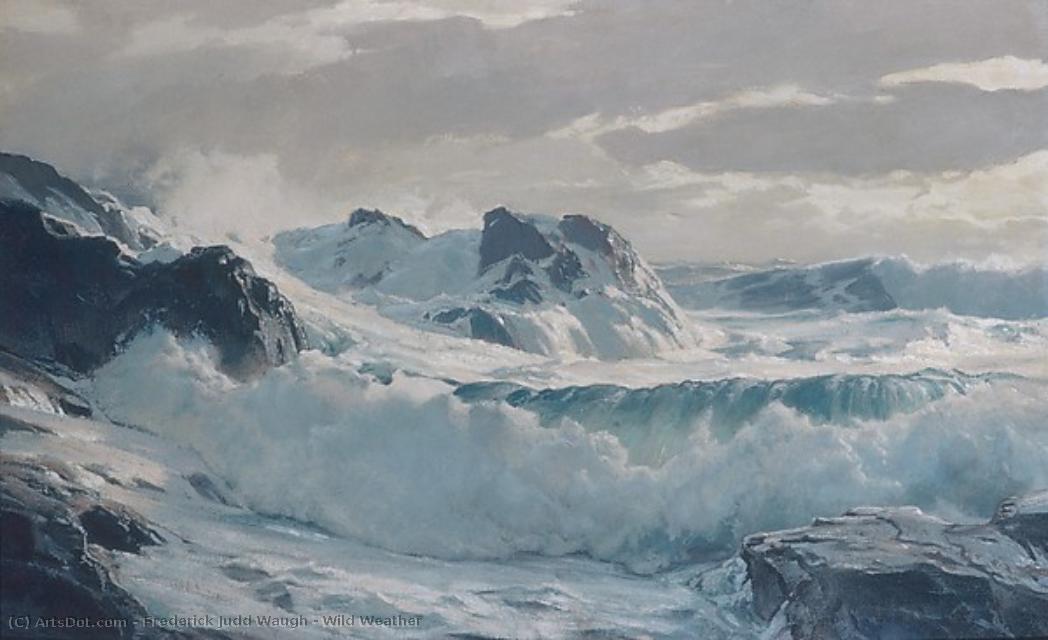
Frederick Judd Waugh's "Wild Weather," painted around 1930, isn’t merely a depiction of a seascape; it’s an immersive experience—a visceral rendering of nature’s raw power and the sublime beauty found within its untamed heart. This oil on masonite painting, now residing in the Metropolitan Museum of Art, captures a moment of intense drama, where towering mountains are swallowed by swirling clouds and relentless waves assault jagged rock formations. Waugh, a master of marine art who later contributed significantly to wartime camouflage efforts, here demonstrates a remarkable ability to translate the elemental forces of nature onto canvas with both precision and profound emotional resonance.
The painting’s composition immediately commands attention. The dominant horizontal thrust of the mountain range establishes a sense of scale and solidity, anchoring the scene while simultaneously emphasizing the overwhelming force of the approaching storm. Waugh skillfully employs atmospheric perspective – a technique borrowed from Impressionism – to create depth; distant peaks fade into a hazy blue, suggesting immense distance and reinforcing the feeling of isolation. The dynamic arrangement of clouds, rendered with loose, expressive brushstrokes, creates a sense of perpetual motion, as if the viewer is caught in the eye of the storm themselves. The lower portion of the image, dominated by the churning sea, provides a counterpoint to the stoic strength of the mountains, highlighting the relentless and ultimately unstoppable nature of the elements.
A Palette of Power: Color, Texture, and Technique
Waugh’s color palette is deliberately restrained, relying heavily on cool tones—whites, grays, blues, and muted browns—to evoke a sense of foreboding and drama. The dominant hues are not vibrant or celebratory; instead, they contribute to the painting's somber mood, mirroring the harshness of the weather conditions depicted. However, subtle highlights – particularly on the snow-covered peaks and the crests of the waves – provide moments of visual relief, suggesting a glimmer of light struggling through the storm clouds. The texture is equally compelling; Waugh’s visible brushstrokes create a palpable sense of roughness and movement, mirroring the chaotic energy of the sea. The application of paint varies from broad washes to finer details, adding layers of complexity and depth to the scene.
Technically, “Wild Weather” showcases Waugh's mastery of oil painting. He skillfully employs layering techniques to build up form and create a sense of three-dimensionality, while simultaneously maintaining a loose, expressive style that captures the fleeting nature of the storm. The choice of masonite as the support—a relatively new material at the time—allowed for a smoother surface, facilitating Waugh’s detailed brushwork and contributing to the painting's overall luminosity. The careful blending of colors and the subtle gradations in tone demonstrate his meticulous attention to detail and his ability to capture the nuances of light and shadow.
Symbolism and Emotional Resonance
Beyond its technical brilliance, “Wild Weather” is rich in symbolic meaning. The imposing mountains can be interpreted as representing resilience, strength, and endurance—qualities tested by the relentless assault of nature. The turbulent sea embodies chaos, unpredictability, and the humbling power of the natural world. Together, these elements evoke a sense of awe and respect for the forces that shape our planet. There’s also an underlying feeling of solitude and vulnerability; the viewer is placed within this dramatic landscape, acutely aware of their own insignificance in the face of such overwhelming power.
Waugh's artistic journey—from his early training in realism to his later embrace of Impressionistic techniques—is evident in “Wild Weather.” The painting reflects a shift towards capturing not just the literal appearance of nature, but also its emotional impact. It’s a testament to Waugh’s ability to transform a simple landscape into a profound meditation on the relationship between humanity and the natural world. The work resonates with viewers today, offering a timeless reminder of the beauty and power that can be found in even the most turbulent of times.
A Legacy of Maritime Art
Frederick Judd Waugh’s “Wild Weather” stands as a pivotal work within his oeuvre and a significant example of American marine art during the early 20th century. His innovative approach to depicting the sea, combined with his meticulous attention to detail and his ability to convey profound emotional depth, cemented his place as one of the most celebrated artists of his generation. Reproductions of this powerful painting continue to captivate audiences, offering a glimpse into a world where nature reigns supreme and the human spirit is both humbled and inspired.
Susiję straipsniai
Henry Thomas Dawson: Navigating Light, Sea & Sentiment in Victorian Marine Painting
Explore the captivating world of Henry Thomas Dawson (1811-1878), a master of Victorian marine painting. Discover his evocative coastal scenes, landscapes & lasting artistic legacy. Learn about collecting Dawson's work and find reproductions at OriginalUniqueArt.
Oil on Canvas Masters: 10 Paintings That Redefined Art History |
Journey through art history with our guide to 10 legendary oil on canvas masterpieces! Explore iconic works by Van Gogh, Monet & Rembrandt. Find museum-quality reproductions and elevate your home decor at . Discover all masterpieces online.
Ivan Aivazovsky: Mastering Light & Emotion in 19th-Century Marine Painting
Explore the captivating world of Ivan Aivazovsky, a master of 19th-century marine painting. Discover his techniques, iconic artworks & lasting legacy in this expert guide.

Ludolf Backhuysen I: Master of Dutch Marine Painting & Atmospheric Realism
Explore the captivating world of Ludolf Backhuysen I, a master of Dutch marine painting. Discover his signature realism, atmospheric seascapes & lasting influence on art history. Learn about collecting and appreciating this Golden Age artist.
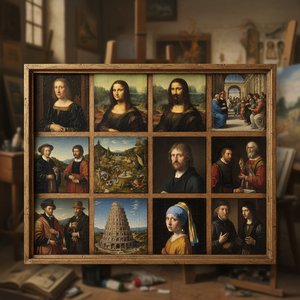
Oil on Panel Masters: 10 Paintings That Revolutionized Art |
Journey through 10 legendary 'Oil on Panel' masterpieces by Van Eyck, Bosch & Bruegel. Explore the stories behind these iconic Renaissance & Baroque paintings and find museum-quality art reproductions to elevate your home decor. Discover all masterpieces on !

