Perjungti į spausdinamus版作品
 Skaityti daugiau







































 Dėl meno kūrinių ar reprodukcijų, kurių bet kuri pusė yra didesnė nei 105 cm (apie 41 inch), rėmas bus siunčiamas kaip išskaidytas surinkimo rinkinys. Šis metodas užtikrina saugų pristatymą ir apsaugo nuo transportavimo metu galimos žalos.


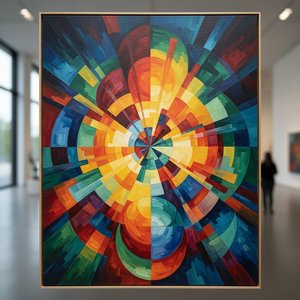
František Kupka’s “Color Drawings”: A Pioneering Exploration of Introspection
“Color Drawings,” attributed to the visionary František Kupka (1871-1957), stands as a pivotal work in the nascent field of abstract art. Born in Opočno, Bohemia, Kupka's artistic trajectory represents a remarkable shift from representational painting to an intensely personal investigation of color and form – a journey that began with traditional academic training but ultimately led him to become one of the earliest pioneers of Simultanism, later known as Orphism.
- Subject Matter: The central figure, a woman lost in contemplation, immediately draws the viewer into a deeply personal space. Her downward gaze and closed eyes evoke a sense of introspection, inviting us to share her silent moment of reflection.
- Color Palette: Kupka’s masterful use of color is paramount. The dominant yellow hue creates an ethereal atmosphere, amplifying the emotional resonance of the scene. Blues are strategically employed to emphasize the woman's dress and contribute to the overall sense of serenity and mystery.
The Rise of Simultanism: A Reaction Against Representation
Kupka’s artistic evolution reflects a broader movement occurring at the turn of the 20th century – a rejection of traditional representational painting in favor of exploring the simultaneous effects of color and form. Influenced by artists like Paul Séraphin and earlier experiments with optical illusions, Kupka sought to capture not what he *saw*, but rather how his eye *perceived* color and light. This approach, termed “Simultanism” or “Orphism,” aimed to represent the subjective experience of vision itself.
His time in Paris during the late 1890s was crucial. Exposure to the avant-garde artistic circles and his studies with Laurens provided him with the tools and intellectual framework necessary to develop his radical ideas. The painting’s composition, with its fragmented figures and emphasis on color relationships, is a direct result of this transformative period.
Technique and Composition: A Dance of Color
Kupka's technique in “Color Drawings” is characterized by loose, expressive brushstrokes and a deliberate avoidance of traditional perspective. The painting’s composition isn’t built around a central focal point; instead, the eye is drawn across the canvas through the interplay of color and shape. The figures are rendered with simplified forms, almost dissolving into the surrounding color field – a hallmark of Simultanism.
- Brushwork: Noticeable gestural marks contribute to the painting’s dynamic energy and convey a sense of immediacy.
- Color Relationships: The careful juxtaposition of colors creates visual tension and harmony, further enhancing the emotional impact of the work.
Symbolic Resonance and Emotional Impact
"Color Drawings" transcends mere aesthetic pleasure; it’s a profound meditation on the human condition. The solitary figure embodies themes of introspection, vulnerability, and perhaps even spiritual seeking – concerns that resonated deeply with Kupka's own philosophical inquiries. The painting’s evocative atmosphere invites viewers to contemplate their own inner worlds, making it a timeless work of art that continues to captivate audiences today.
Klausimai ir atsakymai
Ar „Color drawings“ galima peržiūrėti papildydami realybę?
„Color drawings“ galima peržiūrėti papildytoji realybės formatu: kūrinio Peržiūra papildintajai realybei puslapyje, naudodami suderinamą įrenginį, galite pamatyti jį savo erdvėje.
Kokia „Color drawings“ – Františekas Kupka emocinė nuotaika?
Emocinis tonas, nurodytas kūriniui „Color drawings“ – Františekas Kupka, yra Reflective. Jis apibūdina jausmą, kurį išreiškia šis darbas.
Kokio erdvės spalvos derėtų prie „Color drawings“ – Františekas Kupka spalvų?
Dėl savo Dark paletės, „„Color drawings“ – Františekas Kupka“ rekomenduojamas Living Room. Spalvų derinys yra viena iš šios rekomendacijos priežasčių.
 Peržiūrėti realaus dydžio版
 Pasidalinti
 Dalintis
 Išsamiau
 Vadovas

 Atsisiųsti
 Panašūs eksponatai
 Rentgeno spindulių nuotrauka
 Automatinė diorama
 Q&A
Q&A Statistika