Perjungti į spausdinamus版作品
 Skaityti daugiau







































 Dėl meno kūrinių ar reprodukcijų, kurių bet kuri pusė yra didesnė nei 105 cm (apie 41 inch), rėmas bus siunčiamas kaip išskaidytas surinkimo rinkinys. Šis metodas užtikrina saugų pristatymą ir apsaugo nuo transportavimo metu galimos žalos.


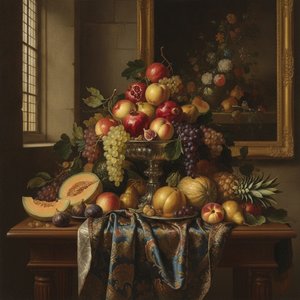
The Fruit Basket: A Baroque Ode to Abundance
Frans Snyders’ “The Fruit Basket,” completed in 1633, transcends mere depiction; it embodies the very spirit of Baroque art—a celebration of opulent detail and dramatic visual impact. Housed within the Museo del Prado in Madrid, Spain, this oil on canvas masterpiece isn't simply a still life; it’s a carefully constructed tableau designed to stimulate contemplation and evoke a profound appreciation for earthly beauty. The painting immediately draws the eye with its vibrant palette—deep reds dominate the apples and oranges, contrasted by lush greens representing the foliage and vegetables. These colors aren’t merely decorative; they were painstakingly chosen to convey emotion and heighten the sense of realism achieved through masterful chiaroscuro lighting.- Composition & Technique: Snyders employs a pyramidal composition, anchoring the eye on the basket itself while subtly guiding it across the table towards the woman holding it. The artist’s meticulous brushwork captures the textures of fruit skins—the velvety sheen of peaches and plums alongside the rough surface of apples—creating an illusion of palpable physicality. Notice how light sculpts the forms, emphasizing volume and depth, mirroring the grandeur of Baroque artistic ideals.
- Historical Context: Created during Philip IV’s reign, “The Fruit Basket” reflects the prevailing fascination with naturalism within European art circles. The Baroque period prioritized portraying the world as it appeared to the senses—a reaction against the stylized conventions of Mannerism. Snyders' work aligns perfectly with this trend, demonstrating a commitment to capturing fleeting moments of sensory experience.
- Symbolism & Narrative: Beyond its visual splendor, “The Fruit Basket” carries symbolic weight. The basket itself represents fertility and nourishment—themes central to Baroque iconography. The woman’s gesture suggests generosity and hospitality, embodying the humanist values championed during this era. Furthermore, the inclusion of a knife hints at preparation and transformation, subtly referencing the cycle of life and death.
- Influence & Legacy: Snyders' meticulous realism profoundly impacted subsequent still life painters. His influence can be seen in works by artists like Jacob Jordaens and Willem Claeszoon Heda who adopted similar techniques to convey a sense of immediacy and grandeur. “The Fruit Basket” remains an enduring testament to Baroque artistry, inspiring admiration for its technical prowess and emotional resonance.
Klausimai ir atsakymai
Kuriem metais buvo sukurta „The Fruit Basket“ – Fransas Snidersas?
„The Fruit Basket“ sukurta 1633 m. Ši data leidžia įvardyti kūrinį Fransas Snidersas kūrybinėje karjeroje bei jo epochoje.
Kokia erdvė rekomenduojama kūriniui „The Fruit Basket“ – Fransas Snidersas?
Rekomenduojama erdvė kūriniui „The Fruit Basket“ – Fransas Snidersas yra Living Room. Šią rekomendaciją, žinoma, galima pritaikyti prie jūsų interjero.
Kur šiandien galima pamatyti kūrinį „The Fruit Basket“ – Fransas Snidersas?
Kūrinys „The Fruit Basket“ – Fransas Snidersas rodomas Prado muziejus, Madrid, Spain. Muziejaus informacija nuoroda į originalą, o ne į reprodukciją.
Daugiau informacijos apie šį paveikslą
 Peržiūrėti realaus dydžio版
 Pasidalinti
 Dalintis
 Išsamiau
 Vadovas

 Atsisiųsti
 Panašūs eksponatai
 Rentgeno spindulių nuotrauka
 Automatinė diorama
 问答
问答 Statistika