Peržiūrėti realaus dydžio版
 Siųsti
 Dalintis
 Išsamiau
 Vadovas

 Atsisiųsti
 Panašūs eksponatai
 Rentgeno spindulių nuotrauka
 Diaporama
 Statistika
Frans Hals
 Oil
Oil- WallArt
- Dutch Golden Age
 1650
1650- Early Modern
 33.0 x 28.0 cm
 Metropolitano muziejus
 Rodyti daugiau
Rankų darbo aliejinės reprodukcijos
Rankiniu būdu tapytas aliejus ant droblio jūsų pageidaujamame dydį ir rėmuose – mūsų menininkų darbas pagal užsakymą. ( Perjungti į spausdinimą Perejti prie skaitmeninių vaizdų)




P118B €10

P118H €10

P118W €10

P438Z €10

P508JH €12

P508YH €12

P805H €10

P805Z €10

P919BZ €10

P919G €10

P919XJ €10

P959ZH €10

P968JZ €12

W106C €8

W218G €10

W218JH €8

W218Y €10

W307PJ €10

W316G €10

W316PJ €8

W316Y €10

W398PJ €8

W4111J €10

W500HY €15

W500JH €15

W692G €12

W849H €8

W940BG €15

W953PJ €8




Pasirinkite iš mūsų nustatytų dydžių, atitinkančių originalaus meno kūrinio proporcijas.

Įveskite jums reikiamą plotį ir aukštį, kad paveikslas atitiktų jūsų rėmą ar sieną. Kadangi šis darbas yra rankinio darbo, siekiant išgauti kitokio formos dydį, paveikslas gali būti šiek tiek didesnis (nuo kraštų bus palikta daugiau erdvės) arba mažesnis – pasirinkite jums patogiausią variantą. Prieš pradedant tapyti, atsiųsime jums skaitmeninį maketą patvirtinimui. Šioje puslapio nuotraukoje matomas vaizdas nėra galutinis rezultatas – jį parodys tik sukurtas maketas.
Gavus užsakymą, OriginalUniqueArt.com komanda susisieks su klientu el. paštu dėl instrukcijų ir pateiks maketo pavyzdį
Pristatymas visame pasaulyje () per 3–4 savaites, o ne įprastai – per 5 savaites. (25 spalis). Kokybė lieka nepakeičiama.

Nemokamas greitasis pristatymas visame pasaulyje

Aukštos kokybės lininis drobė

Pilnas siuntimo draudimas

Muitinės mokesčių grąžinimo garantija

Tikro spalvų atitikimo garantija

100 dienų grąžinimo politika (tik esant įtaigoms)

100% pinigų grąžinimo garantija

Nuolaida dideliems užsakymams
 Stiklo variantas prieinamas tik pasirinkus dydį iki 110 cm

Frans Hals
Reprodukcijos technika
Reprodukcijos dydis
-


Visų pasirinktų variantų kaina
€ 263
A Glimpse into Haarlem’s Golden Age
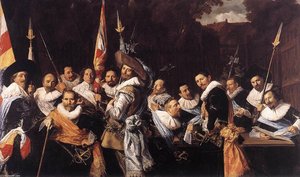
To gaze upon this masterful portrait by Frans Hals is to step through a portal into the vibrant, bustling heart of the Dutch Golden Age. Painted during an era of unprecedented economic prosperity and cultural flourishing, the work captures more than just a likeness; it captures the very soul of seventeenth-century Haarlem. The subject, a distinguished man adorned with a black hat and a delicate white ribbon, commands the viewer's attention with a gaze that feels remarkably immediate, as if he has only just paused his contemplations to acknowledge our presence. This sense of spontaneity is the hallmark of Hals, an artist who possessed the rare ability to freeze a fleeting moment of human existence and preserve it for eternity.
The composition breathes with a life force that transcends the boundaries of the canvas. While the man in the foreground serves as our primary anchor, the subtle presence of figures in the background adds layers of narrative depth, suggesting a larger world of social interaction and communal vitality. This is not a static, frozen icon, but a window into a living, breathing society where every brushstroke whispers stories of status, character, and the quiet dignity of the merchant class.
The Revolutionary Language of the Brush
What truly elevates this piece for the discerning collector or art enthusiast is Hals’s radical departure from the meticulous, almost photographic realism favored by many of his contemporaries. Instead of hiding his hand behind layers of smooth, invisible glazes, Hals embraced a technique defined by visible, energetic brushstrokes. This "loose" style creates a palpable texture that mimics the movement of light and the tactile reality of fabric and skin. There is an incredible rhythm to the application of paint; one can almost feel the swift, decisive motion of the artist's hand as he captured the sheen of the ribbon and the rugged texture of the beard.
For those looking to integrate such a piece into a sophisticated interior, this technique offers a dynamic visual energy. The interplay of light and shadow—the chiaroscuro effect—provides a dramatic focal point that can anchor a room, offering both a sense of historical weight and a modern, expressive flair. It is a technique that celebrates the process of creation itself, making the painting feel less like an object and more like an event.
Symbolism and Emotional Resonance
Beyond the technical brilliance lies a profound emotional depth. In the context of the Dutch Golden Age, portraiture served as a vital medium for expressing identity and social standing. The careful rendering of the man's attire—the stark contrast of the black hat against the white ribbon—speaks to a refined taste and a controlled elegance. Yet, beneath this veneer of formality, Hals injects a sense of psychological intimacy. There is an unmistakable warmth in the subject's expression, a hint of the human spirit that invites the viewer into a silent dialogue.
For the interior designer or art lover, acquiring a high-quality reproduction of such a work means bringing more than just decoration into a space; it means introducing a legacy of humanity and resilience. This painting serves as a reminder of a time when art was used to celebrate the beauty of everyday life and the profound dignity found in the individual. It is an investment in atmosphere, providing a sophisticated touch of history that resonates with timeless elegance and emotional truth.
问答 (or more naturally for a website heading): Klausimai ir atsakymai
Ką „Frans Hals“ turi bendro su kitais Fransas Halsas I kūriniais?
Fransas Halsas I kūryboje „Frans Hals“ pasižymi Dutch Golden Age stiliumi, derinant jį su baroque style, dignified portraiture, guild tradition, humanism values, haarlem legacy temomis.
Kas sukūrė „Frans Hals“?
„Frans Hals“ priskiriamas Fransas Halsas I.
Kokio erdvės spalvos derėtų prie „Frans Hals“, autorius – Fransas Halsas I spalvų?
Atsižvelgiant į jo Monochrome spalvas, kūrinys „Frans Hals“ yra rekomenduojamas Living Room kambariui.
Autoriaus biografija
Fransas Halsas I: Gyvenimo ir tapybos meistras
Fransas Halsas I, gimęs apie 1580 metus Antverpyje, Belgijoje, buvo olandų dailininkas, kuris netrukus iškilo kaip vienas svarbiausių Nyderlandų Aukso amžiaus atstovų. Nors ankstyvieji jo gyvenimo metai apgaubti tam tikra paslaptimi, jis įgijo didelį pripažinimą dėl savo novatoriškos portretinės tapybos ir buitinės scenų kūrinių. Halsas nebuvo tiesiog dailininkas – jis buvo stebėtojas, psichologas, gebantis užfiksuoti žmogaus esmę drobėje.
Ankstyvieji metai ir mokymasis
Išsami informacija apie Halso jaunystę yra skurdi. Manoma, kad jis gavo pirmuosius meno pamokų Antverpyje, kuris tuo metu buvo žinomas kaip svarbus tapybos centras. Tačiau dėl religinių ir politinių neramumų jo šeima persikėlė į Harlemą Nyderlanduose. 1610 metais jis įstojo į Harlemo Šv. Liudviko gildiją, oficialiai pradėdamas savo profesinę karjerą. Būtent Harleme Halsas suformavo savo unikalų stilių ir tapo žymiu portretistu.
Kūrybinis kelias ir savitas braižas
Halsas išsiskyrė nepaprastai šviežiu ir spontanišku stiliumi. Skirtingai nuo daugelio jo bendraamžių, kurie teikė pirmenybę kruopščiai detalėms, Halsas naudojo laisvą ir ekspresyvią potepų techniką. Ši technika suteikdavo jo paveikslams didelį gyvybingumą, užfiksuodavo subjekto asmenybę ir charakterį taip, kaip tai buvo revoliuciškai nauja tuo metu. Jo portretai nebuvo tik fizinis panašumas – jie atspindėjo žmogaus vidinį pasaulį, emocijas ir mintis.
- Jo portretai nebuvo tiesiog atvaizdai; tai buvo psichologiniai tyrimai.
- Jis puikiai perteikdavo trumpalaikes akimirkas – juoką, pokalbį ar apmąstymus.
- Halso šviesos ir šešėlių naudojimas suteikdavo jo kompozicijoms gilumo ir dramatiškumo.
Svarbiausi darbai
Nors Halsas sukūrė daugybę darbų, jis labiausiai žinomas dėl savo portretų. Kai kurie garsiausi jo paveikslai apima:
- Juokiantis kavalierius (1624) – puikus pavyzdys, demonstruojantis Halso gebėjimą užfiksuoti charakterį ir judesį.
- Malle Babbe (apie 1633–1635) – įspūdingas senos moters portretas, rodantis Halso talentą perteikti amžių ir asmenybę.
- Harlemo Senų Namų Regento Portretai (1664) - demonstruojantys jo meistriškumą grupiniuose portretuose.
Jis taip pat sukūrė įtraukių buitinių scenų – kasdienio gyvenimo vaizdus – kurios atskleidė Nyderlandų visuomenę.
Įtaka ir palikimas
Nustatyti Halso tiesiogines įtakas yra sudėtinga, nes jis sukūrė labai individualų stilių. Tačiau greičiausiai jis žinojo ankstesnių flamandų tapytojų, tokių kaip Piteris Bruegelis Vyresnysis, darbus. Jo novatoriškas portretinės tapybos požiūris turėjo didelį poveikį vėlesnės kartos menininkams.
- Jis įkvėpė tokius menininkus kaip Adriaenas Brouweris ir Johannes Vermeeris.
- Jo pabrėžimas asmenybės užfiksavimui pavedė kelią intymesniems ir psichologiškesniems portretams.
- Vėliau menininkai, įskaitant Impresionistus, gyrė jo laisvus potepus ir dėmesį šviesai.
Istorinė reikšmė
Fransas Halsas I suvaidino lemiamą vaidmenį formuojant olandų tapybą Aukso amžiuje. Jo darbai atspindi klestėjantį Nyderlandų turtą ir individualizmą tuo metu. Jis nuėjo nuo griežto formalumo link natūralesnio ir ekspresyvesnio stiliaus, palikęs nesunaikinamą pėdsaką meno pasaulyje.
Šiandien jo paveikslai labai paklausūs ir juos galima rasti pagrindiniuose muziejuose visame pasaulyje, įskaitant Franso Halso muziejų Harleme, kuriame saugoma didžiausia jo darbų kolekcija. Jo indėlis tebeįkvepia menininkus ir žavi publiką jau šimtmečius.

Fransas Halsas I
1580 - 1585 , Belgija
Trumpa informacija apie kūrėją
- Gimimo Data: apie 1580
- Gimimo Vieta (Miestas Ir Šalis): Antverpenas, Belgija
- Meninis Judėjimas/Stilius: Olandų aukso amžius
- Mirties Data: apie 1585
- Pilietybė: Olandietis
- Pilnas Vardas: Frans Hals I
- Įtakoti Menininkai:
- Adriaen Brouwer
- Johannes Vermeer
- Žymiausi Darbai:
- Juokiantis kavalierius
- Malle Babbe
Susiję straipsniai

Frans Hals I: Innovation, Intimacy & the Dutch Golden Age Portrait
Explore the revolutionary portraiture of Frans Hals I, a master of the Dutch Golden Age. Discover his innovative techniques, captivating character studies & lasting impact on art history. Learn more at OriginalUniqueArt.

Olandijos Aukso Amžius: 10 Šedevrų, Apibrėžiančių Meną ir Stilių
Atraskite Olandijos Aukso Amži\u017us meninius šedevrus! 10 legendin\u017iŴ paveikslžiai – Rembrandto, Vermeerio ir kt. darbai. Sužnkitę j\u016ungo namus aukso amži\u017us grožiu! Āukrai, interjero dizainas – viskas OriginalUniqueArt.com. Ižirkite kolekciją internete!
Illuminating Realism: Exploring the Dutch Golden Age of Painting (1600-1700)
Explore the Dutch Golden Age of painting (1600-1700) with OriginalUniqueArt. Discover Rembrandt, Vermeer & other masters. Learn about techniques, history & find museum-quality reproductions.
Illuminating Innovation: Exploring the Dutch Golden Age of Painting
Explore the Dutch Golden Age of painting with OriginalUniqueArt. Discover Rembrandt, Vermeer & other Masters. Learn about key characteristics, iconic artworks, and lasting influence. Expert insights for collectors & enthusiasts.

Golden Light & Dutch Skies: The Timeless Magic of Dutch Golden Age Landscapes
Discover the breathtaking beauty of Dutch Golden Age landscapes. Explore the mastery of light, chiaroscuro, and 17th-century realism through an expert art history lens, celebrating the enduring legacy of the Dutch Masters for discerning collectors and art lovers.